
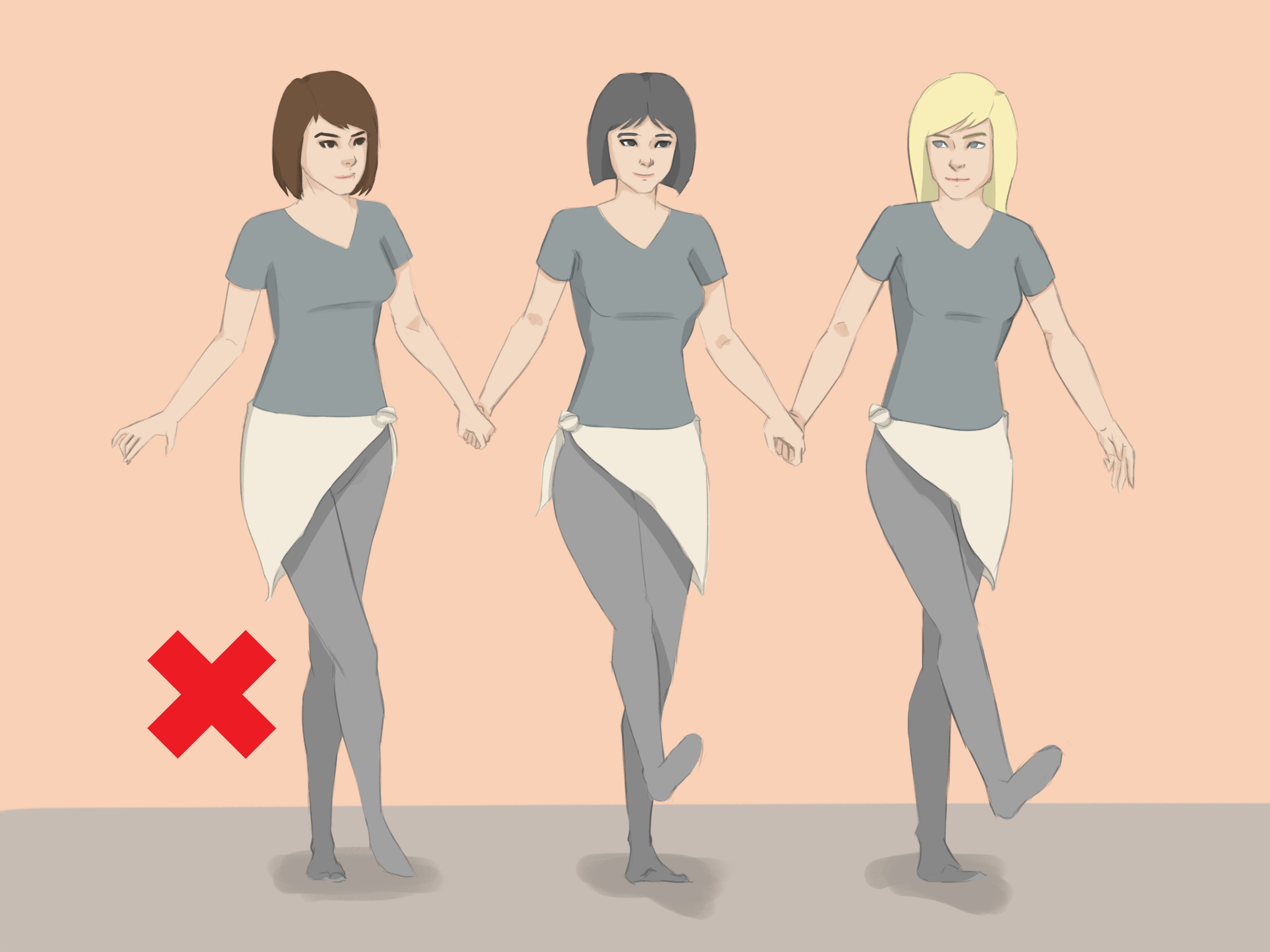
Dabke looks like a line of people having the best time of their lives… because it is.
It’s loud, proud, and extremely cardio-forward. One minute you’re “just watching,” and the next
a stranger is holding your hand and your feet are announcing to the floor that you have arrived.
If you’ve ever wanted to learn dabke but thought, “I don’t have the knees for that,” good news:
you can start with the simplest step, build rhythm over time, and still look like you belong in the line.
This guide breaks down dabke dance steps for beginners, explains line etiquette (yes, it’s a thing),
and gives you a practice plan that actually works in real lifenot just in your imagination at 2 a.m.
What Is Dabke?
Dabke (also spelled dabka/dabkeh) is a traditional Levantine folk dancepopular across communities
with roots in places such as Lebanon, Palestine, Syria, and Jordanand commonly performed at weddings
and other celebrations. It’s typically danced in a line or semi-circle with linked hands/arms, driven by
rhythmic stomps, hops, and synchronized footwork.
The name is often connected to the idea of “stomping,” which is perfect because dabke’s signature move
is… stomping. One widely shared origin story ties dabke to community life: villagers working together to
compact or repair roofs by stomping in unisonturning a practical task into a social ritual that stuck
around long after the roof stopped leaking.
Why Dabke Hits Different
Dabke is less “look at me” and more “look at us.” The line is the star. Even when the leader (often
called the raas or lawweeh) steps out to improvise, the group’s rhythm and unity are what make the
dance feel electric.
Dabke Etiquette: How to Join the Line Without Panic
Dabke is welcoming, but it’s also communalso a tiny bit of etiquette keeps everyone smiling (and upright).
- Start at the end of the line if you’re new. It’s the easiest place to follow and recover.
- Hold gently but clearly. You want connection, not a hostage situation.
- Match the group’s energy. Big stomps are fun; wild stomps into someone’s toes are less fun.
- Watch the leader. If the leader cues a change, the line often follows within a beat or two.
- Respect the moment. Dabke can be purely celebratory, but it can also carry cultural meaning.
Treat it like a living tradition, not a novelty dance challenge.
What You Need Before You Start
1) Shoes & Space
Dabke is footwork-heavy. Pick shoes that won’t slip too much (no ice-skating on hardwood)
and won’t stick like glue (you do need to pivot sometimes). Sneakers or flat dance shoes work well.
Give yourself enough space to move sideways with at least one other person.
2) A 3-Minute Warm-Up (Your Knees Will Thank You)
- 30 seconds: march in place, light bounce.
- 30 seconds: ankle rolls and toe taps.
- 60 seconds: gentle squats (small range), then calf raises.
- 60 seconds: side steps right/left, add a soft stomp on the beat.
Understanding Dabke Music: Find the Beat, Then Make Friends With It
You don’t need a music degree, but you do need one skill: hearing the pulse.
Dabke music can feel fast because the steps are crisp and the energy is high, but beginners do best when they:
- Listen for the “doum/tek” drum pattern (that deep “doum” is your anchor).
- Count in a simple loop (often 6 counts for the basic step).
- Let the line carry you. Group dance is basically rhythm with emotional support.
You’ll often hear classic dabke melodies and chant-like calls that build momentum. Many songs accelerate,
and so will the footworkso your goal is not to start fast. Your goal is to stay on time.
The Classic Beginner Dabke Step (6-Count): Your Home Base
There are many dabke styles, but the beginner-friendly “base step” shows up everywhere. Think of it as your
dabke alphabet. Once you can spell, you can start writing poetry (or at least a decent wedding entrance).
How the Line Moves
In many social dabke settings, the line travels to the right while dancers face forward
(or slightly toward the center of a circle). The footwork creates a steady sideways “walk” with bounce.
6-Count Breakdown (Beginner Version)
Starting position: feet about hip-width, soft knees, core lightly engaged, shoulders relaxed.
- Count 1: Step to the right with your right foot.
- Count 2: Bring your left foot in (tap near your right, or step lightly).
- Count 3: Step to the right again with your right foot (small travel).
- Count 4: Lift your left knee slightly (a small hop or “pick up” is fine).
- Count 5: Place left foot down with a light stomp (controlled, not angry).
- Count 6: Add a second small stomp or a tap with the right to resetthen repeat.
Beginner tip: Keep steps compact. Small and on-beat looks better than huge and late.
Dabke is a team sport disguised as a party.
What It Should Feel Like
- Springy (soft knees, bounce in the ankles).
- Grounded (stomps land under you, not in front of you).
- Connected (your arms help you stay synchronized with the line).
Common Mistakes (And Quick Fixes)
- Stomping too hard → Make it crisp, not destructive. Think “punctuation,” not “demolition.”
- Leaning back → Keep a slight forward readiness; it helps you travel right smoothly.
- Big steps, slow recovery → Shrink your travel by 20% and your timing will magically improve.
- Watching your feet nonstop → Glance down, then look up. Follow the shoulders/arms for timing.
Level Up: 5 Simple Dabke Add-Ons That Still Look Traditional
Once your base step is stable, you can add flavor without changing the whole recipe.
Here are beginner-safe upgrades:
1) The “Spice” Hop
On count 4 (when you lift the left knee), add a tiny hop on the right foot. Keep it small and rhythmic.
If you hop like you’re clearing a puddle, you will land like you’re apologizing to your knees.
2) The Kick (Mini, Not Movie-Stunt)
Replace the knee lift on count 4 with a small forward kick (shin level or lower). The line should stay evenno surprise
leg launches into someone’s personal space.
3) Double Stomp Variation
Make count 5 and count 6 two clear stomps (left, then right). This reads strongly in a crowd and feels satisfying.
4) The Pivot Turn (For When You’re Feeling Brave)
On the reset beat, pivot your body a quarter turn and return. Keep it subtle. Dabke turns are cool when they’re clean,
and confusing when they’re a full spin you didn’t warn anyone about.
5) Shoulder Bounce (The Secret Sauce)
Many dabke lines carry rhythm through the upper body toosmall shoulder pulses that match the beat.
Keep it natural, not robotic. Think “pride and groove,” not “urgent shrugging.”
Dancing in a Dabke Line: Roles, Holds, and How Not to Break the Chain
The Hold
You might see dancers holding hands, linking pinkies, or resting hands on shoulders depending on the setting and style.
In social dabke, the goal is steady connection so the line moves as one unit.
The Leader (Raas/Lawweeh)
The leader is often at the right end of the line (the “front” in many formations), setting tempo and calling changes.
Leaders may improvise with extra footwork while the line keeps the base step.
If you’re new, you do not need to lead. Your job is to:
stay on beat, travel with the line, and keep the chain comfortable.
That alone makes you an excellent dabke citizen.
A Realistic 7-Day Practice Plan to Learn Dabke
You can learn the foundations in a week if you practice a little each day. Keep sessions short enough that you
finish feeling energizednot like you just negotiated with gravity and lost.
Day 1: Beat + Bounce
- Listen to dabke music for 10 minutes and clap the pulse.
- Practice side steps right-left with a light bounce.
Day 2: Base Step Slowly
- Do the 6-count step at a slow tempo for 5 minutes.
- Rest, then repeat for 5 minutes.
Day 3: Consistency Drill
- Set a timer for 3 minutes: repeat the base step without stopping.
- Focus on quiet upper body and controlled stomps.
Day 4: Add One Upgrade
- Add the mini hop on count 4 or the double stomp (5–6).
- Practice switching back to the base step smoothly.
Day 5: Line Simulation
- Hold a scarf or towel lightly with one hand to mimic line tension.
- Travel to the right while keeping your counts steady.
Day 6: Music-Speed Reality Check
- Try a slightly faster track.
- Make your steps smaller, not your timing worse.
Day 7: Party Practice
- Do 2 minutes base step, 30 seconds upgrade, repeat 3 times.
- Smile. Dabke looks 20% better when your face says “I’m having fun.”
How to Dabke at Weddings and Parties
Dabke at a wedding can feel like jumping onto a moving treadmill that’s powered by drums and joy.
Here’s how to make it fun instead of terrifying:
- Join the end of the line and watch for one full 6-count cycle before stepping in.
- Copy the feet, then the bounce. Feet first; style second.
- If the tempo speeds up, shrink your travel and keep the counts clean.
- If you mess up, keep the rhythm with small steps until you reconnect.
- Celebrate the group. Dabke is about unityyour presence matters more than perfection.
Troubleshooting: Fix Problems in the Moment
“I’m off-beat and everyone knows.”
First: breathe. Second: stop trying to do “full dabke.” Do small side steps on the beat until you lock back in,
then re-enter the full 6-count. Recovery is a skill. Congratsyou’re learning it.
“My stomps are loud but I’m still late.”
Loud doesn’t equal on-time. Make stomps lighter and earlier in the beat. Think “tap with intention,” not “slam with regret.”
“My arms keep pulling the line weird.”
Keep elbows soft and close to your body. Connection should be steady like a friendly handshake, not a tug-of-war.
“I get tired fast.”
That’s normal. Dabke is joyful cardio. Take micro-breaks by reducing bounce while keeping the step pattern.
Staying in the line with smaller movement is still dancing.
FAQ: Quick Answers About Dabke
Is dabke only for men?
Historically, some references describe dabke as danced mainly by men in certain contexts, but in modern social and
community settings you’ll commonly see people of all genders dancing dabke together.
Do I need to know the “right” style?
Start with the base step. Dabke has regional styles and troupe choreographies, but the foundation is widely shared.
When in doubt, follow the line.
What’s the fastest way to get better?
Practice the base step slowly, then with music. Dabke rewards timing more than flash. Once your timing is solid,
your style will naturally show up.
Real-World Dabke Experiences (The Part Nobody Tells You)
Learning dabke isn’t just learning stepsit’s learning a feeling. The first thing most beginners notice is the
instant feedback loop: the drum hits, the line responds, and your body gets a clear message about whether
you’re in sync. When you land the stomp on time, it feels oddly satisfyinglike punctuation you can hear. When you miss,
you don’t just feel it; you hear it, too. That’s not failure. That’s dabke teaching you faster than a lecture ever could.
Another common experience: the line has its own personality. Some lines are gentle and bouncy, like the dance is
carrying everyone. Other lines are powerful and crisp, like the floor owes them money. Your job is to match the vibe.
In a lively wedding dabke, for example, you may feel the tempo gradually increase as the music builds. The trick isn’t to
“go bigger” to keep upit’s usually to go smaller and cleaner. The dancers who look most confident aren’t
always the ones with the biggest hops; they’re the ones who stay locked to the beat when the room gets loud.
If you’re joining dabke as someone outside the culture, you’ll probably notice something beautiful: dabke can welcome you
while still clearly belonging to the community that holds it. That means you can participate with enthusiasm and still be
respectfulwatching how people enter the line, how they follow the leader, and how they react to the music’s cues.
In many gatherings, you’ll see a moment where someone new hesitates on the edge, and a dancer at the end of the line
offers a hand. That tiny gesture is dabke in miniature: connection first, technique later.
You may also discover that dabke has “micro-wins.” The first time you keep the 6-count going for a full song, you’ll feel
like you just unlocked a new level of your nervous system. The first time you recover from a mistake without freezing,
you’ll realize dabke is as much about resilience as rhythm. And the first time you feel the line move as one,
you’ll understand why people describe dabke as joy you can physically share. It’s not just a dance you do near other people;
it’s a dance you do with them, in real time, on one beat.
Finally, expect the post-dabke glow. Your calves will file a complaint, your heart rate will be suspiciously proud of itself,
and you’ll catch yourself replaying the rhythm while washing dishes. That’s normal. Dabke is stickyin the best way.
Once your body learns that stomp-bounce-travel pattern, it starts showing up whenever music has a pulse. Congratulations:
you now have a socially acceptable reason to stomp in your kitchen. Use it wisely.










