
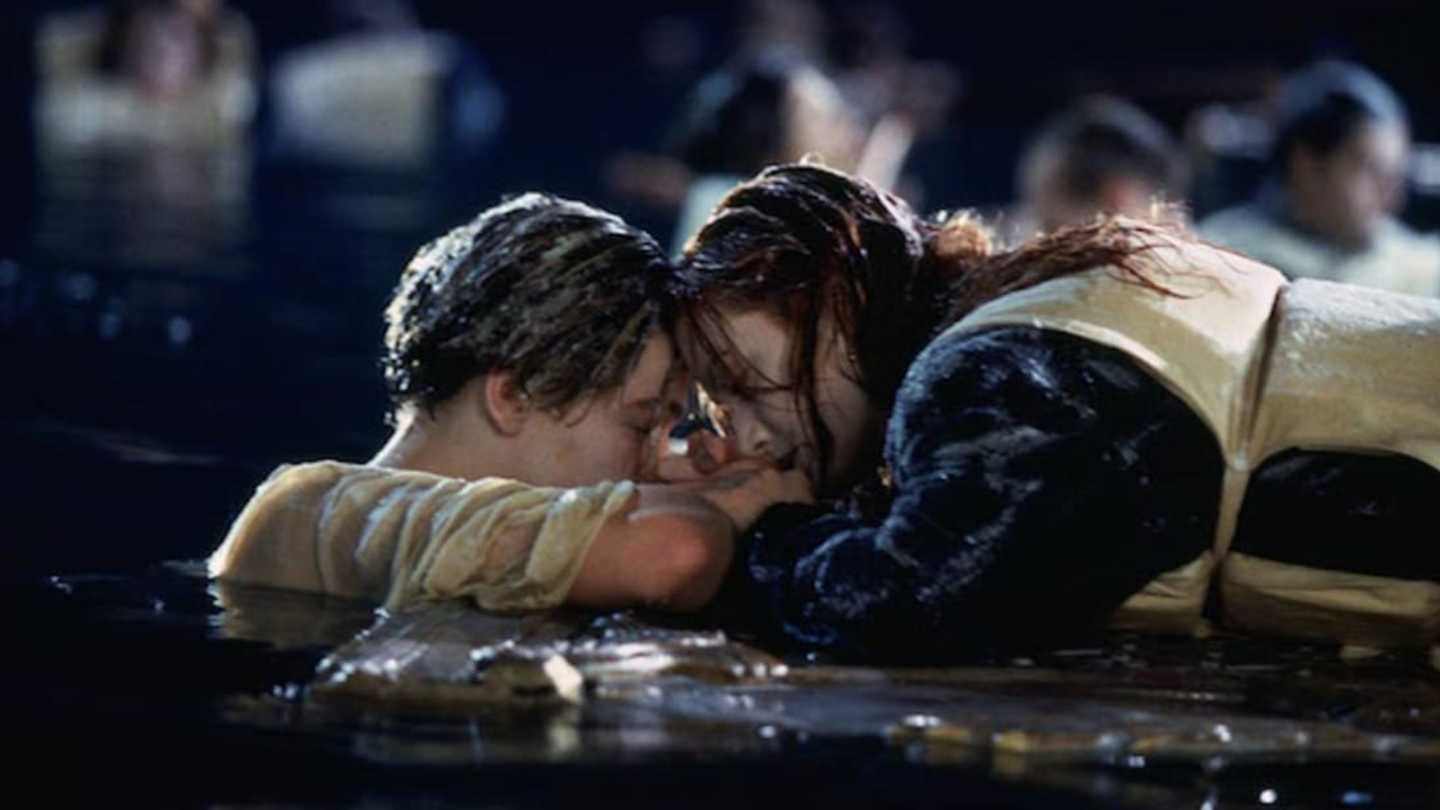
Few movies have sailed into pop culture with the force of Titanic. James Cameron’s 1997 romantic disaster epic is not just a film; it is a three-hour-and-fourteen-minute emotional workout, a history lesson, a visual-effects showcase, a love story, and, for many people, the reason a recorder flute can still cause flashbacks. More than 25 years after its release, Titanic remains one of the most talked-about movies ever made, partly because it sits at the rare intersection of real tragedy and Hollywood spectacle.
The story of Jack Dawson and Rose DeWitt Bukater may be fictional, but the world around them is rooted in the very real sinking of the RMS Titanic on April 15, 1912. Cameron built his blockbuster around historical details, actual ship design, real passengers, authentic wreck footage, and a scale of production that nearly needed its own lifeboat. The result became a box-office phenomenon, an awards juggernaut, and a cultural event that still floats comfortably in conversations about cinema history.
So grab your life jacket, keep an eye on the iceberg, and let’s dive into 10 unsinkable facts about Titanic that explain why this movie still refuses to disappear beneath the waves.
1. Titanic Was Inspired by a Real Maritime Disaster
The 1997 film uses fiction to guide viewers through one of the most famous disasters in modern history. The RMS Titanic was a British luxury ocean liner that struck an iceberg in the North Atlantic during its maiden voyage and sank in the early hours of April 15, 1912. More than 1,500 people died, making the tragedy one of the deadliest peacetime maritime disasters of its era.
At the time, Titanic was celebrated as a marvel of engineering and luxury. It had grand staircases, elegant dining rooms, lavish first-class cabins, and technological features that made it seem almost invincible. The ship included watertight compartments designed to keep it afloat even if part of the hull was damaged. Unfortunately, the iceberg opened damage across multiple compartments, overwhelming the design.
Cameron’s film works because it does not treat the disaster as background decoration. The sinking is the emotional and structural core of the movie. We first fall into the personal drama of Jack and Rose, then watch their story collide with a historical event that no amount of romance, money, or dramatic violin music can stop.
2. Jack and Rose Were Fictional, but Their World Was Real
One of the most common questions about Titanic is whether Jack and Rose were real people. The answer is no. Jack Dawson and Rose DeWitt Bukater were created for the film, giving audiences a personal way to experience the disaster. That creative choice was brilliant because history can feel enormous and distant until it has a face, a heartbeat, and, apparently, excellent sketching skills.
However, many people around Jack and Rose were based on real figures. Margaret Brown, played by Kathy Bates, was a real passenger later known as “The Unsinkable Molly Brown.” Thomas Andrews, the shipbuilder portrayed as thoughtful and devastated, was also real. J. Bruce Ismay, the chairman of the White Star Line, appears in the film as well. These historical characters help anchor the fictional romance inside a documented event.
This blend of fact and fiction is one reason the movie became so powerful. Jack and Rose give the story intimacy, while the real people and historical details give it weight. It is not a documentary, but it borrows enough from reality to make viewers feel the chill of the North Atlantic from their theater seats.
3. James Cameron Went to the Actual Titanic Wreck
Before making the film, James Cameron visited the real Titanic wreck site. The ship had been discovered in 1985 by a team led by oceanographer Robert Ballard and Woods Hole Oceanographic Institution, in partnership with French researchers. Cameron later used footage of the wreck in the movie’s modern-day framing scenes.
This matters because the film’s connection to the real wreck is not just symbolic. Cameron’s fascination with deep-sea exploration shaped the entire project. The opening scenes, with submersibles exploring the ocean floor, give viewers a haunting reminder that the Titanic is not merely a story from a dusty history book. It is still there, resting deep beneath the Atlantic.
The wreck footage also gives the movie a ghostly quality. We see the decayed remains of the ship before seeing it restored in cinematic memory. That contrast between ruin and grandeur is one of the film’s strongest emotional tricks. First, Cameron shows us what time and pressure have done. Then he rewinds the clock and lets the ship live again.
4. The Production Built a Nearly Full-Scale Ship Replica
When people say Titanic was a big movie, they are not exaggerating. Cameron’s production built a massive replica of the ship at Fox Baja Studios in Rosarito, Mexico. The set was designed to recreate the look and scale of the original liner, giving the film its sweeping realism.
This was not a small “just add water” situation. The production involved enormous sets, water tanks, detailed interiors, and complex mechanical systems. Some parts of the ship were built to tilt dramatically so the sinking scenes could feel physically terrifying. Props, costumes, architecture, and even background details were carefully designed to evoke 1912.
The result is a film that still looks impressive decades later. Modern viewers can spot some digital effects, of course, but much of Titanic works because the actors were interacting with real sets. When Rose runs through corridors, when passengers gather on deck, when water floods the ship, the physical environment sells the danger. CGI helped, but practical scale gave the movie its bones.
5. The Movie Was One of the Most Expensive Films Ever Made at the Time
Titanic cost roughly $200 million to produce, an eye-popping budget in the 1990s. At the time, that made it one of the most expensive movies ever made. Studio executives were understandably nervous. A historical romance with a tragic ending, a long runtime, huge production costs, and no superheroes? On paper, it looked less like a guaranteed hit and more like a financial iceberg.
But Cameron’s gamble paid off spectacularly. The film became a global box-office sensation, eventually earning more than $2.2 billion worldwide across its original release and later re-releases. It was the first film to cross the $1 billion mark globally and remained the highest-grossing movie of all time until Cameron beat himself with Avatar.
That success changed Hollywood’s understanding of event cinema. Titanic proved that audiences would show up repeatedly for a film driven by emotion, spectacle, and word of mouth. People did not just watch it; they returned with friends, family members, dates, and probably at least one person who insisted they “only came for the historical accuracy.” Sure, buddy.
6. Titanic Tied an Oscar Record
At the 70th Academy Awards, Titanic received 14 Oscar nominations and won 11, including Best Picture and Best Director for James Cameron. Those 11 wins tied the record previously held by Ben-Hur. It was the kind of awards-night dominance that makes other movies quietly sip their champagne and rethink their life choices.
The Oscar wins recognized the film’s wide technical and artistic achievement. It won for visual effects, cinematography, art direction, costume design, film editing, sound, sound effects editing, original dramatic score, original song, directing, and picture. That list shows why Titanic was more than a hit romance. It was a carefully engineered cinematic machine.
Its Academy Awards success also cemented the movie’s reputation as a landmark blockbuster. Many films make money. Fewer films make money and win major Oscars. Titanic did both, proving that popular entertainment and prestigious filmmaking do not always need to sit at separate tables in the first-class dining room.
7. “My Heart Will Go On” Became a Cultural Tidal Wave
No discussion of Titanic facts is complete without mentioning Céline Dion’s “My Heart Will Go On.” Written by James Horner and Will Jennings, the song became inseparable from the movie. For a while, it seemed impossible to enter a mall, wedding reception, radio station, or school talent show without hearing that flute intro float toward you like destiny in audio form.
The song won major awards, including the Academy Award for Best Original Song and GRAMMY recognition. It became one of Dion’s signature hits and one of the most famous movie songs in history. Even people who have never watched all of Titanic can usually identify the song within seconds.
Interestingly, Cameron was reportedly cautious about using a pop ballad in the movie. That instinct makes sense; the film already had plenty of emotional power. But once the song entered the world, it amplified the movie’s reach. “My Heart Will Go On” gave Titanic a second life outside theaters, turning its emotion into something audiences could replay, sing, parody, and dramatically hum while staring out rainy windows.
8. The Famous Drawing Was Not Done by Leonardo DiCaprio
One of the film’s most iconic scenes involves Jack sketching Rose wearing the Heart of the Ocean necklace. In movie magic, Jack Dawson is the artist. In real life, the hands doing the drawing belonged to James Cameron. Yes, the director was not content with writing, directing, diving to the wreck, managing a giant production, and building a cinematic ocean. He also had to be good at drawing. Some people really do arrive on Earth with extra software installed.
This detail has become one of the most repeated fun facts about Titanic. It also shows Cameron’s hands-on approach to filmmaking. He was deeply involved in the visual identity of the movie, from ship design to underwater imagery to small artistic touches that audiences would remember for decades.
The drawing scene works because it is quiet, intimate, and character-driven. It gives Jack and Rose a private moment before the film’s disaster machinery takes over. Knowing Cameron created the sketch adds another layer to the scene. It is not just a prop; it is a direct piece of the director’s imagination inside the story.
9. The Film Is Long, but Its Pacing Is Carefully Built
Titanic runs over three hours, yet millions of viewers sat through it more than once. That is no small achievement, especially in an age before smartphones trained everyone to panic if a video takes longer than 12 seconds to get to the point.
The movie’s structure is one reason it works. The first half builds the world of the ship and the relationship between Jack and Rose. We learn the class divisions, the social expectations, the ship’s beauty, and the tension beneath the polished surface. The second half turns into a survival thriller as the Titanic strikes the iceberg and slowly sinks.
Because the audience already understands the ship’s layout and characters, the disaster feels personal and spatially clear. We know where the grand staircase is. We know what the decks look like. We know which characters are trapped by pride, duty, love, panic, or bad decisions. By the time the water rises, the movie has trained us to care about the ship as both a place and a symbol.
10. Titanic Became Part of Film Preservation History
In 2017, Titanic was selected for the National Film Registry by the Library of Congress. Films chosen for the registry are recognized for cultural, historical, or aesthetic significance. That selection confirmed what audiences already knew: Titanic was not just a 1990s hit. It had become part of American film history.
The movie’s influence can be seen in later blockbusters that combine romance, disaster, visual effects, historical scale, and immersive world-building. It also helped make Leonardo DiCaprio and Kate Winslet global stars. Their performances gave the film its emotional center, and their chemistry remains a major reason people continue to revisit it.
For all its spectacle, Titanic endures because it understands something simple: audiences remember feelings. They remember Rose stepping onto the stern, Jack shouting into the wind, the musicians playing as the ship goes down, and the older Rose returning the necklace to the sea. The details are huge, but the emotions are human-sized.
Why Titanic Still Captures Audiences Today
The continued popularity of Titanic is not just nostalgia. The film offers a rare mix of romance, history, suspense, tragedy, and technical ambition. It gives viewers the glamour of a period drama, the tension of a disaster film, and the emotional punch of a love story. That combination is difficult to replicate.
It also benefits from dramatic irony. Everyone watching knows the ship will sink. That knowledge creates tension long before the iceberg appears. Every dinner, dance, argument, and stolen glance happens under the shadow of history. The audience is not asking whether disaster will arrive; it is asking who will be changed by it and who will survive it.
The film’s class commentary still resonates as well. First-class passengers move through luxury while third-class passengers face barriers both social and physical. Cameron uses the ship as a floating model of inequality. The ocean does not care about money, but human systems certainly do, and the film makes that painfully clear.
Experiences Related to 10 Unsinkable Facts About ‘Titanic’
Watching Titanic is an experience that tends to change depending on when you see it. For many viewers, the first viewing is all about Jack and Rose. The romance feels enormous, urgent, and beautifully doomed. You notice the stolen moments, the class conflict, the famous lines, and the heartbreak. You may also spend a suspicious amount of time debating whether there was room on the floating door. This debate has now lasted longer than some empires.
On a second viewing, the historical details often stand out more. The ship becomes a character. The elegance of the dining rooms, the busy boiler rooms, the crowded third-class spaces, and the cold open decks all create a layered portrait of life aboard the Titanic. Small moments become more painful because you know what is coming. A casual conversation near a lifeboat suddenly feels loaded. A musician tuning an instrument becomes a warning bell in disguise.
For people interested in filmmaking, Titanic is also a masterclass in scale. The practical sets, digital effects, costumes, lighting, music, editing, and sound design all work together to create immersion. It is easy to joke about the film’s melodrama, but the craft is serious. The sinking sequence remains effective because it combines physical danger with emotional stakes. Water is not just water in the movie; it is time running out.
The film can also inspire real curiosity about the RMS Titanic itself. After watching, many viewers search for passenger stories, wreck photos, ship diagrams, survivor accounts, and museum exhibits. That is one of the film’s most valuable cultural effects: it turns entertainment into a doorway for learning. A fictional necklace may hook the imagination, but the real history keeps people reading.
Another powerful experience is revisiting the movie as an adult. The romance may still work, but other themes become louder: social pressure, economic inequality, institutional arrogance, aging, memory, and survival guilt. Older Rose’s framing story becomes more meaningful because it is about what people carry after catastrophe. She is not simply remembering a lost love; she is reclaiming a version of herself that almost disappeared.
There is also a communal quality to Titanic. People quote it, parody it, sing the song, debate the ending, and pass it down to younger viewers. It has become the kind of movie that lives outside the screen. Even someone who has never watched it probably knows “I’m the king of the world!” or recognizes the bow pose. That level of cultural saturation is rare.
Ultimately, the experience of Titanic is both grand and intimate. It lets us stand on the deck of a legendary ship, but it also asks us to think about courage, love, memory, and the choices people make when comfort disappears. That is why the movie still floats in public imagination. The spectacle brings viewers aboard; the emotion keeps them there.
Conclusion
Titanic remains unsinkable not because it is flawless, but because it is unforgettable. It combines real history with fictional romance, massive production design with intimate character moments, and technical ambition with emotional simplicity. James Cameron’s epic turned a 1912 tragedy into a modern cinematic landmark, while still encouraging audiences to learn more about the real ship, its passengers, and its legacy.
From its record-tying Oscar success to its billion-dollar box office, from Céline Dion’s unforgettable theme song to the director’s own sketching hand, Titanic is packed with facts as fascinating as the film itself. Decades later, it still sparks debate, curiosity, tears, jokes, and repeat viewings. That is the true measure of a classic: it keeps sailing long after the credits roll.
Note: This web-ready article is written in original American English and based on verified historical, film-production, box-office, awards, and cultural information about Titanic.













