
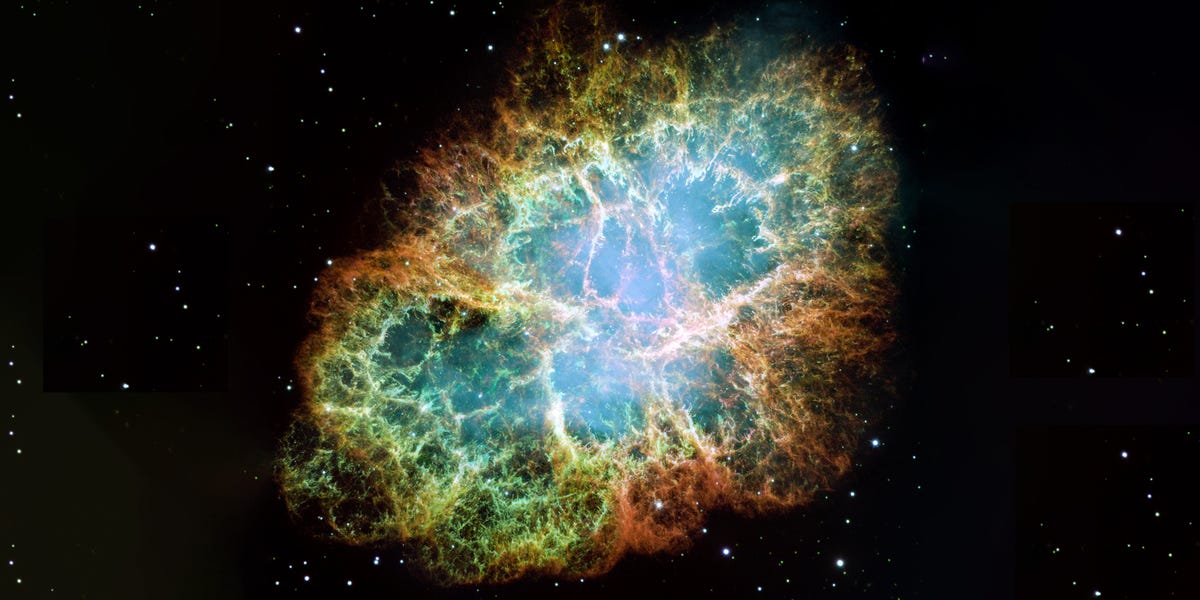
A supernova is the universe’s way of saying, “This star has officially left the building.” It is one of the most powerful explosions in nature, bright enough to outshine entire galaxies for a short time and energetic enough to scatter newly forged elements across space. That may sound like a dramatic cosmic fireworks show happening safely far away, but supernovas are more than pretty lights in a telescope. They help build planets, influence galaxies, create heavy elements, and, under rare circumstances, may even affect Earth’s atmosphere and climate.
The main keyword here is simple: what is a supernova? But the bigger question is even more fascinating: how could a supernova impact Earth’s climate? The answer involves cosmic rays, ozone chemistry, ultraviolet radiation, ancient radioactive iron found in seafloor sediments, and a healthy respect for the fact that space is not exactly “empty.” It is more like a very large neighborhood where the neighbors occasionally explode.
Fortunately, Earth is not sitting next to a star that is about to go supernova tomorrow. Our Sun is too small to explode as a supernova, and known nearby supernova candidates are not close enough to sterilize the planet. Still, scientists study supernovas because they reveal how stars die, how elements form, and how rare cosmic events may leave fingerprints on Earth’s atmosphere, biology, and climate history.
What Is a Supernova?
A supernova is a catastrophic stellar explosion that occurs when certain stars reach the end of their lives or when a white dwarf in a binary system undergoes runaway nuclear fusion. In plain English: a star either collapses under its own gravity or blows itself apart after stealing too much material from a companion star. Either way, the result is a spectacular release of energy, light, particles, and newly created elements.
Supernovas are not ordinary star “burps.” A nova is a much smaller outburst that can happen on the surface of a white dwarf without destroying it. A supernova, by contrast, is usually the final chapter. The star may leave behind a neutron star, a black hole, or, in some Type Ia cases, no compact remnant at all. It is less like a candle flickering and more like the candle, the table, and half the dining room deciding to become physics.
Why Supernovas Matter
Supernovas matter because they recycle the universe. Inside stars, nuclear fusion creates elements such as carbon, oxygen, silicon, and iron. During a supernova explosion, these materials are blasted into space, where they mix with gas and dust clouds that may later form new stars, planets, moons, and living things. The calcium in bones, the iron in blood, and the oxygen we breathe all belong to a long cosmic supply chain.
This is why astronomers often say we are made of stardust. It sounds poetic, but it is also scientifically accurate. Supernovas are part of the reason rocky planets can exist at all. Without ancient stellar explosions, Earth would lack many of the heavy elements needed for geology, oceans, chemistry, and life.
Main Types of Supernovas
Scientists classify supernovas by their light patterns and spectra, but for most readers, the two biggest categories are easier to remember: core-collapse supernovas and Type Ia supernovas.
Core-Collapse Supernovas
A core-collapse supernova happens when a massive star, usually at least about eight times the mass of the Sun, runs out of usable nuclear fuel. For most of its life, the star balances two forces: gravity pulling inward and energy from fusion pushing outward. When fusion can no longer support the core, gravity wins. The core collapses in a fraction of a second, and the outer layers rebound in a violent explosion.
The aftermath can be a neutron star, an incredibly dense object made mostly of neutrons, or a black hole if the original star was massive enough. Famous examples related to this category include the Crab Nebula, created by a supernova observed in 1054, and Supernova 1987A, the closest supernova seen with the naked eye in modern times.
Type Ia Supernovas
A Type Ia supernova usually involves a white dwarf, the dense leftover core of a dead star, in a binary star system. If the white dwarf gains enough material from a companion star or merges with another white dwarf, it can trigger runaway nuclear fusion. The explosion can destroy the white dwarf completely.
Type Ia supernovas are especially important in cosmology because they have predictable brightness patterns. Astronomers use them as “standard candles” to measure cosmic distances and study the expansion of the universe. In other words, one star’s very bad day can become an astronomer’s measuring tape.
How Bright and Powerful Is a Supernova?
A supernova can briefly shine as brightly as billions of stars. Its visible light may fade after weeks or months, but its expanding debris can remain visible for thousands of years as a supernova remnant. These remnants are not just pretty clouds. They are laboratories where particles are accelerated, shock waves move through interstellar gas, and elements are mixed into the galaxy.
Supernova remnants can also produce cosmic rays, which are high-energy particles traveling through space at nearly the speed of light. These particles are central to the question of whether supernovas can affect Earth’s climate.
Can a Supernova Impact Earth?
Yes, a supernova can impact Earth, but distance is everything. A supernova across the galaxy may be a beautiful astronomical event with little effect on us. A supernova within a few dozen light-years could be much more serious. Scientists do not believe a dangerous supernova is imminent, but evidence suggests that nearby supernovas have occurred within the last several million years and may have left traces on Earth.
Researchers have found deposits of iron-60, a radioactive isotope associated with supernova debris, in deep-ocean sediments, crust samples, lunar material, and other records. Iron-60 does not occur naturally on Earth in large amounts, and its half-life is short enough that ancient deposits point toward relatively recent cosmic sources. These findings suggest that one or more nearby supernovas showered Earth with dust a few million years ago.
The “Danger Zone” Depends on Distance
There is no single magic line where supernovas suddenly become dangerous, but many studies focus on events within roughly 30 to 50 light-years as potentially serious for Earth’s atmosphere and biosphere. A star exploding at that distance could increase cosmic-ray exposure, alter atmospheric chemistry, and reduce ozone protection. More distant events may still leave detectable isotopic traces without causing global catastrophe.
To be clear, a nearby supernova would not necessarily roast Earth like a marshmallow. The more realistic concern is atmospheric chemistry: cosmic rays can trigger reactions that affect nitrogen compounds, ozone, cloud processes, radiation levels, and biological exposure to ultraviolet light.
How Supernovas Could Impact Earth’s Climate
The relationship between supernovas and Earth’s climate is complex. A supernova does not act like a giant space heater pointed at our planet. Instead, its possible climate effects come mainly from high-energy radiation and cosmic rays interacting with the atmosphere.
1. Cosmic Rays Can Change Atmospheric Chemistry
Supernova remnants are known sources of cosmic rays. When these energetic particles reach Earth, they collide with molecules in the upper atmosphere and create cascades of secondary particles. These interactions can produce nitrogen oxides, which may contribute to ozone depletion.
The ozone layer is crucial because it absorbs much of the Sun’s harmful ultraviolet-B radiation. If ozone is depleted, more UV-B reaches the surface. That can affect human health, plant growth, plankton productivity, crop yields, and ecosystems. In climate terms, changes to ozone and atmospheric chemistry can influence temperature patterns and biological systems, even if they do not behave like greenhouse-gas warming.
2. Ozone Depletion Could Increase UV Radiation
Ozone depletion is one of the most discussed potential effects of a nearby supernova. Increased cosmic rays could alter the chemistry of the stratosphere, reducing ozone and allowing more ultraviolet radiation to reach Earth’s surface. This would not be the same as ordinary climate change caused by carbon dioxide, but it could stress ecosystems in ways that ripple through food webs.
Marine plankton are especially important because they form the base of many ocean food chains and help regulate carbon cycling. If UV radiation increased significantly, plankton and other photosynthetic organisms could be affected. Plants on land might also face more DNA damage, reduced growth, or lower productivity depending on exposure levels and recovery conditions.
3. Increased Atmospheric Ionization May Affect Clouds
Some scientists investigate whether cosmic rays can influence cloud formation by increasing atmospheric ionization. The idea is that charged particles may help tiny aerosols grow into cloud condensation nuclei. If cloud cover changed, Earth’s reflectivity, rainfall patterns, or regional temperatures could shift.
However, this part of the supernova-climate discussion is still uncertain. Cloud systems are famously complicated, and climate is influenced by many stronger and better-measured drivers, including greenhouse gases, volcanic eruptions, solar variability, ocean circulation, and land-use changes. Cosmic rays may play a role in some atmospheric processes, but they are not a simple explanation for modern global warming.
4. Radiation at Ground Level Could Increase
A close supernova could increase the number of muons and other secondary particles reaching the ground. Muons can penetrate deeply, even through water and rock. Some research has explored whether elevated muon radiation from nearby supernovas could affect mutation rates or biological stress over long periods.
This is not the same as instant movie-style extinction. A more plausible scenario is a prolonged environmental pressure lasting hundreds to thousands of years, depending on the supernova distance, magnetic field conditions, and cosmic-ray exposure. Nature rarely prefers Hollywood timing. It likes slow, complicated trouble with footnotes.
Did Supernovas Affect Earth in the Past?
Evidence from iron-60 suggests that Earth was exposed to material from nearby supernovas within the last few million years. Some scientists have explored whether these events coincided with changes in climate, ocean ecosystems, or extinction patterns. One idea is that increased cosmic rays may have contributed to atmospheric changes during parts of the Pliocene and Pleistocene epochs.
Still, this is an active area of research, not a closed case. Earth’s climate history is shaped by many overlapping forces: orbital cycles, ice-sheet growth, greenhouse gas concentrations, volcanic activity, ocean circulation, tectonics, and biological feedbacks. Supernovas may have contributed to certain atmospheric or ecological changes, but they are unlikely to be the only actor on stage.
Iron-60: The Cosmic Breadcrumb
Iron-60 is one of the strongest clues linking Earth to nearby supernova activity. Because this isotope is produced in stellar explosions and decays over time, finding it in geological layers can help scientists estimate when supernova debris reached Earth. These deposits are like cosmic breadcrumbs sprinkled across the ocean floor.
Researchers have identified iron-60 signals around 2 to 3 million years ago and possibly older intervals as well. That timing overlaps with important environmental changes, including cooling trends and shifts in marine ecosystems. But overlap does not automatically prove cause. It gives scientists a reason to keep investigating.
Could a Supernova Cause an Ice Age?
A supernova could theoretically influence climate-related processes, but saying “a supernova caused an ice age” is too simple. Climate does not usually respond to one dramatic trigger like a cartoon character slipping on a banana peel. Ice ages are strongly tied to Milankovitch cycles, which are changes in Earth’s orbit, tilt, and wobble that affect solar energy distribution across the planet.
That said, a nearby supernova could potentially add stress to the atmosphere and biosphere during a period already vulnerable to climate shifts. It might influence ozone, radiation exposure, cloud chemistry, or ecological productivity. In that sense, a supernova could be a contributing factor rather than the lead villain.
Are We in Danger From a Supernova Today?
At present, there is no known supernova candidate close enough to pose a major threat to Earth. Betelgeuse, the famous red supergiant in Orion, may explode someday, but it is hundreds of light-years away. If it becomes a supernova, it could be spectacular in the night sky, but it is not expected to destroy Earth’s atmosphere.
Our Sun will not become a supernova. It lacks the mass required for core collapse and is not a white dwarf stealing material from a nearby companion. Billions of years from now, the Sun will expand into a red giant and eventually become a white dwarf. That is a serious future problem for Earth, but not a supernova problem. Put another way: the Sun is dramatic, but not that dramatic.
Supernovas, Climate Change, and Misunderstandings
It is important not to confuse supernova-related climate effects with modern human-caused climate change. Today’s global warming is primarily driven by rising greenhouse gas concentrations from fossil fuel use, land-use change, and industrial activity. A supernova is not responsible for the warming trend measured over the last century.
Supernovas belong to the category of rare natural events that may influence Earth over geological timescales. Human-caused climate change is happening now, rapidly, and with a clear physical mechanism: greenhouse gases trap more heat in the lower atmosphere. Cosmic rays and supernovas are fascinating, but they are not a free pass for carbon dioxide.
Why Scientists Study Supernovas and Earth’s Climate Together
Studying supernovas and Earth’s climate together helps scientists understand planetary vulnerability. Earth is protected by its magnetic field, atmosphere, ozone layer, and distance from dangerous astrophysical events. But our planet is still part of a galaxy where stars are born, die, explode, and seed space with radiation and matter.
This research also helps astrobiology, the study of life in the universe. If supernovas can alter atmospheres, affect radiation levels, or influence habitability, then they matter for planets beyond Earth too. A world orbiting in a habitable zone may still face danger if it sits near massive stars that frequently explode.
Real-World Experiences and Reflections: Understanding Supernovas From Earth
Learning about supernovas often begins with a simple backyard experience: looking up. You may not see a supernova tonight, but you are seeing the same sky where generations of observers noticed “new stars” that appeared suddenly and faded slowly. Before modern telescopes, people recorded these events as mysterious lights. Today, we understand that some of those lights were stars dying in astonishing explosions.
One of the most powerful ways to experience this topic is to visit a planetarium or science museum. A good supernova show does something textbooks cannot always do: it gives scale. You see a massive star swell, collapse, explode, and spread elements into space. Suddenly, the phrase “we are made of stardust” stops sounding like a greeting card and starts feeling like a scientific biography. The iron in a person’s blood and the calcium in a child’s growing bones are not random ingredients. They are leftovers from ancient stars.
Another useful experience is watching the constellation Orion during winter in the Northern Hemisphere. Betelgeuse, the reddish star marking Orion’s shoulder, is a famous red supergiant. It is often described as a future supernova candidate. Seeing it with your own eyes makes the subject feel less abstract. That small red point is a star so large and evolved that astronomers study it to understand late-stage stellar life. It is not dangerous to Earth, but it is a reminder that the galaxy is alive with change.
For students, writers, and curious readers, supernovas also offer a great mental exercise in cause and effect. A star explodes many light-years away. Radiation travels through space. Cosmic rays interact with the atmosphere. Ozone chemistry may shift. More ultraviolet radiation might reach the surface. Tiny plankton in the ocean could feel the impact. That chain is enormous, and it teaches humility. Earth’s climate is not a light switch. It is a network of physics, chemistry, biology, and time.
A practical way to connect the topic to everyday life is to compare the ozone layer with sunscreen. Sunscreen does not stop the Sun from shining; it filters harmful radiation. The ozone layer works similarly on a planetary scale. If a nearby supernova reduced ozone, Earth would not become instantly unlivable, but the “sunscreen” would thin. More UV-B could reach organisms that did not ask to participate in an astrophysics experiment.
Writers covering this subject should avoid two common mistakes. The first is exaggeration: supernovas are dramatic enough without claiming one will destroy Earth next Tuesday. The second is understatement: rare does not mean irrelevant. Geological records show that cosmic events can leave measurable traces on our planet. A balanced article should make readers feel wonder, not panic.
The best personal takeaway is that supernovas connect the very large with the very intimate. They shape galaxies, but they also help explain the atoms inside our bodies. They may affect planetary atmospheres, but they also remind us that Earth’s protective systems are precious. A supernova is not just an explosion far away. It is part of the long story of matter, climate, life, and survival in a universe that is beautiful, creative, and occasionally very loud.
Conclusion
A supernova is one of the universe’s most powerful events: the explosive death of a star or the destruction of a white dwarf in a runaway thermonuclear blast. Supernovas create and scatter heavy elements, shape galaxies, produce cosmic rays, and help scientists measure the universe. They are also relevant to Earth because nearby supernovas may affect atmospheric chemistry, ozone levels, radiation exposure, and possibly climate-related processes over geological timescales.
The good news is that no known nearby star threatens Earth with a dangerous supernova. The better news is that studying supernovas helps us understand both cosmic history and planetary protection. These explosions are reminders that Earth is not isolated from space. We live inside a galaxy, under an atmosphere, protected by a fragile blue shield that deserves attention whether the danger comes from cosmic rays, ozone depletion, or our own greenhouse gas emissions.
So, what is a supernova? It is a star’s final roar, a cosmic recycling engine, a creator of elements, a possible climate influence, and one of the most spectacular examples of nature refusing to leave quietly.














