
English is a magnificent junk drawer. It has Shakespearean thunderbolts, internet slang, borrowed words from half the planet, and at least four ways to describe someone who talks too much before coffee. Yet somehow, there are still tiny daily experiences that slip through the cracks. What do you call the awkward sidewalk shuffle when two people try to pass each other and both dodge the same way? What about that sad little lip tremble before a full emotional weather event? Or the mysterious gray dust you scratch off an instant lottery ticket?
That is where these rejected dictionary words come in. The title says “rejected from the Oxford English Dictionary,” but let’s be precise before the lexicography police arrive wearing tweed and carrying citation slips. The Oxford English Dictionary, like other serious dictionaries, does not simply accept a word because it is funny, useful, or emotionally correct. A word needs evidence: real usage by different writers, in different places, over enough time to prove it is not just a linguistic firework that sparkled once and vanished.
So the words below are best understood as playful outsiders: clever coined words, almost-words, and underdog expressions that describe real situations but have not earned full dictionary citizenship in the way established words do. Some are silly. Some are suspiciously useful. A few are so accurate they make you wonder whether the dictionary should loosen its tie and live a little.
Why Do Some Words Get Rejected by Dictionaries?
Dictionaries are not word prisons, and lexicographers are not sitting in a dark room cackling, “No, furgle, you shall never pass.” Modern dictionaries are descriptive, meaning they record how people actually use language. They look for patterns, not vibes. A word has a better chance when it appears in books, newspapers, websites, scripts, magazines, and other written sources. It also helps if more than one person uses it naturally, not just the proud inventor posting it once after midnight.
That matters because English is constantly generating novelty. A clever word may describe a universal experience, but if nobody uses it outside a meme, it stays in the waiting room. Meanwhile, words like “selfie,” “podcast,” and “clickbait” became impossible to ignore because people used them everywhere. In dictionary terms, popularity is not everything, but evidence is the bouncer at the door.
28 Rejected Words You Might Want to Use Anyway
Here are 28 unofficial, rejected, or not-quite-mainstream words worth adopting for daily life. Use them responsibly. Or irresponsibly. Language has survived worse.
1. Polkadodge
Meaning: The awkward dance that happens when two people try to pass each other but move in the same direction.
Example: “We polkadodged in the grocery aisle for six seconds, then both apologized like we had violated international law.”
This word deserves a medal because it names a social ritual everyone knows. It has rhythm, comedy, and instant meaning. It sounds like a dance taught at a very confused wedding reception.
2. Wibble
Meaning: The trembling of the lower lip just before crying.
Example: “The puppy commercial started, and by the second piano note, I was in full wibble mode.”
“Wibble” is soft, wobbly, and emotionally damp. It is exactly what it describes. This is called sound symbolism, and it is why “crunch” sounds crunchy and “glitter” sounds like it owns tiny shoes.
3. Smushables
Meaning: Items that must be packed at the top of a bag to avoid being squashed.
Example: “Put the croissants with the smushables, unless you want breakfast pancakes with a French accent.”
Every traveler needs this word. It includes pastries, sunglasses, chips, birthday cards, and the suspiciously fragile souvenir mug you bought at an airport because panic shopping is a lifestyle.
4. Nonversation
Meaning: A worthless conversation in which nothing is explained or meaningfully discussed.
Example: “That meeting was a 40-minute nonversation with a slide deck.”
Corporate life may have invented this word before anyone wrote it down. A nonversation is not silence; silence is honest. A nonversation makes noise while gently avoiding information.
5. Whinese
Meaning: The language spoken by children on lengthy trips.
Example: “We were only twelve minutes into the drive when the back seat switched from English to Whinese.”
Parents know this dialect well. It includes phrases such as “Are we there yet?” “I’m hungry,” and “He breathed near my elbow.” Linguistically rich, emotionally exhausting.
6. Locavor
Meaning: A person who tries to eat only locally grown or produced food.
Example: “She became a locavor after realizing her salad had more frequent-flyer miles than she did.”
The more common form is “locavore,” which is recognized in many dictionaries. “Locavor” looks like its scrappy cousin: shorter, leaner, and possibly shopping at a farmers market right now.
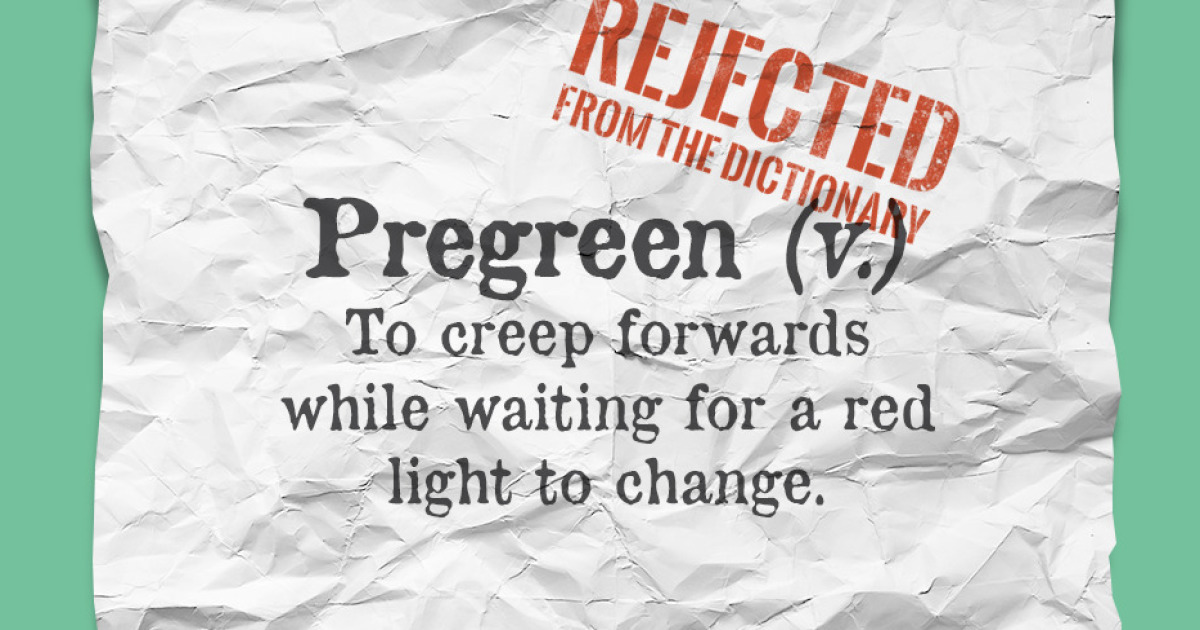
7. Pregreen
Meaning: To creep forward while waiting for a red light to change.
Example: “The driver pregreeened so aggressively that the crosswalk looked nervous.”
This word captures the optimism of people who believe traffic lights respond to intimidation. They do not. But the slow roll continues, one impatient tire rotation at a time.
8. Optotoxical
Meaning: A look that could kill, usually from a parent or spouse.
Example: “When I said I forgot the anniversary dinner reservation, I received an optotoxical stare and began updating my will.”
It blends “opto,” relating to sight, with “toxic.” Fancy? Yes. Useful? Absolutely. It is the academic version of “the look.”
9. Wurfing
Meaning: Surfing the internet while at work.
Example: “He said he was researching market trends, but the browser history revealed advanced wurfing.”
This word may be old-fashioned now that remote work has turned everyone’s home into a snack-powered office. Still, the concept lives on, especially during spreadsheet season.
10. Sprummer
Meaning: The confusing period when spring and summer cannot decide who is in charge.
Example: “Yesterday required sunscreen and a hoodie. Classic sprummer.”
Sprummer is the meteorological shrug between “flowers are blooming” and “why is my steering wheel lava?” It is also when weather apps develop commitment issues.
11. Quackmire
Meaning: The muddy edges of a duck pond.
Example: “The toddler discovered the quackmire and returned looking like a nature documentary.”
This is one of those words that feels unnecessary until you visit a park after rain. Then suddenly, it is not only necessary; it is your shoe’s biography.
12. Furgle
Meaning: To feel in a pocket or bag for a small object, such as a coin or key.
Example: “I furgled for my keys while standing in front of my door like a raccoon with responsibilities.”
“Search” is too formal. “Dig around” is too plain. “Furgle” has the exact energy of blind panic inside a backpack full of receipts.
13. Dunandunate
Meaning: To overuse a word or phrase that has recently entered your vocabulary.
Example: “After learning ‘existential,’ he dunandunated it into every conversation, including lunch orders.”
We all do this. A shiny new word arrives, and suddenly it must appear everywhere like a toddler showing off new shoes.
14. Fumb
Meaning: Your large toe.
Example: “I hit my fumb on the coffee table and briefly saw the history of the universe.”
“Big toe” is clear, but “fumb” is funnier. It also sounds like the noise you make after injuring it, which is excellent design.
15. Espacular
Meaning: Something especially spectacular.
Example: “The sunset was espacular, and my camera still made it look like soup.”
English already has “spectacular,” but sometimes regular spectacular is not enough. Sometimes you need a word wearing sunglasses indoors.
16. Percuperate
Meaning: To prepare for the possibility of being ill.
Example: “Before flu season, she percuperated with soup, tissues, and three shows queued for emergency couch survival.”
This is the opposite of recuperate. It is the art of getting ready to recover before you actually need to recover. Very modern, very anxious, very relatable.
17. Asphinxiation
Meaning: Being sick to death of unanswerable puzzles or riddles.
Example: “After the third ‘What has keys but no locks?’ riddle, I suffered severe asphinxiation.”
The spelling playfully nods toward the Sphinx, famous for riddles. It is dramatic, ridiculous, and perfect for puzzle fatigue.
18. Peppier
Meaning: A waiter whose sole job is to offer diners ground pepper, usually from a large pepper mill.
Example: “The peppier approached like a sommelier of tiny spicy gravel.”
Restaurants have many specialized roles. This one just happens to arrive carrying a wooden instrument that looks like a table leg with ambition.
19. Spatulate
Meaning: To remove cake mixture from the side of a bowl with a spatula.
Example: “Please spatulate thoroughly; that last stripe of batter belongs in the cake, not in the dishwasher.”
Bakers deserve precise verbs. If “whisk,” “fold,” and “knead” get to exist, then “spatulate” should at least be allowed to pull up a chair.
20. Blogish
Meaning: A style of English using many abbreviations and initialisms, especially common in blogs or online writing.
Example: “The comment section was written in such dense Blogish that I needed a decoder ring and emotional support.”
Today, Blogish has evolved into social media shorthand, group-chat grammar, and acronyms that multiply faster than houseplants.
21. Scrax
Meaning: The waxy coating scratched off an instant lottery ticket.
Example: “The table was covered in scrax, false hope, and one extremely unlucky coin.”
This word fills a real gap. That dusty residue has haunted convenience store counters for decades without a name. Justice for scrax.
22. Dringle
Meaning: The watermark left on wood by a glass of liquid.
Example: “The coffee table collected dringles like a museum of bad coaster decisions.”
“Water ring” works, but “dringle” sounds properly accusatory. It makes the stain feel like it committed a small household crime.
23. Lexpionage
Meaning: The sleuthing of words and phrases.
Example: “I fell into lexpionage after wondering why ‘deadline’ sounds so dramatic.”
This is a superb word for etymology lovers, copy editors, trivia fans, and people who start with one innocent search and wake up knowing the history of medieval farming terms.
24. Parrotise
Meaning: A haven for exotic birds, especially green ones.
Example: “The rescue center became a parrotise of feathers, squawks, and judgmental eye contact.”
It is a pun on paradise, and yes, it is shameless. But language loves puns. Half of English is borrowed, blended, or wearing a fake mustache.
25. Sprog
Meaning: To go faster than a jog but slower than a sprint.
Example: “I did not run to catch the bus; I sprogged with dignity and mild wheezing.”
“Sprog” already has slang meanings in some varieties of English, but this proposed verb is useful. It describes that awkward athletic middle zone where you are moving quickly but still pretending you are not desperate.
26. Glocalization
Meaning: Running a business according to both local and global considerations.
Example: “The chain practiced glocalization by keeping its global brand while adapting menus to local tastes.”
This one is less silly and more business-school serious. In fact, “glocalization” is already widely used in marketing, economics, and international business discussions. It is a reminder that some “rejected” words are not useless; they may simply live in specialized neighborhoods.
27. Oninate
Meaning: To overwhelm someone with post-dining breath.
Example: “After the garlic noodles, he accidentally oninated the entire elevator.”
A brutal word, but a necessary one. It has the punch of “onion” plus the menace of “dominate.” Breath mints were invented for this exact paragraph.
28. Accordionated
Meaning: Being able to drive and refold a road map at the same time.
Example: “Before GPS, every road trip required one accordionated adult and one person yelling, ‘You missed the exit.’”
This word is charmingly retro. Younger readers may know maps as rectangle things inside phones. Older travelers remember paper maps as origami tests with state highways printed on them.
What These Rejected Words Teach Us About English
The funniest thing about these rejected words is that many of them work instantly. You do not need a long explanation for “polkadodge” or “dringle.” They click because they are built from familiar sounds, familiar roots, or familiar situations. That is one reason English keeps expanding: speakers love efficiency, humor, and the tiny thrill of naming something everyone has experienced but nobody has properly labeled.
These words also show why dictionary acceptance is not the same as usefulness. A word can be useful in conversation long before it becomes official. Families invent words. Friend groups invent words. Workplaces invent words, though many should probably apologize. A private word becomes public only when enough people understand it, repeat it, and pass it along without needing the inventor in the room.
That is the real test. If you say, “I just polkadodged with my neighbor,” can people guess the meaning from context? Probably. If you say, “The table has a dringle,” will they understand after one glance? Almost certainly. These words have a fighting chance because they attach themselves to visible, common moments. The weaker ones are harder to spread because they are too narrow, too clunky, or too dependent on the joke.
How to Use Rejected Dictionary Words Without Sounding Like a Walking Thesaurus
The trick is not to dump all 28 words into one conversation unless you want your friends to stage a vocabulary intervention. Start with the most natural ones. “Polkadodge,” “smushables,” “furgle,” “sprummer,” and “dringle” are easy because they describe everyday experiences. They sound playful without requiring a footnote.
Use them in casual writing, captions, newsletters, blog posts, classroom examples, or social media. If the context explains the word, readers will enjoy the discovery. For example, “Packing tip: keep the smushables on top” is clear even to someone seeing the word for the first time. “I furgled through my backpack for my earbuds” is also easy because the action is familiar.
For SEO content, these words can add personality, but they should not replace common search terms. Nobody is searching “how to remove dringles from wood” yet, so an article should still include “water rings,” “water stains,” and “wood table marks.” Think of rejected words as seasoning, not the whole soup. Too much and your article becomes Whinese for adults.
Experience Section: Living With Rejected Words in Real Life
After spending time with these rejected dictionary words, it becomes obvious that English is not lacking vocabulary; it is lacking labels for the wonderfully annoying details of ordinary life. The first time I used “polkadodge” in a sentence, it felt less like inventing a word and more like finally finding the receipt for a transaction everyone has made. Two people approach. Both step left. Both step right. Both laugh awkwardly. Society survives. Why should such a common ritual wander nameless through history?
The same goes for “furgle.” Anyone who has hunted for keys in a bag knows that “search” is too calm. Searching is what detectives do with gloves and flashlights. Furgling is what happens when your hand is trapped in a tote bag, touching gum wrappers, old receipts, a pen cap, and something that might once have been a mint. The word has the frantic texture of the action. You can almost hear the coins and panic.
“Smushables” may be the most practical of the group. Every trip begins with a suitcase and a false belief that everything will fit. Then come the smushables: cookies, chips, soft fruit, makeup compacts, paper souvenirs, sunglasses, and anything described by the seller as “delicate.” Once you have the word, packing becomes easier. You can say, “Those are smushables,” and suddenly everyone understands that the muffins should not be buried under hiking boots.
Some rejected words are useful because they reduce emotional labor. “Nonversation” is a perfect example. Instead of explaining that a meeting had words, slides, gestures, and absolutely no conclusion, you can simply say, “It was a nonversation.” The word does the work. It saves time, which is more than the meeting did.
Other words are useful because they make irritation funny. “Pregreen” turns impatient driving into a tiny comedy. “Whinese” lets parents describe back-seat complaining without delivering a full field report. “Dringle” makes a water ring sound less like damage and more like a mischievous creature that visited your coffee table. Language can soften daily frustration by turning it into a shared joke.
That may be the real value of rejected words. Even when they never become official, they prove that language belongs to the people using it. Dictionaries record the winners, but everyday speakers run the tournament. A word does not need a hardcover crown to be useful at dinner, in a group chat, or during a road trip when someone is accordionated with an old map and everyone else is pretending not to panic.
Of course, not every coined word deserves eternal life. Some are too niche. Some sound like startup names. Some are funny once and then immediately tired. But the best rejected words make you feel as if English has quietly gained a new drawer. You may not open it every day, but when you need it, there it is: a place for wibbles, quackmires, smushables, and the scrax of unlucky lottery dreams.
Conclusion
These 28 rejected words may not all belong in the Oxford English Dictionary, but they belong somewhere: in conversations, captions, jokes, travel stories, parenting diaries, food blogs, and the secret vocabulary of people who enjoy naming life’s tiny disasters. The dictionary may demand evidence, endurance, and widespread use. Fair enough. But language also needs play. Without play, English would be efficient, respectable, and about as exciting as a beige spreadsheet.
So use a few. Teach them to a friend. Write them in a caption. Call your next pointless meeting a nonversation. Protect your smushables. Avoid oninating people after garlic bread. And the next time you and a stranger perform the sidewalk shuffle, smile proudly. You did not embarrass yourself. You polkadodged.
Note: This article discusses playful coined words popularly described as rejected dictionary words. Dictionary inclusion depends on sustained, widespread, documented usage, so these terms should be treated as informal, humorous, or emerging vocabulary rather than official Oxford English Dictionary entries.










