
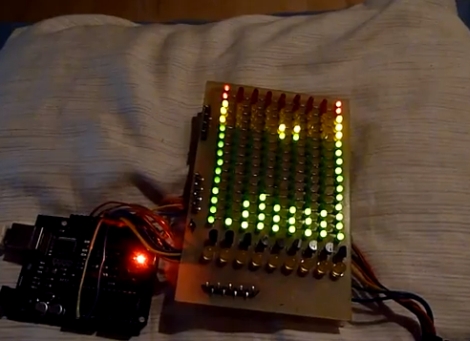
Some hardware projects are impressive because they solve a serious problem. Others are impressive because they solve absolutely no urgent problem at all, yet somehow make life better anyway. Turning a MIDI sequencer display into a Tetris clone belongs firmly in the second category. It is gloriously unnecessary, wonderfully nerdy, and exactly the kind of idea that makes maker culture so much fun.
At first glance, a MIDI sequencer and a falling-block puzzle game seem like distant cousins who only meet at awkward family reunions. One is built for timing, rhythm, note data, and performance control. The other is built for panic, geometry, and the ancient human tradition of saying, “I can clear one more line before bed,” and then accidentally greeting the sunrise. But under the hood, they share a surprising amount of DNA: timed events, visual feedback, tight input handling, and a display that only has to communicate the essentials.
That is what makes this hack so satisfying. It is not just a random game stuffed onto random electronics. It is a clever case of hardware reuse. A display originally meant to show sequencer information becomes a game board. Control logic designed for musical interaction becomes a game loop. A machine meant to keep beats starts dropping blocks instead. Frankly, that is the kind of career pivot most office workers can only dream about.
Why This Hack Is So Memorable
The original appeal of this project comes from its honesty. It does not pretend the sequencer was secretly meant to be a game console all along. Instead, it embraces the fact that embedded systems often contain hidden potential. If a display can light pixels in a grid-like way, and if a microcontroller can refresh that display fast enough, then a surprising number of classic games suddenly become possible.
Tetris is especially perfect for that kind of transformation. The rules are simple, the shapes are iconic, and the game does not need photorealistic graphics, surround sound, or a cinematic backstory. It needs a board, a few shapes, collision detection, and responsive controls. That is it. Tetris has survived for decades because its core design is brutally efficient. It uses seven basic shapes made from four squares each, and those pieces are readable even on tiny, low-resolution displays. In other words, it was practically born for hardware hacks.
That matters when you are working with a MIDI sequencer display. Music hardware screens are usually designed for function first. They show steps, levels, modes, or patterns. They are not trying to compete with a gaming monitor. But when a builder repurposes one for Tetris, the limitations become part of the charm. The display does not need to be fancy. It just needs to be clear. And Tetris, bless its blocky little heart, is nothing if not clear.
The Real Hardware Story Behind The Project
The headline sounds like a joke, but the project came from a real lineage of DIY music hardware. The original maker setup was an Arduino-based MIDI sequencer, part of a broader do-it-yourself approach to electronic music tools. In the related sequencer builds, the hardware included hands-on controls, touch input, and a screen-oriented interface meant to make sequencing more intuitive. That design philosophy matters because it explains why the display could be reused so effectively. The machine was already modular enough to let parts be repurposed instead of locked into one narrow job forever.
That modularity is the secret sauce. A rigid design says, “This part only does one thing.” A playful design says, “This part currently does one thing.” The second mindset is how you end up turning a drum-level display into a game board. It is also how great prototypes evolve. A builder learns the display system, the refresh cycle, the inputs, and the timing constraints while making one tool, then reuses all that knowledge to create something weird and delightful.
And yes, there is a deeper lesson here for anyone building synths, controllers, or custom audio devices: if your display subsystem is cleanly separated from your application logic, you are not just writing better code. You are opening the door to experiments later. Today it is a sequencer. Tomorrow it is Tetris. The day after that, who knows, maybe Pong with velocity-sensitive menus. Never underestimate what boredom plus solder can accomplish.
How A MIDI Sequencer Display Becomes A Game Screen
Step 1: Treat The Display Like A Pixel Map
A sequencer display usually shows status in patterns: lit steps, levels, movement, or active positions. That means the hardware is already good at representing state visually. To turn it into Tetris, the builder simply changes what the lit segments mean. Instead of representing beat positions or drum intensity, the same illuminated elements now represent the game field, the falling piece, and the settled blocks at the bottom.
That sounds simple, but it is the key conceptual leap. In a sequencer, the display answers questions like “Which step is active?” or “What is this channel doing?” In Tetris, the display answers different questions: “Where is the piece?” “What spaces are occupied?” “Did that line just disappear?” The hardware does not care what the lights symbolize. It only cares that the software keeps feeding it the next frame.
Step 2: Replace Music Timing With Game Timing
MIDI sequencers are built around timing. They trigger actions in a repeatable pattern, often with strict rhythmic precision. Tetris also lives and dies by timing, just in a different outfit. Instead of advancing steps in a musical phrase, the software advances a falling piece over time. Instead of quantizing note events, it checks for collision boundaries, rotation states, and line clears.
That is why the hack feels so natural. A sequencer already has a clock-driven mentality. A game loop also depends on a clock. The builder is not jumping from one universe into another; they are mostly swapping one timing model for another. The beat grid becomes a playfield. Scheduled events become movement ticks. Musical urgency becomes arcade urgency. Same skeleton, different dance.
Step 3: Map Inputs To Fast Actions
No Tetris clone survives bad controls. You can get away with a tiny display. You can get away with minimal sound. You cannot get away with buttons that feel like they are thinking about your request and will get back to you sometime next Tuesday.
Embedded projects like this usually rely on direct, simple controls: left, right, rotate, drop, maybe pause. If the original sequencer already had buttons, encoders, or touch input, those could be reassigned. The challenge is making the input feel immediate and stable. Mechanical buttons bounce, which means the software has to debounce them so one press does not accidentally register as several. That matters even more in a puzzle game where a single unwanted move can destroy your carefully built stack and your emotional stability in one elegant swoop.
What MIDI Has To Do With The Bigger Picture
Strictly speaking, MIDI is not what makes Tetris possible here. The game is running because of the microcontroller, display logic, and input handling. But MIDI still matters because it explains the machine’s original purpose and architecture.
MIDI is a communication standard built around musical events such as Note On, Note Off, Control Change, Program Change, and pitch information. In a sequencer, those messages are recorded, arranged, edited, and played back. That means the builder is already working in an environment where timing, state changes, and efficient data representation are central concerns. A sequencer is basically a disciplined little event manager wearing a musician’s jacket.
That background shapes the design. Sequencer builders tend to think in terms of patterns, channels, steps, and compact interfaces. They learn how to squeeze meaning out of limited controls. They learn how to show a lot of information without turning the user interface into spaghetti. Those skills transfer beautifully into a game like Tetris, which also rewards compact logic and clear feedback.
So while MIDI is not making the blocks fall, the sequencer mindset absolutely helps. The project is a reminder that technical domains overlap more than people think. A music machine can become a game machine because both are, at heart, systems for organizing timed events and showing them to humans in a way that makes sense at a glance.
The Technical Challenges Hidden Behind The Fun
Refresh Rate And Readability
One of the first challenges in repurposing a display like this is keeping the refresh smooth enough to feel alive. LED matrices and compact display systems often rely on scanning or multiplexing. That is efficient, but it also means the software has to update the display carefully enough to avoid visible flicker, dimness, or ghosting. In a sequencer, a little visual roughness might be tolerable. In Tetris, where the player is tracking piece motion constantly, it becomes much more noticeable.
Memory Limits
Classic embedded platforms do not have infinite RAM waiting around to indulge your creative impulses. A Tetris clone needs to store the board, the current piece, its rotation state, and game rules such as line clearing and collision tests. None of that is huge by modern standards, but on smaller microcontrollers, every byte still matters. That is one reason Tetris is such a good candidate for hacks like this: its logic is compact, predictable, and efficient.
Scoring, Sounds, And Nice-to-Haves
The original project reportedly ran well, though it did not appear to emphasize scorekeeping. Honestly, that is a very maker-project move. The first victory is getting the game to run at all. The second is making it feel good. Fancy extras can come later. If the builder wanted to go further, they could add line counters, speed levels, a game-over animation, or even MIDI-triggered sound effects. Imagine clearing a line and firing off a tiny drum hit. That would be completely unnecessary and therefore wonderful.
Why Tetris Is The Perfect Choice For Hardware Reuse
Not every game adapts gracefully to weird hardware. A racing game needs smoother animation and more detailed visuals. A fighting game needs richer controls. A role-playing game on a tiny sequencer display would be less “immersive epic” and more “spreadsheet with feelings.” Tetris, on the other hand, thrives under constraints.
The board is rectangular. The pieces are geometric. The movement is discrete. The rules are easy to understand visually. Even players who have never touched the project before can grasp what the display means within seconds. That makes the game ideal for demos, videos, and public reactions. A person can walk by, see the blocks falling, and instantly understand the joke: this music device has gone rogue in the most charming possible way.
There is also a cultural reason Tetris keeps showing up in hardware hacks. It is one of the most portable game ideas ever created. Its identity survives across wildly different platforms because the mechanic is stronger than the presentation. If the blocks are visible and the controls work, the game is still Tetris. That is a rare kind of design durability, and makers love durable designs because they can bend them into unexpected shapes without breaking the soul of the thing.
What Builders Can Learn From This Project
The first lesson is to design subsystems, not just products. If your display code, input code, and application logic are separated cleanly, you can test ideas faster and repurpose hardware later. The second lesson is that constraints are not always enemies. Sometimes they narrow the problem until the right answer becomes obvious. A limited display almost asks for a simple, iconic game.
The third lesson is the most fun: prototypes do not have to stay serious. A music tool can become a toy for a weekend. A toy can teach you something useful about rendering, input latency, or memory handling. Side projects often sharpen technical instincts more effectively than polished, official work because they let you explore without pressure. Nobody is demanding a quarterly report from your sequencer-turned-Tetris machine. It is free to be weird, and so are you.
That freedom is a big reason the project still feels fresh. It is not just about nostalgia for MIDI gear or retro games. It is about the creative habit of looking at a finished object and asking, “Okay, but what else could this do?” That question has launched a lot of great hacks, and this one answers it with blinking blocks and cheerful mischief.
Experience: What It Feels Like To Build And Play Something Like This
The experience of turning a MIDI sequencer display into a Tetris clone is part engineering, part comedy, and part tiny personal epic. At first, it feels like a practical experiment. You look at the hardware and think in very adult terms: display addressing, update intervals, button states, memory usage, maybe power draw. You tell yourself this is a disciplined technical exercise. Then, two hours later, you are emotionally invested in whether a microscopic L-shaped piece can squeeze into a gap on a machine that was supposed to be sequencing beats. That is when you realize the project has won.
There is something especially satisfying about seeing old or single-purpose hardware do an unexpected trick. When the first piece appears and actually falls the way it should, the whole project changes character. It stops being a code port and starts feeling like a performance. The hardware reveals a second personality. Yesterday it was a sequencer interface. Today it is a stubborn little arcade cabinet with delusions of grandeur.
Playing on a limited display also changes your relationship with the game. You stop expecting polish and start appreciating clarity. Every pixel matters more. Every movement feels more physical because the hardware is closer to the metal, so to speak. There is no giant operating system hiding the work. You can practically feel the microcontroller sweating politely in the background, doing its best to keep your terrible stacking decisions from ending the session too soon.
That closeness makes the experience memorable. On a phone or console, Tetris is smooth and familiar. On hacked music hardware, it feels handmade. The imperfections become part of the charm. Maybe rotation is a little rigid. Maybe the display is crude. Maybe there is no score, no hold queue, and no flashy line-clear effect. None of that ruins the fun. In some ways it sharpens it, because the machine is no longer pretending to be a commercial product. It is openly a clever invention, and you get to enjoy both the game and the joke at the same time.
There is also a weirdly educational side effect. Projects like this teach patience. They teach you how many small things have to work together before a simple game feels simple. You gain respect for debouncing, timing, redraw logic, and clean state management. Suddenly, “just make Tetris” sounds less like a casual suggestion and more like the kind of sentence that should come with coffee and a backup weekend.
And then there is the moment when other people see it. That might be the best part. Musicians, makers, and gamers all understand a different slice of the project, so everyone reacts from a different angle. One person laughs because the sequencer is clearly goofing off. Another admires the embedded coding. Another just wants to play. That overlap is rare, and it is exactly why hacks like this travel so well online. They appeal to technical curiosity and playful instinct at the same time.
In the end, the experience is not really about building the ultimate Tetris machine. It is about discovering that a focused, functional tool can also be playful. It is about letting a serious piece of gear have a little fun. And if that fun involves dropping blocky shapes on a former MIDI display while grinning like you just taught a calculator to skateboard, then the project is doing its job perfectly.
Final Thoughts
Turning a MIDI sequencer display into a Tetris clone is more than a funny one-off hack. It is a case study in modular design, creative reuse, and the joy of working within constraints. The project succeeds because it respects what the hardware already does well and then gives it a new job that fits those strengths.
That is the real magic. The display was never wasted. The sequencer was never irrelevant. The builder simply looked at an existing system and saw one more possibility hiding in plain sight. In maker culture, that instinct is gold. Sometimes innovation looks like a brand-new platform. Sometimes it looks like a familiar machine taking the afternoon off to play Tetris.
Note: This web-ready version is intentionally cleaned of source-reference artifacts and extra markup clutter.













