
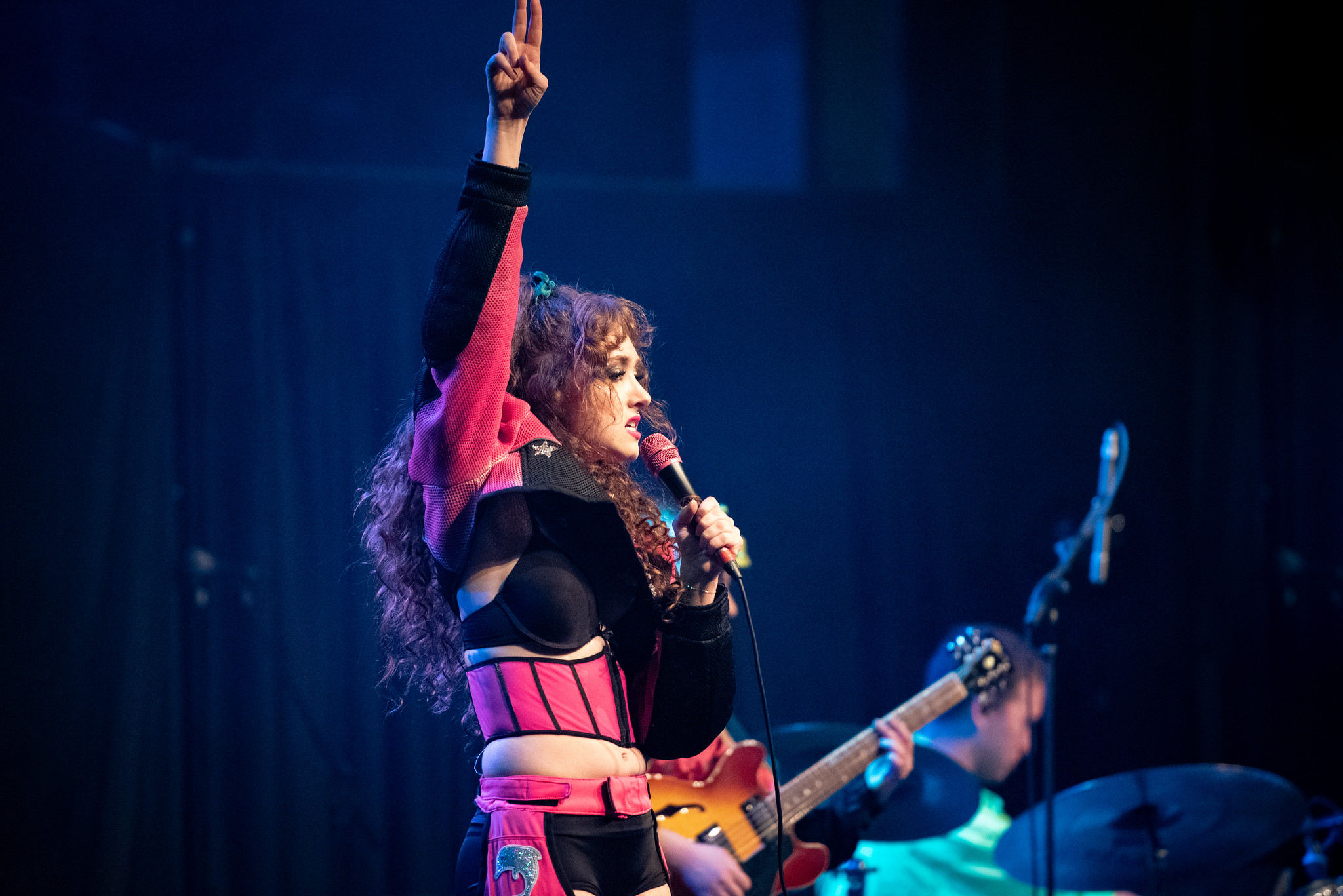
If you came here for the quick answer, here it is: yes, Chappell Roan has publicly said she is a lesbian. And honestly, this is not one of those celebrity mysteries that requires a corkboard, red string, and three sleepless nights. Roan herself has spoken openly about being gay, about coming out as a lesbian, and about the way queerness shapes both her life and her music.
Still, the question “Is Chappell Roan gay?” keeps popping up online because pop culture loves to turn identity into clickbait. Add in Roan’s giant stage presence, her theatrical glam, her songs about women, her campy drag-inspired world, and her fast rise to stardom, and the internet starts asking the same question over and over again like it just discovered Google yesterday.
But Chappell Roan’s story deserves better than lazy speculation. She is not interesting because people are trying to decode her. She is interesting because she has been unusually direct, funny, honest, and emotionally sharp about who she is. She has turned that honesty into art, into performance, and into a fan community that feels deeply personal to a lot of queer listeners, especially those who grew up feeling out of place.
So let’s answer the headline clearly, respectfully, and without making it weird: yes, Chappell Roan identifies as gay in the broad sense, and more specifically, she has publicly described herself as a lesbian. What makes that matter is not just the label itself, but how she talks about it, how she sings about it, and how it has helped shape one of the most exciting pop careers of the moment.
The Short, Respectful Answer
When people ask whether Chappell Roan is gay, the most accurate response is: yes, and she has been more specific than that. Roan has publicly said she is a lesbian. That means the respectful move is not to keep guessing, debating, or trying to “figure her out.” The respectful move is to listen to the words she has already used.
This matters because celebrity sexuality discussions often get flattened into gossip. The internet tends to treat identity like a scavenger hunt, especially when it comes to women in pop. But Roan has not left the public to piece together clues from eyeliner, lyrics, and stage lighting. She has spoken for herself. Case closed. Glitter cannon optional.
There is also a useful distinction here. Some people use “gay” as a broad umbrella term for queer identity. Others prefer more specific language. In Roan’s case, she has used language that points clearly to lesbian identity, so that is the most precise and respectful wording to use when discussing her publicly stated sexuality.
What Chappell Roan Has Actually Said
Roan’s public comments about her sexuality have stood out because they are frank without sounding rehearsed. She has talked about realizing that nothing was “wrong” with her, and that the answer was simply that she was gay. She has also spoken about coming out as a lesbian and about the shame she had to unlearn after growing up in a conservative Christian environment.
That directness is part of why the question now has such a straightforward answer. She has not framed queerness as a vague aesthetic mood or a marketing haze floating over a synth beat. She has talked about it as lived reality. That difference matters. A lot.
More recent coverage has continued to reflect that same public identity. Even when discussions shift toward her fame, dating life, live shows, or the wild pace of her career, Roan is still consistently discussed in lesbian terms because that is how she has described herself. In other words, this is not a one-off quote dragged out of a years-old interview and stuffed into a headline forever. It is part of how she has publicly represented herself across multiple appearances and profiles.
That consistency is one reason fans feel so protective of her language. In an entertainment culture that often waters queer identity down into something more “universal,” Roan has been notably unwilling to sand off the edges. She sounds like herself, even when that means being messy, blunt, playful, or deeply serious all at once.
Why the Question Keeps Coming Up
Her music is openly sapphic
One big reason the question keeps circulating is simple: the music is not exactly subtle. Chappell Roan’s catalog is packed with songs that center queer desire, queer fantasy, queer heartbreak, and queer self-discovery. Tracks like Naked in Manhattan, Red Wine Supernova, Casual, and Pink Pony Club do not sound like someone nervously tiptoeing around the subject.
Even songs that are more emotionally layered than explicitly labeled still carry that energy. Roan’s writing often lives in the space between yearning and performance, fantasy and confession. That makes her music feel personal to queer listeners, not because every song is a formal identity statement, but because the emotional world is recognizably queer.
Then there is The Giver, the country-pop detour that Roan herself has framed in proudly lesbian terms. The song helped underline something fans already understood: her queerness is not a side note to her work. It is part of the joke, the swagger, the style, the storytelling, and the point of view.
Her visual world is queer, too
Roan’s performances do not just sound queer. They look queer. Her whole artistic world is built with drag, camp, theatrical exaggeration, pageant energy, femme performance, and a deep love for queer cultural references. She has featured drag queens on tour, talked about the importance of local queer community, and helped create shows that feel less like generic pop concerts and more like glitter-soaked gatherings where people can show up as their fullest selves.
That is part of what makes her stand out. Chappell Roan is not simply a pop singer who happens to be queer. She has built an entire pop universe that treats queer aesthetics, queer humor, and queer community as central, not decorative.
Why “Lesbian” Matters More Than a Vague Umbrella Label
It is tempting in celebrity coverage to use broad language because broad language feels easy. “Queer.” “Gay.” “LGBTQ icon.” All of those can be true in different ways. But when a public figure has given a more specific identity label, it is worth using it correctly. In Roan’s case, “lesbian” is not a throwaway detail. It is part of what makes her presence in mainstream pop feel meaningful to many fans.
For years, lesbian representation in pop has often been treated as niche, coded, or secondary to a wider marketing strategy. Roan’s rise has pushed back on that. She has not needed to make her work less specific to become more popular. If anything, the specificity is part of the appeal. Her songs are detailed, campy, emotional, dramatic, and unmistakably rooted in women loving women. Turns out that being specific can make art feel bigger, not smaller. Imagine that.
There is also something culturally important about seeing a lesbian pop star become this visible without being flattened into stereotype. Roan can be theatrical, funny, glamorous, messy, vulnerable, loud, and deeply Midwestern all at once. She does not fit one neat box, which is exactly why so many people see themselves somewhere in her work.
How Her Background Shapes the Conversation
To understand why Roan talks about sexuality the way she does, it helps to understand where she came from. She has described growing up in Missouri in a conservative Christian environment that left her feeling restricted and disconnected from queer community. That background shows up all over her public story, not as a tidy origin myth, but as a real source of tension and longing.
You can hear it in the emotional swing of her music: the escape fantasy, the reinvention, the camp, the hunger for self-creation, the humor that sits right next to pain. Pink Pony Club, in particular, feels almost like a mission statement for that transformation. It is not just a catchy song. It is a fantasy of freedom, self-invention, and queer belonging. No wonder it hit like a glitter-covered meteor.
Roan has also spoken about how growing up without a broad range of visible queer identities made it harder to understand herself. That point lands with a lot of people, especially those from small towns, religious communities, or places where queerness was either mocked, feared, or barely spoken about at all. When your mirror is missing, self-recognition can take longer.
That is one reason her story resonates beyond fandom. It is not just “famous singer turns out to be gay.” It is a more layered experience: a young woman from a restrictive environment finding language for herself, then turning that language into pop spectacle without losing its emotional truth.
How Chappell Roan Changed the Shape of Pop
Roan’s sexuality matters in public conversation not because it is gossip fuel, but because it is tied to a larger shift in pop music. She arrived at a moment when openly queer women and nonbinary artists were being taken more seriously by the mainstream, and she helped push that moment even further into the spotlight.
Her rise has not been about softening queer themes for a wider audience. It has been about proving that flamboyant, lesbian-centered, drag-inflected pop can be huge. Not cult favorite huge. Not “internet niche” huge. Actually huge. Festival huge. Award-show huge. Scream-the-chorus-with-strangers huge.
When she stepped into the Grammys conversation and then won Best New Artist, it felt like more than a personal milestone. It signaled that queer pop was not hanging out at the edge of the room hoping to be invited in. It was already in the center, wearing impossible makeup, making eye contact, and stealing the spotlight.
Roan has also used public moments to speak with clarity about queer community. Her statement that she would not be where she is without trans girls was one of the clearest examples of how she locates herself within a broader queer cultural lineage. That matters. It shows awareness, gratitude, and a refusal to act like she invented the world she now shines in.
What Fans Connect With Most
Fans do not just connect to Chappell Roan because she is talented. Plenty of talented singers exist. They connect because she offers a combination that feels rare: theatrical fun, emotional honesty, queer specificity, and just enough chaos to make everything feel alive.
For some listeners, especially queer women, Roan’s work feels like relief. Not because it answers every question, but because it removes the need to translate everything into straight language first. There is no obligatory wink to make the song “relatable to everyone.” There is no nervous apology for being too gay, too femme, too camp, too dramatic, too much. The whole point is that it is too much. And that is the fun.
For others, her appeal is about recognition. She makes room for people who were not always the center of the pop story: queer kids from conservative places, late bloomers, people who found community online first, people who learned to laugh while figuring out who they were. Roan’s shows and songs do not just entertain those listeners. They mirror them.
Experiences Related to This Topic: Why Roan’s Story Feels Personal to So Many People
One reason this topic keeps getting so much attention is that Chappell Roan’s public story connects with experiences many queer people know intimately. The first is the experience of feeling “off” before you have language for why. A lot of people do not grow up with a big glowing sign that says, “Congratulations, this is your identity, and here’s the user manual.” Instead, they grow up with confusion, discomfort, or the persistent sense that they are performing a version of themselves that never quite fits. When Roan talks about realizing that nothing was wrong with her and that she was simply gay, that lands because it mirrors a common moment of recognition.
The second experience is growing up without enough examples. If the only queer people you hear about are stereotypes, warnings, jokes, or one-dimensional side characters, then self-understanding can feel delayed. People from small towns, conservative families, and highly religious communities often talk about not seeing anyone who looked or sounded like them. Roan’s background makes that part of her story especially powerful. She is not presenting queerness as a sleek, prepackaged identity that arrived fully formed. She is talking about how long it can take to understand yourself when the cultural map is missing half the roads.
Then there is the experience of finding community in loud, joyful places. For some people, that happens in clubs. For others, it happens online, at concerts, at Pride events, or in a room full of strangers screaming the same lyrics. Roan’s shows have become meaningful partly because they feel like a celebration rather than a debate. That may sound small, but it is not. For many queer people, especially younger ones, joy is not extra credit. It is survival. It is proof that identity does not have to be framed only through struggle, fear, or explanation.
Another related experience is learning that visibility can be complicated. Not everyone comes out the same way, and not everyone wants to discuss identity constantly. Roan has spoken in ways that reflect that tension. You can be proud and still protective. You can be open and still not want your whole public life reduced to one label every second of every day. That nuance means a lot to people who are tired of being told they must either hide completely or become a full-time spokesperson. Sometimes a person just wants to exist, make art, and not turn every interview into Queer Studies 101.
Finally, Roan’s story connects with the experience of turning shame into style. That may be one of the most electric things about her career. She does not merely say, “I am here.” She says it with costumes, camp, drag references, giant choruses, and the confidence of someone who understands that self-expression can be both serious and funny at once. For fans, especially those who once felt too weird, too loud, too feminine, too emotional, or too queer, that kind of performance can feel like permission. Not permission from authority, thankfully. Permission from possibility.
That is why the question about her sexuality matters to so many people. It is not just about celebrity curiosity. It is about recognition. It is about hearing someone say the thing clearly, publicly, and without apology. And for a lot of listeners, that kind of clarity does more than answer a headline. It opens a door.
Final Take
So, is Chappell Roan gay? Yes. More specifically, Chappell Roan has publicly said she is a lesbian. That is the clearest, most respectful answer.
But the more interesting part of the story is not the label alone. It is how she has talked about it, sung about it, styled it, and built community around it. Roan has helped make lesbian visibility in pop feel not merely acceptable, but central, joyful, glamorous, weird, emotional, and wildly entertaining.
In a culture that often treats queer identity like a trend one minute and a controversy the next, Chappell Roan has done something refreshingly simple: she has told the truth about who she is and made very good pop music out of it. Sometimes the best answer really is the most obvious one. Even under ten pounds of stage makeup.













