
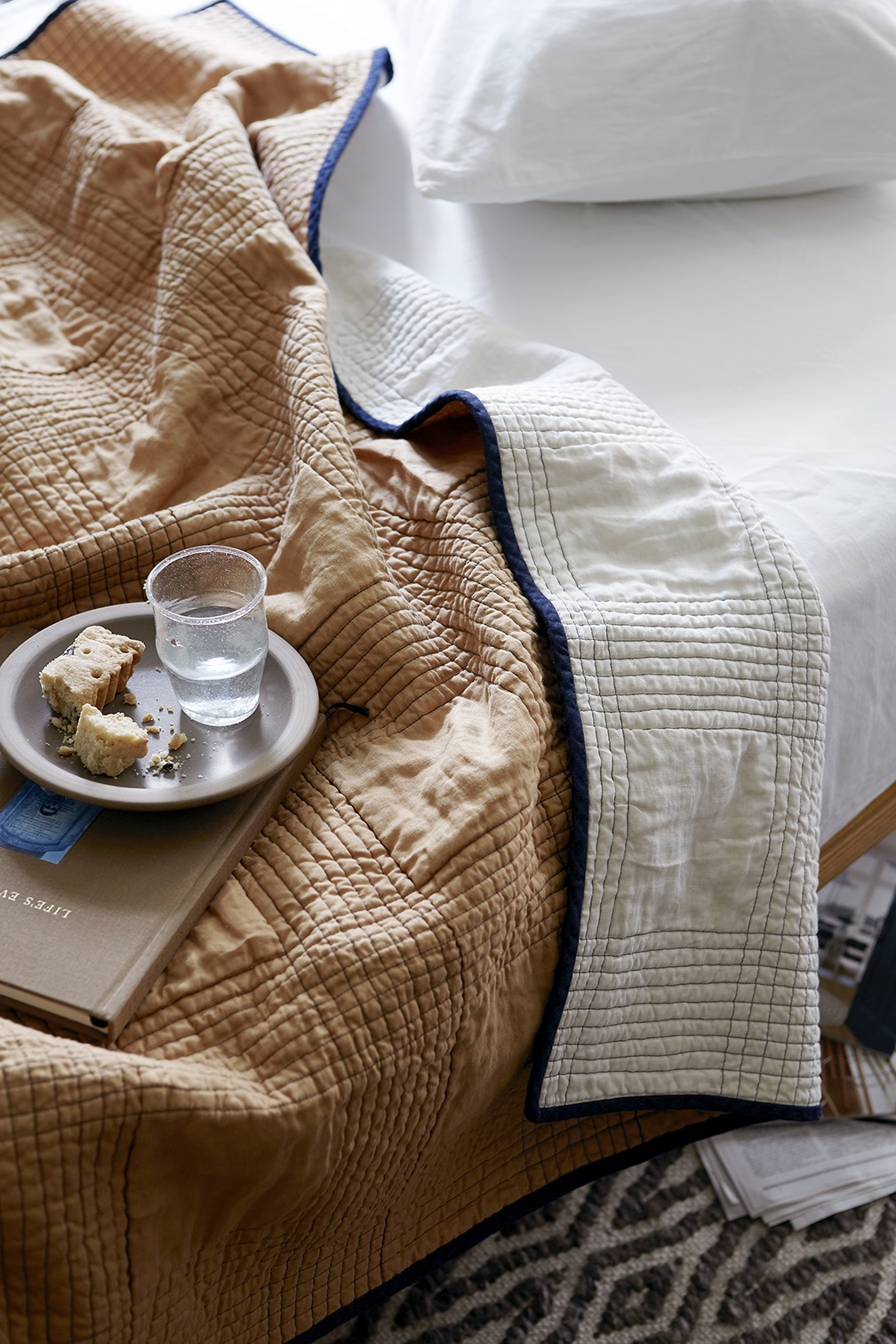
Some home goods whisper. Others shout, wave their arms, and demand that you redecorate the entire bedroom around them by Thursday. Mathilde linen quilts belong to the first group. They are quiet in the best possible way: soft-washed, architectural, handmade, and rooted in Rhode Island’s long textile story. They do not need neon colors, novelty patterns, or a dramatic monologue about “cozy season” to make their point. They simply sit on the bed looking calm, useful, and suspiciously elegant.
Founded by designer and quilter Claudia Middendorf, Mathilde creates minimalist linen quilts and throws from a Pawtucket, Rhode Island studio. The brand’s work blends European-inspired heirloom craft, American quilting tradition, modern graphic design, and the relaxed beauty of natural materials. These are not mass-market comforters pretending to be handmade because someone sewed on one charmingly uneven label. Mathilde quilts are made in small batches, using European linen and U.S.-sourced cotton batting, with local stitchers contributing to the finished pieces.
The result is bedding that feels both old and new: familiar like a quilt from a family trunk, but clean-lined enough for a modern bedroom with white walls, oak floors, and one ceramic vase that cost more than anyone wants to admit.
What Is Mathilde?
Mathilde is a Rhode Island-based textile brand focused on modern linen heirloom quilts, throws, pillows, and related home accessories. Its identity is built around softness, simplicity, natural fibers, and surface pattern. The quilts often use restrained palettes, subtle geometry, contrasting binding, and stitched texture rather than loud printed decoration.
Claudia Middendorf’s background helps explain the look. She studied graphic design at California College of the Arts and earned an MFA in Graphic Design from Rhode Island School of Design. That design training shows up in Mathilde’s sense of line, scale, proportion, and negative space. Instead of treating a quilt as only a warm layer, Mathilde treats it as a composition: fabric, batting, stitch, color, shadow, and touch working together.
The company’s pieces are described as heirloom quilts, but not in the dusty, “please do not sit on grandma’s parlor chair” sense. Mathilde’s heirloom idea is more practical. A quilt should be used, washed, folded, dragged to the sofa, layered over a sheet, loved by pets, and still look better with age. That is the sweet spot: collectible modern craft with real utility.
Why Rhode Island Matters
Mathilde’s Pawtucket location is more than a mailing address. Rhode Island has deep textile roots, especially along the Blackstone River. Pawtucket is associated with early American industrial textile history, including the water-powered mill systems that helped launch large-scale textile manufacturing in the United States. That history gives Mathilde’s work an interesting backdrop: a small contemporary studio making slow, tactile goods in a region shaped by mills, fabric, waterpower, labor, and craft.
There is a poetic symmetry in that. The old Rhode Island textile story was often about speed, output, and industrial scale. Mathilde’s story is about slowing down, choosing fewer materials, working in small batches, and making pieces meant to remain in the home for years. It is not nostalgia for the factory age. It is a quieter continuation of textile culture, with better lighting, softer linen, and probably fewer terrifying machines.
The Materials: Linen, Cotton, and the Joy of Breathability
Mathilde quilts are built around linen and cotton. Linen comes from the flax plant, a natural fiber known for durability, breathability, moisture-wicking performance, and the ability to soften beautifully over time. That last part is important. Linen is not trying to be perfectly smooth forever. Its charm is that it relaxes. It creases, softens, rumples, and develops the kind of lived-in texture that makes a bed look inviting rather than staged by a person who has never taken a nap.
Mathilde uses European linen and cotton batting sourced in the United States. The brand describes its quilts and throws as crafted from 100% European linen with substantial American-sourced cotton batting. In practice, that means the quilt has the pleasant temperature balance many people want: cozy without feeling smothering, breathable without feeling flimsy.
This makes linen quilts especially useful for layered bedding. In warmer climates, a linen quilt can work over a top sheet or even stand in as a lighter layer. In cooler rooms, it can sit beneath or above a comforter for added warmth and texture. In other words, it is the bedding equivalent of a very good cardigan: useful almost all year, never too fussy, and somehow always appropriate.
Minimalist Design Without the Coldness
Minimalism can go wrong quickly. One minute you are admiring a calm bedroom; the next, you are wondering whether the homeowner has ever experienced joy, toast, or a patterned sock. Mathilde avoids that problem because its minimalism is tactile, not sterile. The quilts use simple shapes, stripes, rectangular fields, stitched lines, and restrained color, but the linen texture keeps everything warm and human.
Collections such as Simple Lines, Westerly, Providence, Bristol, and Cape Cod show the range. Simple Lines focuses on stripes, texture, and contrasting binding. Westerly leans into soft neutrals and textured linen. Providence includes stronger color combinations and architectural influence. Bristol feels more modern, with rectangle shapes and angled stitching. Cape Cod brings coastal energy with bold stripes and natural linen comfort.
These designs are subtle enough for a minimalist bedroom but interesting enough to keep the room from looking like a furniture catalog forgot to load its images. A Providence Maple/Cream quilt, for example, can warm up a neutral room without taking over. A navy-striped Cape Cod piece can add structure to a breezy guest room. A Westerly neutral can make an all-white bed feel layered instead of blank.
The Wabi-Sabi Influence
One of Mathilde’s most appealing ideas is its embrace of imperfection and simplicity. Claudia Middendorf has referenced wabi-sabi as an influence, and that philosophy fits linen perfectly. Linen wrinkles. Handmade stitching has subtle variation. A quilt shifts a little after washing. The pattern becomes more visible with use. The object changes because people live with it.
That is not a flaw; it is the point. Many modern consumers are tired of disposable home goods that look shiny for three weeks and then begin a slow emotional decline in the laundry room. Mathilde’s quilts are designed to become softer and more characterful over time. The texture deepens, the surface pattern becomes more pronounced, and the whole piece starts to feel less like something purchased and more like something that belongs.
Handmade in Small Batches
Mathilde’s quilts and throws are handmade in Rhode Island using local stitchers. The brand notes that it works with a small group of experienced stitchers and produces in small batches. This matters because quilts are physical records of labor. Every line of stitching affects shape, texture, drape, and durability.
Small-batch production also means the pieces do not feel anonymous. In a world of fast furniture and overnight-delivery décor, a handmade quilt carries a different rhythm. You are not just buying a blanket-shaped object. You are buying the design decisions, material choices, sewing skill, and regional craft network behind it.
That is also why Mathilde’s pricing sits in the premium handmade category. Throws and twin-size pieces often start in the several-hundred-dollar range, while custom queen and king quilts can reach into the thousands. For shoppers comparing purely by square inches of fabric, that may seem surprising. But for shoppers comparing by craftsmanship, materials, limited production, and longevity, the pricing makes more sense.
How to Style a Mathilde Linen Quilt
1. Keep the bed simple
A Mathilde quilt does not need a complicated supporting cast. Try white, ivory, sand, pale gray, or muted blue sheets. Let the stitched surface and binding provide the visual interest. Add one or two pillows, not the entire decorative pillow population of North America.
2. Use it as the top layer
For spring, summer, and mild fall nights, a linen quilt can serve as the visible top layer over a sheet. The breathable nature of linen makes it comfortable when a heavy comforter feels like too much commitment.
3. Layer it at the foot of the bed
If you already love your duvet, fold the quilt across the foot of the bed. This adds color, weight, and texture without rebuilding your entire bedding setup. It is also practical for cooler mornings, afternoon reading, or the household pet who believes all soft rectangles are legally theirs.
4. Let color do quiet work
Mathilde’s palettes include neutrals, ocean tones, indigo, sand, coral, blush, moss, turquoise, and other nature-adjacent colors. These shades work best when they echo something already in the room: wood grain, wall color, artwork, a rug, or the view outside.
Care and Longevity
Mathilde’s care guidance is refreshingly practical. The quilts and throws are pre-washed, which contributes to their softness and texture. They can be machine washed in cold water with mild soap. Bleach should be avoided because it can affect both color and fiber. For drying, Mathilde recommends tumble drying on low or medium and removing the quilt promptly. For storage, breathable natural bags are preferred, and long-stored quilts should be refolded occasionally.
This is good news for people who actually live in their homes. A quilt that requires museum gloves and a climate-controlled vault is not bedding; it is anxiety with stitching. Mathilde pieces are special, but they are meant for everyday use. That balance is part of the brand’s charm.
Why the Quilt Is Having a Modern Comeback
Quilts have always carried more meaning than ordinary bedding. In American history, quilts have served as household necessities, family records, artistic expressions, community projects, and cultural documents. Museum collections and folk-art archives treat quilts as evidence of design, memory, labor, and storytelling.
The current return of quilts makes sense. After years of slick, disposable interiors, many people want objects with texture and emotional weight. A quilt feels personal. It suggests hands, time, warmth, and continuity. Mathilde taps into that desire without copying traditional patchwork literally. Instead, it updates the form with linen, restraint, graphic pattern, and modern color.
That is why the brand appeals to both craft lovers and design minimalists. It offers the soul of quilting without requiring a farmhouse theme, a gingham addiction, or a decorative sign that says “Gather.”
Who Should Consider a Mathilde Quilt?
A Mathilde quilt is a strong fit for shoppers who appreciate natural materials, handmade textiles, minimalist interiors, and objects that age gracefully. It is especially appealing for people who want bedding that looks refined but not precious. Interior designers may also find the custom sizing and color collaboration useful for finished bedrooms where standard bedding does not quite work.
It may not be the right choice for someone seeking the cheapest possible blanket, a synthetic ultra-plush feel, or a perfectly wrinkle-free surface. Linen has personality. It rumples. It relaxes. It refuses to behave like hotel polyester, and frankly, good for linen.
The Experience of Living With a Minimalist Linen Quilt
The first experience of using a minimalist linen quilt is visual. You make the bed and notice that the room suddenly looks more intentional. Not decorated to death, not “influencer breakfast tray” staged, just calmer. The quilt’s stitched lines catch the light. The linen has a dry, organic texture. The binding gives the edge a finished look. Even if the rest of the room includes a laundry chair quietly auditioning for a mountain-climbing documentary, the bed looks composed.
The second experience is touch. Linen does not feel like microfiber, fleece, or sateen cotton. It has a textured hand, a breathable coolness, and a softness that becomes more relaxed with washing. A Mathilde-style quilt has enough weight to feel grounding but not so much that it traps heat. That makes it useful during those strange in-between nights when a sheet is too little, a comforter is too much, and your thermostat seems to be taking philosophical positions.
The third experience is flexibility. A linen quilt can move through the home. On the bed, it acts as a clean top layer. On the sofa, it becomes the good throwthe one guests notice without knowing exactly why. In a reading chair, it adds texture. Folded in a basket, it looks like the homeowner has excellent taste and definitely did not panic-clean ten minutes before visitors arrived.
Over time, the quilt becomes familiar. The folds settle. The stitching gains dimension. The linen softens. You learn which side of the bed catches the best morning light and how the fabric looks at different times of day. This is where handmade home textiles earn their place. They are not static objects. They participate in daily routines: coffee in bed, sick days, weekend naps, late-night reading, pets sneaking onto forbidden territory, and the ceremonial Sunday act of making the bed properly for once.
There is also an emotional experience. A minimalist linen quilt brings a slower mood into the room. It encourages fewer but better things. It makes a case for buying with care, maintaining what you own, and letting materials show age instead of fighting every crease. In a culture obsessed with newness, that is oddly refreshing. Mathilde’s quilts feel connected to a larger idea: home as a personal sanctuary, not a showroom; comfort as a daily practice, not a seasonal marketing campaign.
That may be the real reason these quilts resonate. They are beautiful, yes, but they are also useful in a deeply ordinary way. They warm the bed. They soften the room. They survive washing. They look better when lived with. And they quietly remind us that the best home objects do not need to perform. They simply need to belong.
Conclusion
Mathilde’s minimalist linen quilts stand at a thoughtful intersection: Rhode Island textile heritage, modern graphic design, handmade production, natural materials, and everyday comfort. Claudia Middendorf’s work respects quilting tradition without freezing it in the past. The pieces feel contemporary, but not trendy; luxurious, but not loud; crafted, but still practical enough for real homes.
For anyone searching for handmade linen quilts made in Rhode Island, Mathilde offers a compelling alternative to mass-produced bedding. These quilts are designed to be touched, washed, layered, folded, and passed along. They are the kind of home textile that earns its keep quietlyone nap, one cool night, one beautifully rumpled morning at a time.














