
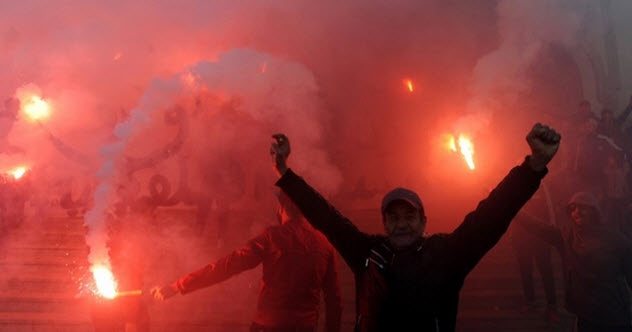
History does not always turn on palace speeches, battlefield maps, or politicians pretending they read the whole briefing. Sometimes, it turns when ordinary people step into the street, sit on a bus, refuse to move, walk for miles, hold a sign, chant a demand, or simply show up in such large numbers that power has to stop pretending not to hear them.
The most influential protests in modern history did more than fill public squares. They changed laws, shook empires, challenged segregation, accelerated independence movements, pressured dictatorships, expanded civil rights, and rewired how the world understands democracy, dignity, and justice. Some were carefully organized. Others began suddenly, sparked by one arrest, one funeral, one unfair law, or one video that people could not ignore.
This list is not a ranking of “best” protests, because history is not a reality TV finale. Instead, it highlights ten protest movements whose impact reached far beyond their original time and place. Each one offers a lesson about courage, strategy, communication, and the stubborn human habit of saying, “Actually, no, this system is not fine.”
What Makes a Protest Historically Influential?
A protest becomes influential when it creates a ripple effect. That may mean changing a law, inspiring similar movements, weakening a regime, shifting public opinion, or giving future activists a practical playbook. The strongest protest movements often combine moral clarity with strategy: a clear demand, disciplined organization, symbolic action, and enough public visibility to make silence impossible.
Modern protest movements also prove that influence is not always immediate. Some campaigns win quickly. Others seem to fail at first, only to become turning points years later. A march may not pass a law overnight, but it can change the national conversation. A student uprising may be crushed, yet still expose a government’s fear. A single act of civil disobedience can become a shared memory powerful enough to outlive the people who tried to suppress it.
1. The Salt March, India, 1930
A walk that shook an empire
In 1930, Mohandas Gandhi turned salt into a political earthquake. The British colonial government controlled salt production and taxed it, even though salt was a basic necessity used by rich and poor alike. Gandhi understood the genius of choosing a simple issue: everyone needed salt, so everyone could understand the injustice.
He and his followers walked roughly 240 miles from Sabarmati Ashram to the coastal village of Dandi. When Gandhi picked up salt from the shore in defiance of British law, it became one of the most famous acts of nonviolent resistance in history. The Salt March did not defeat British rule by itself, but it transformed India’s independence struggle into a global moral drama.
Its influence was enormous because it showed that civil disobedience could be disciplined, symbolic, and accessible. Instead of asking people to debate abstract colonial policy, Gandhi asked them to look at salt. That tiny crystal carried the weight of empire. Not bad for something usually left next to pepper.
2. The Montgomery Bus Boycott, United States, 1955–1956
The protest that made walking a political weapon
The Montgomery Bus Boycott began after Rosa Parks was arrested for refusing to give up her bus seat to a white passenger in Montgomery, Alabama. But the boycott was not just one spontaneous reaction. It was built on years of local organizing by Black activists, church leaders, community networks, and civil rights groups.
For 381 days, Black residents refused to ride Montgomery’s segregated buses. Many walked long distances, organized carpools, shared rides, and endured harassment. The boycott severely affected the bus system and drew national attention to the cruelty and absurdity of segregation.
The protest helped bring Martin Luther King Jr. into national leadership and proved that nonviolent mass action could challenge Jim Crow laws. It also led to a Supreme Court ruling that bus segregation in Montgomery was unconstitutional. The boycott’s influence lives on because it showed how economic pressure, community discipline, and moral courage could turn a local injustice into a national reckoning.
3. The March on Washington for Jobs and Freedom, United States, 1963
Where a dream became a national demand
On August 28, 1963, about a quarter million people gathered in Washington, D.C., for the March on Washington for Jobs and Freedom. The protest called for civil rights, voting rights, fair employment, and an end to racial discrimination. It remains one of the most iconic demonstrations in American history.
Martin Luther King Jr.’s “I Have a Dream” speech became the emotional centerpiece, but the march was much broader than one speech. Organized by leaders including A. Philip Randolph and Bayard Rustin, it brought together labor groups, religious organizations, civil rights activists, students, and ordinary families who wanted the country to live up to its own promises.
The march helped build momentum for the Civil Rights Act of 1964 and the Voting Rights Act of 1965. Its lasting power comes from how it blended moral vision with policy demands. It did not simply say, “Be nicer.” It demanded jobs, legal protection, voting access, and human dignity. In other words: dreams are great, but legislation pays the rent.
4. The Stonewall Uprising, United States, 1969
A rebellion that energized LGBTQ+ rights
In June 1969, police raided the Stonewall Inn, a gay bar in New York City’s Greenwich Village. Raids on LGBTQ+ spaces were common at the time, but this night was different. Patrons and community members resisted, and the confrontation grew into several days of protest.
The Stonewall Uprising did not begin the LGBTQ+ rights movement, which already had brave organizers working for years. But Stonewall became a powerful symbol of resistance. It helped energize a new era of LGBTQ+ activism, including pride marches, community organizing, legal advocacy, and public demands for equality.
Its influence lies in visibility. Stonewall told people who had been forced into silence that public resistance was possible. It also reminded society that rights are not politely handed out like party favors. They are often claimed by people willing to stand together when the world tells them to disappear.
5. The Soweto Uprising, South Africa, 1976
Students against apartheid
The Soweto Uprising began on June 16, 1976, when Black schoolchildren in South Africa protested the apartheid government’s education policies, including the forced use of Afrikaans in certain school subjects. What began as a student march became a nationwide symbol of resistance against apartheid.
The government’s response drew global attention and outrage. Images and reports from Soweto exposed the brutality of apartheid to audiences around the world. The uprising helped strengthen international anti-apartheid activism, including sanctions campaigns, divestment efforts, and cultural boycotts.
Soweto’s influence is especially powerful because it showed that young people were not passive victims of injustice. Students became political actors. Their courage helped shift global opinion and contributed to the long struggle that eventually ended apartheid. The lesson is clear: never underestimate students. They may look like they are just carrying notebooks, but sometimes they are carrying history.
6. Poland’s Solidarity Movement, 1980s
Workers who challenged a communist state
In 1980, workers at the Lenin Shipyard in Gdańsk, Poland, launched strikes over labor rights, economic hardship, and political repression. Led in part by electrician Lech Wałęsa, the movement grew into Solidarity, an independent trade union and broad social movement.
Solidarity was remarkable because it challenged communist authority from inside a Soviet-aligned state. It united workers, intellectuals, religious leaders, and ordinary citizens in a campaign for labor rights and political freedom. Although the Polish government imposed martial law in 1981 and tried to crush the movement, Solidarity survived underground.
By the late 1980s, Solidarity helped push Poland toward negotiations, semi-free elections, and a peaceful transition away from communist rule. Its influence spread across Eastern Europe, showing that organized civil resistance could weaken even heavily controlled systems. It also proved that a labor movement could become a democracy movement when the workplace became the front line of freedom.
7. The People Power Revolution, Philippines, 1986
A peaceful uprising on EDSA
In February 1986, hundreds of thousands of Filipinos gathered along Epifanio de los Santos Avenue, better known as EDSA, to protest Ferdinand Marcos after a disputed election. The movement brought together religious leaders, opposition figures, soldiers, families, students, and citizens tired of authoritarian rule.
The People Power Revolution became famous for its largely peaceful character. Protesters faced a tense political crisis with prayers, songs, flowers, food, and mass presence. The result was the end of Marcos’s rule and the rise of Corazon Aquino as president.
Its influence was global because it gave the world a dramatic example of nonviolent popular resistance removing a dictator. The images from EDSA inspired democracy movements elsewhere and became a case study in how legitimacy can collapse when citizens withdraw consent. Sometimes the most powerful crowd is not the loudest one, but the one that refuses to leave.
8. Tiananmen Square Protests, China, 1989
A movement remembered despite censorship
In the spring of 1989, students and citizens gathered in Beijing’s Tiananmen Square calling for political reform, freedom of expression, and action against corruption. The protests spread beyond Beijing and drew workers, intellectuals, and ordinary people into a wider national conversation about China’s future.
The movement ended in a severe government crackdown in early June. Yet the protests became one of the defining events of the late twentieth century. Around the world, Tiananmen became a symbol of the risks people take when they demand political openness under authoritarian rule.
Its influence is partly rooted in memory. Even where public discussion is restricted, the event remains a global reference point for democracy, censorship, state power, and historical truth. Tiananmen shows that a protest can be influential even when it is suppressed, because the attempt to erase it can make remembrance itself an act of resistance.
9. The Fall of the Berlin Wall and East German Protests, 1989
Peaceful pressure that cracked the Cold War
The Berlin Wall did not fall because one official had a bad press conference, although that certainly helped history become more dramatic. Its collapse followed months of public pressure, including mass demonstrations in East Germany. The Monday demonstrations in Leipzig and other protests demanded travel rights, reform, and political freedom.
By November 9, 1989, pressure on the East German government had become impossible to contain. The opening of the border led to emotional scenes of families and strangers crossing between East and West Berlin. The fall of the Wall became one of the clearest symbols of the Cold War’s end.
The influence of these protests was enormous. They contributed to German reunification and inspired democratic transitions across Eastern Europe. They also demonstrated that authoritarian systems can look permanent until, suddenly, they do not. History sometimes spends decades building a wall and then watches citizens make it look surprisingly temporary.
10. The George Floyd Protests and Black Lives Matter, Global, 2020
A digital-age protest wave
After George Floyd was killed by a Minneapolis police officer in May 2020, protests spread across the United States and around the world. The demonstrations focused on police accountability, systemic racism, racial justice, and public safety reform.
The protests were influential not only because of their size, but also because of how quickly they spread. Smartphones, social media, livestreams, and online organizing helped turn local outrage into a global movement. People marched in large cities, small towns, and countries far beyond the United States.
The movement influenced corporate policies, public art, local government debates, school discussions, sports activism, and police reform proposals. It also triggered intense political disagreement, proving that influential protests rarely produce neat consensus. Their role is often to force a society to confront questions it would rather postpone. In 2020, the question was blunt: what does justice require when the whole world is watching?
Common Threads Among the Most Influential Protests in Modern History
Although these protests happened in different countries and political systems, they share several patterns. First, many began with a specific injustice that represented a much larger problem. Salt stood for colonial exploitation. A bus seat stood for segregation. A school language policy stood for apartheid. A wall stood for political imprisonment.
Second, influential protests often depend on organization as much as emotion. Anger may spark a movement, but planning sustains it. The Montgomery Bus Boycott needed carpools. The March on Washington needed logistics. Solidarity needed networks. People Power needed communication across political, religious, and military lines.
Third, symbolism matters. A march route, a public square, a shipyard, a bus, a wall, or a raised sign can become a historical shortcut. People remember symbols because they make complex issues visible. A good protest symbol says in one image what a policy paper may need 80 pages to explainand let’s be honest, fewer people will nap halfway through a symbol.
Finally, these movements show that protest is not separate from history. It is one of history’s engines. Laws, rights, and political systems often change because people outside formal power structures demand that they change.
Experiences and Lessons From Studying Historic Protest Movements
One of the most powerful experiences related to the 10 most influential protests in modern history is realizing how ordinary many of the participants were. Textbooks can make protest leaders look like marble statues who woke up already heroic. But most movements were built by regular people with jobs, families, fears, bills, homework, church meetings, union shifts, and sore feet.
Studying these protests feels different from memorizing dates because the human choices are so vivid. Imagine being a Montgomery resident who depended on the bus but chose to walk anyway. Imagine being a student in Soweto, knowing that adults in power had designed your education to limit your future. Imagine being an East German citizen attending a Monday demonstration, unsure whether the state would respond with reform or force. These were not abstract civics exercises. They were lived decisions made under pressure.
Another lesson is that protest movements are rarely as simple as slogans make them seem. A slogan may fit on cardboard, but the movement behind it usually contains debate, disagreement, strategy, sacrifice, and compromise. The March on Washington looked unified from the outside, but it required careful coordination among groups with different priorities. Solidarity was not just a strike; it was a social ecosystem. The Arab Spring and later digital-age movements showed that gathering people is one challenge, while building durable political change is another.
There is also a communication lesson. Every generation uses the tools available to it. Gandhi used newspapers and symbolic action. Civil rights organizers used church networks, leaflets, television, and disciplined media strategy. East European protesters used underground publishing and public gatherings. In 2020, activists used smartphones and social platforms to document events instantly. The tools changed, but the goal stayed familiar: make injustice visible enough that denial becomes ridiculous.
These histories also teach humility. Not every protest achieves all its goals. Some victories are partial. Some are reversed. Some movements inspire future generations more than they transform their own moment. But influence is not measured only by immediate success. A protest can change what people believe is possible. It can create new leaders, new language, new alliances, and new expectations.
For writers, students, educators, and readers, the best way to engage with protest history is to look beyond the famous photograph. Ask who organized transportation. Who printed signs? Who cooked meals? Who protected records? Who translated ideas into demands? Who kept going after the cameras left? History is usually less like a lightning bolt and more like a group project where some people did heroic work and others definitely forgot to bring tape.
The deepest experience these protests offer is a reminder that civic courage is contagious. When people see others take risks for dignity, they may find the courage to act too. That is why influential protests travel across borders and decades. They become part of humanity’s shared instruction manual for refusing injustice.
Conclusion: Why These Protests Still Matter
The most influential protests in modern history matter because they changed more than headlines. They changed expectations. They showed that empires can be challenged, segregation can be defeated, dictators can be pressured, walls can fall, and communities pushed to the margins can force their way into public memory.
These movements also remind us that protest is not chaos by default. At its best, protest is democratic speech with walking shoes. It is how people without easy access to power make themselves visible. It is how societies argue with their own conscience.
From the Salt March to Black Lives Matter, modern protest history reveals a simple but demanding truth: change is rarely delivered by comfort. It is built by people willing to be inconvenienced for something larger than themselves. Sometimes they march. Sometimes they boycott. Sometimes they gather in a square. Sometimes they stand still and refuse to move. And sometimes, by doing so, they move the world.













