
If there is one kitchen tool that can save breakfast, rescue weeknight dinner, and protect your last shred of patience, it is a good nonstick pan. Eggs slide. Pancakes flip. Fish fillets behave like polite dinner guests. And cleanup does not require a steel brush, a prayer, and a dramatic monologue.
That is exactly why nonstick cookware still earns precious cabinet space, even in kitchens packed with stainless steel, cast iron, and that one mystery pan everyone swears they will season “this weekend.” In BHG’s roundup, the winners cover every type of cook: the practical one, the design-loving one, the budget shopper, and the person who wants a pan that can go from stovetop to oven without acting offended.
This guide breaks down BHG’s eight best nonstick pans, explains what makes each one stand out, and adds broader context from other major cookware reviews and kitchen testing. The result is a more useful, more realistic look at what to buy, why it matters, and how to keep your pan from aging like unrefrigerated milk.
Why Nonstick Pans Still Matter
Nonstick pans are not meant to do everything. They are not your best choice for ripping-hot steakhouse sears, campfire theatrics, or proving your wrist strength with a six-pound skillet. What they are excellent at is low- to medium-heat cooking where easy release matters most. Think omelets, crepes, delicate fish, grilled cheese, quesadillas, sautéed vegetables, and sticky sauces that would otherwise weld themselves to the surface.
Across major cookware tests, the same themes show up again and again: the best nonstick pans heat evenly, feel balanced in the hand, release food cleanly, and wipe out fast. The catch is longevity. Nonstick surfaces, whether traditional or ceramic, are not forever products. Even the best one is more like a star athlete than an immortal superhero. Treat it kindly, use the right utensils, skip raging heat, and it will serve you well. Abuse it, and suddenly your “nonstick” pan starts acting like a medieval torture device for scrambled eggs.
How to Choose the Right Nonstick Pan
Before jumping into the list, it helps to know what separates a great pan from a regrettable one. Size is the first factor. An 8-inch or 10-inch pan is great for one or two people, while a larger sauté pan or 12-inch skillet handles family meals, stir-fries, and one-pan dinners more comfortably. If your usual dinner is two eggs and toast, a giant pan is overkill. If you cook for a crowd, a tiny pan will make dinner feel like a relay race.
Material matters too. Hard-anodized aluminum is popular because it heats quickly and evenly without making the pan too heavy. Ceramic-coated pans appeal to shoppers who want PTFE-free options and often come with strong high-heat claims, though many cooks find ceramic coatings can lose their slickness sooner than premium traditional nonstick. Stainless-clad nonstick pans bring a more substantial feel and often better induction compatibility, but they usually cost more.
You should also check oven safety, stovetop compatibility, handle comfort, and cleaning instructions. “Dishwasher safe” sounds convenient, but hand-washing is still the smart play if you want the coating to last longer. In other words, your pan may say it can survive the dishwasher. That does not mean it enjoys it.
The 8 Best Nonstick Pans, Reviewed by BHG
1. Best Overall: Calphalon Classic Hard-Anodized Nonstick 5-Quart Sauté Pan
BHG named the Calphalon Classic Hard-Anodized Nonstick 5-Quart Sauté Pan the best overall pick, and it is easy to see why. This is the kind of pan that earns permanent front-row placement on the stove. Its deeper sides and lid make it more versatile than a basic frying pan, so it can handle far more than eggs. You can brown chicken, simmer pasta sauce, toss vegetables, or make a full one-pan meal without ingredients leaping over the edge.
The hard-anodized construction helps with even heating, while the nonstick interior makes cleanup dramatically easier. It is especially appealing for home cooks who want one pan that can multitask without fuss. The only real limitation is that it is not built for extremely high heat, so this is a finesse tool, not a flamethrower. For everyday practicality, though, it hits the sweet spot between size, performance, and convenience.
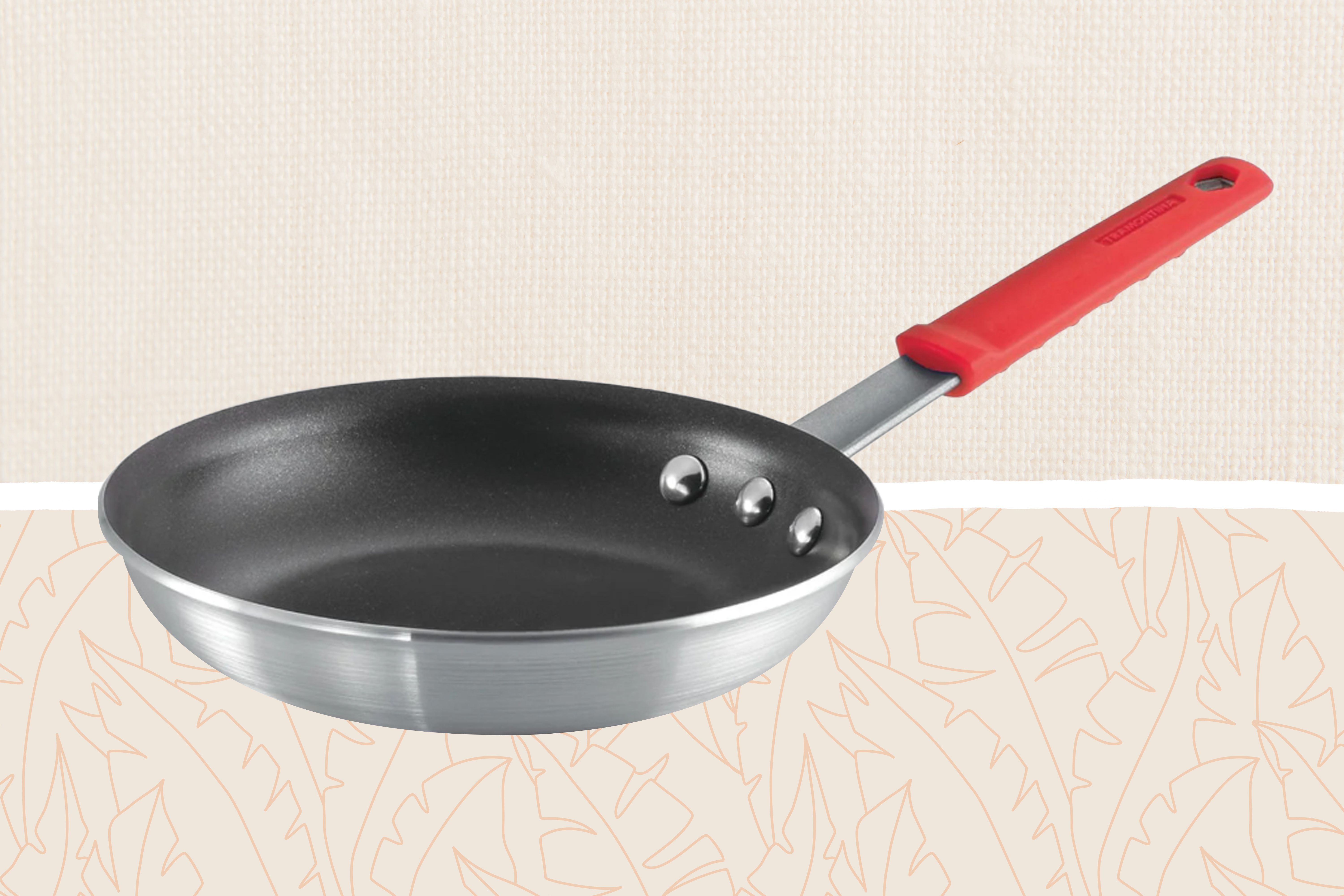
2. Best Budget: Tramontina 10-Inch Nonstick Skillet
The Tramontina 10-Inch Nonstick Skillet is BHG’s budget pick, and budget here does not mean bargain-bin disappointment. Tramontina has a long reputation for delivering strong cooking performance at reasonable prices, which helps explain why this brand shows up repeatedly in cookware tests from other outlets too.
This skillet is a smart choice for anyone who wants a straightforward, no-drama pan for eggs, pancakes, grilled sandwiches, and quick sauté jobs. The size is practical, the handling is manageable, and the price makes replacement less painful whenever the coating eventually wears down. BHG also notes a removable silicone grip, which adds comfort but affects oven limits. That kind of detail matters because it turns a cheap pan into a thoughtfully designed cheap pan, and that is a very different category.
3. Best Splurge: Le Creuset Stainless-Steel Nonstick Saucier
If you enjoy cookware that feels expensive because it actually is expensive, BHG’s splurge pick will make sense. The Le Creuset Stainless-Steel Nonstick Saucier brings premium construction, polished looks, and a shape that works especially well for sauces, risottos, reductions, and recipes that benefit from easy whisking and stirring.
This is not a basic breakfast pan. It is more of a luxury multitasker for serious home cooks who appreciate refined details, including interior capacity markings and a more elevated build. The saucier shape helps ingredients move smoothly around the pan, which is a small detail that becomes a big one once you start cooking creamy sauces or dishes that need constant attention. It is pricey, yes, but it also looks and feels like cookware for people who know exactly where their microplane is at all times.
4. Best Ceramic: GreenPan Reserve Ceramic Nonstick 12-Inch Frypan
For shoppers leaning toward ceramic, BHG chose the GreenPan Reserve Ceramic Nonstick 12-Inch Frypan. This pick makes sense because GreenPan has become one of the most visible names in ceramic nonstick cookware, and its pans are frequently praised for smooth food release, stylish finishes, and oven-friendly construction.
The Reserve line offers a roomy 12-inch surface, hard-anodized durability, and a ceramic coating designed for everyday use. BHG points out its high oven tolerance and even-heating design, which makes it a versatile option for cooks who like to start on the stovetop and finish in the oven. The tradeoff is that not every version is induction-friendly, so buyers need to check compatibility. Ceramic pans can feel like overachievers when they are new: slick, clean, and photogenic. The long game, however, depends heavily on gentle care.
5. Best Set: Cuisinart Chef’s Classic Nonstick Cookware Set
Some people are not shopping for one pan. They are shopping for a kitchen reset. That is where BHG’s best set pick comes in. The Cuisinart Chef’s Classic Nonstick Cookware Set gives buyers a broad range of pots and pans, including skillets, saucepans, and larger vessels for soups, sauces, and braises.
This kind of set works well for first apartments, wedding registries, vacation homes, or anyone tired of assembling a cookware collection one oddly mismatched piece at a time. BHG highlights the fact that the included pieces are oven-safe and built with cool-grip handles. The biggest drawback is that sets can include pieces you use constantly and pieces you ignore for years. Still, for shoppers who want coordinated performance and convenience, this one offers a practical all-in-one solution.
6. Best Oven-Safe: KitchenAid Hard Anodized Nonstick Ceramic Sauté Pan
The KitchenAid Hard Anodized Nonstick Ceramic Sauté Pan wins BHG’s oven-safe category, and it earns attention for its larger capacity and flexible design. This is a pan that works well for cooks who move between stovetop and oven regularly, especially for casseroles, skillet dinners, baked pasta finishes, and braised chicken thighs.
The body can handle higher oven temperatures than many standard nonstick pans, although the lid has a lower limit, which is an important fine-print detail. Like many larger sauté pans, its real strength is that it does not force you to choose between surface area and depth. You get both. That means fewer overflow disasters and more room to stir, toss, and actually cook like a confident adult.
7. Best Eco-Friendly: GreenPan Lima Ceramic Nonstick 8-Inch Frypan
BHG’s eco-friendly pick is the GreenPan Lima Ceramic Nonstick 8-Inch Frypan, a smaller pan aimed at lighter daily tasks. This pan is especially useful for solo cooks, small breakfasts, reheating leftovers, and all the little jobs that do not deserve a massive skillet.
Its appeal comes from lightweight handling and GreenPan’s environmentally minded manufacturing messaging, which has helped the brand stand out in the ceramic space. If you want a compact pan for eggs and quick sauté work, this size makes sense. If you are cooking for three or more people, however, it will feel more like an appetizer pan than a main-event pan. Small pans are charming until you try to fit a full dinner into one and discover the laws of physics are still active.
8. Best Aesthetic: Our Place Always Pan 2.0
The Our Place Always Pan 2.0 takes BHG’s aesthetic category, which is hardly shocking. This pan was built to be seen. It comes in multiple colors, photographs beautifully, and leans hard into the idea that cookware can double as kitchen décor.
But the appeal is not just cosmetic. It is also designed as a multifunctional pan that can steam, braise, sauté, and fry, making it attractive for smaller kitchens or cooks who want fewer pieces doing more jobs. The compromise is that style-forward pans often ask for more careful handling, and BHG notes this one is best hand-washed and not suited to aggressive high-heat use. In other words, it is the linen blazer of cookware: charming, versatile, and not what you wear to wrestle a bear.
What the Broader Cookware World Agrees On
One reason BHG’s list feels credible is that several themes overlap with what other respected testers have found. Tramontina keeps showing up as a value standout. GreenPan regularly appears in ceramic-focused recommendations. Le Creuset, All-Clad, OXO, Made In, and Zwilling are also common names when reviewers discuss better heat control, stronger build quality, or premium performance.
That overlap matters because nonstick cookware can be tricky to judge from marketing alone. Everyone claims “effortless release.” Everyone promises “easy cleanup.” In reality, the differences show up in details: whether the handle stays comfortable, whether the pan heats evenly across the center and edges, whether it works on induction, and whether it still performs after months of real-life cooking. The best pans do not just release one egg on day one. They stay useful long enough to justify the space they take up in your kitchen.
How to Make a Nonstick Pan Last Longer
Here is the practical truth: even a great nonstick pan is not heirloom cookware. But you can absolutely extend its life. Use low to medium heat most of the time. Reach for silicone, wood, or nylon utensils. Let the pan cool before washing. Hand-wash it instead of tossing it into a brutal dishwasher cycle. Avoid aerosol cooking sprays that can leave stubborn residue. And do not stack it carelessly under heavier pans unless you enjoy mystery scratches.
If the coating becomes visibly damaged, food starts sticking regularly, or the surface looks rough and worn, it is time to replace it. Modern safety guidance generally distinguishes between intact cookware used as intended and broader concerns around PFAS exposure in the environment. For consumers, the most sensible approach is simple: buy quality, use it correctly, and replace it when it is clearly past its prime.
Real-World Cooking Experiences With Nonstick Pans
Ask enough home cooks about their favorite pan, and the answers get strangely emotional. Stainless steel gets respect. Cast iron gets devotion. But nonstick? Nonstick gets gratitude. Not dramatic poetry. Not family-heirloom reverence. Just honest, everyday gratitude. And that might be even more important.
A good nonstick pan shines in the moments that make people either love cooking or order takeout. It is the difference between an omelet that folds neatly and one that turns into scrambled regret. It is the reason pancakes can actually look round instead of like geography homework. It is what lets a tired person at 7:15 p.m. make salmon, eggs, dumplings, or a quick vegetable sauté without also signing up for a long cleanup session.
One of the most common real-life experiences with nonstick pans is the “weekday breakfast save.” You wake up late, the coffee is not working fast enough, and you need eggs immediately. This is not the time to lovingly preheat stainless steel and test whether the Leidenfrost effect is happening. This is the time for a pan that says, “Relax, I’ve got this.” A reliable nonstick pan gives you that margin of error.
Another huge win shows up with delicate proteins. Fish is the classic example. Even confident cooks get nervous when flipping a fillet, because one sticky moment can turn dinner into fish confetti. Nonstick reduces that drama. The same goes for breaded cutlets, tofu, and anything sugary or sticky that would otherwise cling to the pan like it pays rent there.
Then there is the cleanup factor, which honestly deserves more respect. People talk about cooking performance all day long, but cleanup decides whether a pan feels lovable or exhausting. A great nonstick pan turns “ugh, dishes” into “that was not so bad.” For busy households, parents, college graduates building a first kitchen, and anyone cooking after work, that matters a lot.
Of course, the experience also teaches some hard truths. Many people buy a nonstick pan, crank the burner too high, use a metal fork in it, run it through the dishwasher every night, and then act stunned when it starts sticking six months later. Nonstick is convenient, but it is not indestructible. It rewards gentle use. Think of it less like cast iron armor and more like a good pair of white sneakers. Very useful. Very satisfying. Not designed for chaos.
Perhaps the most honest experience of all is this: many cooks do not need a whole kitchen full of nonstick cookware. They need one or two really good pieces. A medium skillet for eggs and fast meals. Maybe a deeper sauté pan for one-pan dinners. That is usually enough. Once people stop expecting nonstick cookware to do every job, they tend to like it a lot more.
That is why BHG’s list works. It is not trying to crown one magical pan for every human being. It recognizes that different kitchens need different strengths: budget, beauty, oven range, capacity, eco appeal, or set value. And in real cooking, that is exactly the point. The best nonstick pan is not the one with the loudest marketing. It is the one that makes dinner easier, breakfast smoother, and cleanup less annoying. In kitchen terms, that is basically romance.
Final Take
BHG’s eight winners create a practical map for today’s nonstick market. The Calphalon sauté pan is the do-it-all choice for most households. Tramontina gives budget shoppers a dependable everyday skillet. Le Creuset delivers the luxury route. GreenPan covers both ceramic and eco-conscious needs. Cuisinart offers set value. KitchenAid brings oven flexibility. And Our Place proves good-looking cookware can still earn its keep.
If you want the smartest buying strategy, start with how you actually cook. Buy for your routine, not your fantasy self. If you make eggs, pancakes, fish, and quick dinners often, a quality nonstick pan is still one of the most useful tools in the kitchen. Just treat it kindly, and it will return the favor one beautifully intact omelet at a time.













