
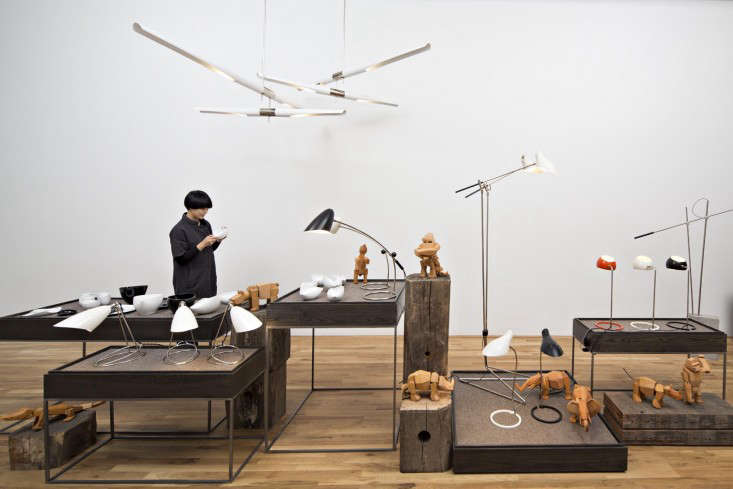
New York has never been shy about design. It can turn a warehouse into a gallery, a sidewalk into a runway, and a lighting showroom into a full-blown conversation about sculpture, craft, and whether your living room pendant is quietly judging your sofa. That is exactly why David Weeks’ New Tribeca studio matters. It is not simply a place to buy modern lighting. It is a carefully staged, hands-on expression of one of America’s most recognizable independent design voices.
David Weeks Studio, founded in 1996, built its reputation on sculptural lighting that feels both technically precise and delightfully alive. Weeks is often associated with the rise of Brooklyn’s independent design movement, but the Tribeca studio gave his work a Manhattan-facing stage: a place where lighting, furniture, accessories, prototypes, and collaborations could be seen together rather than scattered across showrooms, catalogs, and the occasional “wait, where did you get that?” dinner party.
Located at 38 Walker Street in Tribeca, the studio arrived at a perfect moment for downtown New York design. Tribeca had already become a magnet for architects, collectors, boutique furniture brands, and anyone who can say “materiality” without wincing. Weeks’ storefront fit the neighborhood naturally: industrial but polished, experimental but livable, high-design but not allergic to humor.
Who Is David Weeks?
David Weeks is an American designer known for lighting, furniture, home goods, and sculptural objects. Originally from Athens, Georgia, he studied painting and sculpture at the Rhode Island School of Design before establishing his namesake studio in New York. That background matters because Weeks’ fixtures rarely behave like standard lamps. They balance, pivot, lean, stretch, glow, and occasionally look like they might wander off if you leave the room.
His work is rooted in a sculptor’s understanding of form and a maker’s respect for structure. Instead of treating lighting as decoration added after the real design work is done, Weeks treats it as architecture in miniature. A pendant becomes a floating composition. A sconce becomes a wall-mounted gesture. A floor lamp becomes a character with posture.
Over the years, David Weeks Studio has expanded beyond lighting into seating, tables, textiles, toys, and accessories. Yet the studio’s core language remains consistent: clean geometry, playful balance, handmade production, and a deep interest in how objects occupy space. The best Weeks pieces do not shout. They raise an eyebrow, throw a beautiful shadow, and let you come closer.
Why the Tribeca Studio Was a Big Deal
Before the Tribeca storefront, much of the studio’s energy lived behind the scenes in Brooklyn, where production and design development took place. The move into a visible Manhattan space created something different: a public-facing laboratory. The studio was part showroom, part gallery, part creative workshop, and part design diary with excellent lighting.
That distinction is important. A conventional showroom often says, “Here are the products; please admire them politely.” David Weeks’ Tribeca studio said, “Here is the world these objects come from.” Visitors could see lighting collections beside furniture, accessories beside experimental work, and collaborations beside established classics. The result was a more complete picture of Weeks’ design mind.
The space also helped position the brand within the growing Tribeca design district. Walker Street, with its cast-iron charm and downtown grit, became a natural home for design-focused retail. Weeks’ studio joined a neighborhood ecosystem where furniture, lighting, architecture, and interiors could overlap. In New York terms, it was less “open a store” and more “claim a creative address.”
Inside the Studio: A Gallery, a Lab, and a Little Theater
The interior concept reflected the studio’s own design philosophy: flexible, modular, and capable of change. Displays were designed to showcase lighting, toys, tableware, furniture, and prototypes without freezing the space into one permanent layout. That flexibility allowed the studio to function like a changing exhibition rather than a static retail floor.
This matters because David Weeks’ work often depends on movement and relationship. A fixture is not just an object; it is an arrangement of arms, shades, angles, counterweights, and shadows. To understand a Kopra pendant or a Boi sconce, you need to see how it responds to the room. You need to walk around it. You need to watch the light hit a wall and think, “Fine, maybe my ceiling does need personality.”
The Tribeca studio created room for that experience. It gave visitors the chance to compare scale, finish, proportion, and mood in person. For designers and homeowners, that can be the difference between liking a fixture online and understanding why it belongs in a project.
The Opening Exhibit: Brass, Leather, and a Cowboy Plot Twist
The inaugural exhibition, Brass and Leather, captured what made the studio interesting from the start. Instead of simply lining up bestsellers, Weeks used the opening to introduce new work, revisit older designs, and invite collaborators into the conversation.
One of the standout pieces was a reimagined version of the Semana Chair, produced as a limited edition of 40. The chair was made in collaboration with Big Bend Saddlery in Alpine, Texas, a historic saddlery known for leather work with serious durability. This was not delicate showroom leather that panics when someone holds a coffee nearby. It was saddle leather: structured, rugged, and designed to age with character.
The Semana Chair perfectly illustrates Weeks’ talent for mixing refinement with toughness. Its sling form feels minimal and elegant, but the leather gives it warmth and grit. It is the kind of chair that looks good in a Tribeca loft but could probably survive a minor stampede of design editors.
The exhibit also featured brass basketry by Nyack, New York artist Rodger Stevens, adding another layer of craft and material exploration. Brass, in this context, was not simply a shiny finish. It became a medium for structure, reflection, line, and handwork.
The Fenta Lighting Collection
Another major highlight was the Fenta lighting collection, a series that brought together cement, brass, wood, and the familiar softness of the Boi shade. The Fenta lamp design uses a custom-cast cement base, a gently curved brass arm, and a wooden dowel that helps lock the composition together. It sounds simple until you realize every material involved has its own opinion.
Cement shrinks and changes as it cures. Brass requires precision. Wood introduces warmth and a tactile counterpoint. The result is a lamp that feels both industrial and graceful. Fenta is modern without becoming cold, sculptural without becoming ridiculous, and playful without looking like it escaped from a children’s museum.
The use of brass also connected the collection to Weeks’ earlier experience in jewelry and metalwork. That history shows in the details. His lighting may be large in scale, but it often carries the refinement of a smaller object handled closely by hand.
Signature Pieces on View
The Tribeca studio offered a broad look at the David Weeks universe. In the window, visitors could see fixtures such as the Kopra Burst and Kopra Cluster, both based on arrangements of Boi shades. These pieces are especially effective because they combine repetition with surprise. The shades gather, branch, and angle outward like a modernist botanical specimen that happens to be wired for electricity.
The Boi Sconce is another essential piece in the studio vocabulary. It has a curved, smiling form and dual openings that cast light in expressive ways. Installed in multiples, Boi can create rhythm across a wall, turning a hallway or living room into something more atmospheric than “builder-grade beige with switch plate.”
Other pieces associated with the studio presentation include the Doublepod Standing Lamp, Sculpt Sofa, Torroja Standing Lamp, Hennen Cross, Cernan Light, and Folha tables. Together, they show how Weeks moves between lighting and furniture without losing his design voice. The same interest in balance, curve, structure, and visual tension carries across categories.
Brooklyn Made, Tribeca Displayed
One of the most compelling aspects of David Weeks Studio is the connection between New York design and New York making. The studio’s production has long been rooted in Brooklyn, where designers, engineers, and artisans help transform sketches and prototypes into finished work. This relationship between hand and machine, idea and fabrication, is central to the studio’s identity.
That Brooklyn foundation gave the Tribeca studio credibility. It was not a polished showroom detached from the messy, fascinating process of making things. It was a storefront connected to a workshop culture. The objects on display carried evidence of testing, adjusting, refining, and occasionally arguing with physics until physics gave up and looked stylish.
For architects and interior designers, this kind of studio is especially valuable. Custom lighting is rarely just a matter of choosing a pretty fixture. It requires scale studies, finish decisions, installation planning, and an understanding of how light behaves in a real room. David Weeks Studio’s handmade approach supports that kind of project-driven work.
Why Tribeca Was the Right Neighborhood
Tribeca has a particular design energy. It is quieter than SoHo, more architectural than flashy, and filled with loft spaces that practically beg for large-scale lighting. The neighborhood’s old industrial buildings, broad windows, and high ceilings provide the kind of environment where sculptural fixtures can breathe.
For David Weeks, Tribeca offered visibility without sacrificing seriousness. The studio could welcome design professionals, collectors, homeowners, and curious passersby while maintaining a gallery-like atmosphere. It also placed the brand within a downtown design conversation that included furniture showrooms, architecture offices, and creative retailers.
The studio’s later collaboration with Stellar Works at the same Walker Street address further reinforced the location’s role as a design destination. The 38 Walker Street space became a setting where contemporary furniture and David Weeks lighting could be styled together, giving visitors a fuller sense of how these pieces live in interiors.
Design Lessons from David Weeks’ New Tribeca Studio
1. A showroom should tell a story
The best showrooms do not simply display inventory. They create context. David Weeks’ Tribeca studio worked because it presented the studio’s range as a connected body of work. Lighting, furniture, accessories, and collaborations were not isolated categories; they were chapters in the same design language.
2. Materials need personality
Brass, leather, cement, steel, wood, and powder-coated finishes all played important roles in the studio’s identity. The key was not using expensive materials for bragging rights. It was choosing materials that could carry texture, age, weight, reflection, and humor.
3. Lighting is architecture
Weeks’ work reminds us that lighting affects how a room feels, not just how bright it is. A pendant can organize a dining area. A sconce can create rhythm. A floor lamp can add height and movement. Good lighting is not the cherry on top; it is often the thing that makes the whole room stop mumbling.
4. Playfulness can be serious design
There is a sense of wit in many David Weeks pieces, from the smile-like Boi shade to the almost creaturely compositions of Kopra. But the humor never weakens the design. It makes the objects more memorable, more human, and more likely to survive trends.
Experience Notes: What a Visit to a Studio Like This Teaches You
Spending time with a studio like David Weeks’ Tribeca space changes the way you look at interiors. Online, a lamp is a thumbnail, a price, a finish option, and maybe a dramatic product photo where the room is cleaner than any room has a legal right to be. In person, the object becomes more complicated and more interesting. You notice the thickness of a shade, the confidence of a curve, the way a finish shifts from bright to moody as you move a few feet to the side.
The first experience is scale. A fixture that looks modest online may have real presence overhead. A mobile pendant may feel airy from one angle and architectural from another. This is especially true with David Weeks lighting because many pieces depend on asymmetry, rotation, and visual balance. You do not fully understand them from a flat image. You understand them when you see how they occupy air.
The second experience is shadow. Great lighting designers think about what the lamp does after the bulb turns on. The Boi shade, for example, is not only about its cheerful form. It is about how light spills, bends, and washes across surrounding surfaces. In a studio setting, you can see whether a sconce creates softness, drama, pattern, or a quiet glow. That knowledge is gold for anyone planning a home, restaurant, gallery, or office.
The third experience is material honesty. Saddle leather looks different when you can see its thickness and imagine how it will soften with time. Brass feels warmer when it is not flattened by a screen. Cement reads less like “industrial trend” and more like a carefully controlled mass when paired with a brass arm or sculptural shade. These details help people choose pieces that will age well rather than pieces that merely photograph well for one glorious afternoon.
The fourth experience is creative confidence. The Tribeca studio showed that a brand can be commercial without becoming generic. Weeks did not hide the experimental side of his practice. He used the storefront to show prototypes, collaborations, limited editions, and gallery-like installations. For young designers, that is a useful lesson: a studio’s personality is not a liability. It is the reason people remember you.
Finally, a space like this teaches patience. Handmade lighting and furniture are not fast-fashion objects wearing a fancy coat. They involve iteration, skill, and decisions that are invisible until something goes wrong. When you stand in a room surrounded by well-made pieces, you begin to understand why proportion matters, why finishes matter, and why the best interiors are not built from random “add to cart” panic at midnight. Although, to be fair, we have all been there.
Conclusion: Why David Weeks’ Tribeca Studio Still Matters
David Weeks’ New Tribeca Studio was more than a showroom opening. It was a milestone in the evolution of an independent American design studio that helped define modern lighting in New York. By bringing lighting, furniture, accessories, prototypes, and collaborations into one public space, Weeks created a richer way to experience his work.
The studio captured the best of downtown design culture: craft without nostalgia, experimentation without chaos, and sophistication with just enough mischief to keep things interesting. From the Brass and Leather opening exhibit to the Semana Chair, Fenta lighting collection, Kopra fixtures, Boi sconces, and evolving collaborations, the Tribeca space showed how design becomes more powerful when it is allowed to breathe in public.
For homeowners, architects, collectors, and design fans, the lesson is clear: great lighting is not an afterthought. It is structure, atmosphere, sculpture, and mood. And when it comes from a studio like David Weeks’, it may also be the one object in the room with better posture than everyone else.
Note: This article is based on publicly available information from reputable design, architecture, and studio sources, including official David Weeks Studio materials and established U.S. design publications. It has been rewritten in original editorial language for web publication.














