
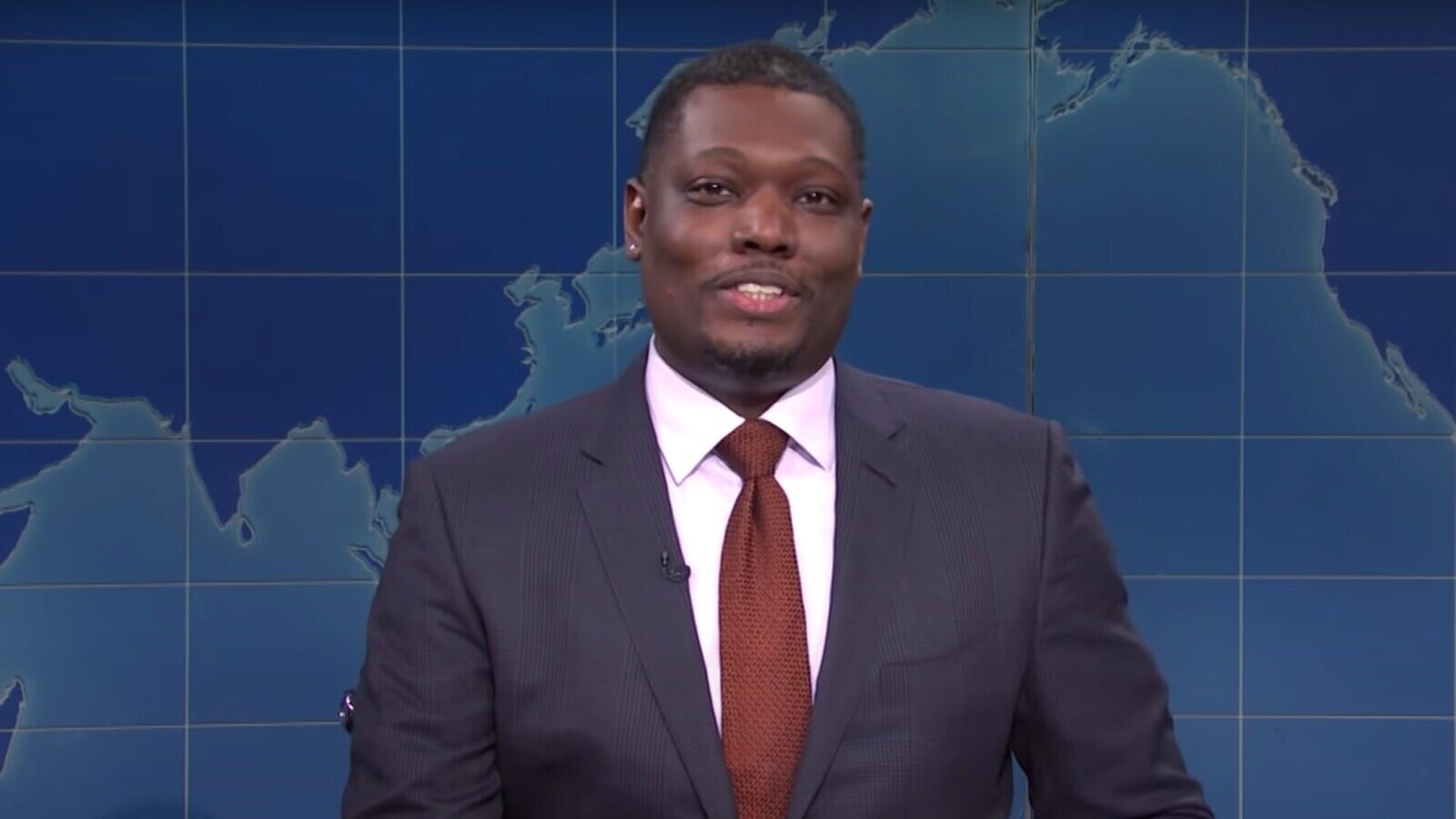
Note: This is an opinion-style entertainment analysis based on publicly reported information about Saturday Night Live, Michael Che, “Weekend Update,” and recent cast-change coverage.
There are few American television jobs more pressure-packed, more visible, or more psychologically strange than sitting behind the “Weekend Update” desk on Saturday Night Live. One minute, you are delivering a punchline about politics, pop culture, or some deeply confused celebrity apology. The next, the internet is treating your eyebrow movement like a papal signal. Michael Che knows this better than almost anyone. Since 2014, he has co-anchored “Weekend Update” with Colin Jost, turning their dry, awkward, sometimes savage chemistry into one of the most recognizable parts of modern SNL.
That is exactly why his recurring cryptic posts about a possible exit have become such a problem. Che is too experienced, too influential, and too media-savvy to pretend he does not know what happens when he hints, jokes, ducks, or half-teases that he might be done with the show. Fans speculate. Entertainment sites write headlines. Social media begins its annual “Is Che leaving?” scavenger hunt. And somewhere inside 30 Rockefeller Plaza, newer comedians who would probably fight a raccoon in Times Square for a stable spot on SNL have to watch a veteran make the job look like a vague relationship status.
So yes, here is the spicy but reasonable argument: Saturday Night Live should fire Michael Che if he keeps making cryptic posts about his potential exit. Not because Che is untalented. That would be absurd. Not because every joke must be corporate-approved and wrapped in bubble wrap. That would kill comedy faster than a committee meeting about “edgy but brand-safe humor.” The issue is professionalism, timing, and respect for the show’s ecosystem.
Michael Che Is Not Just Another Cast Member
Michael Che is not a random featured player testing out three lines in a game-show sketch at 12:48 a.m. He is one of the defining voices of the current SNL era. He joined “Weekend Update” in 2014, replacing Cecily Strong at the anchor desk and forming a long-running partnership with Colin Jost. Together, Che and Jost have become the longest-running “Weekend Update” anchor team in the show’s history, a fact that matters because “Weekend Update” is not just another segment. It is the spine of the episode.
Even in uneven weeks, viewers often stick around for “Update.” It is the place where SNL most directly responds to the news cycle, where the writing has to be sharp, fast, and fearless, and where a good joke can travel across social platforms before the cold open has finished cooling. Che’s deadpan delivery, willingness to poke at uncomfortable subjects, and prank-war chemistry with Jost have helped keep the desk culturally relevant.
That legacy gives him leverage. It also gives him responsibility. When a performer at Che’s level posts something mysterious about his future, it does not land like a harmless private thought. It becomes a public signal. It affects the narrative around the show. It can overshadow colleagues. It can make SNL look less like a disciplined comedy institution and more like a group chat where someone keeps typing “big news soon” and then refusing to elaborate.
The Cryptic Exit Bit Has Become Exhausting
Che’s possible departure has been a recurring topic for years. In 2022, after comments at a stand-up performance sparked speculation, he pushed back on the idea that he had officially announced he was leaving. Later, he continued to be publicly uncertain about his future. More recently, as SNL moved through its 50th anniversary season and into a major cast reshuffle, fans again wondered whether Che and Jost might finally step away from “Weekend Update.”
To be fair, performers are allowed to be unsure. A job like SNL is famously demanding. The weekly grind is brutal. Writing topical comedy overnight, rehearsing, rewriting, dealing with live television, and then waking up to everyone online grading your jokes like a national exam cannot be easy. Che has every right to think about what comes next.
But there is a difference between privately considering your future and publicly turning that uncertainty into recurring content. A cryptic post can be funny once. Twice, maybe. After that, it becomes the comedy equivalent of a smoke alarm with a low battery: not an emergency, exactly, but annoying enough that everyone in the house wants someone to deal with it.
When the Joke Becomes the Brand Problem
Che’s defenders might argue that the ambiguity is part of his comic personality. He trolls fans. He plays with discomfort. He likes making people guess. That is all true, and sometimes it works. The problem is that SNL is not just Che’s personal stand-up stage. It is a legacy television institution with a giant cast, a massive writing staff, network obligations, advertisers, publicists, booking considerations, and younger comics whose careers can change overnight based on whether they are kept, cut, promoted, or forgotten.
When Che hints at leaving while other cast members are actually being let go, the bit can feel tone-deaf. Recent SNL cast changes have included departures from performers who were still building their national profiles. For those comics, leaving the show is not a cute mystery. It is a career earthquake. A veteran with more than a decade of SNL status joking around with his exit while others absorb real professional losses can read as attention-hungry, even if that is not his intention.
Comedy thrives on timing. Bad timing can make even a decent joke feel sour. If Che wants to leave, he should say so. If he wants to stay, he should stop feeding the rumor machine. If he wants to keep trolling, SNL should decide whether the troll is still worth the distraction.
Why SNL Should Draw a Line
Saturday Night Live has survived because it knows how to renew itself. Cast turnover is not a glitch in the machine; it is the machine. The show launched in 1975 and has outlasted waves of comedy trends, political eras, network changes, and audience habits. It has produced superstars, misfires, legends, cult favorites, and sketches people quote for decades. Its greatest strength is that it can keep moving.
That is why Che’s ongoing exit ambiguity should not become bigger than the show. No cast member, not even a popular “Weekend Update” anchor, should be allowed to create a permanent will-he-or-won’t-he sideshow. At a certain point, leadership has to ask a simple question: does this still help the program?
If the answer is yes, fine. Keep him. Let Che and Jost continue the joke swaps, the political barbs, and the awkward laughs that have become part of the modern SNL rhythm. But if the answer is no, then SNL should act like the institution it is. Give Che a clean sendoff, thank him for a historic run, and hand the desk to someone hungry enough to treat the job like a privilege instead of a recurring punchline.
Firing Would Not Erase Che’s Achievements
To argue that SNL should be ready to fire Che is not to argue that Che has failed. Quite the opposite. He has had an unusually long and successful run on a show where longevity is difficult. He helped shape “Weekend Update” across multiple election cycles, cultural shifts, and comedy controversies. He and Jost turned the joke-swap format into a recurring viral tradition. Che’s relaxed delivery often gives sharp jokes an extra sting because he seems almost bored by the chaos he is describing.
But television history is full of talented people who stayed too long, got restless, or began signaling that they were halfway out the door before the audience was ready. The graceful exit is an underrated art. Leave too early, and people wonder what could have been. Leave too late, and people start refreshing the page for replacement rumors.
Che is close to that danger zone. He has enough goodwill to leave as a major figure in SNL history. But every vague post chips away at that clean ending. Instead of “What a run,” the conversation becomes “Is he doing this again?” That is not the farewell arc a comedian should want.
The “Weekend Update” Desk Can Survive Change
One reason some fans panic about Che leaving is that “Weekend Update” has become so identified with the Jost-Che partnership. Their contrast is easy to understand: Jost often plays the polished, slightly uncomfortable straight man, while Che brings a looser, more unpredictable energy. Their chemistry is especially useful during joke swaps, when each anchor forces the other to read jokes designed to cause maximum visible suffering. It is childish, clever, and occasionally spectacular television.
Still, “Weekend Update” has always evolved. Chevy Chase, Jane Curtin, Dennis Miller, Norm Macdonald, Tina Fey, Jimmy Fallon, Amy Poehler, Seth Meyers, Cecily Strong, Jost, and Che all brought different rhythms to the desk. Some eras were sharper. Some were warmer. Some were more chaotic. The segment’s strength is not that one person owns it forever. Its strength is that the format can absorb new voices.
Replacing Che would be difficult, but not impossible. SNL has a deep bench of performers, writers, stand-ups, and rising comedy voices who could reinterpret the desk for a new era. The next anchor should not try to be Michael Che 2.0. That would be a mistake. The next anchor should bring a fresh point of view, a clear relationship with the audience, and the discipline to make the news funny without turning their employment status into a weekly escape room.
What Che Should Do Instead
The cleanest solution is simple: Michael Che should stop being cryptic. That does not mean he has to publish a five-page resignation roadmap with footnotes and emotional weather patterns. He can still be funny. He can still be evasive in interviews. He can still make jokes about being tired, old, bored, or ready to open a coffee shop where every drink is called “Please Stop Asking Me About SNL.”
But the public teasing should end. If he is leaving, announce it with class. If he is staying, say he is staying and get back to work. If he genuinely does not know, say that once and stop feeding the machine. Mystery is powerful when it protects something meaningful. It is irritating when it becomes a substitute for communication.
SNL also has a responsibility here. The show should not let the public narrative drift forever. Lorne Michaels has always understood the value of controlled uncertainty, but the internet has changed the rules. A vague post can now become a headline, a TikTok theory, a Reddit argument, and a newsletter topic before lunch. The show does not need to respond to every rumor, but it should not allow one veteran’s teasing to overshadow larger creative decisions.
Why Fans Are So Invested
The reason Che’s posts get attention is obvious: people care. They care about “Weekend Update.” They care about the Che-Jost dynamic. They care about whether SNL is entering a new era after its 50th anniversary. Fans love transition drama because SNL is both a television show and a comedy sports league. Everyone has a lineup opinion. Everyone thinks they know who should be promoted, who should leave, who is underrated, who is overused, and who should never again be asked to play a game-show host.
That investment is good for the show. It means SNL still matters. But fan attention is not unlimited. When the same exit rumor repeats too many times, curiosity turns into fatigue. Eventually, the audience stops asking, “Is he leaving?” and starts asking, “Why are we still talking about this?”
That shift is dangerous for Che. It is also dangerous for SNL. The show needs viewers discussing sketches, breakout performers, political satire, musical guests, and the next generation of comedy voices. It does not need a veteran’s Instagram ambiguity eating the oxygen like a houseplant with a publicist.
Experience Section: What This Situation Teaches About Work, Loyalty, and Leaving Well
Anyone who has worked in a high-pressure creative environment has seen a version of this story. Maybe it was not on live television. Maybe there was no famous desk, no cue cards, no studio audience, and no national headline. But the dynamic is familiar: one experienced person starts hinting that they may leave, and suddenly everyone else has to work around the fog.
In a normal office, it might be the senior designer who keeps saying, “I may not be here next quarter,” while still approving campaigns. In a restaurant, it might be the head chef who keeps joking about opening a food truck while the kitchen staff wonders whether they should update their résumés. In a school club, it might be the president who keeps implying they are done but never actually hands over the notebook. The setting changes, but the effect is the same. Ambiguity from a leader creates emotional static.
The first lesson is that leaving is not just a personal decision when other people depend on your role. Che has earned the right to move on whenever he wants. But because “Weekend Update” is a central part of SNL, his uncertainty affects more than him. Writers may wonder what voice they are writing for. Producers may consider replacement plans. Fans may read every episode as a goodbye clue. Newer cast members may feel their own exits are being overshadowed by a veteran who still has a seat.
The second lesson is that humor does not erase impact. A joke can still create confusion. A troll can still waste people’s time. A vague post can still redirect attention from colleagues who deserve their own moment. Creative people often use humor to avoid sincerity, and sometimes that is charming. But when the subject is a major job, a major show, and other people’s careers, endless joking starts to look less like wit and more like avoidance.
The third lesson is that clean endings are powerful. When someone leaves well, they make room for gratitude. The audience gets to celebrate the work. The team gets closure. The replacement gets a fair runway. The person leaving gets to control the final chapter instead of letting rumor write it for them. Che has enough history with SNL to deserve that kind of ending. He should not reduce his exit, whenever it comes, to a trail of vague captions and fan frustration.
The fourth lesson is for organizations: do not confuse loyalty with passivity. SNL can respect Che’s contributions and still set boundaries. A workplace can love a veteran and still say, “We need clarity.” In fact, strong institutions survive because they know when to honor the past and when to protect the future. If Che wants to stay, wonderful. If he wants to leave, wonderful. If he wants to keep publicly playing both sides forever, SNL should stop treating that as harmless.
Finally, this situation is a reminder that attention is not the same as value. Cryptic posts generate clicks, but clarity builds trust. Che’s best work has never depended on mystery about his employment. It has depended on timing, perspective, delivery, and chemistry. Those are real talents. They are also the talents he should let define the end of his SNL run, not another round of “What did he mean by that?”
Conclusion: Che Should Choose the Exit or Respect the Desk
Michael Che has been one of the most important Saturday Night Live figures of the past decade. His run on “Weekend Update” is historically significant, commercially valuable, and often very funny. That is exactly why the cryptic exit routine has worn thin. A performer with Che’s résumé should not need mystery-posting to keep the audience interested. His work already did that.
If Che wants to leave, he should leave with style. If he wants to stay, he should stop turning his future into a guessing game. And if he keeps making cryptic posts that distract from the show, overshadow cast transitions, and make his commitment look optional, then SNL should be willing to fire him and move forward. Not as punishment. As renewal.
After all, Saturday Night Live has always been bigger than one desk, one anchor, one era, or one Instagram story. The show’s future depends on people who want to be in the room, write the jokes, take the hits, and pass the torch when the time comes. Michael Che has earned applause. Now he needs to earn clarity.










