
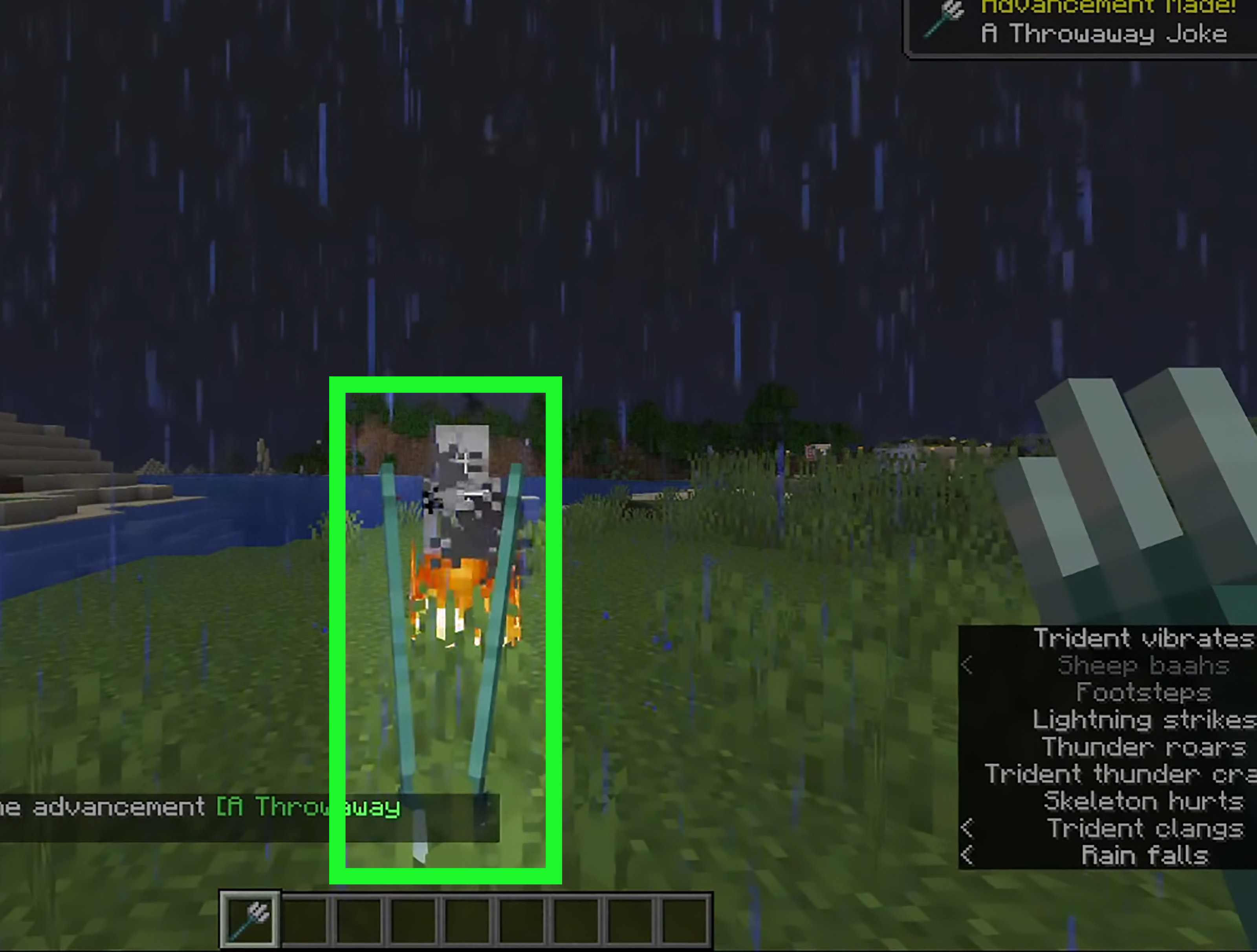
A trident in Minecraft is one of those items that makes you feel instantly cooler. You are no longer just Steve with a sword. You are Steve, ruler of storms, ocean explorer, drowned-slayer, and occasional accidental thrower of priceless weapons into ravines. The only problem? Tridents are not easy to find, and once you finally get one, it often arrives with the durability of a wet paper fork.
That is why learning how to repair trident in Minecraft is so important. Unlike swords, pickaxes, and armor, a trident cannot be repaired with iron ingots, prismarine shards, diamonds, or any “surely this makes sense” material. Minecraft looks at your logic, smiles politely, and says, “Nope. Bring another trident or get Mending.”
In this guide, you will learn the three simple ways to repair a trident in Minecraft: using an anvil, using a crafting table or grindstone, and using the Mending enchantment. We will also cover which method protects enchantments, which one is best for early game, and which repair strategy keeps your favorite thunder stick alive for the long haul.
Why Tridents Are Worth Repairing
Before repairing a trident, it helps to understand why this weapon deserves the VIP treatment. A trident is both a melee and ranged weapon. You can stab enemies up close or throw it like a spear. With the right enchantments, it becomes even more useful: Loyalty makes it return after being thrown, Channeling can summon lightning during thunderstorms, Riptide launches you through water or rain, Impaling boosts damage in aquatic situations, Unbreaking slows durability loss, and Mending repairs it with experience points.
That is a lot of power packed into one item. Unfortunately, tridents are also rare. You usually get one by defeating drowned mobs that spawn with tridents, and even then, a drop is not guaranteed. In other words, repairing a trident is not just convenient. It is survival economics. When the ocean finally gives you a magical sea fork, do not treat it like a disposable wooden shovel.
Quick Answer: The 3 Ways to Repair a Trident
There are three main methods to repair a trident in Minecraft:
- Repair with an anvil: Combine a damaged trident with another trident while keeping enchantments.
- Repair with a crafting table or grindstone: Combine two damaged tridents, but most enchantments are removed.
- Repair with Mending: Add the Mending enchantment and collect XP while holding or equipping the trident.
The best method depends on your situation. If your trident has valuable enchantments, use an anvil or Mending. If it has no enchantments and you just need more durability fast, a crafting table or grindstone works fine. If you want a trident that lasts practically forever, Mending is the champion.
Method 1: Repair a Trident with an Anvil
The anvil method is the safest repair option when you care about enchantments. If your trident has Loyalty, Riptide, Channeling, Impaling, Unbreaking, or Mending, do not toss it into a crafting table unless you enjoy emotional damage. An anvil lets you combine two tridents while preserving enchantments and increasing durability.
What You Need
- One damaged trident
- One additional trident
- One anvil
- Enough experience levels to pay the repair cost
How to Do It
- Place your anvil on the ground.
- Open the anvil interface.
- Put your damaged trident in the first slot.
- Place another trident in the second slot.
- Take the repaired trident from the result slot.
This method combines durability from both tridents and keeps useful enchantments. If both tridents have compatible enchantments, the anvil may also combine them. For example, if one trident has Loyalty and another has Impaling, you may be able to merge those benefits into one stronger weapon. However, some enchantments are incompatible. Loyalty and Channeling can exist together, but Riptide cannot be combined with either of them. Minecraft does not allow you to become a flying lightning boomerang god without rules. Rude, but fair.
When You Should Use the Anvil Method
Use an anvil when your trident already has valuable enchantments. This is especially true for rare setups like Loyalty III with Channeling, or a strong Impaling trident you use for underwater combat. The anvil costs experience levels, and repeated anvil work can become expensive, but it is still the best short-term way to repair an enchanted trident without stripping away its magic.
The downside is obvious: you need another trident. Since tridents are rare, this can take some drowned farming. But if you have a few half-broken tridents sitting in a chest, an anvil can turn that sad pile of ocean forks into one reliable weapon.
Method 2: Repair a Trident with a Crafting Table or Grindstone
The second way to repair a trident is to combine two damaged tridents in a crafting table, the 2×2 inventory crafting grid, or a grindstone. This is the budget repair method. It costs no experience levels and requires no anvil, which is great if you are early in the game or currently iron-poor.
What You Need
- Two damaged tridents
- A crafting table, grindstone, or your inventory crafting grid
How to Do It with a Crafting Table
- Open your crafting table or inventory crafting grid.
- Place two damaged tridents anywhere in the grid.
- Take the repaired trident from the output slot.
How to Do It with a Grindstone
- Place and open a grindstone.
- Put one damaged trident in the first slot.
- Put the second damaged trident in the next slot.
- Collect the repaired trident from the result slot.
The big warning: this method removes enchantments. If your trident has Loyalty, Channeling, Riptide, Impaling, Unbreaking, or Mending, those enchantments will be lost when repaired through a crafting table or grindstone. Curse enchantments behave differently, but for most normal gameplay, the takeaway is simple: do not use this method on a trident you love.
When You Should Use This Method
Use the crafting table or grindstone method when the tridents have no useful enchantments. It is perfect for combining low-durability tridents dropped by drowned mobs. Think of it as cleaning out your storage chest. Two nearly broken tridents go in, one better trident comes out, and your inventory gets slightly less chaotic. That is basically therapy, but blocky.
This method is also helpful before enchanting. If you have several plain tridents, combine the damaged ones first, then enchant the best repaired trident later. That way, you avoid wasting books or experience on a weapon that is already close to breaking.
Method 3: Repair a Trident with Mending
Mending is the best long-term way to repair a trident in Minecraft. Once Mending is applied, experience orbs repair the trident instead of only increasing your XP bar. This means your trident can stay in service for a very long time, especially if you pair Mending with Unbreaking III.
What You Need
- A trident
- A Mending enchanted book
- An anvil
- Experience levels to apply the book
- A source of XP, such as mobs, mining, smelting, trading, fishing, or XP farms
How to Add Mending to a Trident
- Get a Mending enchanted book.
- Place an anvil on the ground.
- Put the trident in the first slot.
- Place the Mending book in the second slot.
- Take the enchanted trident from the output slot.
After that, hold the trident while collecting XP. You can also place it in your off-hand while killing mobs with another weapon. As XP orbs are collected, the game repairs eligible Mending items. If you are wearing armor or holding other tools with Mending, the XP may be split among them, so repairing can feel slower. For focused repairs, temporarily remove other Mending gear or hold only the trident you want to fix.
How to Get Mending
Mending is a treasure enchantment, which means you should not expect to simply roll it from a normal enchanting table. Common ways to get Mending include trading with librarian villagers, fishing, and finding enchanted books in loot chests. Villager trading is usually the most reliable method because you can work toward a librarian trade instead of praying to the loot table gods while fishing for three hours and catching mostly pufferfish and regret.
Why Mending Is the Best Repair Method
Mending is ideal because it does not consume another trident. That is a huge advantage. Since tridents are rare, using spare tridents as repair materials can feel painful. With Mending, XP becomes your repair fuel. Build a simple XP farm, trade with villagers, smelt items, mine ores, or fight mobs, and your trident will recover durability over time.
For the strongest setup, combine Mending with Unbreaking III. Unbreaking gives the trident a chance not to lose durability when used, and Mending restores durability when you gain XP. Together, they turn your trident from “fragile ocean souvenir” into “reliable storm-powered multitool.”
Can You Repair a Trident with Prismarine?
No, you cannot repair a trident with prismarine shards, prismarine crystals, iron ingots, diamonds, copper, nautilus shells, or any other material. This is one of the most common Minecraft trident repair mistakes. The item may look like it belongs in an ocean monument gift shop, but Minecraft does not treat prismarine as its repair material.
To repair a trident, you need another trident or the Mending enchantment. That is it. If you have been standing at an anvil with prismarine shards wondering why nothing works, congratulations: you have completed a classic Minecraft learning experience.
Best Repair Method for Each Situation
Best for Enchanted Tridents: Anvil or Mending
If your trident has enchantments, protect them. Use an anvil if you have a spare trident and enough XP. Use Mending if you want the best long-term solution. Never use a crafting table or grindstone on an enchanted trident unless you intentionally want to remove enchantments.
Best for Early Game: Crafting Table
If you just found two damaged, unenchanted tridents, use a crafting table. It is simple, free, and fast. You do not need an anvil or XP levels, and you can do it directly from your inventory crafting grid if needed.
Best for Late Game: Mending and Unbreaking III
For late-game players, Mending plus Unbreaking III is the best repair strategy. Add Loyalty III if you want a throwing trident that returns, or Riptide III if you want a movement-focused trident for rain and water. Just remember: Riptide does not work with Loyalty or Channeling, so choose your trident personality before spending expensive books.
How to Avoid Breaking Your Trident
Repairing is useful, but prevention is even better. First, add Unbreaking as soon as possible. Second, avoid throwing a non-Loyalty trident into dangerous places. A trident can land somewhere unreachable, especially near lava, deep caves, cliffs, or the void. Third, keep an eye on durability before major fights. The last thing you want is for your trident to break mid-battle while a drowned watches with the expressionless confidence only Minecraft mobs can have.
Also, consider keeping separate tridents for different jobs. A Loyalty and Channeling trident is excellent for combat and thunderstorms. A Riptide trident is better for travel in water or rain. Keeping separate builds prevents enchantment conflicts and helps you avoid overusing one precious weapon for every task.
Common Mistakes When Repairing a Trident
Using a Crafting Table on an Enchanted Trident
This is the big one. A crafting table repair can erase valuable enchantments. If your trident has Mending, Loyalty, Channeling, Riptide, Impaling, or Unbreaking, use an anvil instead.
Trying to Use Iron or Prismarine
Tridents do not use standard repair materials. They are repaired with another trident or with Mending. No amount of staring at the anvil will make prismarine work.
Waiting Until the Trident Is Almost Broken
Do not wait until your trident has one durability left unless you enjoy suspense. Repair it before risky ocean monuments, raids, cave trips, or thunderstorm adventures. Minecraft is full of surprises, and most of them hiss, shoot, explode, or swim at you with poor manners.
Extra Experience: What Repairing a Trident Feels Like in Real Gameplay
The first time you get a trident in Minecraft, it feels like winning a tiny lottery run by angry underwater zombies. You spot a drowned holding one, panic a little, dodge a few throws, and finally defeat it. Then the item drops. You swim over, pick it up, open your inventory, and realize the durability bar is already low. Classic Minecraft. The game gives you treasure and homework at the same time.
In practical survival gameplay, the repair method you choose often depends on how emotionally attached you are to that specific trident. If it is a plain trident with no enchantments, combining it with another damaged one in a crafting grid is painless. You are not losing anything special. It is like merging two cracked helmets into one slightly less embarrassing helmet. Useful, not sentimental.
But once enchantments enter the picture, everything changes. A Loyalty trident feels completely different from a normal trident because you can throw it without sprinting after it like a desperate fisherman. Add Channeling, and suddenly every thunderstorm becomes an event. You are no longer hiding indoors from lightning; you are looking outside like, “Finally, weather suitable for business.” That is when the anvil becomes your best friend. Paying a few XP levels is worth it to protect a trident that actually does something special.
Mending, however, is where the trident becomes part of your permanent kit. A Mending trident changes how you play because every XP source becomes a repair station. Trading with villagers? Repair time. Fighting mobs? Repair time. Mining ores? Repair time. Smelting a ridiculous amount of kelp because you made questionable life choices? Also repair time. It turns trident maintenance into a background habit instead of an emergency.
One helpful habit is to carry the trident in your off-hand while collecting XP, especially if you want to repair it quickly. However, be aware of other Mending gear. If your armor, pickaxe, sword, and elytra all have Mending, the XP may repair different items instead of focusing on your trident. When your trident is badly damaged, temporarily remove extra Mending items or hold only the trident so the XP goes where you want it.
Another experience-based tip: do not throw a non-Loyalty trident casually. It sounds obvious, but Minecraft players are brave, curious, and occasionally very silly. Throwing a trident into a ravine, ocean ruin, lava-lit cave, or crowded battlefield can become a recovery mission. Loyalty solves that problem beautifully. Without Loyalty, always think before throwing. Ask yourself, “Can I safely walk over there and pick it up?” If the answer is no, maybe use a bow like a responsible adult.
For long-term worlds, the best setup is usually one Loyalty trident and one Riptide trident. The Loyalty trident is your combat tool, especially with Channeling and Impaling. The Riptide trident is your movement toy, perfect for rainstorms, oceans, and dramatic launches that may or may not end with fall damage. Keep both repaired with Mending, and you will rarely need to farm drowned again unless you want backup tridents.
The biggest lesson from using tridents is simple: repair early, enchant wisely, and never waste a good trident. Minecraft’s oceans are dangerous enough without losing your best weapon because you ignored a tiny durability bar. Treat your trident well, and it will reward you with lightning strikes, underwater victories, and the unforgettable joy of watching a weapon fly back into your hand like it missed you.
Conclusion
Knowing how to repair trident in Minecraft helps you protect one of the game’s rarest and most entertaining weapons. For a plain trident, combine two damaged tridents in a crafting table or grindstone. For an enchanted trident, use an anvil so you do not lose valuable upgrades. For the best long-term solution, apply Mending and repair your trident with XP.
The smartest strategy is to repair plain tridents before enchanting them, save anvils for valuable enchanted tridents, and eventually add Mending plus Unbreaking III. Do that, and your trident can last through ocean raids, drowned fights, rainy Riptide launches, and every dramatic thunderstorm moment your blocky heart desires.
Note: This article is written for current Minecraft survival gameplay and focuses on practical trident repair methods players can use in Java and Bedrock Edition. It avoids placeholder citations, duplicated source wording, and unnecessary publishing artifacts.














