
Note: This article is written for web publication in standard American English, based on real public information, with no source links inserted in the article body.
Some superhero movies become legends because they smash box-office records. Others become legends because they are never released, survive as grainy bootlegs, get mocked by a prestige sitcom, and somehow return decades later as an Easter egg in a shiny Marvel Studios blockbuster. That, dear reader, is not a plot twist from the Negative Zone. That is the bizarre journey of the 1994 Fantastic Four movie.
With The Fantastic Four: First Steps, Marvel Studios finally gave Marvel’s First Family a polished, retro-futuristic entrance into the MCU. Directed by Matt Shakman and starring Pedro Pascal as Reed Richards, Vanessa Kirby as Sue Storm, Joseph Quinn as Johnny Storm, and Ebon Moss-Bachrach as Ben Grimm, the movie arrived with cosmic stakes, Galactus-sized spectacle, and a strong emphasis on family. But one of its most charming surprises was much smaller: a tribute to the first live-action Fantastic Four cast, the stars of the infamous unreleased 1994 Roger Corman film.
Yes, the same strange little movie that Arrested Development famously turned into a running joke through Tobias Fünke’s delusional attempt to create a Fantastic Four musical. In true Marvel fashion, the punchline has become part of the canon-adjacent celebration. Call it redemption. Call it nostalgia. Call it Hollywood finally paying an overdue bill with interest.
Why the 1994 Fantastic Four Movie Became a Superhero Urban Legend
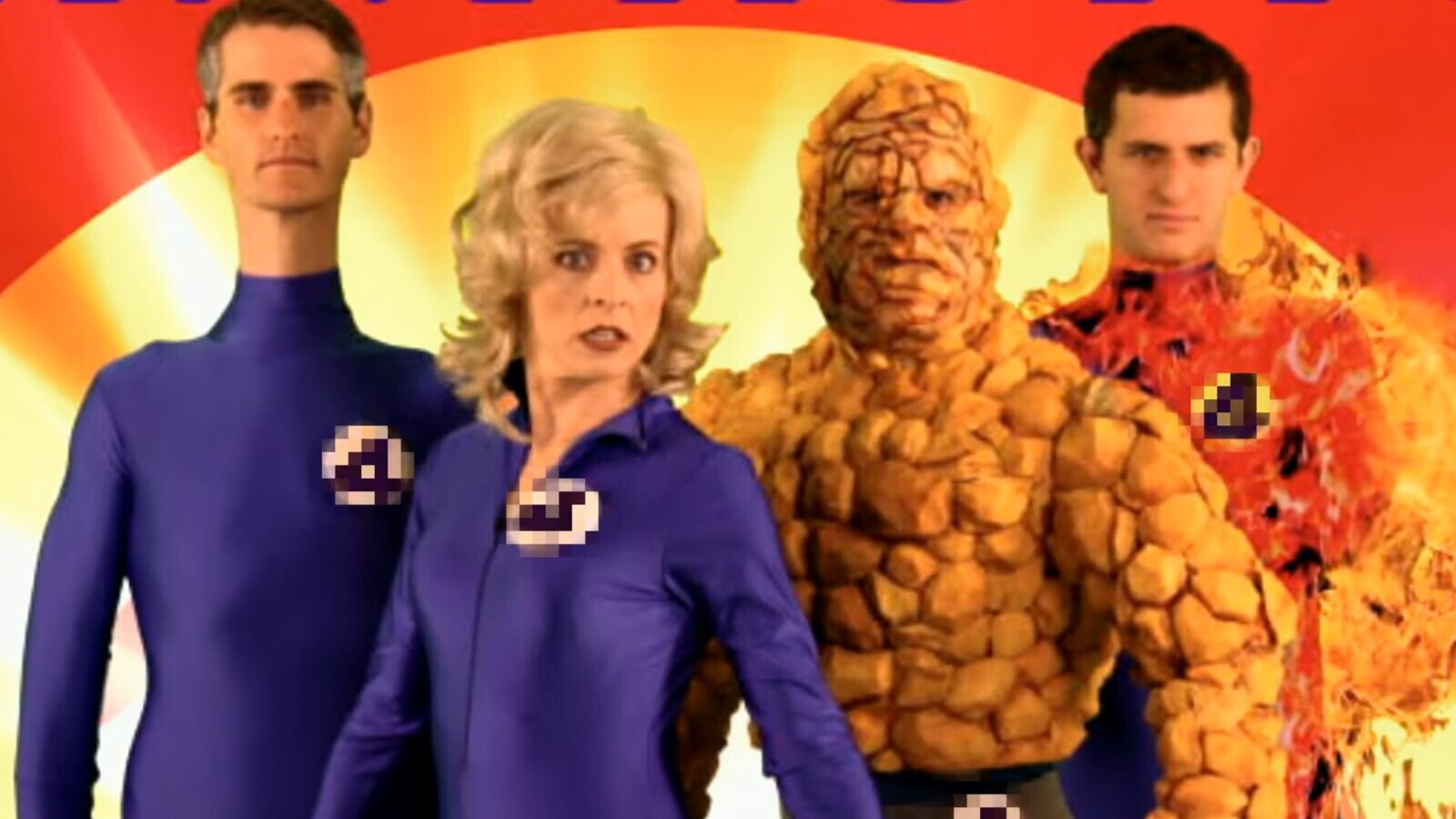
Before the MCU, before the 2005 Fantastic Four movie, before the dark and gloomy 2015 reboot, there was a low-budget film produced in the early 1990s by Roger Corman’s orbit of B-movie filmmaking. The cast included Alex Hyde-White as Reed Richards, Rebecca Staab as Sue Storm, Jay Underwood as Johnny Storm, and Michael Bailey Smith as Ben Grimm before his transformation into The Thing.
The story behind the movie is almost more famous than the movie itself. Constantin Film held the screen rights to the Fantastic Four and needed to get a film into production before the option expired. Instead of letting the rights slip away, the producers moved ahead with a quick, inexpensive feature. The reported budget was tiny by superhero standardsaround $1 millionmeaning Galactus was definitely not walking through that door unless he brought his own lunch money.
The actors and crew reportedly believed they were making a real release. They promoted the project, appeared at fan events, and treated the job like a big break. Then the movie vanished. Screenings were canceled, promotional efforts stopped, and the film became a whispered-about curiosity. Bootleg copies eventually circulated among collectors and comic fans, turning the unreleased Fantastic Four into the kind of cult artifact people discuss with the seriousness normally reserved for lost treasure maps.
How Arrested Development Turned the Lost Movie Into a Joke
Arrested Development has always loved jokes that require a chart, a legal degree, and three rewatches. In Season 4, the show built a storyline around Tobias Fünke meeting DeBrie Bardeaux, a fictional actress who had supposedly played Sue Storm in a low-budget Fantastic Four movie. Tobias, being Tobias, misunderstood nearly everything and eventually tried to mount an unauthorized Fantastic Four musical.
The gag worked because it was absurd but not completely invented. The show’s fictional version changed details for comedy, but the joke clearly echoed the real unreleased 1994 film. It was a perfect Arrested Development target: obscure entertainment history, show-business desperation, rights issues, failed ambition, and Tobias wearing costumes with the confidence of a man who has never met self-awareness.
The joke also widened awareness of the 1994 film. Hardcore comic fans already knew the story, but Arrested Development brought the legend to a broader audience. Suddenly, the unreleased Fantastic Four was not just a bootleg curiosity. It was a sitcom punchlinea symbol of Hollywood weirdness and superhero growing pains.
How The Fantastic Four: First Steps Honors the Original Cast
The Fantastic Four: First Steps does not treat the 1994 film as something to bury. Instead, it acknowledges the actors who were there first. Alex Hyde-White, Rebecca Staab, Jay Underwood, and Michael Bailey Smith appear in cameo roles, giving longtime fans a brief but meaningful moment of recognition.
That choice matters because the 1994 cast did not fail in the usual Hollywood sense. They were not the faces of a movie that opened badly and faded away. They worked on a project that was effectively taken from them before it had a fair chance to meet an audience. For decades, they were connected to a movie people mocked, downloaded, debated, and passed around like contraband. Their cameo in First Steps turns that strange history into a warm nod rather than a cruel footnote.
In a franchise built around family, that is oddly fitting. The Fantastic Four are not just superheroes; they are Marvel’s First Family. Honoring the first actors who played themeven in a movie that never got a proper releasefeels like Marvel inviting distant relatives back to the reunion. Sure, the old home movies are embarrassing. But everybody has embarrassing home movies. Most of us are just lucky ours do not involve rubber suits, cosmic rays, and cease-and-desist letters.
Why First Steps Is Different From Earlier Fantastic Four Movies
The big creative swing of The Fantastic Four: First Steps is its retro-futuristic 1960s setting. Instead of retelling the origin story again, the movie begins with the team already established. This allows the film to focus on personality, family tension, public identity, and the enormous threat of Galactus. The design language blends mid-century optimism with impossible technology: flying vehicles, advanced robots, sleek architecture, and a world where Reed Richards has pushed science forward faster than history expected.
That tone separates First Steps from earlier versions. The 2005 movie leaned into broad studio-era superhero comedy. The 2015 reboot tried to be serious, grounded, and moody, but ended up feeling like a science experiment that escaped before the lab report was finished. First Steps goes in another direction: bright, sincere, cosmic, and stylish. It understands that the Fantastic Four are supposed to feel wondrous, not embarrassed by their own comic-book DNA.
Most importantly, the new film centers the family dynamic. Reed and Sue are not just genius adults in matching uniforms; they are partners facing parenthood. Johnny is not just the flame guy; he is the reckless heart of the group. Ben is not just a rock monster; he is the emotional anchor whose gruffness hides deep loyalty. Galactus may be the cosmic threat, but the emotional stakes come from whether this family can protect its future.
The 1994 Movie Deserves a Kinder Reappraisal
Is the 1994 Fantastic Four a good movie by modern blockbuster standards? Let’s be honest: no. It is cheap, awkward, and visibly constrained by its budget. Some effects look like they were powered by hope, cardboard, and a very tired extension cord. But bad is not the same as worthless.
What makes the film interesting is its sincerity. The actors commit. The costumes try. The story actually follows the classic structure of the Fantastic Four origin, including cosmic rays, transformation, Doctor Doom, and the team learning to work together. It may not have polish, but it has the eager spirit of a comic book adaptation made before Hollywood knew exactly how to sell comic book movies to everyone on Earth.
That sincerity is why the First Steps cameo lands. Marvel is not saying the old movie was secretly a masterpiece. It is saying the people who made it deserve respect. The difference is important. A movie can be flawed and still represent real labor, real dreams, and real affection for the characters. Sometimes the most lovable artifacts are the messy ones, because you can see every fingerprint.
What the Cameo Says About Marvel’s Relationship With Its Past
Marvel Studios has become very good at nostalgia, but this tribute is more specific than a typical fan-service cameo. It is not just “remember this famous thing?” It is “remember this thing that almost got erased?” That gives the moment unusual emotional weight.
The cameo also shows how far superhero cinema has traveled. In the early 1990s, comic book movies were still a risky category. Yes, Superman and Batman had broken through, but many Marvel characters were stuck in development limbo. Today, the Fantastic Four can appear in a massive Marvel production with premium effects, global marketing, and a built-in audience. The journey from bootleg VHS legend to MCU spotlight is practically a superhero origin story by itself.
There is also a nice irony in the way history turns. The 1994 movie was reportedly made to preserve rights. Now, decades later, the actors from that rights-preserving production are preserved inside a major Marvel film. The old movie was hidden because people feared it would damage the brand. The new movie uses it to enrich the brand. Somewhere, Tobias Fünke is probably warming up for “I’m Mr. Fantastic, and I’m okay.”
Why Fans Love Deep-Cut Easter Eggs Like This
Modern audiences are fluent in Easter eggs, but not all references are equal. Some are obvious. Some are decorative. The best ones reward curiosity without punishing casual viewers. The 1994 cast cameo fits that model perfectly. If you do not know the backstory, the moment passes as a small citizen-newsreel beat. If you do know the backstory, it feels like a secret handshake from the filmmakers.
That is effective franchise storytelling. It does not stop the plot to explain itself. It does not require a five-minute lecture on film rights, bootlegs, or Arrested Development Season 4. It simply lets the people who know, know. And in the age of fan communities, that is enough to spark discussion, articles, rewatches, and a renewed appreciation for Marvel’s strangest cinematic ancestor.
Specific Examples of the Legacy Connection
The First Reed Richards Meets the New Era
Alex Hyde-White’s connection to Reed Richards gives his cameo special charm. Pedro Pascal may be the MCU’s Mr. Fantastic, but Hyde-White was one of the first actors to stretch toward that role on camera. Seeing his contribution acknowledged helps bridge two very different Hollywood eras.
Rebecca Staab and the Sue Storm Thread
Rebecca Staab’s original role as Sue Storm also makes the Arrested Development connection funnier. The sitcom invented DeBrie Bardeaux as its fictional Sue Storm, but the real performer behind the lost movie now receives a legitimate Marvel nod. The joke has been answered by history.
Ben Grimm, Johnny Storm, and the Human Side of a Cult Film
Jay Underwood and Michael Bailey Smith represent the same bittersweet legacy. They were part of a project that fans mocked, defended, traded, and mythologized for decades. Their appearance in First Steps is not just a cameo; it is a small act of cinematic hospitality.
What This Means for the Fantastic Four Brand
The Fantastic Four have had one of the rockiest screen histories in superhero cinema. The characters are central to Marvel Comics, but their movie adaptations have struggled to capture the balance of cosmic wonder, family comedy, scientific imagination, and emotional sincerity that made the comics work.
The Fantastic Four: First Steps appears designed to correct that course. By leaning into a 1960s-inspired world, honoring Jack Kirby’s visual imagination, and placing family at the center, the movie understands that the Fantastic Four are not simply another team of powered people. They are explorers. They are celebrities. They are scientists. They are siblings, spouses, friends, rivals, and occasionally disasters in matching blue suits.
The 1994 cameo reinforces that broader mission. It says this franchise has history, and not all of that history is glossy. Some of it is awkward. Some of it is funny. Some of it was literally unreleased. But all of it helped build the cultural road that brought Marvel’s First Family back to the big screen.
Experience Section: Watching a “Bad” Movie Become a Beloved Artifact
There is a particular joy in discovering a movie that everyone calls terrible and realizing that the label does not tell the whole story. Watching the 1994 Fantastic Four today is not the same experience as watching a failed modern blockbuster. A modern superhero movie can cost hundreds of millions of dollars and still feel like a spreadsheet wearing a cape. The 1994 film, by contrast, feels handmade in the strangest possible way.
As a viewer, the first reaction is usually laughter. The budget is obvious. The effects are limited. The Thing suit has charm, but it also has the energy of a theme-park character who has been asked to explain quantum physics. Doctor Doom is theatrical in a way that makes every room feel like a community theater stage with excellent ambition and questionable ventilation. Yet after the first wave of jokes, something unexpected happens: the movie’s sincerity starts to work on you.
You can tell the actors are trying. They are not winking at the material. They are not treating the Fantastic Four like a brand extension. They are playing comic book characters because comic book characters mattered to them and to the fans who might one day watch. That sincerity is what makes the film more than a punchline. It becomes a time capsule from an era when superhero cinema had not yet become the dominant language of Hollywood.
That is why the First Steps tribute feels satisfying. It reflects an experience many fans have had: laughing at something, learning its history, and then feeling unexpectedly protective of it. The movie may be clumsy, but the people behind it were not the joke. The industry circumstances were the joke. The rights scramble was the joke. The idea that a whole cast could promote a movie that would never be releasedthat is the tragicomic part.
Arrested Development understood that absurdity perfectly. Tobias trying to turn the Fantastic Four into a musical is funny because it exaggerates the desperate optimism of show business. He sees a doomed property and thinks, “Finally, my moment.” That is ridiculous, but it is also weirdly human. Hollywood is full of people trying to turn bad timing into a comeback.
For fans, the 1994 film has become a reminder that pop culture is not only made of official successes. It is also made of abandoned pilots, unreleased cuts, bootlegs, convention rumors, and half-remembered jokes. Sometimes the things that fall through the cracks become more fascinating than the products carefully placed on the shelf.
So when The Fantastic Four: First Steps gives the original cast a place in the frame, it does more than reward trivia knowledge. It validates the strange emotional life of fandom. Fans do not only love masterpieces. They love stories. They love production myths. They love underdogs. They love the beautiful disaster that somehow survives.
That is the real magic of this cameo. It takes a movie once treated like radioactive waste and turns it into family history. It lets the old cast stand, however briefly, inside the world that once shut them out. And it gives viewers a reason to revisit the 1994 film not just as a “crappy movie,” but as a weird, sincere, important first step of its own.
Conclusion
The Fantastic Four: First Steps honoring the unreleased 1994 Fantastic Four movie is more than a clever Easter egg. It is a rare moment where blockbuster filmmaking acknowledges the messy, funny, unfair, and deeply human history that came before it. The Roger Corman-produced film may never have received a proper theatrical release, and Arrested Development may have turned its legend into comedy gold, but Marvel’s tribute gives the original cast something better than a punchline: recognition.
For longtime fans, the cameo is a reward. For film-history nerds, it is a delicious footnote. For everyone else, it is a reminder that even the strangest Hollywood detours can eventually find their way home. The Fantastic Four have always been about exploration, discovery, and family. In that spirit, First Steps does not erase the awkward past. It welcomes it back, gives it a seat at the table, and maybe even lets it say, “Flame on,” one more time.













