
So, you want to become an actress with no experience. Excellent. You have chosen a career path that is thrilling, competitive, unpredictable, occasionally glamorous, and sometimes powered entirely by coffee, rejection emails, and the belief that your “one-line cashier role” is actually a major artistic breakthrough.
The good news? Every actress starts somewhere. Nobody is born holding a headshot, emotionally prepared for a self-tape, and casually saying, “My agent will call your people.” Experience is built, not magically delivered by a fairy godmother wearing a headset on a film set. Whether your dream is film, television, theater, commercials, voice acting, or streaming projects, you can begin without professional credits if you approach the process with patience, training, smart materials, and realistic expectations.
This guide explains how to start an acting career from zero, how to find beginner-friendly auditions, how to build an acting resume with no credits, and how to protect yourself from common industry scams. Let’s turn “I have no experience” into “I’m building my first real opportunities.”
Can You Become an Actress With No Experience?
Yes, you can become an actress with no experience, but “no experience” should be a starting point, not a permanent brand. Casting directors are not usually looking for a blank slate forever. They are looking for someone who can listen, take direction, show emotional truth, arrive prepared, and behave professionally. Those skills can be developed through classes, workshops, community theater, student films, short films, background work, and self-tape practice.
Many successful performers began outside the traditional pipeline. Some started in school plays. Some were discovered through local theater. Some entered through comedy, dance, music, social media, modeling, or voiceover. Others booked tiny roles before they booked memorable ones. The key is not waiting for permission. The key is creating proof that you can do the job.
Step 1: Learn What Acting Actually Requires
Acting is not simply “pretending while looking attractive under expensive lighting.” It is the craft of behaving truthfully under imaginary circumstances. That means studying voice, movement, script analysis, character motivation, emotional connection, listening, timing, and audition technique.
Before you chase casting calls, learn the basic language of the industry. A headshot is your professional photo. A resume lists your training, skills, and credits. A demo reel shows clips of your acting work. A self-tape is a recorded audition. A breakdown is a role description. A slate is a short introduction at the beginning or end of an audition tape.
Understanding these terms helps you avoid feeling like everyone at the audition received a secret handbook and you were handed a sandwich menu instead.
Step 2: Take Beginner Acting Classes
If you have no acting experience, classes are one of the fastest ways to build confidence and skill. You do not need to enroll in an expensive conservatory on day one. Start with beginner acting classes at a local theater, community college, arts center, improv school, or reputable online program.
What Kind of Acting Class Should You Take First?
Look for classes that focus on scene study, monologues, improvisation, audition technique, voice, movement, or on-camera acting. If your goal is film and TV, an on-camera class can help you understand how small expressions read on screen. If your goal is theater, scene study and voice training are especially helpful.
Improv is also a fantastic starting point. It teaches you to listen, respond, think quickly, and stop apologizing every time you make a bold choice. Acting rewards brave decisions. Improv teaches your brain that mistakes are not always disasters; sometimes they are the funniest part of the scene.
Step 3: Practice at Home Like It Is Your Job
Training does not only happen in class. Read plays. Watch great performances. Study how actors use silence, posture, eye contact, and rhythm. Record yourself performing short scenes and monologues. Then watch the footage, even though your first instinct may be to throw your phone into the nearest lake.
Seeing yourself on camera is uncomfortable at first, but it is necessary. You may discover that you blink dramatically when nervous, rush lines, overuse your hands, or deliver every sentence like you are announcing weather warnings. Good. Now you know what to improve.
Simple Home Practice Routine
Choose a short monologue or two-person scene. Read it several times. Identify what your character wants. Record one take. Watch it without insulting yourself. Record again with one adjustment: slower pace, clearer intention, stronger listening, or more natural movement. Improvement happens in small, repeatable steps.
Step 4: Get Simple, Honest Headshots
A headshot is one of your most important acting tools. It does not need to look like a perfume ad photographed on a yacht. It needs to look like you on a great day: clear, current, expressive, and casting-friendly.
For beginners, a clean photo with natural lighting, simple clothing, and a neutral background can work until you are ready to invest in professional headshots. Avoid heavy filters, extreme retouching, sunglasses, distracting props, or photos where you look nothing like the person who will walk into the audition.
Casting teams want accuracy. If your headshot says “moody detective” but you arrive looking like “confused substitute teacher after a windy bus ride,” it creates a trust problem.
Step 5: Build an Acting Resume With No Credits
Yes, you can create an acting resume with no professional acting credits. At the beginning, your resume can include training, workshops, special skills, school productions, community theater, student films, short films, public speaking, dance, singing, sports, languages, accents, musical instruments, or performance-related experience.
What to Put on a Beginner Acting Resume
Include your name, contact information, height, general location, training, performance experience, and special skills. Do not invent credits. Casting directors can smell fake resumes the way dogs smell snacks. If you have not played “Lead Detective” in a network crime drama, do not write it down and hope nobody checks.
Keep your resume clean and simple. A beginner resume is not embarrassing. It tells the industry, “I am new, I am training, and I am serious.” That is much better than pretending to be experienced and then panicking when someone asks basic set etiquette questions.
Step 6: Create Your First Demo Reel or Acting Clips
A demo reel is a short video that shows what you can do as an actress. If you have no footage yet, start with simple acting clips. Record two or three short scenes that show different sides of your range: natural conversation, emotional honesty, comedy, drama, or commercial energy.
Your clips do not need explosions, drone shots, or a dramatic soundtrack that sounds like the trailer for a superhero movie. Keep the focus on your performance. Clear audio matters. Good lighting helps. A plain background is fine. A strong performance in a simple setup is better than a flashy clip where nobody can hear your lines.
Step 7: Audition for Beginner-Friendly Roles
When you are starting out, look for auditions that welcome new talent. Good beginner opportunities include community theater, student films, short films, local commercials, background work, independent projects, web series, voiceover practice, and unpaid or low-paid projects that are safe, legitimate, and useful for building experience.
Student films can be especially helpful because film students need actors, and new actors need footage. This is one of the rare industry relationships where both sides are equally broke and equally ambitious. Beautiful, really.
Where Beginners Can Find Auditions
Look at reputable casting platforms, local theater websites, university film departments, community arts boards, Playbill job listings, local Facebook groups for film and theater, and official production company notices. Always research the project before submitting. If a casting notice is vague, asks for strange personal information, or demands money to audition, treat it like a raccoon in a tuxedo: interesting, but not trustworthy.
Step 8: Learn How to Self-Tape
Self-tapes are now a normal part of the audition process. A self-tape is simply a recorded audition that you submit online. For beginners, learning self-tape basics can make you look more prepared than many people with more credits.
Use a quiet space, steady camera, clear lighting, and clean audio. Frame yourself from about the chest up unless instructions say otherwise. Look slightly off camera when speaking to a reader, not directly into the lens unless the audition asks for it. Follow the instructions exactly. If the casting notice says “one minute,” do not send a seven-minute emotional documentary about your journey.
Good self-tapes are not about perfection. They are about clarity, preparation, and a performance that feels alive.
Step 9: Network Without Being Weird About It
Networking matters, but it does not mean chasing casting directors through coffee shops or sending agents thirty-seven messages titled “Please Discover Me.” Networking means building real relationships with other actors, teachers, filmmakers, photographers, writers, directors, and theater people.
Attend workshops. Join local productions. Help on student sets. Support other actors’ projects. Be friendly, reliable, and generous. In acting, people remember talent, but they also remember who showed up on time, knew their lines, and did not create chaos over the snack table.
Step 10: Understand Talent Agents and Managers
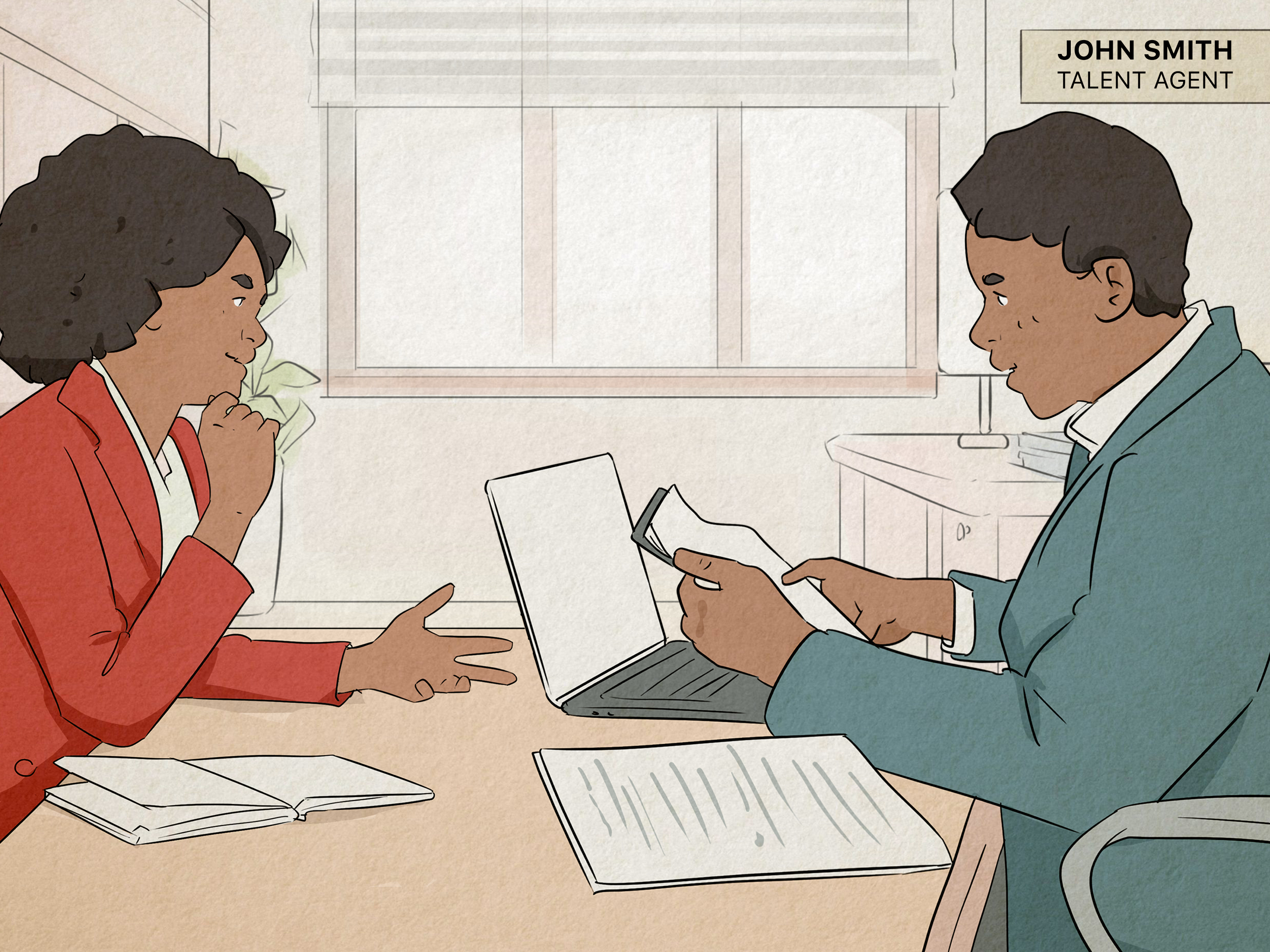
Many beginners believe they need an agent immediately. Not always. An agent can help submit you for larger opportunities, but agents are more likely to respond when you already have training, headshots, a resume, clips, and some proof that you are actively working.
A legitimate talent agent earns commission when you book paid work. Be cautious of anyone who guarantees fame, demands large upfront fees, requires you to buy expensive classes or photos from one specific provider, or pressures you to sign quickly. Real representation should feel professional, not like someone selling you a golden ticket to Hollywood from a folding table.
When Should You Contact Agents?
Consider reaching out after you have at least a solid headshot, basic resume, training, and a few clips. Your email should be short, polite, and specific. Include your materials, mention recent work or training, and avoid dramatic lines such as “I was born to be a star.” Agents read many submissions. Make their job easy.
Step 11: Protect Yourself From Acting Scams
New actresses are often targeted by scams because ambition can make people hopeful. Hope is wonderful. Hope with a credit card and no research is dangerous.
Red flags include paying to audition, being promised guaranteed roles, being told you must use one photographer or school, receiving vague casting messages from unknown accounts, or being asked to send sensitive personal information before a project is verified. For young performers, a parent or guardian should always be involved in communication, contracts, transportation, and set safety.
A real acting career does require investment in training and materials, but it should not require handing money to strangers who promise instant fame. Fame is not instant. Even microwave popcorn needs two minutes.
Step 12: Choose a Starting Lane
“Actress” is not one single job. You can pursue theater, film, TV, commercials, voiceover, background acting, sketch comedy, improv, social media comedy, motion capture, hosting, or corporate videos. Beginners often grow faster when they choose one or two lanes first.
If you love live performance, start with theater and improv. If you want camera work, focus on self-tapes, student films, and short films. If you have a distinctive voice, explore voiceover training. If you are comfortable with quick character work, commercials may be a good entry point.
Step 13: Build Confidence Through Small Wins
Your first win may not be a role. It may be completing a class, filming your first self-tape, getting feedback, auditioning without freezing, or updating your resume. These wins count. Acting careers are built through repetition, not one magical moment where a producer points at you across a restaurant and says, “You! You are the lead!”
The more you audition, the more normal auditioning becomes. Rejection does not mean you are bad. Often it means you were too tall, too young, too similar to someone already cast, not the right energy, or simply not what the team imagined. Your job is to keep improving and keep showing up.
Common Mistakes New Actresses Should Avoid
Waiting Until You Feel Ready
You will probably never feel completely ready. Start before your confidence becomes perfect. Confidence usually arrives after action, not before it.
Spending Too Much Too Soon
Do not empty your savings on luxury headshots, expensive showcases, and premium subscriptions before you understand the basics. Invest gradually and wisely.
Ignoring Training
Natural talent helps, but training sharpens it. Even charismatic beginners need technique, discipline, and feedback.
Using Outdated Materials
Keep your headshots, resume, and casting profiles current. If your photo looks like you from three hairstyles and two life eras ago, update it.
Taking Rejection Personally
Rejection is part of acting. Treat auditions as practice, not emotional court verdicts.
A Simple 90-Day Beginner Plan
Days 1–30: Learn and Prepare
Take a beginner acting or improv class. Watch performances with intention. Record short monologues at home. Create a basic resume. Take clean starter headshots.
Days 31–60: Build Materials
Film two short acting clips. Set up profiles on reputable casting platforms. Ask teachers or trusted actors for feedback. Start submitting to beginner-friendly projects.
Days 61–90: Audition and Improve
Submit consistently. Audition for student films, community theater, and local projects. Track what you submit for. Update your materials as you gain footage and credits. Keep training.
Experiences and Practical Lessons for Becoming an Actress With No Experience
Many beginners imagine their first acting experience will feel cinematic: they walk into a room, deliver one breathtaking line, and everyone silently agrees that a star has entered the building. In real life, the first steps are usually less glamorous and more educational. You may audition in a community center hallway while someone practices tap dancing in the next room. You may record your first self-tape with a stack of books holding up your phone. You may forget a line, recover awkwardly, and then realize the world did not end. These moments are not failures. They are the training ground.
A common beginner experience is learning that acting is much more physical and technical than expected. You might think you are being expressive, then watch the video and discover your face barely moved. Or you may think you are being subtle, only to realize you look like you are trying to communicate with aliens through eyebrow signals. Camera acting teaches you precision. Theater teaches you projection and stamina. Improv teaches you courage. Every format gives you a different muscle.
Another real experience is discovering how much preparation matters. New actresses sometimes believe auditions are about “being talented in the moment.” Talent helps, but preparation saves you. Reading the full scene, understanding the relationship, choosing a clear objective, and practicing with a reader can transform a nervous audition into a focused performance. Even if you do not book the role, you leave with stronger technique.
Beginners also learn that professionalism is a superpower. Show up early. Know your lines. Bring what was requested. Be polite to assistants, readers, stage managers, student directors, and crew members. The entertainment industry is smaller than it looks, and people recommend actors they trust. A talented actress who is difficult may lose opportunities to a slightly less experienced actress who is prepared, kind, and dependable.
One of the most valuable experiences is building comfort with rejection. At first, every “no” may feel personal. After a while, you understand that casting is a puzzle. You can give a strong audition and still not be the missing piece. That does not make the audition worthless. Each one teaches you how to handle pressure, follow directions, make choices quickly, and move on without turning your self-esteem into confetti.
Finally, many new actresses discover that small roles are not small lessons. A background role can teach set etiquette. A student film can give you footage. A community play can build discipline. A one-line commercial audition can teach timing. A self-tape you never submit can still improve your camera presence. The path begins by collecting these practical experiences, one brave step at a time. You do not need to start as a star. You need to start as a student of the craft who keeps showing up.
Conclusion
Learning how to become an actress with no experience is not about skipping the hard part. It is about entering the industry through smart beginner steps: training, practice, headshots, simple clips, safe auditions, networking, and steady improvement. You do not need a perfect resume to begin. You need curiosity, discipline, resilience, and enough humility to keep learning after every audition.
Start small, stay safe, and build proof of your ability. Take the class. Record the scene. Submit for the student film. Audition for the local play. Update your materials. Protect your money. Learn from every room, every tape, and every “not this time.” Experience is not something you wait for. It is something you create.
Note: This article is for educational and career-planning purposes. Young performers should involve a parent or guardian when communicating with casting contacts, attending auditions, reviewing contracts, or working on set.














