
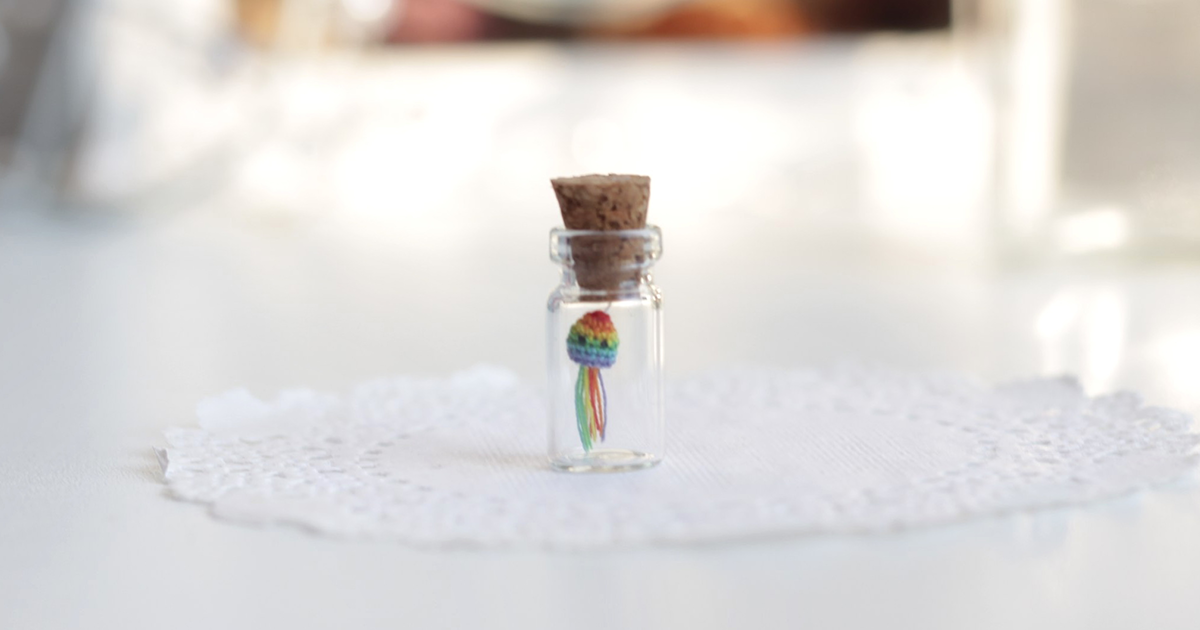
Some people collect stamps. Some people build ships in bottles. And some of us look at a tiny glass vial and think, “Yes, clearly this needs a crocheted frog inside.” Welcome to the charming, slightly ridiculous, and wonderfully patient world of micro crochet toys.
Micro crochet is exactly what it sounds like: crochet made very, very small. Instead of chunky yarn and a cozy blanket big enough to survive winter, the maker uses fine thread, tiny steel hooks, sharp eyesight, and the emotional stability of someone who can lose a teddy bear’s ear on the tip of a finger and still keep going. These miniature crochet toys may be only a few centimeters tall, yet each one carries a full-sized personality.
The series “I Make Micro Crochet Toys That Fit In A Tiny Glass Bottle (35 Pics)” celebrates handmade miniatures that combine amigurumi, dollhouse art, fiber craft, and collectible design. Think tiny cats, frogs, bears, aliens, holiday characters, pet portraits, and little dolls so small they look as if they escaped from a fairy’s craft basket. Placed inside corked glass bottles, they become pocket-sized worlds: soft, detailed, preserved, and almost suspiciously cute.
What Is Micro Crochet?
Micro crochet is a specialized form of crochet that uses extremely fine thread and very small hooks to create miniature objects. In regular crochet, a hook may be 3.5 mm, 4 mm, or larger. In miniature crochet, makers often work with hooks around 0.4 mm to 1.5 mm, depending on the thread, pattern, and desired size. The result is not just “small crochet.” It is crochet under a microscope, emotionally speaking.
Many micro crochet toys are also amigurumi. Amigurumi is the Japanese-inspired art of crocheting or knitting small stuffed dolls, animals, and objects. The technique usually involves tight stitches, spiral rounds, shaping, stuffing, and tiny facial details. When this method is scaled down, everything becomes more demanding. A simple round head can become a test of focus. A nose can be one stitch. A smile may require thread, a needle, and a deep conversation with your own patience.
Why Put Crochet Toys In A Tiny Glass Bottle?
The glass bottle turns the toy into a miniature scene. It protects the work from dust, fingers, pets, and the mysterious forces that make tiny things vanish forever. It also creates a sense of wonder. A micro crochet frog on a table is adorable. A micro crochet frog sealed inside a tiny bottle looks like a magical specimen discovered in an enchanted pond.
Glass also gives scale. When viewers see a handmade toy small enough to fit inside a bottle, the brain immediately asks, “How?” That is part of the fun. Miniature art works because it invites people to lean closer. It rewards attention. It makes viewers slow down in a world that usually prefers everything supersized, automated, and delivered in two business days.
The Charm Of Tiny Handmade Toys
What makes these micro crochet toys so appealing is not only their size. It is their personality. A tiny cat can look curious. A miniature bear can look sleepy. A frog can appear deeply philosophical, which is impressive for something smaller than a grape. The best miniature toys do not feel like reduced copies of bigger toys; they feel like complete characters living at a smaller address.
Because every stitch is visible, handmade imperfections become part of the charm. One ear may tilt slightly. One eye may sit a hair higher than the other. In mass production, those details might be considered flaws. In micro crochet, they become evidence of the human hand. They say, “A real person made this, probably while holding their breath.”
Tools And Materials Behind Micro Crochet Toys
Fine Thread
Micro crochet usually starts with crochet thread, embroidery floss, sewing thread, or very fine cotton. The thinner the thread, the smaller the finished toy can be. Cotton is popular because it holds stitch definition well, which matters when a whole animal face may be built from just a few stitches.
Tiny Steel Hooks
Steel crochet hooks are essential for miniature work. These hooks can be much smaller than the hooks used for blankets, scarves, or standard amigurumi. The hook must be small enough to catch fine thread without splitting it, but comfortable enough to use for long periods. That balance is harder than it sounds. A hook that is too large makes loose stitches; a hook that is too tiny can turn the project into a wrestling match with dental floss.
Stuffing And Structure
Even miniature toys need shaping. A tiny amount of stuffing helps heads, bodies, and paws keep their form. Some artists use very small bits of fiberfill, thread scraps, or other soft filling materials. The challenge is not to overstuff. In micro crochet, too much filling can distort the shape faster than a dramatic plot twist in a soap opera.
Needles, Tweezers, And Good Lighting
Micro crochet makers often rely on sewing needles, embroidery needles, tweezers, magnifying lamps, and bright natural light. These are not luxury items; they are survival tools. When a finished ear is smaller than a sesame seed, tweezers become less like an accessory and more like a trusted coworker.
How A Micro Crochet Toy Comes To Life
The process usually begins with an idea: a kitten, frog, dog, ghost, doll, bird, alien, or custom pet portrait. The maker studies the shape and decides which details are essential. At micro scale, editing is everything. A regular plush toy may have whiskers, paw pads, cheeks, eyebrows, clothing, and accessories. A micro version may need to suggest all that with just a few careful stitches.
Next comes the pattern or freehand shaping. Some artists adapt standard amigurumi patterns by using thinner thread and smaller hooks. Others design from scratch. Tiny heads and bodies are often worked in rounds, with increases and decreases forming the shape. Limbs, ears, tails, and accessories are made separately and attached with careful sewing.
The most nerve-racking stage is finishing. Embroidering a face on a toy this small can feel like performing surgery on a marshmallow. Eye placement matters. A fraction of a millimeter can change a character from “sweet little bunny” to “bunny who knows what you did.” That is why micro crochet artists often test placement before securing details permanently.
Why Micro Crochet Is Harder Than It Looks
At first glance, a tiny crochet toy may seem quick because it uses so little material. That is a charming misunderstanding. Micro crochet can take longer than larger crochet because every movement must be precise. The stitches are smaller, harder to see, and easier to lose. Counting rounds requires concentration. Fixing mistakes can be more difficult because ripping back fine thread may weaken or tangle it.
There is also the physical challenge. Working with tiny hooks can strain the hands, wrists, neck, and eyes. Many makers take breaks, stretch, use ergonomic grips, and switch between projects. A beautiful micro toy is not worth a heroic battle with hand cramps. The best makers learn to pace themselves.
Popular Micro Crochet Toy Ideas
Tiny Animals
Animals are among the most beloved subjects for micro crochet. Cats, dogs, bears, rabbits, foxes, frogs, koalas, ducks, owls, and mice all translate beautifully into small rounded shapes. The softer and more expressive the animal, the better. A tiny frog in a bottle has the energy of a museum artifact and a desk buddy at the same time.
Pet Portraits
Custom pet miniatures are especially meaningful. A maker can recreate a beloved cat’s markings, a dog’s floppy ears, or a pet’s favorite expression. These pieces become keepsakes rather than simple decorations. They can memorialize a pet, celebrate a new animal companion, or give a pet owner something adorable to display without requiring it to be fed.
Holiday Characters
Micro crochet works wonderfully for seasonal designs. Tiny ghosts, snowmen, pumpkins, Santas, elves, reindeer, hearts, flowers, and miniature gifts can all fit inside glass bottles. Because they are small, they make excellent ornaments, shelf decorations, or collectible holiday displays.
Fantasy And Pop-Culture Inspired Figures
Aliens, dragons, monsters, wizards, mushrooms, and storybook creatures are natural fits for miniature crochet. At this scale, fantasy feels believable. A tiny green alien glowing inside a bottle looks less like a toy and more like evidence from a very polite UFO incident.
Design Lessons From Micro Crochet
Micro crochet teaches one important rule: small does not mean simple. In fact, the smaller the object, the more intentional the design must be. Every color choice matters. Every stitch affects the silhouette. Every facial detail changes the mood. A large stuffed bear can survive a slightly awkward arm. A micro bear cannot hide anything. It is tiny, exposed, and depending entirely on good proportions.
That is why many successful micro crochet toys use simple shapes with strong character. Big heads, round bodies, short limbs, and expressive eyes create instant cuteness. This is similar to the design logic behind many beloved animated characters: simplify the form, exaggerate the emotion, and let the viewer’s imagination fill in the rest.
Are Micro Crochet Toys Safe For Children?
Micro crochet toys in glass bottles are usually best treated as collectibles, not playthings for small children. Their tiny parts, delicate construction, glass containers, corks, beads, and accessories can create choking or breakage hazards. In the United States, toys intended for young children must meet safety requirements, and items with small parts are especially important to label and handle properly.
For collectors, adult craft lovers, dollhouse enthusiasts, and careful display, these pieces are delightful. For babies, toddlers, pets, or anyone likely to chew first and ask questions later, they are not the right choice. A good rule is simple: if it is tiny enough to disappear in the couch, it should not be treated like a rugged toy.
Why Collectors Love Tiny Crochet In Bottles
Collectors are drawn to these pieces because each one feels personal. Unlike factory-made miniatures, handmade micro crochet carries the maker’s rhythm. The stitches show time. The expression shows choice. The bottle adds protection and presentation, making the toy feel like a tiny exhibit.
They are also easy to display. A shelf can hold an entire village of micro animals. A desk can host a tiny frog council. A windowsill can become a lineup of bottled bears, cats, and ghosts. For people who love handmade objects but do not have room for large collections, miniature crochet offers maximum charm per square inch.
Tips For Beginners Who Want To Try Micro Crochet
- Start with regular amigurumi first. Learn shaping, increases, decreases, stuffing, and sewing before shrinking everything.
- Use a simple pattern. A ball, heart, mushroom, or tiny animal head is better than starting with a twelve-piece dragon wearing boots.
- Choose lighter thread colors. Dark thread can make stitches harder to see, especially at night.
- Practice with a slightly larger hook. Build confidence before moving to the tiniest sizes.
- Work slowly. Micro crochet rewards patience, not speed.
- Take breaks. Your eyes and hands are part of the tool kit. Treat them kindly.
The Experience Of Making Micro Crochet Toys That Fit In A Tiny Glass Bottle
Making micro crochet toys for tiny glass bottles is a strange mix of calm, comedy, and suspense. The calm comes from the rhythm of the stitches. Even when the project is small, crochet has a meditative quality. Insert hook, pull thread, complete stitch, count, repeat. It gives the hands something useful to do and the mind somewhere gentle to land.
The comedy arrives when scale becomes absurd. A normal crafter may drop a sleeve. A micro crochet maker drops an entire arm and has to search for it like a detective investigating a dust particle. Sometimes a finished ear clings to the sleeve. Sometimes a tail hides under the pattern notes. Sometimes the smallest piece in the project develops the strongest survival instincts and simply vanishes.
The suspense begins during assembly. Before the face is finished, the tiny toy looks like a mysterious bean. Then one eye appears, and suddenly it has a soul. The second eye changes everything. A few stitches for the mouth can turn it shy, cheerful, sleepy, surprised, or mildly judgmental. That moment is one of the best parts of the process. The toy stops being a shape and becomes a character.
Putting the finished toy into the bottle is its own ceremony. The bottle must be clean and dry. The toy must fit without being crushed. If there is a base, flower, mushroom, scarf, or accessory, everything has to be arranged carefully. Tweezers help guide the piece into place. The cork closes the scene. Suddenly, the toy is not just finished; it is preserved, framed, and ready to live in its tiny glass house.
There is also a satisfying sense of contrast. Crochet is soft. Glass is hard. Thread is flexible. The bottle is fixed. Together they create a miniature world that feels both cozy and precious. That contrast is why people react so strongly to these pieces. They are not only cute; they are improbable. They make viewers imagine the time, eyesight, and steady hands required to create them.
One of the biggest lessons from making micro crochet toys is that detail does not always mean adding more. Sometimes detail means choosing the right three things. A tiny cat may need pointed ears, a curved tail, and two bright eyes. A tiny frog may need round eyes and a squat body. A tiny ghost may need nothing more than a soft white shape and a surprised little mouth. Good miniature work depends on suggestion. It gives the viewer just enough information to complete the story.
Another lesson is that mistakes become teachers very quickly. Loose stitches make the toy look wobbly. Overstuffing changes the shape. A misplaced eye can create accidental chaos. The thread can twist, split, or knot at the worst possible time. But each problem builds skill. After a few projects, the hands learn how much tension to use. The eyes learn where the next stitch should be. The maker learns when to push through and when to put the hook down before a tiny bear becomes a tiny emotional event.
The joy of this craft is not only in the finished photos. It is in the quiet work behind them. It is in choosing colors, testing expressions, trimming thread ends, and watching a character emerge from almost nothing. It is in seeing someone hold a tiny bottle, lean closer, smile, and say, “Wait, that is crocheted?” That reaction never gets old.
Micro crochet toys remind us that art does not need to be large to feel impressive. Sometimes the most memorable handmade object is small enough to fit in a bottle, light enough to rest on a fingertip, and charming enough to make a grown adult whisper, “I need the tiny frog.” Honestly, the tiny frog understands.
Conclusion
Micro crochet toys that fit in tiny glass bottles prove that small art can make a big impression. These miniature creations combine patience, skill, humor, design sense, and a love of detail. Whether the subject is a cat, frog, bear, alien, ghost, custom pet, or fantasy creature, each piece feels like a tiny handmade story sealed safely behind glass.
For collectors, they are joyful display pieces. For makers, they are a challenge worth accepting. For everyone else, they are a reminder that creativity does not always need more space. Sometimes it only needs fine thread, a tiny hook, good lighting, and enough determination to crochet a complete personality into something smaller than a bottle cap.













