
Fifty days sounds like a comfortable amount of time until you realize your hotel is booked, your flight is booked, your calendar is not booked, and your brain is quietly whispering, “So… which sessions are we actually attending?” That is the fun little panic SaaStr Europa 2019 created for SaaS founders, executives, investors, operators, and anyone who has ever said “ARR” in a meeting and meant it.
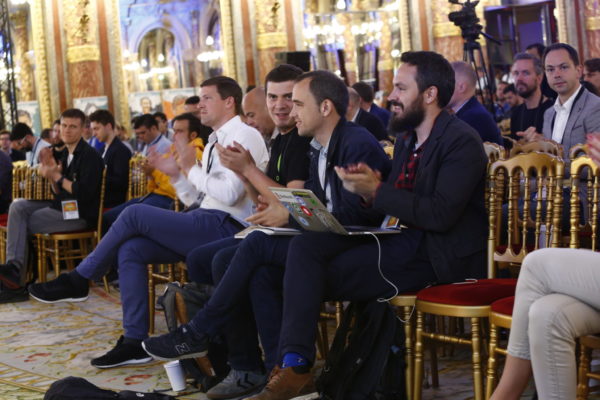
SaaStr Europa 2019 was not just another tech conference with badge lanyards, espresso lines, and people pretending they are “just quickly checking Slack.” It brought the SaaS community to Paris for two full days of founder lessons, venture capital insight, customer success strategy, growth stories, and practical operating advice. With more than 2,500 attendees expected, 200+ mentoring sessions, 100+ top VCs, and a speaker roster packed with founders and executives from companies like Talkdesk, Collibra, Typeform, Egnyte, Tradeshift, Podium, New Relic, Twilio, Algolia, MessageBird, Bessemer Venture Partners, Insight Partners, Workday Ventures, and more, the event had the feeling of a masterclass disguised as a very stylish European gathering.
The big message behind “even MORE amazing speakers” was simple: SaaS builders were not coming to Paris for recycled advice. They were coming for battle-tested lessons from people who had built pipelines before they had brand awareness, scaled customer teams before the org chart looked pretty, learned when freemium helps and when it hurts, and discovered that hypergrowth is exciting right up until the spreadsheet starts sweating.
Why SaaStr Europa 2019 Mattered for the SaaS Community
SaaStr has long been a gathering place for people building subscription software businesses, especially founders and revenue leaders trying to move from early traction to serious scale. SaaStr Europa 2019 mattered because it gave the European SaaS ecosystem a major stage of its own. Instead of forcing every important conversation to happen in Silicon Valley, it put founders, investors, and operators in Paris and said: the global SaaS market is no longer a one-city story.
That mattered in 2019 because the SaaS playbook was changing quickly. Companies were no longer asking only, “How do we get customers?” They were asking better, harder questions: How do we build a management team? How do we sell when nobody knows our name? How do we choose between building and buying infrastructure? How do we expand accounts without annoying customers into another time zone? How do we raise capital without giving away the entire company and a ceremonial office plant?
SaaStr Europa’s speaker lineup answered those questions through specific, practical sessions. The agenda was not built around vague inspiration. It focused on the messy middle of company building: hiring, firing, pipeline generation, product scaling, freemium economics, enterprise partnerships, investor relationships, and customer success.
The Speaker Lineup: Less Fluff, More Field Notes
The strongest conference speakers are not the ones who say, “Growth is important,” because yes, thank you, so is oxygen. The strongest speakers show exactly what broke, what worked, what surprised them, and what they would do differently. SaaStr Europa 2019 leaned heavily into that kind of content.
Founders Who Had Actually Built the Thing
One of the biggest draws was the founder-led programming. Talkdesk Co-Founder and CEO Tiago Paiva joined SaaStr CEO Jason Lemkin for a session on going from hackathon to unicorn. That kind of story matters because it compresses years of execution into a format founders can actually learn from. It is one thing to hear that a company became a unicorn. It is far more useful to understand the early choices, hiring decisions, customer signals, product bets, and persistence behind the headline.
Collibra Co-Founder Felix van de Maele joined Insight Partners’ Teddie Wardi for “From Slooooow Growth to Hypergrowth,” a topic that sounds funny until you remember that slow growth and hypergrowth both create different kinds of headaches. Slow growth tests patience and positioning. Hypergrowth tests systems, leadership, culture, and whether your team can still find the latest version of the sales deck.
Typeform CEO Joaquim Lecha and Point Nine Managing Partner Christoph Janz tackled “Freemium at Scale,” one of the most seductive and misunderstood topics in SaaS. Freemium can be a powerful engine for product-led growth, but it is not magic glitter. It requires disciplined conversion strategy, user segmentation, onboarding design, pricing clarity, and a clear understanding of what free users are supposed to do next.
Operators Who Know the Unsexy Work
Not every valuable SaaS lesson arrives with a unicorn valuation. Some of the best sessions focused on operating fundamentals. Egnyte’s Charles Lawson and Lara Badanes covered how to build a pipeline with no brand and sometimes no market. That topic is painfully real for early-stage and expansion-stage companies. When nobody is searching for your category, your sales team cannot simply sit back and wait for inbound leads to arrive wearing tiny gift bows.
Pipeline building without brand power requires focus. You need to define the pain clearly, identify accounts with urgency, test messaging quickly, and resist the temptation to chase every company with a pulse and a procurement department. The Egnyte session pointed toward a deeper lesson: great sales development is not just activity; it is learning at high speed.
New Relic EVP and Chief Customer Officer Roger Scott was part of the agenda with lessons on keeping customers happy at scale. That theme deserves attention because SaaS growth is not only about booking new revenue. It is about keeping, expanding, and serving customers after the celebration confetti has been vacuumed up. Customer success becomes a growth engine when it is tied to measurable adoption, business outcomes, and genuine customer trust.
Core Themes That Defined SaaStr Europa 2019
1. Building the First Real Management Team
Early teams often run on trust, improvisation, and heroic effort. That can work for a while. Eventually, though, the company needs managers, structure, and a leadership team that can scale beyond founder instinct. The SaaStr Europa session “Hiring, Firing and Stretching: How to Build Your First Management Teams” addressed exactly that transition.
This stage is difficult because founders must stop hiring only for immediate gaps and start hiring for the next version of the company. A great early employee may not automatically become the right executive for a 200-person organization. At the same time, hiring too senior too early can create expensive confusion. The art is knowing who can stretch, who needs support, and when the role has outgrown the person. Not exactly coffee-table conversation, but definitely company-saving conversation.
2. Scaling Outside Silicon Valley
Podium CEO Eric Rea’s session on going from $0 to $60 million ARR in four years highlighted an essential SaaS truth: great companies can be built outside the usual tech capitals. That message fit perfectly in a European conference. The center of SaaS gravity was spreading, and founders in London, Paris, Berlin, Amsterdam, Copenhagen, Barcelona, and beyond needed playbooks that respected their markets instead of copying Silicon Valley with a French accent.
Scaling outside Silicon Valley often means different hiring pools, different investor conversations, different customer acquisition patterns, and sometimes a stronger need to prove credibility early. But it also creates advantages: less noise, more focused teams, regional market knowledge, and the chance to build culture without copying everyone else’s office mural.
3. Hypergrowth Without Losing the Plot
Hypergrowth sounds glamorous until you are inside it. Suddenly every process is too small, every dashboard is incomplete, every leader is hiring, and every customer wants a roadmap update by Thursday. SaaStr Europa 2019 featured several hypergrowth-focused sessions because the conference understood a key point: growth does not solve operational problems; it magnifies them.
MessageBird’s Robert Vis, Collibra’s Felix van de Maele, and other growth-stage leaders helped frame hypergrowth as a leadership challenge, not only a revenue milestone. The lessons were likely to resonate with founders who had moved beyond product-market fit and were now confronting go-to-market complexity, international expansion, customer support demands, and hiring pressure.
4. Venture Capital With More Context
The investor programming at SaaStr Europa 2019 included Bessemer Venture Partners’ “State of the Cloud 2019: Europa Edition,” discussions around whether seed was becoming the new Series A, and sessions on partnering with large companies. This was useful because fundraising advice often becomes generic fast. “Build a great company” is technically correct, but it is also about as actionable as “be taller” during a basketball tryout.
Founders needed to understand how investors evaluated cloud businesses, what metrics mattered at different stages, how capital markets were shifting, and how to approach strategic partnerships without turning the company into a custom-development agency. The VC presence at SaaStr Europa made the event more than a lecture series; it became a place for direct conversations about capital, category design, and growth strategy.
The Inaugural SaaStr Startup Pitch Competition
Another major highlight was the inaugural SaaStr Startup Pitch Competition, presented by Ingram Micro. Five B2B startups were selected to pitch live in front of judges, with three winners sharing $100,000 in cash prizes. The top prize was $50,000, while two runner-ups received $25,000 each.
Pitch competitions can sometimes feel like startup theater, complete with dramatic timers and founders trying to explain a complex market in five minutes without speaking at auctioneer speed. But the SaaStr version had real strategic value. For early-stage B2B founders, it offered visibility in front of SaaS executives, investors, and potential partners. It also forced one of the healthiest disciplines in company building: explaining clearly who you serve, what problem you solve, why now, and why your team can win.
How Attendees Could Plan the Best SaaStr Europa Experience
With dozens of speakers and sessions available, the smartest attendees needed a plan. The best strategy was not to attend the most famous sessions automatically. It was to map sessions to business priorities. A founder struggling with sales pipeline should prioritize Egnyte’s no-brand pipeline discussion. A product-led company experimenting with free plans should make time for Typeform and Point Nine on freemium. A company moving into enterprise accounts should look at customer success, partnerships, and land-and-expand sessions.
Networking also required intention. SaaStr Europa offered mentoring sessions, VC access, Brain Dates, Q&As, breakouts, and happy-hour moments. That meant attendees could build a schedule that mixed learning with relationship-building. The real magic at SaaS conferences often happens between sessions, when someone says, “We had that exact churn problem last year,” and suddenly you get a better answer than the one you were going to pay a consultant to produce.
Practical Lessons Founders Could Take Away
Know Which Stage You Are Actually In
A pre-seed company, a $5 million ARR company, and a $60 million ARR company do not need the same advice. SaaStr Europa 2019 worked because it covered multiple stages of SaaS growth. The key for attendees was self-awareness. Are you still proving demand? Are you building repeatable sales? Are you expanding internationally? Are you replacing founder-led management with functional leadership? The best session is the one that solves your current constraint.
Do Not Confuse Inspiration With Implementation
Great speakers can energize a room, but the real value comes after the event. Founders and executives should leave with three to five specific experiments, not 47 vague intentions. For example: rewrite outbound messaging for one vertical, redesign customer onboarding around activation milestones, test freemium upgrade prompts, audit management gaps, or schedule investor conversations around measurable traction.
Use the Conference as a Research Lab
SaaStr Europa was a rare chance to compare notes with people building similar companies under different conditions. Attendees could test messaging, validate hiring plans, ask investors how they viewed a category, and learn from operators who had already survived the next stage. In other words, the hallway was not a hallway. It was a live SaaS research lab with better pastries.
Experience-Based Add-On: What It Feels Like to Prepare for a SaaStr Europa-Style Event
There is a specific kind of energy that arrives about 50 days before a major SaaS conference. It is part excitement, part logistics, and part “Did anyone remember to update the one-pager?” For founders, revenue leaders, and marketers heading to an event like SaaStr Europa 2019, the preparation period can be as valuable as the conference itself. Why? Because it forces clarity.
Before an event like this, a smart team starts by asking what success looks like. Is the goal investor meetings? Partnership conversations? Customer discovery? Recruiting? Competitive intelligence? Brand visibility? If the answer is “all of the above,” congratulations, the team has just created a suitcase full of chaos. The better approach is to choose two primary objectives and build everything around them.
For example, a seed-stage founder might focus on meeting five relevant investors and learning how later-stage companies built repeatable sales. A Series B revenue leader might prioritize sessions on pipeline, sales management, and expansion revenue. A customer success executive might look for practical advice from New Relic, Egnyte, or other operators who had scaled post-sale teams. A product leader might chase sessions on freemium, technical scaling, and build-versus-buy decisions.
The next step is preparation. The best attendees do not simply show up and hope the conference gods place the perfect contact next to them in the coffee line. They review the agenda, reserve sessions early, identify speakers and investors they want to meet, and prepare short, useful introductions. A good intro does not sound like a press release. It sounds like a human being with a clear reason to talk: “We help mid-market finance teams reduce manual reconciliation, and I’d love your perspective on European expansion.” See? No buzzword fog machine required.
During the event, the most valuable behavior is active listening. Many attendees collect notes like souvenirs but never convert them into action. The better move is to tag every insight as one of three things: something to test, someone to follow up with, or something to ignore for now. That last category is underrated. Not all good advice is good for your stage. A $100 million ARR tactic can be a very expensive distraction for a company still trying to close its tenth customer.
After the event, speed matters. Follow up within a few days while the conversation is still fresh. Send specific messages, not “Great meeting you!” confetti. Mention the topic discussed, propose a next step, and keep it short. The same applies internally. Teams should hold a post-event debrief and choose a small number of actions. Maybe the sales team rewrites outbound sequences. Maybe the founder revises the fundraising narrative. Maybe customer success updates onboarding milestones. The conference becomes valuable only when the lessons leave the notebook and enter the operating system of the company.
That is the real promise of SaaStr Europa 2019. The speakers were the headline, but the deeper opportunity was transformation through practical learning. Fifty days out, the countdown was not just about booking flights and choosing sessions. It was about getting ready to hear the kind of hard-won advice that can change how a SaaS company hires, sells, supports, scales, and survives the next stage of growth.
Conclusion
SaaStr Europa 2019 brought together the right ingredients for a high-value SaaS event: serious founders, experienced operators, sharp investors, practical sessions, mentoring opportunities, and enough Paris charm to make even a pipeline review feel slightly more elegant. The announcement of even more speakers 50 days before the event signaled that this was not a lightweight conference. It was a focused gathering for people who wanted to build better SaaS companies, avoid predictable mistakes, and learn directly from leaders who had already crossed difficult terrain.
From Talkdesk’s unicorn journey to Collibra’s hypergrowth lessons, from Egnyte’s pipeline-building realities to Typeform’s freemium strategy, from Bessemer’s cloud insights to the Startup Pitch Competition, SaaStr Europa 2019 offered a rich playbook for SaaS leaders. The best attendees would not simply leave inspired. They would leave with sharper questions, better tactics, and a stronger sense of what to do next.
Note: This publish-ready article is written in original language, based on publicly available SaaStr Europa 2019 event information and broader SaaS conference best practices. Source-link blocks are intentionally not included in the article body.













