
Cash App can help you receive money, save smarter, earn small rewards, and get paid for legitimate workbut it is not a magic money machine. If someone online says they can turn your $50 into $500 by dinner, congratulations: you have met a scammer with Wi-Fi.
The good news is that there are real, practical ways to use Cash App to support your income goals. The better news is that most Cash App scams become easier to spot once you know their favorite tricks: fake giveaways, money flips, fake support numbers, phishing messages, overpayment schemes, crypto traps, and “pay a fee to get paid” nonsense.
This guide explains how to make money on Cash App safely, how to use legitimate features, and how to avoid losing your hard-earned dollars to someone whose business plan is “steal from strangers on the internet.”
Can You Really Make Money on Cash App?
Yes, but with an important reality check. Cash App is mainly a financial app for sending, receiving, spending, saving, and managing money. It can support money-making activities, but it usually does not create income out of thin air.
Think of Cash App like a digital wallet with extra tools. You can use it to collect payments from clients, receive money from side gigs, earn referral bonuses when available, save interest, apply offers, and manage business transactions. What you should not do is treat Cash App like a lottery ticket, investment guru, or secret clubhouse where strangers hand out free money because they are “feeling blessed.”
The safest strategy is simple: use Cash App for real transactions, keep good records, verify people before sending money, and ignore anything that sounds too easy. Fast money often moves in one directionaway from you.
8 Trusted Tips to Make Money on Cash App Safely
1. Use Cash App Referral Bonuses the Right Way
One legitimate way to earn money on Cash App is through invite or referral bonuses when they are available in your account. Typically, you share your invite code or referral link with a friend, and if that person follows the required stepssuch as signing up, linking a debit card, and sending a qualifying amount within the required timeyou may receive a bonus.
This is not unlimited income, and the offer amount can vary. The key is to use your own official referral code from inside Cash App, not a random link from a stranger. Share it with people who genuinely want to use the app. Do not spam social media, create fake accounts, or promise people money you cannot deliver. That is how a simple referral bonus turns into a digital circus.
Example: If your friend already wants to use Cash App to split rent, pay for lunch, or send family money, your referral code may help both of you benefit. But if someone says they can “hack” referral bonuses, walk away. Cash App promotions have rules, and breaking them can cost more than the bonus is worth.
2. Get Paid for Freelance or Side-Gig Work
If you write, design, tutor, mow lawns, walk dogs, repair bikes, sell baked goods, or do weekend photography, Cash App can be a convenient way to receive payment. The money-making part is the service you provide; Cash App is simply the payment lane.
For small service providers, convenience matters. A client may be more likely to pay quickly when the payment method is easy. You can include your $Cashtag on an invoice, text it after a completed job, or use it for repeat customers who already trust you.
However, keep business and personal money separate whenever possible. If you regularly accept payments for goods or services, consider whether a Cash App Business account is appropriate. Business payments may include processing fees, and income may have tax-reporting implications. Save records of who paid you, what the payment was for, and when the work was completed.
Pro tip: Do not deliver expensive work based only on a screenshot. Screenshots can be faked faster than a teenager can say, “My phone died.” Confirm payment inside Cash App before handing over the product, file, item, or finished service.
3. Use Cash App Business for Simple Selling
Cash App Business can be useful for small sellers, independent contractors, and microbusiness owners who want a simple way to accept payments. If you sell handmade items, digital templates, used furniture, event tickets, or local services, Cash App can help you collect money without needing a complicated checkout system.
That does not mean you should ignore normal business rules. Price your products carefully, account for fees, track expenses, and keep proof of each sale. When payments are for goods or services, they may count as taxable income even if you do not receive a tax form. A clean record today can save you from a headache tomorrow.
Example: Suppose you sell custom phone cases for $25 each. If you receive 40 orders in a month, Cash App may help you collect payments quickly. But your real profit is not $1,000 if you spent $420 on materials, shipping, packaging, and fees. Track the math. Your future self will send you a thank-you note.
4. Save Money With Cash App Card Offers
Making money is great, but saving money is its underrated cousin. Cash App Card and Cash App Pay offers may provide discounts or rewards on qualifying purchases. When you use an offer for something you were already planning to buy, the savings act like extra cash in your budget.
The magic phrase is “already planning to buy.” A discount on something unnecessary is not savings; it is shopping wearing a fake mustache. Before using an offer, check the details, minimum purchase requirement, expiration date, maximum discount, and whether it applies in-store, online, through Cash App Pay, or with the Cash App Card.
Example: If you regularly buy coffee, groceries, transit, or takeout, applying a relevant offer can reduce your monthly spending. But buying a $60 meal just to save $5 is not a financial strategy. That is your stomach running the budget meeting.
5. Use Savings Interest Carefully
Cash App Savings may help you separate money for goals and earn interest, depending on eligibility and account features. Interest is not a side hustle, but it can help your money work a little while it waits. If you are building an emergency fund, saving for a trip, or setting aside taxes from freelance income, a dedicated savings space can reduce the temptation to spend everything the moment it arrives.
The smartest move is to name your goals clearly. “Tax money,” “Car repair fund,” “Emergency savings,” and “New laptop” are better than one mysterious pile of money labeled “vibes.” When your money has a job, you are less likely to accidentally spend your electric bill on sneakers.
Still, do not keep large balances in any payment app without understanding protections and limitations. For long-term savings, compare options with FDIC-insured banks or credit unions. Cash App can be convenient, but convenience should not replace safety.
6. Use Round Ups for Long-Term Investing, Not Quick Riches
Cash App Card Round Ups can round purchases to the nearest dollar and place the difference into stocks, Bitcoin, or savings, depending on the option you choose. This can be a low-effort way to build a habit. Spend $4.35, round to $5, and the extra $0.65 goes toward your selected destination.
Round Ups can be useful because they make saving or investing automatic. But investing always carries risk, especially with Bitcoin and individual stocks. Prices can rise, fall, and occasionally behave like a raccoon trapped in a vending machine. Do not use rent money, emergency savings, or borrowed funds for risky investments.
Best practice: Treat Round Ups as a habit-building tool, not a get-rich plan. If you choose stocks or Bitcoin, understand what you are buying, keep expectations realistic, and never trust strangers who promise guaranteed returns.
7. Sell Locally, But Protect Yourself From Buyer Scams
Cash App can be useful when selling items locally, such as furniture, electronics, clothes, sports gear, or collectibles. The safest local sales are simple: meet in a public place, confirm the buyer, receive payment inside the app, and avoid complicated refund requests.
Scammers often use overpayment tricks. They may “accidentally” send too much money and ask you to refund the difference to another account. They may send a fake email claiming your payment is pending until you pay a fee. They may show a fake screenshot that looks convincing but never appears in your Cash App balance.
Rule of thumb: If the buyer makes the transaction weird, slow down. Real buyers usually want the item. Scammers want confusion. Do not ship or hand over anything until the payment is confirmed inside your account.
8. Turn Scam Prevention Into a Money-Making Habit
Avoiding scams is not just about protecting money; it is part of making money. Every dollar you do not lose to a fake support agent, phishing link, cash flip, romance scam, or crypto scheme is a dollar still available for bills, savings, business inventory, or your next real opportunity.
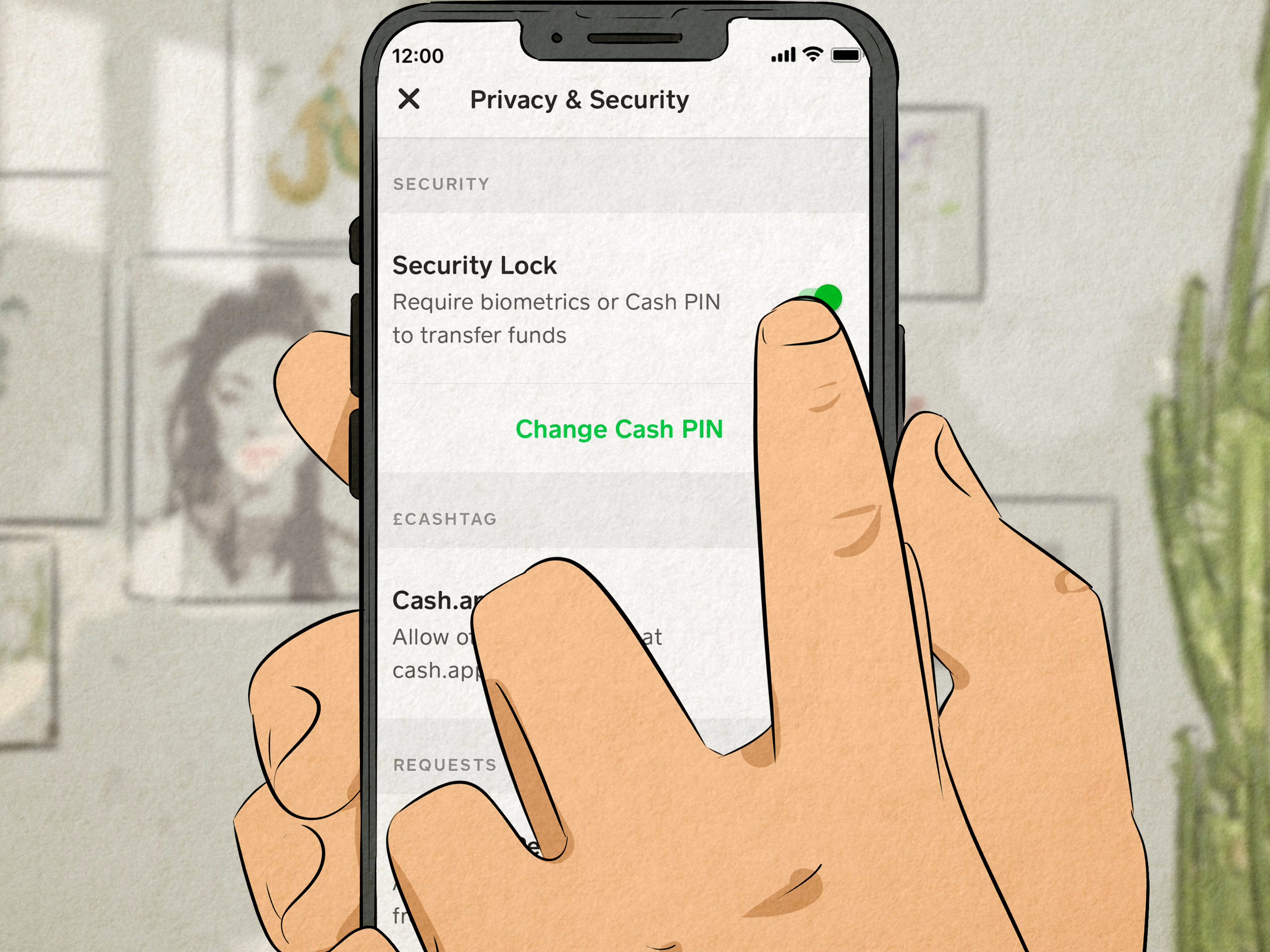
Turn on security features such as notifications and Security Lock. Never share your sign-in code, PIN, Social Security number, card details, or account access with anyone who contacts you unexpectedly. Cash App support will not ask you to send money to “verify” your account. A stranger promising free money is not your financial mentor; they are probably baiting the hook.
If you believe you were scammed, stop communicating with the person, report the payment in Cash App if available, block the account, contact your bank if needed, and report fraud to the proper agencies. Acting quickly matters.
Common Cash App Scams to Avoid
Money Flip Scams
A money flip scam claims someone can multiply your money if you send a small amount first. The scammer may use fake screenshots, rented luxury photos, or comments from fake accounts. The pitch usually sounds like: “Send $100 and get $1,000 back instantly.” That is not investing. That is you donating to a thief with a Canva account.
Fake Cash App Support
Scammers create fake phone numbers, websites, social media pages, and search results pretending to be Cash App support. Once you contact them, they may ask for your sign-in code, tell you to download remote-access software, or instruct you to send money to “fix” your account. Always use support options inside the official app or official website.
Giveaway and Prize Scams
Some scams claim you won a Cash App giveaway but must pay a fee, tax, or verification charge before receiving the prize. Real prizes do not require you to send money first. If the prize has a cover charge, it is not a prize.
Fake Job and Task Scams
Task scams may promise easy money for liking videos, reviewing products, boosting apps, or completing simple online actions. At first, the scammer may pay a small amount to build trust. Later, they ask you to deposit money to unlock higher tasks or withdraw earnings. When a job requires you to pay to get paid, close the tab and protect your wallet.
Crypto Investment Scams
Cash App includes Bitcoin features, but that does not mean every Bitcoin opportunity is legitimate. Be especially careful if someone from social media, dating apps, messaging apps, or investment groups tells you they have a guaranteed crypto method. Guaranteed profit is one of the loudest alarm bells in finance.
Smart Safety Rules Before Sending or Receiving Money
Before sending money on Cash App, confirm the recipient’s $Cashtag, name, phone number, or email. A typo can send money to the wrong person, and recovering it may not be easy. Only send money to people you know and trust unless you are using a setup designed for goods and services.
Before receiving money, remember that pending emails, screenshots, and text messages are not proof. Check the app itself. If the money is not visible where it should be, do not release the item or service.
For business use, create a simple tracking system. A spreadsheet with date, customer name, amount, item or service, expenses, and notes can make tax season much less dramatic. Nobody wants to reconstruct a year of sales from random emojis in payment notes.
Finally, move money intentionally. If you receive a large payment, consider transferring what you do not need for spending into a bank account or another appropriate financial account. Payment apps are convenient, but they should not become a shoebox stuffed with your entire financial life.
Experience Section: Practical Lessons From Using Cash App for Money Goals
One of the biggest lessons people learn with Cash App is that convenience can either help your money or quietly make it disappear. Imagine a college student named Maya who uses Cash App to split utilities with roommates, receive small payments for tutoring, and save money for textbooks. At first, everything goes into one balance. Rent money, pizza money, tutoring income, birthday cash, and “I should probably not touch this” money all sit together like socks in a laundry basket. After a few months, she realizes the problem is not Cash Appit is the lack of categories. Once she separates savings goals and tracks tutoring payments, she stops accidentally spending money that was supposed to cover bills.
Now picture a freelance designer named Chris. He accepts quick design jobs from local businesses and uses Cash App because clients like fast payment. At first, he sends finished files after clients text screenshots of “payment sent.” Then one buyer sends a very official-looking screenshot, asks for the logo files immediately, and disappears. Chris checks the app too late and sees no payment. Lesson learned: screenshots are not money. After that, he confirms every payment inside Cash App before delivering files. It feels slightly less “nice,” but it is much more professional.
Another common experience involves referral bonuses. A user may share an invite code with friends and earn a small bonus when someone signs up correctly. That can be fun and legitimate. The trouble begins when people start chasing bonus hacks. They join random groups promising secret referral loops, fake accounts, or “guaranteed” bonus stacking. The result is usually wasted time, possible account problems, or exposure to scams. The better approach is boring but effective: share your real invite code with real people who actually want the app.
Cash App offers can also teach a useful budgeting lesson. A discount feels like a win, but only when it reduces planned spending. For example, saving money on groceries or transportation can help. Buying something unnecessary just because an offer appears is not really saving. Many users eventually discover that the best “money-making” habit is not chasing every deal; it is choosing deals that match their normal life.
The scam side is where experience becomes painfully valuable. People often fall for scams when they are rushed, excited, embarrassed, or scared. A fake support agent may claim your account is locked. A fake investor may say the opportunity expires in 10 minutes. A fake buyer may pressure you to refund an overpayment immediately. The emotional pressure is the trap. The safest users build a pause into every transaction. They stop, verify, check the app, search official support, and refuse to send money under pressure.
The real experience-based takeaway is simple: Cash App works best when you treat it like a tool, not a shortcut. Use it to get paid for real work, collect legitimate payments, save with intention, apply useful offers, and manage small money tasks. Avoid anyone promising effortless riches. The app can help your financial life move faster, but your judgment still has to drive.
Conclusion
Learning how to make money on Cash App starts with understanding what the app can and cannot do. It can help you receive payments, earn referral bonuses when available, save interest, use discounts, accept business payments, and support side hustles. It cannot turn strangers into trustworthy investors, make fake giveaways real, or guarantee profits from crypto, stocks, or “money flips.”
The safest Cash App strategy is practical: earn through real work, use official features, confirm payments inside the app, keep records, protect your login details, and slow down whenever someone creates urgency. Scammers love speed because speed makes people sloppy. Your best defense is a calm thumb and a skeptical brain.
Used wisely, Cash App can be a helpful part of your financial toolkit. Used carelessly, it can become an expensive lesson. Keep the helpful part. Skip the expensive lesson.













