
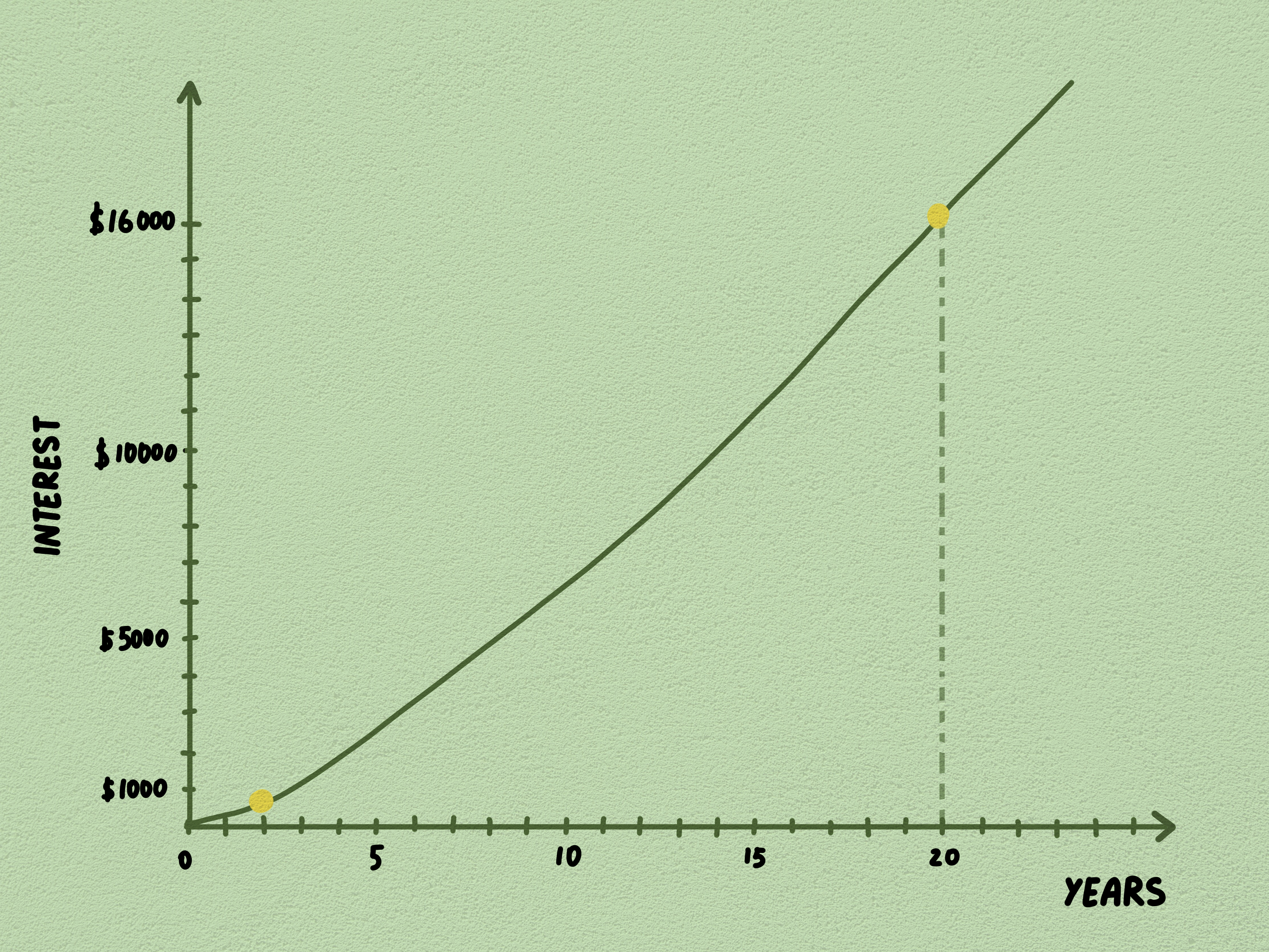
Compound interest sounds like something that belongs in a math textbook guarded by a dragon, but it is actually one of the most useful money concepts you can learn. Whether you are growing a savings account, comparing certificates of deposit, planning for retirement, or trying to understand why credit card debt behaves like it drank three espressos, compound interest explains what happens when interest starts earning interest.
In simple terms, compound interest is interest calculated on your original amount of money, called the principal, plus the interest that has already been added. That tiny detail is what makes it powerful. Simple interest walks in a straight line. Compound interest brings a snowball, finds a hill, and gets dramatic.
This guide explains the compound interest formula, how to use it step by step, how compounding frequency changes the result, and how to avoid the most common calculation mistakes. You will also see practical examples that make the math much less scary than it looks.
What Is Compound Interest?
Compound interest is the process of earning interest on both your principal and previously earned interest. If you deposit money into an account that compounds monthly, the account calculates interest, adds it to your balance, and then calculates the next round of interest on the new, larger balance.
For savers and investors, compound interest can help money grow faster over time. For borrowers, it can increase the cost of debt when interest is added to an unpaid balance. That is why the same concept can be your best financial friend or the gremlin hiding inside a credit card statement.
Simple Interest vs. Compound Interest
Before learning the compound interest formula, it helps to compare it with simple interest.
Simple Interest
Simple interest is calculated only on the original principal. If you invest $1,000 at 5% simple interest for three years, you earn $50 each year. After three years, you have $1,150.
The simple interest formula is:
Where P is principal, r is the annual interest rate as a decimal, and t is time in years.
Compound Interest
Compound interest is calculated on the principal plus accumulated interest. Using the same $1,000 at 5% annually for three years, your balance becomes $1,157.63 if compounded once per year. The difference may look small at first, but over longer periods, compound growth becomes much more noticeable.
That is the main lesson: compound interest rewards time. The longer money stays invested or saved, the more opportunities it has to grow.
The Compound Interest Formula
The standard compound interest formula is:
To find only the interest earned, use:
What Each Variable Means
- A = the final amount after interest is added
- P = the principal, or starting amount
- r = the annual interest rate written as a decimal
- n = the number of compounding periods per year
- t = the number of years the money compounds
The formula may look fancy, but it is really asking five questions: How much money are you starting with? What rate are you earning? How often is interest added? How long will it grow? And how much will you have at the end?
How to Calculate Compound Interest in Easy Steps
Step 1: Identify the Principal
The principal is the amount you start with. If you deposit $1,000 into a savings account, your principal is $1,000. If you invest $10,000 into an account, your principal is $10,000. The formula starts with this number because every future calculation grows from it.
Step 2: Convert the Interest Rate to a Decimal
Interest rates are usually shown as percentages, but formulas use decimals. To convert a percentage to a decimal, divide by 100. A 5% interest rate becomes 0.05. A 7.25% rate becomes 0.0725. This step is small but important. Forgetting it is like putting hot sauce in coffee: technically possible, but the result will be unpleasant.
Step 3: Find the Compounding Frequency
The compounding frequency tells you how many times per year interest is calculated and added to the balance. Common examples include:
- Annually: n = 1
- Semiannually: n = 2
- Quarterly: n = 4
- Monthly: n = 12
- Daily: n = 365
More frequent compounding usually creates a slightly higher final balance, assuming the same interest rate, principal, and time period.
Step 4: Choose the Time Period
The time period, represented by t, is measured in years. If you are calculating six months, use 0.5. If you are calculating 18 months, use 1.5. If you are calculating 10 years, use 10.
Step 5: Plug the Numbers Into the Formula
Once you know the principal, rate, compounding frequency, and time, place the numbers into the formula. Then solve inside the parentheses, apply the exponent, and multiply by the principal.
Compound Interest Example: Monthly Compounding
Let’s say you deposit $1,000 into an account with a 5% annual interest rate, compounded monthly, and leave it there for three years.
The inputs are:
- P = 1,000
- r = 0.05
- n = 12
- t = 3
Now use the formula:
The final amount is approximately:
To find the compound interest earned:
So, after three years, you would earn about $161.47 in interest. Not bad for money that mostly sat there minding its own business.
Example: How Compound Interest Grows Over 10 Years
Now let’s use a longer timeline. Suppose you invest $10,000 at a 6% annual interest rate compounded monthly for 10 years.
The final balance is approximately:
The interest earned is:
This is where compound interest starts flexing. The account earns interest, then that interest joins the team and helps earn more interest. Over time, the growth curve becomes steeper.
How Compounding Frequency Affects Your Money
Compounding frequency matters because it determines how often interest is added to your balance. If two accounts offer the same stated interest rate, the account that compounds more frequently may produce a slightly higher final balance.
For example, a $5,000 deposit earning 4% for five years compounded daily grows to about $6,106.95. The same deposit compounded annually would grow to about $6,083.26. The difference is not enormous over five years, but it becomes more important when the balance, rate, or timeline increases.
This is also why banks and credit unions often advertise APY, or annual percentage yield. APY includes the effect of compounding, making it useful when comparing deposit accounts. If one account has a higher APY than another, it generally offers a higher annual return, assuming fees and account rules do not cancel out the advantage.
APR vs. APY: Do Not Mix Them Up
APR and APY sound like financial alphabet soup, but they are not the same.
APR, or annual percentage rate, is commonly used for borrowing. It shows the yearly cost of a loan or credit product. APY, or annual percentage yield, is commonly used for savings and deposit accounts. It reflects how much you may earn in one year after compounding is considered.
When saving, APY is usually the more helpful number because it shows the impact of compounding. When borrowing, pay close attention to APR, fees, and whether interest can compound or be added to your balance.
How to Calculate Compound Interest With Regular Contributions
The basic compound interest formula works well when you make one initial deposit and leave it alone. But real life often includes regular contributions. You might add $100 every month to savings or invest part of every paycheck.
When regular contributions are involved, the calculation becomes more complex because each deposit has a different amount of time to compound. You can calculate it manually using a future value of annuity formula, but most people use a spreadsheet or compound interest calculator. This is not laziness. This is wisdom wearing comfortable shoes.
Still, the idea is simple: the earlier each contribution is made, the longer it has to grow. That is why consistent saving can be so effective. You are not only increasing the principal; you are also giving every new dollar a chance to earn returns.
The Rule of 72: A Quick Compound Interest Shortcut
The Rule of 72 is a simple way to estimate how long it may take money to double at a fixed annual rate of return. Divide 72 by the annual rate.
For example, if an investment earns 6% per year:
That means the money may double in about 12 years. The Rule of 72 is only an estimate, but it is useful for quick comparisons. A 4% return doubles in about 18 years. An 8% return doubles in about 9 years. Suddenly, small rate differences do not look so small anymore.
Common Mistakes When Calculating Compound Interest
Mistake 1: Using the Percentage Instead of the Decimal
Never put 5 into the formula when you mean 5%. Use 0.05. Otherwise, your calculation will imagine a 500% return, which sounds exciting until reality taps you on the shoulder.
Mistake 2: Forgetting Compounding Frequency
Annual, monthly, and daily compounding do not produce identical results. Always check how often interest compounds before calculating.
Mistake 3: Confusing Interest Rate With APY
If an account gives you APY, compounding is already included in that number. If you use APY as though it were a simple stated interest rate inside the compound interest formula, you may double-count compounding.
Mistake 4: Ignoring Fees
Fees can reduce the benefit of compound interest. A monthly maintenance fee, investment expense ratio, or account charge may quietly eat into growth. Compound interest loves consistency; fees love nibbling.
Mistake 5: Assuming Returns Are Guaranteed
Bank savings accounts and CDs may offer stated rates, but investments such as stocks, mutual funds, or exchange-traded funds can rise and fall. Compound return examples are useful for planning, but market returns are not guaranteed.
Why Compound Interest Matters for Saving
Compound interest is especially helpful for long-term savings goals. Emergency funds, down payments, education savings, and retirement accounts can all benefit from time and regular contributions.
The biggest advantage is that compounding does not require perfection. You do not need to start with a fortune. You need time, patience, and a plan that you can actually follow. Even small amounts can grow meaningfully when added consistently and left alone long enough.
Why Compound Interest Matters for Debt
Compound interest is not always a warm and fuzzy savings buddy. On debt, it can work against you. If unpaid interest is added to your balance, future interest may be calculated on a larger amount. This can make debt grow faster and harder to repay.
Credit cards are a common example. Carrying a balance can lead to interest charges, and those charges can increase the amount owed if they are not paid off. That is why paying more than the minimum, avoiding unnecessary balances, and understanding the rate can make a major difference.
Best Ways to Use Compound Interest in Real Life
Start Earlier Rather Than Later
Time is one of the most important ingredients in compounding. Starting earlier gives your money more compounding periods. Waiting does not ruin everything, but it means your money has fewer chances to grow.
Contribute Regularly
Automatic transfers can make saving easier. A monthly contribution turns compound interest from a one-time calculation into a long-term habit.
Compare APYs Carefully
When choosing savings accounts, money market accounts, or CDs, compare APY, not just the stated interest rate. Also review minimum balances, withdrawal rules, and fees.
Reinvest Earnings
Compounding works best when interest, dividends, or returns stay invested. Withdrawing earnings can slow future growth.
Control Costs
Fees reduce the amount available to compound. In investing, even small expense differences can matter over long periods.
Practical Experience: What Calculating Compound Interest Teaches You
One of the best experiences related to compound interest is the moment you calculate two timelines side by side. Imagine one person starts saving $100 per month at age 25, while another starts at age 35. At first, the difference looks manageable. Ten years is a long time, but life happens. People change jobs, pay rent, buy laptops they swear are “for productivity,” and occasionally discover that brunch is not free.
But when you run the compound interest numbers, the lesson becomes clear. The early saver does not just contribute more money. Each early contribution has more time to grow. The first $100 deposit made at age 25 may compound for decades. The same $100 deposited at age 35 has ten fewer years to work. That missing time is expensive.
Another useful experience is comparing accounts with different APYs. At first glance, the difference between 3.75% and 4.25% may not feel dramatic. It is only half a percentage point, right? That is the kind of thinking compound interest enjoys correcting. Over a year, the difference may be modest. Over 10 or 20 years, especially with regular contributions, it can become meaningful. This does not mean you should chase every tiny rate change like a squirrel with a spreadsheet, but it does mean rates deserve attention.
Calculating compound interest also teaches patience. Many beginners expect growth to feel exciting immediately. In the early years, compound interest can seem almost boring. You earn a little interest, then a little more. Nothing explodes. No confetti falls from the ceiling. But later, the curve begins to bend upward. The interest portion becomes larger because the balance is larger. That is when the quiet math starts to feel impressive.
There is also a valuable debt lesson. When people calculate how interest grows on a credit card balance, they often become more motivated to pay it down. Compound interest on savings is a helpful employee. Compound interest on debt is an employee who steals your snacks and bills you for the privilege. Seeing the numbers makes the cost of waiting more real.
Finally, compound interest encourages better decision-making. It helps you ask smarter questions: How long can I leave this money untouched? Is this APY worth switching accounts? Are fees reducing my return? What happens if I increase my monthly contribution by $50? These questions turn vague financial goals into measurable plans.
The real magic of compound interest is not that it makes people rich overnight. It does not. The magic is that it rewards consistency. It turns small choices into larger outcomes when those choices are repeated over time. Once you understand the formula, you stop seeing interest as a mysterious bank number and start seeing it as a tool. And honestly, any tool that can make future-you happier deserves a little respect.
Conclusion
Learning how to calculate compound interest gives you a clearer view of how money grows or how debt can increase. The formula A = P(1 + r/n)^(nt) may look intimidating at first, but it becomes simple when you break it into principal, rate, compounding frequency, and time.
For savings and investments, compound interest can help your money grow faster, especially when you start early, contribute regularly, reinvest earnings, and keep fees low. For debt, the same force can work against you, making balances more expensive if unpaid interest keeps building.
The main takeaway is simple: compound interest rewards time and consistency. Start with what you can, understand the numbers, and let the math do its quiet, powerful work.










