
Note: This article is formatted as a clean HTML body section for web publishing, with SEO tags included in JSON format at the end.
Few movie settings can turn ordinary conversation into cinematic fireworks quite like a courtroom. One person stands up, another objects, a judge sighs like they need a vacation, and suddenly the entire audience is leaning forward as if the verdict depends on us. The best courtroom scenes in movies work because they combine conflict, performance, suspense, and moral pressure in one tightly controlled room.
A great courtroom scene is not just about shouting “Objection!” at the perfect moment, although we admit that helps. It is about truth being tested in public. It is about characters who can no longer hide behind polite conversation. Lawyers, witnesses, defendants, jurors, and judges all become part of a dramatic machine where one sentence can change everything.
From classic black-and-white legal dramas to sharp modern trial movies, the courtroom has given film fans some of the most unforgettable moments in cinema history. Below are 10 of the best courtroom scenes in movies, ranked for emotional power, cultural impact, writing, acting, and pure rewatch value.
1. A Few Good Men (1992): The “You Can’t Handle the Truth” Showdown
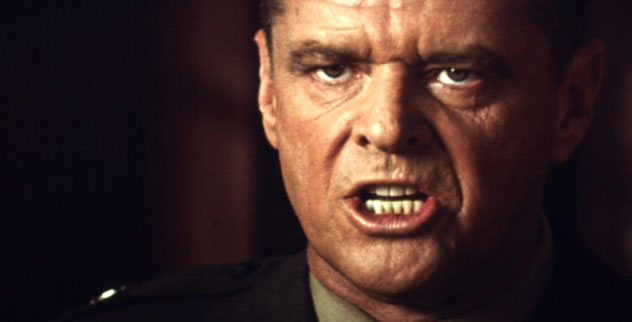
If courtroom scenes had championship belts, A Few Good Men would walk into the ring wearing sunglasses. Directed by Rob Reiner and written by Aaron Sorkin, this military legal drama builds toward the explosive confrontation between Lt. Daniel Kaffee, played by Tom Cruise, and Col. Nathan R. Jessup, played with volcanic arrogance by Jack Nicholson.
Why This Scene Works
The genius of the scene is its rhythm. Kaffee does not simply yell his way to victory. He corners Jessup with timing, patience, and a carefully laid trap. Jessup, convinced of his own superiority, cannot resist explaining himself. That is what makes his confession feel inevitable and shocking at the same time.
The famous line “You can’t handle the truth!” has become part of pop culture, but the scene is more than a quote-machine. It is a battle between law and power. Kaffee represents procedure, accountability, and doubt. Jessup represents authority that believes it is above judgment. When the truth finally erupts, the courtroom becomes a pressure cooker with the lid flying into the ceiling fan.
2. 12 Angry Men (1957): Reasonable Doubt in a Locked Room
Technically, much of 12 Angry Men takes place in a jury room rather than a courtroom. But leaving it off a list of the best courtroom movie scenes would feel like holding a trial without evidence. Sidney Lumet’s classic is one long, tense examination of justice, prejudice, and moral courage.
The Power of Quiet Persuasion
Henry Fonda’s Juror 8 does not begin by claiming he knows the defendant is innocent. He simply says he is not sure. That tiny hesitation becomes the engine of the entire film. One by one, the jurors are forced to examine the case, their assumptions, and themselves.
The knife demonstration, the re-creation of witness testimony, and the gradual collapse of certainty all make the film feel like a courtroom scene stretched into a masterpiece of logic and character. There are no car chases, no surprise explosions, and no one dramatically throws a folder across the room. The drama comes from words, sweat, silence, and the terrifying possibility of sending an innocent person to death.
3. To Kill a Mockingbird (1962): Atticus Finch’s Closing Argument
Robert Mulligan’s adaptation of Harper Lee’s novel gives us one of cinema’s most dignified legal performances. Gregory Peck’s Atticus Finch stands before the court in Maycomb, Alabama, defending Tom Robinson, a Black man falsely accused in a deeply racist society.
A Courtroom Scene About Conscience
Atticus’s closing argument is not flashy. That is precisely why it hits so hard. He does not perform like a showman. He speaks with moral clarity, asking the jury to look past prejudice and toward evidence. The scene understands that justice is not automatic just because everyone is sitting in a courtroom. Sometimes the room built for justice is also where injustice gets dressed in formal clothes.
The emotional aftershock comes later, when the Black community in the balcony rises as Atticus leaves. That moment says what words cannot: even when the verdict fails, moral courage still matters. It is one of the most moving courtroom moments ever filmed.
4. My Cousin Vinny (1992): Mona Lisa Vito Saves the Day
Who says one of the best courtroom scenes in movies cannot involve tire marks, a skeptical judge, and automotive expertise delivered with glorious attitude? My Cousin Vinny is a legal comedy, but its final courtroom stretch is surprisingly smart about trial strategy.
Comedy Meets Legal Precision
Joe Pesci’s Vinny Gambini begins as a walking courtroom disaster. His suits are wrong, his manners are wrong, and his experience level is somewhere between “newly licensed” and “please pray for these defendants.” Then Marisa Tomei’s Mona Lisa Vito takes the stand, and everything changes.
Her testimony about cars, tire tracks, and positraction becomes the key to proving the defendants could not have committed the crime. The scene works because it is hilarious without making the law look stupid. In fact, lawyers often praise the movie for its unusually accurate use of evidence, cross-examination, and expert testimony. It is the rare courtroom scene that makes you laugh and also think, “Wait, this is actually a pretty good trial lesson.”
5. Anatomy of a Murder (1959): Legal Strategy in Its Sharpest Form
Otto Preminger’s Anatomy of a Murder is one of the most sophisticated courtroom dramas ever made. James Stewart plays Paul Biegler, a small-town lawyer defending a soldier accused of murder. George C. Scott, as the prosecutor, brings controlled intensity that makes every exchange feel dangerous.
Why It Still Feels Modern
The courtroom scenes in Anatomy of a Murder are not built around one explosive twist. They are built around legal maneuvering, word choice, witness control, and the slippery nature of truth. The film’s frank discussion of sexual assault, motive, and credibility was bold for its time, and that realism remains part of its power.
What makes the courtroom material unforgettable is how human everyone seems. Biegler is charming but strategic. The witnesses are complicated. The judge is practical. The lawyers fight over language because language can decide the case. Watching the film feels like watching chess played with objections, side-eyes, and carefully sharpened questions.
6. The Verdict (1982): Frank Galvin’s Closing Argument
Sidney Lumet returned to legal drama with The Verdict, starring Paul Newman as Frank Galvin, a washed-up Boston attorney who takes a medical malpractice case that becomes a shot at personal redemption.
A Scene About Redemption, Not Just Law
Frank’s closing argument is powerful because he is not just arguing for his client. He is trying to recover his own soul. By the time he stands before the jury, the case has become bigger than settlement money or professional survival. It is about whether one broken person can still do the right thing when doing the right thing is inconvenient, costly, and possibly doomed.
The courtroom scene avoids cheap triumphalism. Newman’s performance is weary, restrained, and deeply human. He does not become a superhero lawyer. He becomes a man finally willing to tell the truth without hiding from it. That makes the scene one of the most emotionally honest moments in any legal drama.
7. Witness for the Prosecution (1957): The Twist That Keeps Twisting
Billy Wilder’s Witness for the Prosecution, based on Agatha Christie’s work, is a courtroom thriller that treats surprise like a competitive sport. Charles Laughton plays Sir Wilfrid Robarts, a brilliant barrister defending Leonard Vole, who is accused of murder.
A Courtroom Built for Suspense
The magic of this film is how it keeps shifting the audience’s confidence. Just when you think you understand who is lying, the story turns the chair around and asks you to look again. Marlene Dietrich’s Christine adds mystery, emotional ambiguity, and ice-cold control to the courtroom proceedings.
The climactic revelations are not just plot tricks. They expose how performance operates inside a trial. Witnesses perform. Lawyers perform. Defendants perform. Even truth may arrive wearing a costume. That is why Witness for the Prosecution remains one of the greatest courtroom thrillers ever made.
8. Philadelphia (1993): Dignity on the Witness Stand
Jonathan Demme’s Philadelphia brought AIDS discrimination and workplace prejudice into a mainstream Hollywood legal drama. Tom Hanks plays Andrew Beckett, a lawyer fired after his firm discovers he has AIDS. Denzel Washington plays Joe Miller, the attorney who represents him while confronting his own biases.
Why the Courtroom Scenes Matter
The courtroom moments in Philadelphia are not designed as clever legal puzzles. They are designed to restore humanity to someone who has been reduced to fear, stigma, and rumor. When Andrew testifies, the drama is not simply whether he will win the case. It is whether the people in the room can see him fully.
The movie’s legal scenes are moving because they connect private suffering to public justice. The courtroom becomes a place where illness, discrimination, courage, and mortality all sit at the same table. It is not the loudest courtroom scene on this list, but it may be one of the most compassionate.
9. Kramer vs. Kramer (1979): The Custody Trial That Hurts Everyone
Kramer vs. Kramer is not a murder trial, a military trial, or a conspiracy thriller. Its courtroom scenes are about custody, divorce, parenting, and the painful business of deciding a child’s future through legal argument.
Emotional Damage, Legally Presented
Dustin Hoffman and Meryl Streep make the courtroom material devastating because both characters feel human. The trial does not let viewers relax into easy heroes and villains. Instead, it shows how legal systems often turn intimate wounds into public evidence.
The cross-examinations are brutal because they force both parents to compress years of love, failure, resentment, and growth into answers that can be judged. The scene reminds us that some courtroom victories feel like losses because the process itself leaves bruises. That emotional complexity is why Kramer vs. Kramer remains one of the most memorable legal dramas in American film.
10. Judgment at Nuremberg (1961): Justice After Atrocity
Stanley Kramer’s Judgment at Nuremberg is courtroom cinema on a historical scale. Set after World War II, the film examines the trial of judges accused of helping enable Nazi crimes. Spencer Tracy, Burt Lancaster, Richard Widmark, Judy Garland, and Montgomery Clift all contribute to a drama that feels morally enormous.
A Courtroom Scene With Historical Weight
The film’s courtroom sequences ask a frightening question: how much responsibility belongs to people who hide behind orders, institutions, and legal language? The answer is not delivered as a simple speech. It emerges through testimony, denial, shame, and the slow recognition that law can be used to protect people or destroy them.
Judgment at Nuremberg is not light viewing. No one is putting it on for a cozy movie night with pizza unless that pizza comes with footnotes. But its courtroom scenes endure because they show the law facing its greatest possible test: whether justice can speak clearly after history has screamed.
What Makes a Great Courtroom Scene?
The best courtroom scenes in movies usually share a few qualities. First, the stakes are painfully clear. Someone may lose freedom, family, reputation, dignity, or life itself. Second, the writing gives every side a reason to fight. Weak courtroom scenes feel like lectures. Great ones feel like battles where every word has weight.
Third, great courtroom scenes understand silence. A pause before an answer can be as dramatic as a shouted confession. A witness looking away can reveal more than a page of dialogue. A jury member shifting in a chair can make the whole audience nervous.
Finally, the best scenes are about more than law. They are about fear, pride, prejudice, grief, courage, and the human hunger to be believed. That is why legal drama remains such a durable movie genre. A courtroom is really a stage where society argues with itself.
Honorable Mentions Worth Watching
Any list of the best courtroom movie scenes will start a friendly argument, which is exactly what lists are for. Legally Blonde deserves love for turning a beauty routine into decisive legal reasoning. Inherit the Wind remains essential for anyone interested in science, religion, and public debate. Primal Fear offers one of the great courtroom-thriller endings, powered by Edward Norton’s breakout performance. The Social Network is more deposition drama than courtroom drama, but its legal-room confrontations are razor sharp.
The courtroom genre is flexible. It can be tragic, funny, suspenseful, political, romantic, or morally exhausting. Sometimes all in the same movie. That range is why trial movies continue to attract top actors and screenwriters. Put great performers under oath, and suddenly everyone in the audience becomes a juror.
Conclusion: Why Courtroom Movie Scenes Never Get Old
The best courtroom scenes in movies last because they give us something we rarely get in real life: a concentrated moment when truth might finally win. Of course, cinema knows better than to make justice easy. In these films, the truth is often delayed, distorted, attacked, buried, or dragged into the room wearing a wrinkled suit.
Still, we keep watching because courtroom scenes turn moral conflict into visible drama. They allow actors to deliver career-defining performances, writers to sharpen every line, and directors to make a room full of chairs feel more suspenseful than a battlefield. Whether it is Atticus Finch asking a jury to rise above prejudice, Daniel Kaffee cornering Colonel Jessup, or Mona Lisa Vito explaining cars better than half the mechanics in America, these scenes remind us that cinema can make justice thrilling, heartbreaking, and occasionally very funny.
Personal Viewing Experience: Why These Courtroom Scenes Feel So Rewatchable
Watching great courtroom scenes is a strange kind of audience participation. You are not just observing the characters; you are mentally voting, objecting, doubting, and changing your mind. The first time I watched 12 Angry Men, I expected an “important classic,” which is often code for “good for you, like cinematic broccoli.” Instead, it felt alive from the first argument. The room was small, the cast barely moved locations, and yet the tension kept rising. That is when I realized courtroom drama does not need visual chaos. It needs pressure.
A Few Good Men creates a completely different experience. You know the big line is coming. Everyone knows the big line is coming. The scene has been quoted, parodied, and turned into cultural furniture. Yet when you watch the full buildup, it still works. The pleasure is not just hearing Nicholson explode. It is watching Kaffee slowly realize that Jessup’s ego is the door, the lock, and the key. The scene is satisfying because the legal strategy and character flaw collide at exactly the right second.
My Cousin Vinny is the one I would show to someone who thinks courtroom movies are too serious. It proves that comedy can make legal logic more memorable, not less. Mona Lisa Vito’s testimony is funny because she is underestimated by nearly everyone in the room. Then she opens her mouth and turns expertise into a knockout punch. It is the kind of scene that makes viewers grin because the smartest person in the courtroom was hiding in plain sight.
The heavier films create a different aftertaste. Philadelphia is not fun in the popcorn sense, but it is deeply affecting. Its courtroom scenes feel intimate because the case is about more than employment discrimination. It is about whether a person’s humanity can survive public fear. Kramer vs. Kramer also lingers because it shows how legal victory can come wrapped in emotional pain. Nobody walks away untouched.
That may be the secret of the best courtroom scenes in movies: they make us feel the cost of judgment. They ask us to consider what we would believe, how quickly we would assume, and whether we would have the courage to stand alone. The gavel may belong to the judge, but the best courtroom films quietly hand one to the audience too.













