
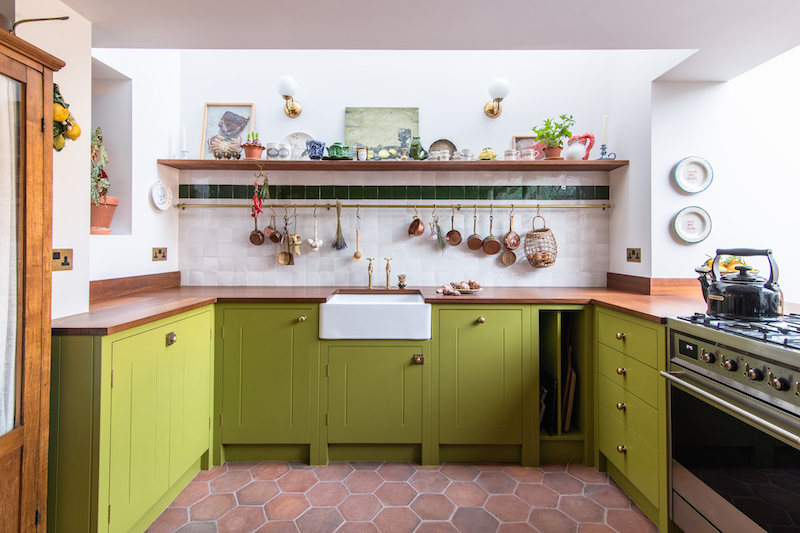
A bright green kitchen remodel sounds risky in the same way bangs sound risky: thrilling in theory, emotionally complicated in practice, and capable of changing your entire identity by Tuesday. But when it is done well, a green kitchen does not feel loud or gimmicky. It feels collected, welcoming, a little bit cheeky, and wonderfully alive. That is exactly why this London-inspired vintage kitchen look has such staying power.
The magic here is not just the color. It is the mix. Bright green cabinetry brings the energy. Vintage inspiration brings the soul. London style brings the restraint that keeps the room from turning into a theatrical vegetable. The result is a kitchen that feels charming without being precious, stylish without being cold, and personal without looking like a thrift store exploded near the toaster.
If you want to steal this look, do not focus on one hero piece and call it a day. This style works because several design choices are pulling in the same direction: saturated green paint, warm metals, textured tile, practical storage, natural wood, old-world flooring, and lighting that flatters everything from your tea kettle to your midnight snack decisions. Below is a detailed guide to recreating a bright green kitchen remodel with vintage inspiration, whether you are starting from scratch or just trying to rescue a tired kitchen from its beige era.
Why This Bright Green London Kitchen Look Works So Well
It uses color with confidence, not chaos
Bright green is bold, but it can still act like a grown-up. In a kitchen, green connects beautifully with natural materials such as oak, marble, terracotta, unlacquered brass, and linen. That means even a vivid shade can feel grounded. Unlike trendy colors that scream for attention and then vanish into design witness protection, green has one foot in nature and one foot in tradition. It can read fresh, heritage-inspired, playful, or elegant depending on the finish and surrounding materials.
It borrows from the past without becoming a costume
Vintage-inspired kitchens are not about recreating a museum piece where everyone whispers near the cutting board. The best versions cherry-pick old details that still feel useful today: simple cabinet fronts, turned brass latches, checkerboard floors, ceramic tile, bridge faucets, skirted storage, schoolhouse-style lighting, and handmade accessories. These details create warmth and memory. They make a kitchen feel lived in from day one, even if your contractor just left yesterday and you are still emotionally recovering from the invoice.
It suits both small and medium kitchens beautifully
This look is especially smart for galley kitchens, Victorian terraces, and narrow urban layouts. Why? Because color and detail can create personality without requiring a bigger footprint. Tall cabinetry, integrated storage, shallow counters in select areas, open shelves, and visually rich surfaces can make a compact kitchen feel intentional rather than cramped. In other words, you do not need a giant island the size of a small nation to pull this off.
Steal This Look: The 7 Design Elements That Matter Most
1. Choose a lively green for the cabinetry
If the title says bright green, commit to bright green. Not neon. Not cartoon slime. Think verdant, leafy, zesty, garden-adjacent green with enough depth to feel refined. A satin or eggshell finish usually works better than high gloss for a vintage-inspired kitchen because it softens the color and helps the cabinetry feel established rather than flashy.
Shaker-style cabinet fronts are the safest route, but you can also lean into slightly more decorative profiles if you keep the lines clean. The point is to let the color be the star. Pair it with painted pantry cabinetry, a matching island, or even just lower cabinets if you want a more cautious entry into the green zone.
2. Balance the color with warm neutrals
Bright green needs a calm supporting cast. Creamy white walls, soft putty paint, warm plaster tones, pale stone, and off-white ceilings help the cabinetry shine without making the room feel over-saturated. Cool, icy whites can work, but they often make a vintage-inspired kitchen feel a bit too crisp. This look is better when the room has some softness in the background.
That same principle applies to counters. Honed marble, marble-look quartz, pale composite stone, or even tile countertops can work if the tones are warm and tactile. The goal is contrast with coziness, not contrast with courtroom lighting.
3. Add tactile tile with character
A vintage-inspired green kitchen loves tile with texture. Zellige, handmade ceramic, square tile, subway tile with tonal variation, or a stripe of deeper green around the backsplash can all create that collected London feel. Perfectly flat, perfectly uniform tile can look a bit too sterile for this style. You want a backsplash that catches the light and gives the eye something to enjoy while the pasta water refuses to boil.
Backsplashes can also be where you add subtle storytelling. A tiled range alcove, a single darker stripe, or a niche for oils and spices can introduce a crafted, old-world detail without making the space fussy. Even if the rest of the kitchen is fairly simple, textured tile instantly adds age and authenticity.
4. Use brass hardware that gets better with time
Hardware is one of the easiest ways to push a green kitchen toward vintage charm. Unlacquered brass knobs, cup pulls, turn catches, rails, and latches bring warmth and a little old-English personality. The best part is that brass does not mind aging. In fact, it becomes more attractive once it loses its showroom stiffness and develops a gentle patina.
If you prefer a less golden look, antique bronze or aged nickel can also work, but brass is especially good with green because it highlights the warmth in the color. It is the design equivalent of sunlight on houseplants.
5. Mix in natural wood and furniture-style touches
One reason bright green kitchens feel so inviting is that they rarely rely on paint alone. Wood tones are essential. Think oak shelves, walnut stools, a butcher-block prep area, exposed furniture legs, a freestanding hutch, or a vintage table in place of a formal island. These pieces stop the kitchen from feeling too built-in or overly new.
Furniture-style details are especially effective in a London-inspired remodel because they make the room feel as though it evolved over time. A dresser-like island, a plate rack, a narrow farm table, or even a painted bench can help the kitchen feel layered rather than factory-finished.
6. Ground the room with old-world flooring
If the cabinets are the headline, the floor is the plot twist. A checkerboard pattern, terracotta tile, limestone effect, aged wood, or brick-inspired flooring gives the room that lovely vintage backbone. Checkerboard is especially effective because it feels classic, a little European, and just dramatic enough to make guests think you know what you are doing.
The trick is to keep the floor timeless rather than trendy. Soft black and cream, warm brown and tan, or muted stone shades feel more enduring than harsh high-contrast patterns. In a smaller kitchen, a floor with character can make the room feel richer without making it feel smaller.
7. Layer the lighting like a pro
Great kitchens do not rely on one heroic ceiling light that casts everyone in suspiciously interrogation-like shadows. A bright green kitchen remodel needs layered lighting: overhead ambient light, task lighting at the counters, focused pendants over an island or table, and accent lighting that makes shelves, tile, and hardware glow a little after dark.
Vintage-inspired sconces, schoolhouse pendants, opal glass shades, or simple brass fixtures all fit beautifully here. Lighting is what makes green cabinetry read rich and inviting instead of flat. If your kitchen is short on natural light, this matters even more. A well-lit green kitchen can feel moody in the best way. A poorly lit one can feel like an avocado regretted everything.
How to Recreate the Look in Your Own Kitchen
Start with the cabinets, then build the palette
Choose your green first. Once you know whether your cabinets lean grassy, olive, mossy, or jewel-toned, the supporting materials become easier to select. Warm marble or quartz, creamy paint, brass hardware, and natural wood almost always work. The more vivid the green, the more disciplined the rest of the palette should be.
Keep one element slightly imperfect
Vintage style needs a little texture and irregularity. That could be handmade tile, aged brass, reclaimed wood, or even a freestanding antique piece. If every element is perfectly smooth and machine-finished, the room will lose some of its character. This style needs one eyebrow slightly raised.
Think storage before styling
The prettiest kitchens still have to function on a Wednesday morning. Plan for deep drawers, concealed trash storage, pantry pull-outs, tray dividers, and practical shelves before you start buying striped tea towels and decorative crocks. Open shelving is lovely, but only when it holds items you actually use or truly want to display. Not every mug deserves a public platform.
Use accessories to echo the vintage mood
Once the renovation basics are in place, styling can reinforce the look. Consider pleated lampshades, ceramic canisters, framed still-life art, floral or striped textiles, old cutting boards, copper pans, woven baskets, enamelware, and classic cookware in black, cream, or deep green. These pieces should look collected, not staged by committee.
Common Mistakes to Avoid
Do not pair bright green with too many competing colors. A touch of burgundy, pale pink, navy, or butter yellow can be charming, but if five bold colors enter the chat, the kitchen may start to feel chaotic.
Do not ignore undertones. Green can lean warm or cool. Test it beside your countertop, backsplash, floor, and hardware before committing. The wrong undertone can make expensive materials look oddly unrelated.
Do not over-decorate every surface. Vintage-inspired is not the same as cluttered. Leave breathing room on counters. Let the cabinetry and tile do their jobs.
Do not fake old with cheap gimmicks. Distressed finishes, novelty signs, and overly themed decor can turn sophisticated vintage inspiration into a diner cosplay moment. Aim for authenticity, not parody.
Budget-Friendly Ways to Get the Look
If a full kitchen remodel is not in the cards right now, you can still capture much of this style. Paint existing cabinets in a lively green. Swap hardware for brass knobs and latches. Add a textured backsplash behind the range. Replace a flush-mount fixture with a pendant that has more personality. Bring in a vintage table or stools. Lay a patterned runner. Style open shelves with pottery and cookbooks. It is amazing how quickly a plain kitchen starts flirting with charm once the right materials show up.
For a medium-budget refresh, focus on cabinet paint, hardware, lighting, and backsplash first. Those changes create the strongest visual identity. For a higher-end remodel, invest in cabinetry proportions, flooring, custom storage, and quality surfaces. In a room like this, materials matter. Touch points matter. The kitchen should feel good when you look at it, but it should also feel good when you open a drawer, turn a latch, or rest your hand on the counter while pretending you are on a cooking show.
The Experience of Living with a Bright Green Vintage-Inspired Kitchen
There is something oddly comforting about walking into a kitchen that has personality before coffee. A bright green kitchen does not wait politely in the background like a standard white one. It greets you. It says good morning with conviction. On gray days, especially in a city setting, it can make the whole home feel more awake. The color reflects natural light in a way that feels fresh and botanical, but because it is grounded by vintage details, it does not become exhausting. It has energy, but it also has manners.
In daily life, the vintage-inspired pieces often become the emotional anchors of the room. The brass hardware warms under your hand. The tile behind the stove catches the late-afternoon light. The old stool in the corner becomes the place where someone always sits to talk while dinner is being made. The kitchen stops feeling like a utility zone and starts acting like a lived-in room with memory and rhythm. That is the real power of this look. It turns cooking, cleaning, chopping, chatting, snacking, and even standing around wondering what to make into part of a nicer visual experience.
It also changes how a space photographs and how it feels at different times of day. In the morning, the green can look crisp and cheerful. By evening, under warm pendants and sconces, the same cabinets feel deeper, richer, and almost cocooning. That day-to-night flexibility is one reason the style feels expensive even when some of the pieces are budget-friendly. It has atmosphere. It does not flatten out after the first week. In fact, it often gets better once you start layering in real life: a bowl of lemons, a worn linen towel, cookbooks with bent spines, a vase of herbs, a kettle that lives on the stove because everyone knows it is too handsome to hide.
There is also a practical satisfaction in a kitchen that balances beauty and utility. Vintage inspiration can sometimes drift into delicate territory, but this particular look holds up well because the core materials are hardworking. Painted cabinets are easy to refresh. Brass hardware ages attractively. Tile is durable. Wood accessories hide wear better than ultra-polished finishes. Even the slight imperfections become part of the charm. A tiny mark on a painted cupboard or a patina shift on a handle does not ruin the look. It adds to it.
And perhaps that is the best part. A bright green kitchen remodel with London vintage inspiration does not demand perfection. It rewards use. It welcomes a little clutter from actual life, as long as it is the good kind: fresh produce, warm bread, stacked plates, flowers from the market, friends leaning on the counter, somebody telling a long story while the onions soften in the pan. The room feels designed, yes, but not untouchable. It is stylish enough to admire and relaxed enough to enjoy. That balance is rare. It is also exactly why this look is worth stealing.
Final Thoughts
If you love kitchens with soul, a bright green kitchen remodel with vintage inspiration is one of the smartest looks to borrow. It is cheerful without being childish, nostalgic without being dusty, and practical enough for real life. The formula is simple: bold green cabinets, warm materials, useful storage, textured surfaces, old-world flooring, and lighting that flatters the entire scene. Do that well, and you get more than a pretty kitchen. You get a room with character, confidence, and just enough swagger to make plain white cabinetry look a little nervous.













