
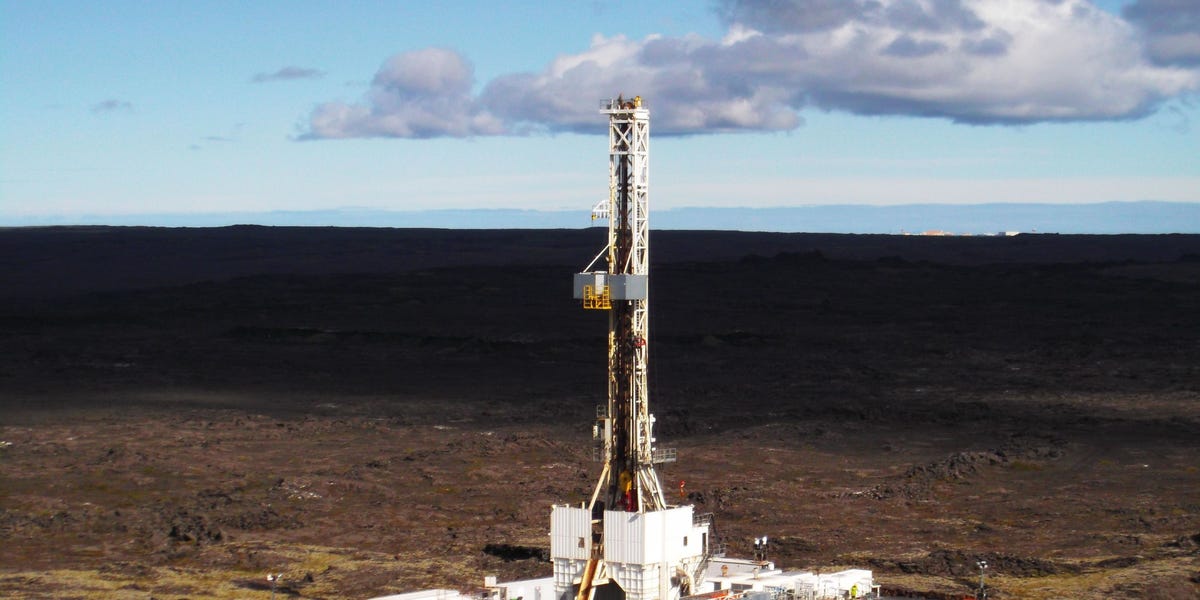
Iceland has never been shy about letting the Earth do the heavy lifting. While many countries burn fuel, import gas, or stare nervously at power bills, Iceland has spent decades turning volcanic heat into electricity, hot water, warm homes, steamy swimming pools, and a national identity that basically says, “Yes, our basement is lava, and yes, we know how to use it.”
Now the country is pushing geothermal energy into a much hotter, stranger, and more ambitious era. Scientists and engineers have been drilling nearly 3 miles into volcanic terrain to reach superhot fluids, and newer projects such as the Krafla Magma Testbed aim to create direct access to magma itself. The goal is not to build a cartoon villain lair under a volcano, although the branding department could have fun with that. The real goal is to understand whether magma-adjacent geothermal systems can produce far more clean electricity from fewer wells.
The headline sounds like science fiction: Iceland is drilling a 3-mile hole to tap magma power. The reality is even more interesting. This is a story about supercritical fluids, extreme drilling, renewable baseload electricity, volcanic science, and the possibility that the next major clean-energy breakthrough might be hiding under black lava fields.
Why Iceland Is the Perfect Place to Chase Magma Power
Iceland sits on the Mid-Atlantic Ridge, where the North American and Eurasian tectonic plates pull apart. That geological drama brings heat closer to the surface than in most places on Earth. In practical terms, Iceland does not have to drill as far as many countries would to reach very hot rock, steam, and hydrothermal systems. The island is, geologically speaking, a pressure cooker with excellent scenery.
This unusual setting explains why geothermal energy is already central to Iceland’s energy system. The country produces almost all of its electricity from renewable resources, mainly hydropower and geothermal power. Geothermal heat also supports district heating, greenhouses, pools, industry, and everyday life. If you have ever seen photos of people soaking outdoors in warm water while snow decorates the landscape like powdered sugar, you have seen geothermal energy doing its cozy public-relations work.
But conventional geothermal power has limits. A standard geothermal well taps hot water or steam underground, brings it to the surface, and uses it to spin a turbine. That works well when the resource is naturally hot, wet, and permeable. The challenge is that the best geothermal spots are not everywhere, and even in excellent places, each well produces only so much power. Iceland’s magma-related drilling projects are trying to solve that problem by going deeper, hotter, and closer to the ultimate heat source.
What the 3-Mile Hole Is Really Trying to Reach
The famous “3-mile hole” refers to the Iceland Deep Drilling Project, especially the IDDP-2 well at Reykjanes in southwest Iceland. Engineers began deepening an existing geothermal well in 2016 using a rig nicknamed Thor, which is frankly the only acceptable name for a machine drilling into volcanic rock. The well ultimately reached about 4,659 meters, or nearly 3 miles, making it one of Iceland’s deepest and hottest geothermal wells.
The target was not simply magma as a glowing underground lake. The practical target was supercritical fluid: water heated and pressurized so intensely that it behaves neither like a normal liquid nor a normal gas. At these conditions, water carries much more energy than conventional geothermal steam. Think of it as geothermal espresso: smaller volume, much bigger kick.
At the bottom of IDDP-2, temperatures exceeded 426 degrees Celsius, or roughly 800 degrees Fahrenheit, with very high pressure. Those conditions are important because supercritical geothermal systems could produce dramatically more electricity per well than standard geothermal resources. Some estimates suggest one successful superhot well could produce many times the output of a conventional high-temperature geothermal well.
That matters because drilling is expensive. If one well can produce 30 to 50 megawatts instead of around 5 megawatts, the economics of geothermal energy change. A developer could get more electricity from a smaller surface footprint, fewer well pads, fewer roads, and less disturbance. In a clean-energy transition where land use, reliability, and grid stability all matter, that is not a minor upgrade. That is the difference between a bicycle bell and a church bell.
The Krafla Magma Testbed: A Volcano Observatory With a Power Dream
While the Reykjanes deep-drilling effort focused on supercritical fluids near a volcanic system, the Krafla Magma Testbed takes the idea even closer to the source. Krafla, in northeast Iceland, is one of the world’s best-studied geothermal and volcanic areas. It has a known shallow magma body, proven infrastructure, and decades of geothermal operations. In 2009, drillers working on the IDDP-1 well at Krafla accidentally struck magma at about 2.1 kilometers below the surface.
Accidentally hitting magma sounds like the moment in a disaster movie when someone says, “That probably isn’t good.” In this case, it became a scientific opportunity. The well produced extremely hot steam and showed that usable heat near magma might be accessible at relatively shallow depths. It also exposed serious engineering challenges: extreme temperature, corrosion, unstable chemistry, glassy rock fragments, and equipment that was never designed for a molten-rock meet-and-greet.
The Krafla Magma Testbed aims to do this intentionally and carefully. Its goal is to drill into or near magma and create the world’s first magma observatory. That means placing instruments where scientists can directly study magma behavior, heat transfer, volcanic processes, and the boundary between molten rock and hydrothermal systems. For energy researchers, the prize is even bigger: proving that superhot geothermal resources can be accessed safely, repeatedly, and eventually at commercial scale.
How Magma Power Could Work Without Pumping Lava Into a Turbine
Let’s clear up one common misunderstanding: geothermal engineers are not planning to pump lava through a turbine. Turbines are tough, but they are not “please swallow molten rock” tough. The goal is to use heat from magma or magma-heated rock to create extremely hot fluids that can generate electricity.
In a typical geothermal plant, hot water or steam rises through wells and spins a turbine. In a binary-cycle plant, the geothermal fluid heats a second working fluid with a lower boiling point, and that vapor drives the turbine. In superhot geothermal systems, the concept becomes more intense. Water or brine heated near magma can become supercritical, carrying far more energy to the surface. Once managed properly, that energy can be converted into electricity through specialized surface equipment.
The science is elegant. The engineering is rude. At extreme temperatures, metals weaken, sensors fail, cement behaves differently, and fluids can become chemically aggressive. Superhot brines may carry dissolved minerals that scale pipes or corrode casings. A successful magma-adjacent well needs materials that survive heat, pressure, acidity, and mechanical stress. It also needs monitoring systems that keep working in a place where ordinary electronics would retire immediately and move to Florida.
Why Supercritical Geothermal Energy Is Such a Big Deal
Solar and wind power are now central to the global clean-energy transition, but they are variable. The sun clocks out at night. Wind has moods. Batteries help, transmission helps, and diversified grids help, but the world still needs clean power that can run around the clock. Geothermal energy is valuable because it can provide firm, reliable electricity 24 hours a day.
Supercritical geothermal energy could make that firm power much more powerful. A conventional geothermal resource may require several wells to reach a desired output. A superhot resource could potentially deliver much more energy from each well. That means better economics, denser power production, and a smaller land footprint. For countries trying to decarbonize electricity while keeping grids stable, that combination is extremely attractive.
The United States is paying attention too. Next-generation geothermal technologies, including enhanced geothermal systems and superhot rock concepts, are being studied as ways to expand geothermal power beyond naturally perfect volcanic locations. If engineers can learn from Iceland’s volcanic laboratories, the lessons may eventually apply to parts of the American West, Japan, New Zealand, Indonesia, Kenya, and other tectonically active regions.
The Risks: Heat, Pressure, Corrosion, and the Volcano Question
Drilling near magma is not like installing a backyard fence post. The temperatures can exceed the working limits of many conventional drilling tools. Pressure can be enormous. The chemistry of superheated fluids can be unpleasantly creative. Rock can fracture, collapse, or feed fluids into unexpected pathways. Every stage requires planning, modeling, testing, and humility.
Then there is the obvious question: can drilling into or near magma trigger an eruption? Based on current understanding, the answer is that careful scientific drilling is not expected to “set off” a volcano like poking a soda can. Magma systems are controlled by huge geological forces, not one narrow borehole. However, drilling can affect local pressure, fluid flow, and well stability, which is why monitoring is essential. The point of projects like Krafla is partly to improve volcanic understanding, not gamble with it.
Another challenge is economics. A superhot geothermal well may produce huge energy, but it also costs more to drill, complete, monitor, and maintain. Early projects are research-heavy and may not pay off quickly. Investors, governments, energy companies, and scientists must share risk. Iceland is unusually well positioned because it already has geothermal expertise, energy infrastructure, public familiarity with volcanic power, and a strong reason to keep innovating.
What This Could Mean for the Future of Clean Energy
If magma-adjacent geothermal systems work, the result could be one of the most important clean-energy developments of the century. Not because every country will drill into magma next Tuesday, but because the technology could expand what geothermal energy can do. It could turn high-temperature volcanic regions into compact, powerful, low-carbon electricity hubs.
For Iceland, the benefits are direct. More geothermal output could support industry, electrification, energy security, and future exports of expertise. For the world, the benefits are broader. Successful superhot drilling would improve materials science, high-temperature sensors, reservoir modeling, drilling techniques, and volcanic hazard research. It could also make geothermal energy more appealing to oil and gas drilling companies looking to pivot their skills toward clean energy.
There is a poetic angle here too. Fossil fuels also come from underground, but they release ancient carbon when burned. Magma power would use underground heat without burning the planet’s stored carbon bank account. It is still difficult, expensive, and experimental, but the principle is beautifully simple: stop digging for fuel and start drilling for heat.
Real-World Experience: What Iceland’s Magma Power Story Feels Like
To understand why this project captures the imagination, picture arriving in Iceland on a gray morning when the sky looks like brushed steel and the landscape seems recently assembled by a very dramatic planet. Steam rises from vents beside the road. The ground is dark, rough, and young. In many places, it feels less like standing on land and more like standing on a cooled idea of land. That is the emotional setting for magma power: the reminder that Earth is not a dead rock but a restless engine.
Visiting a geothermal area in Iceland makes the technology feel surprisingly practical. There is no giant furnace, no mountain of coal, no train delivering fuel. There is simply heat below, pipes above, turbines nearby, and people going about their day. Homes are warm. Sidewalks may be heated. Greenhouses grow vegetables in a cold climate. Public pools steam under open skies. Geothermal energy is not treated as futuristic decoration; it is normal infrastructure. That normality is what makes the magma-drilling story so powerful.
At a site like Krafla or Reykjanes, the experience is different from reading a technical paper. You see the strange beauty of a volcanic field and understand why engineers are tempted to go deeper. The resource is right there, almost taunting humanity from below. Of course, the Earth is not giving anything away for free. The same heat that promises clean power also punishes equipment. The same fractures that let fluids move can complicate drilling. The same volcanic system that creates opportunity demands respect.
That tension is what makes Iceland’s 3-mile drilling effort more than a clean-energy headline. It is a field test of human patience. Engineers must design wells that can survive temperatures hot enough to ruin ordinary tools. Scientists must interpret data from places no one can see directly. Energy planners must balance optimism with caution. Local communities must trust that the work is being done responsibly. The result is not a simple “Eureka!” moment. It is a slow negotiation with the planet.
For anyone thinking about the future of energy, Iceland offers a useful lesson: innovation often begins in places where necessity meets geography. Iceland did not become a geothermal leader because geothermal was trendy. It did so because volcanic heat was available, imported fuel was expensive, and practical people learned to use what their landscape provided. Magma power is the next chapter of that same mindset. It says clean energy does not have to come from one miracle technology. It can come from learning to read the local Earth very, very well.
Conclusion: A 3-Mile Bet on the Heat Beneath Our Feet
Iceland’s effort to drill nearly 3 miles into volcanic systems is not just a wild engineering stunt. It is a serious attempt to unlock a more powerful form of geothermal energy. The IDDP-2 well showed that supercritical conditions can be reached in Iceland’s volcanic crust. The Krafla Magma Testbed aims to go further by creating direct scientific access to magma and testing the technologies needed for superhot geothermal development.
The road ahead is not easy. Extreme heat, corrosive fluids, expensive drilling, and scientific uncertainty all stand in the way. But the potential reward is enormous: reliable clean power from a small footprint, deeper understanding of volcanoes, and a new path for geothermal energy worldwide. Iceland may be a small country, but when it comes to using the Earth’s inner heat, it is drilling into very big questions.
If the project succeeds, the future of renewable energy may not only be above us in the sun and around us in the wind. It may also be below us, waiting patiently in the dark, hot enough to power cities, stubborn enough to challenge engineers, and dramatic enough to remind us that the planet still has plenty of surprises in the basement.














