
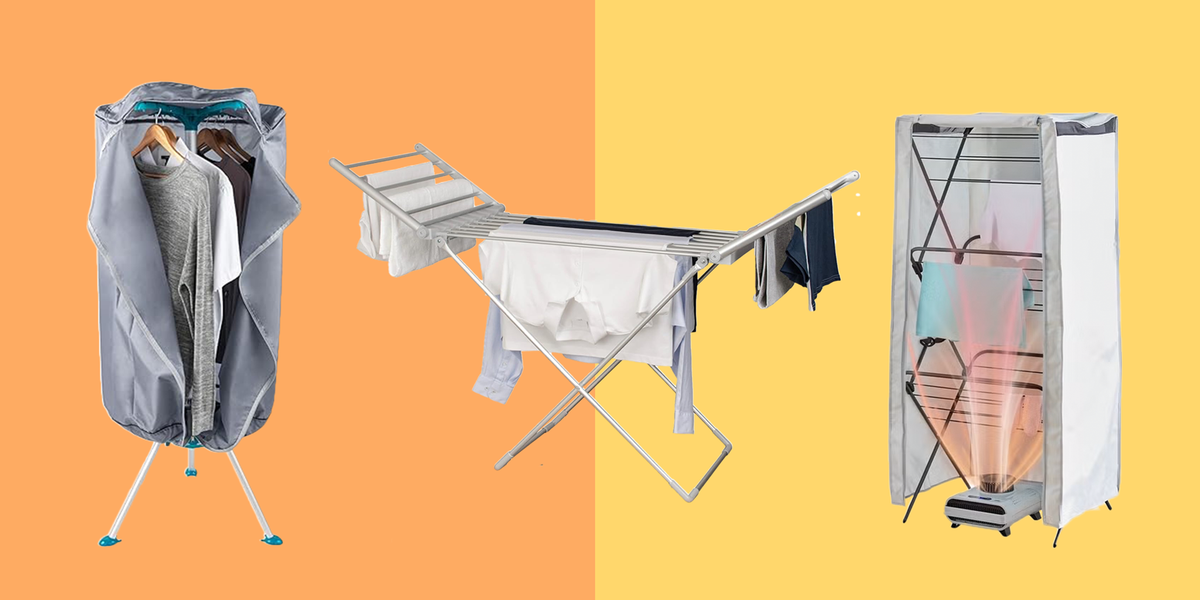
Drying laundry indoors used to mean one of three things: draping socks over radiators like festive bunting, waiting two business days for jeans to dry, or firing up the tumble dryer and hearing your electric bill softly cackle in the distance. Thankfully, heated clothes airers have stepped in as the practical middle ground: faster than a standard drying rack, gentler than a tumble dryer, and usually far cheaper to run.
A heated clothes airer, also called an electric drying rack or heated drying rack, uses low-wattage heated bars or warm circulating air to speed up indoor drying. Most bar-style models use about 200 to 300 watts, while covered pods and fan-assisted dryers often use more power but dry garments faster. For households trying to save energy, protect delicate clothing, reduce dryer use, or survive damp winter laundry days without turning the living room into a sock jungle, the right heated airer can be a small appliance with a surprisingly big impact.
Below is a carefully researched guide to the 15 best heated clothes airers to save energy and money, with practical notes on capacity, drying style, storage, and who each model suits best.
How to Choose the Best Heated Clothes Airer
Look at Wattage, Not Just Size
A large heated clothes airer is not automatically expensive to run. Many three-tier models use around 300 watts, which is far lower than many conventional electric dryers. However, wattage only tells part of the story. A 300W airer may need several hours for thick towels, while a higher-powered drying pod may finish lighter garments sooner. The best choice depends on how often you do laundry, what fabrics you dry, and whether you need speed or low running cost above all else.
Capacity Matters for Families
If you wash several loads a week, prioritize a three-tier or four-tier heated airer with at least 15kg capacity and 20 meters or more of drying space. Smaller winged models are ideal for apartments, dorm rooms, and quick midweek loads, but they can become crowded when asked to handle bedding, hoodies, and denim.
A Cover Can Make a Big Difference
A heated airer with a cover traps warmth around clothing, helping items dry more evenly. Without a cover, heated bars warm the fabric they touch, but thicker areas may stay damp unless you rotate garments. A cover is not magic, but it is the laundry equivalent of putting a lid on a pot: less wasted heat, better results.
15 Best Heated Clothes Airers to Save Energy and Money
1. Dry:Soon Deluxe 3-Tier Heated Clothes Airer
Best overall for families and regular laundry.
The Dry:Soon Deluxe 3-Tier Heated Clothes Airer is one of the most popular premium options for a reason. It offers generous drying space, a strong folding frame, a built-in timer, and enough capacity for roughly two wash loads. It is especially useful for families, shared households, or anyone who does not want laundry draped over every chair like a fabric-based art installation.
This model is best when paired with its fitted cover, which helps trap warm air and improves drying performance. It is not the cheapest heated clothes airer, but its combination of capacity, energy efficiency, and convenience makes it a strong long-term pick.
2. Dry:Soon Mini 3-Tier Heated Airer
Best compact heated airer for small spaces.
The Dry:Soon Mini 3-Tier Heated Airer is designed for apartments, small laundry areas, and households that need vertical drying capacity without a wide footprint. Despite its smaller size, it can still handle a useful amount of washing and folds slim for storage.
It is a smart pick for renters or anyone who wants a heated clothes drying rack that can disappear behind a door or into a cupboard. It may not dry bulky towels as quickly as larger covered models, but for shirts, underwear, gym clothes, baby items, and lightweight layers, it is efficient and easy to live with.
3. JML DriBUDDI Compact Heated Airer
Best drying pod for faster garment drying.
The JML DriBUDDI Compact works differently from classic heated-bar airers. Instead of warming metal rails, it uses warm air inside a cover to dry hanging garments. That makes it especially good for shirts, school uniforms, blouses, lightweight trousers, and anything you want to hang rather than drape.
Because it uses a more powerful heating system than many bar-style airers, it can dry faster but costs more per hour to run. The trade-off is simple: if you need speed and prefer hanging clothes, this pod-style dryer is convenient. If your goal is the lowest possible running cost, a 300W rack may suit you better.
4. Minky SureDri 4-Tier Heated Clothes Airer with Cover
Best high-capacity heated airer with cover.
The Minky SureDri 4-Tier model is built for people who produce laundry at an Olympic pace. With multiple heated tiers, a cover, and strong drying capacity, it is well suited to family wash days and homes where laundry seems to multiply when nobody is looking.
The extra tier gives more flexibility for small items, socks, children’s clothes, and layered drying. A covered design also helps keep warmth around the garments, which is useful in cold or damp rooms. This is a practical pick if you want a heated clothes airer that behaves like a mini indoor laundry station.
5. Minky SureDri 3-Tier Heated Clothes Airer
Best sturdy three-tier alternative.
The Minky SureDri 3-Tier Heated Clothes Airer is a reliable choice for households that want a familiar tower-style rack with heated rails. It offers good drying space, folds down for storage, and typically runs at low wattage compared with a tumble dryer.
It is especially useful for mixed loads: T-shirts on the upper rails, socks and underwear on the middle tier, and heavier items spread across the lower bars. Like most heated rail airers, it works best when clothes are spaced out rather than packed tightly together.
6. BLACK+DECKER 3-Tier Heated Clothes Airer
Best practical all-rounder.
The BLACK+DECKER 3-Tier Heated Clothes Airer is a strong option for shoppers who want a recognizable brand, a straightforward folding design, and enough capacity for regular household laundry. Its three-tier layout makes it versatile, while the heated rails help reduce drying time compared with a standard rack.
This model suits people who want simplicity. Open it, load it, plug it in, and let it work. It is not trying to be a spaceship. It is trying to dry socks, and that is a noble mission.
7. Beldray 3-Tier Heated Airer
Best budget-friendly large rack.
The Beldray 3-Tier Heated Airer offers a useful balance of drying space, foldable storage, and affordable running costs. Many versions use 300W power, making them suitable for people who want to reduce tumble dryer use without buying a premium appliance.
It is a good choice for medium-size households, especially if you dry lighter loads frequently. Add a compatible cover or place the airer in a well-ventilated room to improve performance. For best results, avoid overlapping thick garments, because heated rails need airflow to do their job properly.
8. Beldray Winged Heated Airer
Best winged airer for quick small loads.
A winged heated airer is ideal when you do not need a tower-style rack. The Beldray Winged Heated Airer is useful for smaller loads, delicate items, and households that want a wider drying surface for flat or semi-flat drying.
Winged models are often easier to load than tower airers, and they work well for sweaters, tops, underwear, and quick laundry emergencies. The downside is footprint: when fully open, a winged rack takes more floor space. If your laundry area is narrow, measure before buying, unless you enjoy doing the sideways shuffle around wet T-shirts.
9. Daewoo 3-Tier Heated Clothes Airer
Best for heavy-duty drying capacity.
The Daewoo 3-Tier Heated Clothes Airer is often promoted with a generous load capacity, making it worth considering for households with bigger laundry demands. It has a vertical folding structure that allows several garments to dry at once without occupying as much floor space as a wide winged rack.
This model is best for users who want a large heated drying rack but do not necessarily need premium extras. Look for bundle versions that include a cover, as covered drying usually improves efficiency and keeps warmth concentrated around the laundry.
10. Dunelm 3-Tier Heated Airer
Best value pick for occasional indoor drying.
Dunelm’s three-tier heated airers have become popular with budget-conscious households looking for an affordable way to dry laundry indoors. A three-tier frame gives enough room for everyday clothing, while the heated rails help speed up drying during rainy or cold weather.
Before buying any electric laundry appliance, check the current model number, safety information, and recall notices from the retailer or manufacturer. That is not meant to be scary; it is simply good practice with any plug-in home product. A safe heated airer should have clear instructions, stable construction, and enough room around it for ventilation.
11. Status Portable Heated Airer
Best low-cost starter heated airer.
The Status Portable Heated Airer is a sensible option for anyone testing whether a heated clothes airer fits their routine. It is usually lighter, simpler, and more affordable than premium tower models, making it useful for students, renters, and small households.
This type of airer is best for light loads rather than full family laundry days. Use it for essentials: uniforms, work shirts, underwear, socks, and the one hoodie that mysteriously becomes everyone’s favorite garment in the house.
12. Argos Home Heated Clothes Airer
Best easy-to-find high-street option.
Argos Home heated airers are popular because they are accessible, practical, and often priced for everyday buyers. Many models focus on simple folding storage and moderate drying capacity, which makes them good for apartments and households that only need heated drying a few times per week.
Expect performance to depend heavily on room conditions. In a warm, ventilated room, lighter garments can dry efficiently. In a cold, closed room with poor airflow, even a heated airer will struggle. Laundry appliances are useful, but they cannot break the laws of humidity.
13. Dry:Soon Drying Pod
Best for shirts, uniforms, and hanging garments.
The Dry:Soon Drying Pod is another strong choice for people who prefer hanging clothes inside a warm air chamber. It is especially useful for shirts, blouses, school uniforms, dresses, and lighter garments that benefit from hanging rather than being folded over rails.
Drying pods can also reduce creasing compared with crowded rail drying. The trade-off is that they often use more power than low-wattage bar airers and may not be as suitable for bulky towels or heavy bedding. For weekday clothing and quick wardrobe rotation, however, a pod can be wonderfully convenient.
14. Dry:Soon Heated Towel Airer
Best for towels, bathrooms, and daily damp items.
A heated towel airer is not meant to replace a full laundry rack, but it can be excellent for damp towels, sportswear, dish cloths, and small daily items. The Dry:Soon Heated Towel Airer is useful for bathrooms, utility rooms, and households that want to prevent damp towels from lingering like tiny fabric clouds.
This is a niche but valuable choice. It will not handle a week’s worth of jeans, but it can reduce the need to run the dryer for small items. Over time, those small avoided dryer cycles can add up.
15. Foldable Heated Wing Airer with Cover
Best flexible design for mixed laundry.
A foldable heated wing airer with a fitted cover is one of the most versatile styles for ordinary home use. The wings create space for flat drying, while the cover helps trap heat and speed up the process. This style is especially helpful for mixed laundry loads that include shirts, socks, leggings, children’s clothes, and light towels.
When shopping, look for stable legs, a clear wattage rating, overheat protection, and a cover that fits properly without blocking ventilation. A badly fitted cover can trap too much moisture, while a good one helps create a warmer drying zone.
Heated Clothes Airer vs Tumble Dryer: Which Saves More Money?
For many households, a heated clothes airer is cheaper to run per hour than a traditional tumble dryer because it uses much less power. A typical electric dryer may use several kilowatt-hours per load, while many heated rail airers use a fraction of that. However, the comparison is not always one-to-one. A tumble dryer may finish a load faster, while a heated airer may run longer.
The real savings come from using the airer strategically. Dry lightweight items on the heated airer, save the tumble dryer for bulky towels or bedding, and spin laundry thoroughly before drying. The wetter the clothes are when they leave the washer, the longer any drying method will take.
How to Use a Heated Clothes Airer Efficiently
Do Not Overload the Rails
The biggest mistake is piling laundry on top of itself. Clothes need both heat and airflow. Spread garments across rails, leave small gaps, and rotate thicker items halfway through drying.
Use a Cover When Possible
A cover can improve heat retention, especially in cooler rooms. If your airer does not include one, check whether the manufacturer sells a compatible cover. Avoid improvising with heavy blankets, which can block ventilation and create safety risks.
Ventilate the Room
Indoor drying releases moisture into the air. Crack a window, run an extractor fan, or use a dehumidifier if your home is prone to condensation. Saving money is great; growing mold behind the bookcase is not the bonus feature anyone asked for.
Spin Clothes Well Before Drying
A high spin cycle removes more water before clothes reach the airer. This can reduce drying time and improve efficiency. Always follow garment care labels, especially for delicate fabrics.
Best Heated Clothes Airer by Household Type
For Families
Choose a large three-tier or four-tier heated airer with a cover, such as the Dry:Soon Deluxe, Minky SureDri 4-Tier, BLACK+DECKER 3-Tier, or Daewoo 3-Tier. These models provide enough space for regular laundry loads and help reduce tumble dryer use.
For Apartments
Compact tower models such as the Dry:Soon Mini or a portable Status airer are easier to store and move. Look for slim folding depth and vertical drying space.
For Fast Drying
A drying pod such as the JML DriBUDDI or Dry:Soon Drying Pod is better for speed, especially with hanging garments. It may use more energy per hour, but it can be worthwhile when time matters.
For Delicates
Heated rail airers are generally gentler than tumble drying because they use lower, more direct warmth without tumbling. Use flat drying space for knitwear and avoid hanging heavy wet sweaters by the shoulders.
Extra Experience: Real-Life Lessons from Using Heated Clothes Airers
After comparing heated clothes airers, one thing becomes clear: the best model on paper is not always the best model for your daily routine. A huge three-tier airer sounds wonderful until you realize your apartment hallway is now a laundry obstacle course. A tiny winged model sounds convenient until you try to dry three hoodies, two pairs of jeans, and a bath towel on it. Heated airers work best when they match your actual laundry behavior, not your imaginary “perfectly organized adult” behavior.
In real use, lightweight clothing is where heated airers shine. T-shirts, socks, underwear, pajamas, gym clothes, uniforms, and synthetic tops can dry much more pleasantly than they do on a cold standard rack. The gentle heat helps prevent that stale damp smell that appears when clothes sit too long in a chilly room. For anyone who has ever rewashed a load because it dried with the aroma of “forgotten basement,” this is a major win.
Thick cotton and denim are more demanding. Jeans, hoodies, bath towels, and heavy sweatshirts need more time and airflow. The trick is to give bulky items extra rail space and rotate them during drying. If you fold a thick towel over one heated bar and leave it there overnight, the rail area may dry while the outer layers remain damp. Spread heavy items across multiple bars or finish them with a short dryer cycle if needed.
A cover is one of the most useful accessories. Without a cover, heat escapes into the room. With a cover, warmth surrounds the laundry and drying becomes more even. That said, the room still needs ventilation. Indoor drying adds moisture to the air, and moisture needs somewhere to go. A slightly open window, extractor fan, or dehumidifier can make the difference between fresh laundry and foggy windows.
Another lesson: timers are worth having. A built-in timer helps prevent unnecessary running, especially if you start the airer in the evening. Models without timers can still be efficient, but using a plug-in timer adds control. Running a heated airer only as long as needed is one of the easiest ways to save money.
Placement also matters. A heated clothes airer works better in a small, ventilated room than in a large cold space. Put it where air can circulate around it, not jammed against a wall or trapped in a cupboard. Never cover it with random blankets, never overload the frame, and always follow the manufacturer’s instructions. Electric laundry gadgets are helpful, but they deserve the same respect as any appliance that plugs into the wall.
The biggest practical benefit is flexibility. You do not have to abandon your tumble dryer completely. Instead, use the heated airer for everyday clothes and save the dryer for towels, bedding, or urgent loads. That hybrid approach is often the most realistic way to save energy and money without turning laundry into a full-time hobby.
In short, a heated clothes airer is not a miracle machine. It will not dry a king-size comforter in twenty minutes while making you coffee. But it can cut down dryer use, protect delicate fabrics, reduce damp indoor drying time, and make winter laundry far less annoying. For a small appliance, that is a pretty respectable résumé.
Conclusion
The best heated clothes airers to save energy and money are the ones that fit your space, laundry volume, and patience level. For families, a large three-tier or four-tier covered model offers the best balance of capacity and efficiency. For apartments, compact heated airers are easier to store. For fast drying, pods are excellent for hanging garments. And for everyday savings, using a heated airer alongside smart laundry habits can reduce tumble dryer dependence without leaving your clothes damp for days.
If you want the strongest all-rounder, start with a covered three-tier model such as the Dry:Soon Deluxe, Minky SureDri, BLACK+DECKER, Beldray, or Daewoo. If you want compact convenience, the Dry:Soon Mini or a portable heated airer may be enough. Either way, the humble heated clothes airer has earned its place in the modern laundry routine: quiet, useful, energy-conscious, and far less dramatic than your electric bill after a weekend of tumble drying.













