
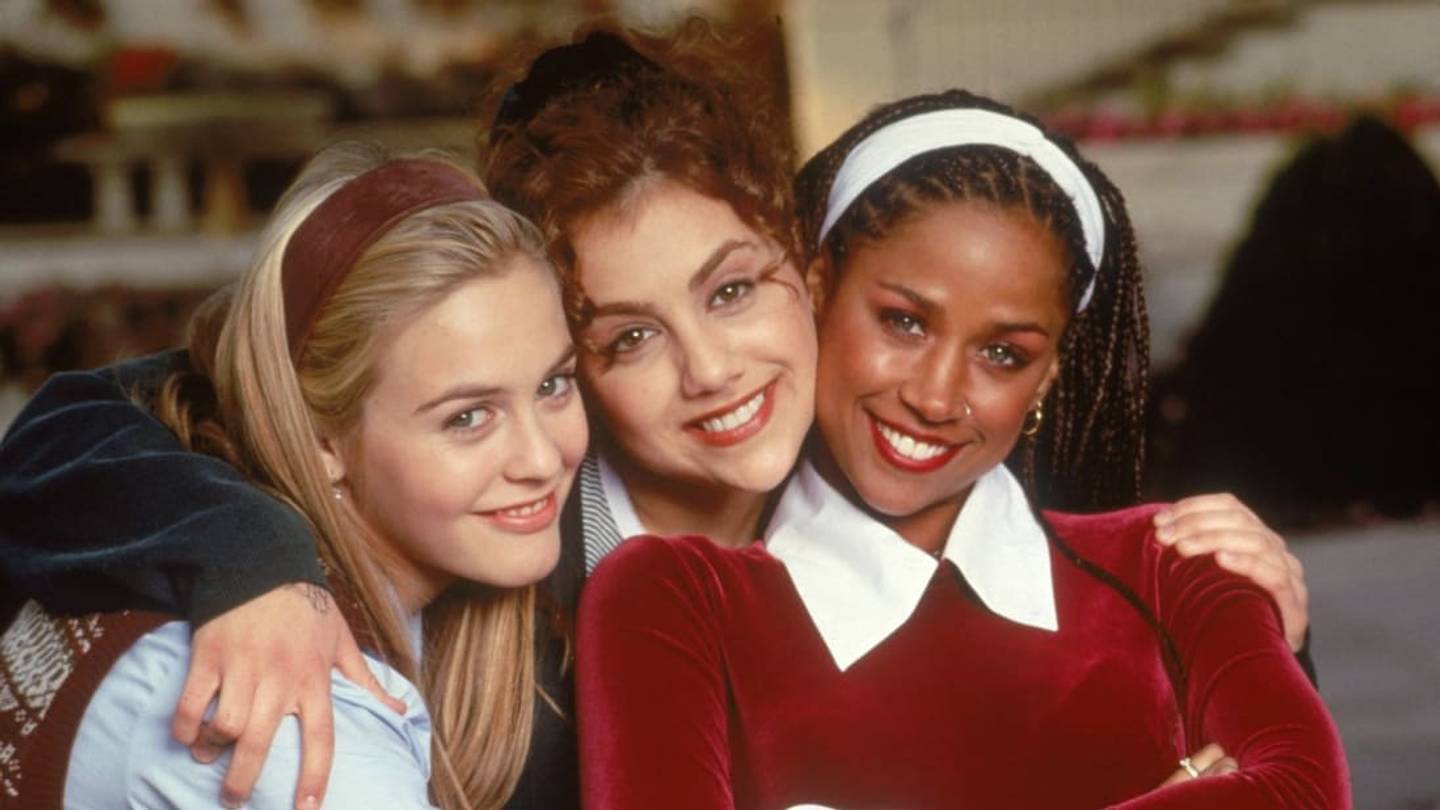
Clueless is not just a movie. It is a plaid-covered cultural time capsule, a Jane Austen remix with mall lighting, and possibly the only film in history that made “As if!” sound like both an insult and a philosophy. Released in 1995, Amy Heckerling’s teen comedy gave audiences Cher Horowitz, Dionne Davenport, Tai Frasier, Josh Lucas, and enough quotable lines to power a sleepover for the next 30 years.
At first glance, Clueless looks like a glossy Beverly Hills high school comedy about makeovers, crushes, parties, driving tests, and the sacred art of outfit coordination. But beneath the fuzzy pens and knee-high socks is a surprisingly smart movie about class, confidence, friendship, social blindness, and growing up without losing your sparkle. It is funny because Cher is wrong so often, but it works because her heart is usually in the right placeeven when her logic is wearing designer heels on a staircase.
Whether you have watched it once, rewatch it every year, or quote it so often your friends gently ask if you need a hobby, these fun facts about Clueless reveal why the movie still feels fresh, fashionable, and totally pause-worthy.
1. Clueless Is a Modern Version of Jane Austen’s Emma
One of the best-known but still delightful facts about Clueless is that it was loosely inspired by Jane Austen’s 1815 novel Emma. Cher Horowitz is the Beverly Hills version of Emma Woodhouse: rich, charming, confident, and convinced she can improve everyone’s romantic life except her own. Tai is the Harriet Smith figure, Elton mirrors Mr. Elton, and Josh has strong Mr. Knightley energyexcept with more flannel and college-student judgment.
The genius of the adaptation is that it does not feel like homework. Instead of country estates and Regency manners, the movie uses high school cliques, parties, report cards, and mall culture. The social rules are different, but the emotional game is the same: who belongs, who misunderstands love, and who needs a reality check wrapped in comedy.
2. The Movie Started as a TV Idea
Before Clueless became one of the defining teen movies of the 1990s, Amy Heckerling originally developed the concept as a television project. The early idea centered on popular California high school students and a relentlessly optimistic female lead. That sunshine-powered personality eventually became Cher Horowitz.
The project did not immediately become the movie we know. It moved through development, changed shape, and eventually found its cinematic home. In a very Clueless twist, the movie later inspired an actual TV series in 1996. So yes, the story went from TV idea to movie hit to TV show. Cher would probably call that “full-circle fabulous.”
3. The Title Was Not Always Clueless
The title Clueless is now so perfect that it feels impossible to imagine anything else. But during development, the project had other names, including No Worries and I Was a Teenage Teenager. Those titles are fun in their own way, but they do not have the same sharp, breezy punch.
Clueless works because it describes Cher’s blind spots without being cruel. She is not unintelligent; she is emotionally overconfident. She can negotiate grades, organize a makeover, and spot a bad outfit from orbit, but she takes longer to understand her own feelings. The title is funny, simple, and just a little bit savagelike Amber with better timing.
4. Amy Heckerling Studied Real Teenagers
The slang in Clueless feels heightened, but it did not come from nowhere. Amy Heckerling observed real Los Angeles-area teenagers to capture the rhythm, logic, and comic exaggeration of teen speech. The result is dialogue that sounds artificial and authentic at the same time, which is much harder than it looks.
Lines like “As if,” “totally buggin’,” and “Whatever” became part of pop culture because they sounded like teen language turned up to maximum sparkle. The movie does not simply copy slang; it stylizes it. That is why the script still works decades later, even when some references are very 1995. The attitude is timeless, even if the cellular phones are delightfully enormous.
5. Alicia Silverstone Got Cher Because of Aerosmith Videos
Before she became Cher Horowitz, Alicia Silverstone was already familiar to many viewers because of her appearances in Aerosmith music videos. Her screen presence caught attention: she was expressive, funny, pretty without seeming icy, and had the exact mix of innocence and self-possession that Cher needed.
Cher could easily have become shallow or annoying in the wrong hands. Silverstone made her lovable because she played the character with sincerity. Cher truly believes she is helping people. Sometimes she is. Sometimes she is creating social chaos in a mini skirt. Either way, Silverstone makes us root for her.
6. Reese Witherspoon Auditioned for Cher
It is strange but fascinating to imagine Reese Witherspoon as Cher Horowitz. Witherspoon auditioned for the role before Alicia Silverstone landed it, and she obviously went on to become a teen and comedy icon in her own right. Still, Cher required a very specific energy: polished, sheltered, sunny, ridiculous, and secretly wise by the end.
Silverstone’s performance feels effortless because she never plays Cher as mean. Cher is privileged and sometimes oblivious, but she is not a villain. She is a girl learning that good intentions need actual listening skills. That emotional softness is a huge reason the movie lasts.
7. Sarah Michelle Gellar Was Connected to the Role of Amber
Amber, played with perfect snippy precision by Elisa Donovan, is one of the film’s most underrated comic weapons. Before Donovan took the role, Sarah Michelle Gellar was associated with the part, but scheduling conflicts prevented it from happening. That tiny casting road not taken is a fun reminder of how many future stars orbited 1990s teen entertainment.
Donovan’s Amber is so effective because she is not just “mean girl number two.” She is theatrical, competitive, and always dressed like she has somewhere dramatic to be. Every high school comedy needs a character who treats gym class like a personal attack, and Amber delivers.
8. Paul Rudd Auditioned for More Than One Role
Paul Rudd eventually became Josh, Cher’s socially conscious ex-stepbrother and slow-burn love interest. But during the casting process, he was interested in other parts too, including roles like Christian or Murray. Thankfully, he ended up as Josh, because his dry, skeptical energy balances Cher’s cotton-candy confidence.
Josh could have been smug, but Rudd makes him warm underneath the sarcasm. He teases Cher, but he also sees her potential before she fully sees it herself. Their chemistry works because the movie lets them argue, grow, and slowly realize they are better matched than either wants to admit.
9. Brittany Murphy’s Tai Was a Breakout Performance
Brittany Murphy brought Tai Frasier to life with a mixture of awkwardness, sweetness, and comic timing. Tai’s transformation from new girl to mini-Cher to bruised-but-wiser friend is one of the movie’s funniest and most human arcs.
Her legendary insultcalling Cher “a virgin who can’t drive”is devastating because it is both childish and surgically accurate. It lands like a glitter-covered lightning bolt. But Murphy also gives Tai vulnerability. She is not simply a makeover project; she is a teenager trying to figure out who she is while everyone else keeps handing her a different costume.
10. Cher’s Yellow Plaid Suit Became a Fashion Landmark
If Clueless had a national flag, it would be yellow plaid. Cher’s opening outfitmatching jacket and skirt, white knee socks, and absolute confidencebecame one of the most recognizable looks in movie history. Costume designer Mona May helped create a fashion language that was colorful, feminine, witty, and completely different from the grunge-heavy style often associated with the early 1990s.
The outfit tells us everything before Cher says much at all. She is organized, wealthy, playful, and convinced her closet deserves its own operating system. In one look, the movie announces its tone: smart, bright, and not afraid of being pretty.
11. The Wardrobe Mixed High Fashion and Thrifted Creativity
The clothes in Clueless look expensive because the characters live in a world of privilege, but the costume design was not just a parade of designer labels. Mona May mixed high-end inspiration, custom pieces, altered finds, and creative styling to build a world that felt fashionable but still character-driven.
That balance matters. Cher, Dionne, Tai, Amber, and Miss Geist all dress differently because their clothes tell mini-stories. Dionne’s hats are bold. Tai’s style evolves. Amber’s outfits scream competitive theater kid with a credit card. Miss Geist’s makeover works because her clothes finally reflect the warmth that was already there.
12. Cher’s Closet Predicted Fashion Tech
One of the most futuristic things in Clueless is not a car, phone, or school computer. It is Cher’s digital closet. The famous outfit-matching program lets her browse clothes on a screen before choosing what to wear, which seemed like fantasy in 1995.
Today, wardrobe apps, digital styling tools, and virtual try-on technology make the scene feel oddly prophetic. Cher was not just fashion-forward; she was app-forward. She basically wanted a personal style algorithm before most people had reliable dial-up.
13. The “Haitians” Scene Became Iconic by Accident
Cher’s classroom speech about immigration is one of the film’s funniest scenes, partly because she mispronounces “Haitians.” The moment works because it captures Cher perfectly: she is confident, persuasive, compassionate in a vague way, and completely unaware that her argument is held together with designer tape.
The scene also shows why Clueless is smarter than a simple teen comedy. Cher may sound silly, but she is trying to argue for generosity. The movie laughs at her privilege and ignorance while still allowing her to have a heart. That balance is difficult, and Clueless walks it in platform shoes.
14. The Soundtrack Is a 1995 Time Capsule
The Clueless soundtrack is packed with 1990s personality. It includes artists and songs that help define the movie’s world, from Coolio’s “Rollin’ With My Homies” to tracks connected with Radiohead, Beastie Boys, The Muffs, and other era-specific sounds.
Music does more than decorate the film. It builds mood. The party scenes, driving sequences, and romantic beats feel alive because the soundtrack understands teen life as a mix of confidence, embarrassment, performance, and sudden emotional intensity. In other words, high school with a better playlist.
15. “Rollin’ With My Homies” Became Tai’s Emotional Anthem
In most movies, a love song is sweeping and obvious. In Clueless, Tai’s romantic memory is tied to Coolio’s “Rollin’ With My Homies.” That choice is hilarious and weirdly touching. Tai hears the song and immediately associates it with Elton, even though viewers know Elton is not exactly Prince Charming.
The joke works because teen crushes often attach themselves to random songs, snacks, hallways, or smells. One minute it is just a track at a party; the next minute it is the soundtrack to your entire emotional collapse. Tai’s taste may be questionable, but her feelings are painfully real.
16. The Movie Turned Slang Into a Cultural Export
Clueless did not invent every phrase it used, but it helped launch several into mainstream pop culture. “As if!” became the big one, but “Whatever,” “totally buggin’,” and the film’s particular rhythm of teen exaggeration became instantly recognizable.
The dialogue is so memorable because it has structure. Characters do not just say funny words; they use language as social armor. Cher persuades. Dionne punctures. Amber performs. Josh critiques. Murray bluffs. The result is a comedy where even small lines feel polished without losing energy.
17. The Movie Helped Redefine the Teen Comedy
Before Clueless, many teen comedies leaned heavily on broad stereotypes, gross-out jokes, or male-centered coming-of-age plots. Clueless shifted the formula by placing a stylish, female-led story at the center and treating teen girls as funny, flawed, intelligent, and worth studying.
It opened the door for a wave of clever teen films that understood high school as both ridiculous and emotionally serious. Movies like 10 Things I Hate About You, Mean Girls, and Legally Blonde share some of that DNA: bright surfaces, sharp jokes, and heroines who are underestimated because they enjoy style.
18. Several Cast Members Reprised Their Roles on TV
After the film’s success, Clueless became a television sitcom that aired from 1996 to 1999. Alicia Silverstone did not return as Cher; Rachel Blanchard took over the role. However, several film cast members did reprise their parts, including Stacey Dash as Dionne, Donald Faison as Murray, Elisa Donovan as Amber, Wallace Shawn as Mr. Hall, and Twink Caplan as Miss Geist.
The TV series did not replace the movie, but it shows how quickly Clueless became a recognizable brand. The characters, clothes, and slang were strong enough to move beyond one film and into weekly sitcom territory.
19. The Movie Was a Box Office Win
Clueless was not a giant effects blockbuster, but it became a major success for its scale. With a modest budget and a sharp concept, it earned strong theatrical returns and later found even more life through home video, cable, streaming, anniversary coverage, fashion retrospectives, and endless rewatching.
That long shelf life is important. Some movies open big and disappear. Clueless did the opposite: it arrived as a hit, then kept growing into a cultural object. Every few years, a new generation discovers Cher’s closet and immediately wonders why their own computer is not more helpful.
20. Clueless Earned a Place in Film History
Decades after its release, Clueless is widely recognized as more than a fun teen comedy. It is a smart literary adaptation, a fashion landmark, a slang machine, and a snapshot of 1990s American youth culture. Its selection for preservation by the National Film Registry further confirms what fans already knew: this movie is not just cute. It matters.
The reason is simple. Clueless understands that being young can be hilarious, selfish, generous, embarrassing, and sincere all at once. It lets its heroine be wrong without humiliating her. It lets fashion be fun without treating it as empty. Most importantly, it proves that a movie can wear yellow plaid and still have brains.
Why Clueless Still Feels So Rewatchable
The secret to the movie’s staying power is not just nostalgia. Yes, the 1990s details are charming: the tiny backpacks, the chunky phones, the mall trips, the computer closet, the party music, and the dramatic importance of driving. But Clueless still works because the emotional engine is timeless.
Cher wants control. Tai wants acceptance. Dionne wants confidence and respect. Josh wants people to care about bigger things. Mr. Hall and Miss Geist want connection. Even Amber wants attention, though she would prefer it arrive with better lighting. These wants are simple, recognizable, and funny when they collide.
The movie also rewards repeat viewing. On the first watch, you may focus on the clothes and jokes. On the second, you notice the adaptation structure. On the third, you realize how carefully the movie uses Cher’s narration to reveal what she understands and what she completely misses. By the fourth watch, you are probably shopping for plaid, and frankly, that is between you and your closet.
Personal-Style Experiences Inspired by Clueless
One of the funniest experiences many fans have with Clueless is realizing that the movie quietly changes how they look at their own wardrobe. After watching Cher confidently reject an outfit through her computer, ordinary morning indecision suddenly feels cinematic. Standing in front of a closet and saying “I have nothing to wear” becomes less of a complaint and more of a dramatic scene. The only thing missing is a rotating digital avatar and perhaps a best friend named Dionne giving brutally honest commentary.
The film also makes viewers think differently about personal style. Cher’s outfits are not random; they are declarations. Dionne’s hats say she refuses to be background decoration. Tai’s early clothes show her outsider status, while her makeover reflects how easily identity can become performance. Even Miss Geist’s transformation is less about becoming “pretty” and more about letting her outside match her warm, romantic personality. That is a surprisingly useful fashion lesson: clothes do not have to impress everyone, but they should help you feel like yourself.
Another relatable experience is the social makeover fantasy. Most people have had a moment when they wanted to reinvent themselves, help a friend glow up, or organize someone else’s life because their own was inconveniently messy. Clueless makes that impulse funny. Cher thinks she is being generous when she transforms Tai, but she slowly learns that helping someone does not mean turning them into a smaller version of yourself. That lesson applies far beyond high school. Whether it is fashion, dating advice, career advice, or friend-group drama, the best help starts with listening.
The movie also captures the strange comedy of confidence. Cher can give a classroom speech with total conviction even when her facts wobble. She can negotiate her grades like a tiny Beverly Hills attorney. She can walk into almost any room as if she has already been approved by the lighting department. That kind of confidence is both ridiculous and inspiring. Viewers may laugh at Cher, but they also secretly want a teaspoon of her self-belief. Maybe not the driving skills. Definitely not the driving skills.
For modern audiences, watching Clueless can feel like visiting a stylish museum of pre-smartphone teenage life. People get lost without GPS. A phone call can be a major plot event. Social status travels by rumor, not apps. Yet the emotions feel familiar. Everyone still wants to be liked. Everyone still misreads signals. Everyone still occasionally chooses the wrong crush and then builds an entire emotional soundtrack around it. Technology changes, but being a teenager remains a contact sport.
That is why Clueless remains such a satisfying comfort watch. It is light without being empty, stylish without being cold, and clever without begging for applause. It lets viewers enjoy the fantasy of wealth and fashion while gently poking holes in Cher’s bubble. By the end, Cher becomes kinder, more aware, and more honest with herself. She is still Cherthank goodnessbut she has learned that good intentions need humility, and that love sometimes looks like the person teasing you from the stairs.
Conclusion
Clueless endures because it is much smarter than its characters sometimes pretend to be. It turns Jane Austen into a Beverly Hills teen comedy, transforms fashion into storytelling, and gives viewers one of the most lovable heroines of the 1990s. From Cher’s yellow plaid suit to Tai’s “Rollin’ With My Homies” heartbreak, every detail feels memorable because it serves character, comedy, and culture at the same time.
The film’s best trick is that it never asks viewers to choose between brains and fun. It has both. It is literary and silly, stylish and sincere, satirical and warm. That is why fans still quote it, study it, dress like it, and rewatch it whenever life needs a little more plaid optimism. In the immortal spirit of Cher Horowitz: some movies are classics because they are deep. Clueless is a classic because it is deep and has better accessories.














