
Saturday Night Live has launched more comedy careers than a suspiciously over-caffeinated talent cannon. Since 1975, the show has turned sketch performers into movie stars, sitcom icons, Oscar nominees, late-night hosts, political commentators, and the occasional human headline. But when a former SNL cast member steps behind the camera, the results can be wildly unpredictable. Sometimes you get smart, lasting comedy. Other times you get a movie that feels like a 4-minute sketch trapped in a 100-minute escape room with no key.
This article looks at the worst movies directed by former SNL cast membersnot simply bad movies starring them, and not films based on SNL sketches unless the director also qualifies. That distinction matters. It’s Pat, for example, is often called one of the worst SNL-related movies ever made, but it was not directed by a former cast member. Here, the focus is on performers who once stood under the Studio 8H lights and later took the director’s chair for feature films that critics, audiences, or time itself judged harshly.
Why Do Great Sketch Performers Sometimes Make Bad Directors?
Sketch comedy is built on speed. A character enters, the premise lands, the joke escalates, and the sketch either explodes beautifully or limps to the host saying, “We’ll be right back.” Feature filmmaking is different. It demands structure, rhythm, visual storytelling, character arcs, and the discipline to know when a joke has expired. Former SNL cast members often bring energy, performance instincts, and fearless silliness to directing. What they do not always bring is a story that can survive beyond the first commercial break.
The worst examples tend to fail in similar ways: the concept is too thin, the tone keeps wobbling, the pacing feels uncertain, or the movie mistakes volume for comedy. Many of these films are not lazy. In fact, some are overly ambitious. Their biggest problem is that their creators seemed to have three movies in mind and tried to release all of them at once.
1. Teddy Bears’ Picnic Directed by Harry Shearer
Harry Shearer is one of the sharpest satirical minds associated with Saturday Night Live. He was a cast member during two separate periods and later became world-famous as one of the essential voices of The Simpsons. He also helped create the mockumentary language of This Is Spinal Tap, which makes Teddy Bears’ Picnic especially puzzling.
Released in 2002, Teddy Bears’ Picnic is Shearer’s political satire about a secretive retreat for powerful men. On paper, that sounds like a target-rich comedy environment. Wealthy elites behaving badly in the woods? That should be satire with a bear trap. Instead, critics found the movie surprisingly toothless. The premise promises mischief, but the execution often feels strangely small, like a newspaper cartoon expanded into a feature without enough visual or narrative momentum.
The film has frequently been cited as one of Shearer’s weakest screen efforts. Its problem is not that it lacks intelligence; the problem is that the intelligence rarely becomes funny cinema. The jokes are aimed at privilege, secrecy, and institutional arrogance, but the movie often explains its targets more clearly than it skewers them. For a performer with Shearer’s résumé, that makes the disappointment sting harder.
2. Almost Heroes Directed by Christopher Guest
Christopher Guest is a comedy legend. As a former SNL cast member and the creative force behind beloved mockumentaries like Waiting for Guffman, Best in Show, and A Mighty Wind, he has one of the strongest directing careers of any SNL alum. But even great filmmakers have a “please don’t put this on the highlight reel” title, and for Guest, that title is Almost Heroes.
The 1998 adventure comedy stars Chris Farley and Matthew Perry as explorers trying to beat Lewis and Clark to the Pacific. That setup should have delivered a rowdy historical farce. Instead, the film feels oddly stranded between broad slapstick and half-hearted period parody. Farley gives the movie bursts of energy, and Perry has moments of dry confusion, but the story never finds the comic engine it needs.
Critics were especially disappointed because Guest’s best work depends on character observation, ensemble chemistry, and deadpan precision. Almost Heroes leans more on obvious gags and chaotic set pieces, which makes it feel less like a Christopher Guest film and more like a studio comedy that wandered into his filmography wearing a fake mustache. It is not unwatchable, and many Farley fans defend it warmly. Still, compared with Guest’s best work, it is a major misfire.
3. Big Stan Directed by Rob Schneider
Rob Schneider’s SNL years helped define his screen persona: oddball voices, exaggerated reactions, and characters who could turn a single joke into a recurring bit. As a director, however, his 2007 debut Big Stan landed with a thud loud enough to wake up every unused punchline in Hollywood.
The movie stars Schneider as a con man who trains in martial arts before going to prison. The basic idea could have become a ridiculous underdog comedy, but the film leans heavily on crude, repetitive humor, including jokes about sexual assault that many critics found offensive rather than edgy. Comedy can be outrageous and still smart. Big Stan often seems to believe outrageousness is the joke.
David Carradine appears as a mysterious martial arts mentor, and the supporting cast includes recognizable faces, but the film never becomes more than a string of uncomfortable setups. The direction is functional, but the tone is stuck between spoof, prison comedy, and self-congratulating fantasy. It is the kind of movie where you can almost hear the pitch meeting: “What if fear itself learned karate?” Unfortunately, fear was not the only thing that needed training. So did the screenplay.
4. Nothing but Trouble Directed by Dan Aykroyd
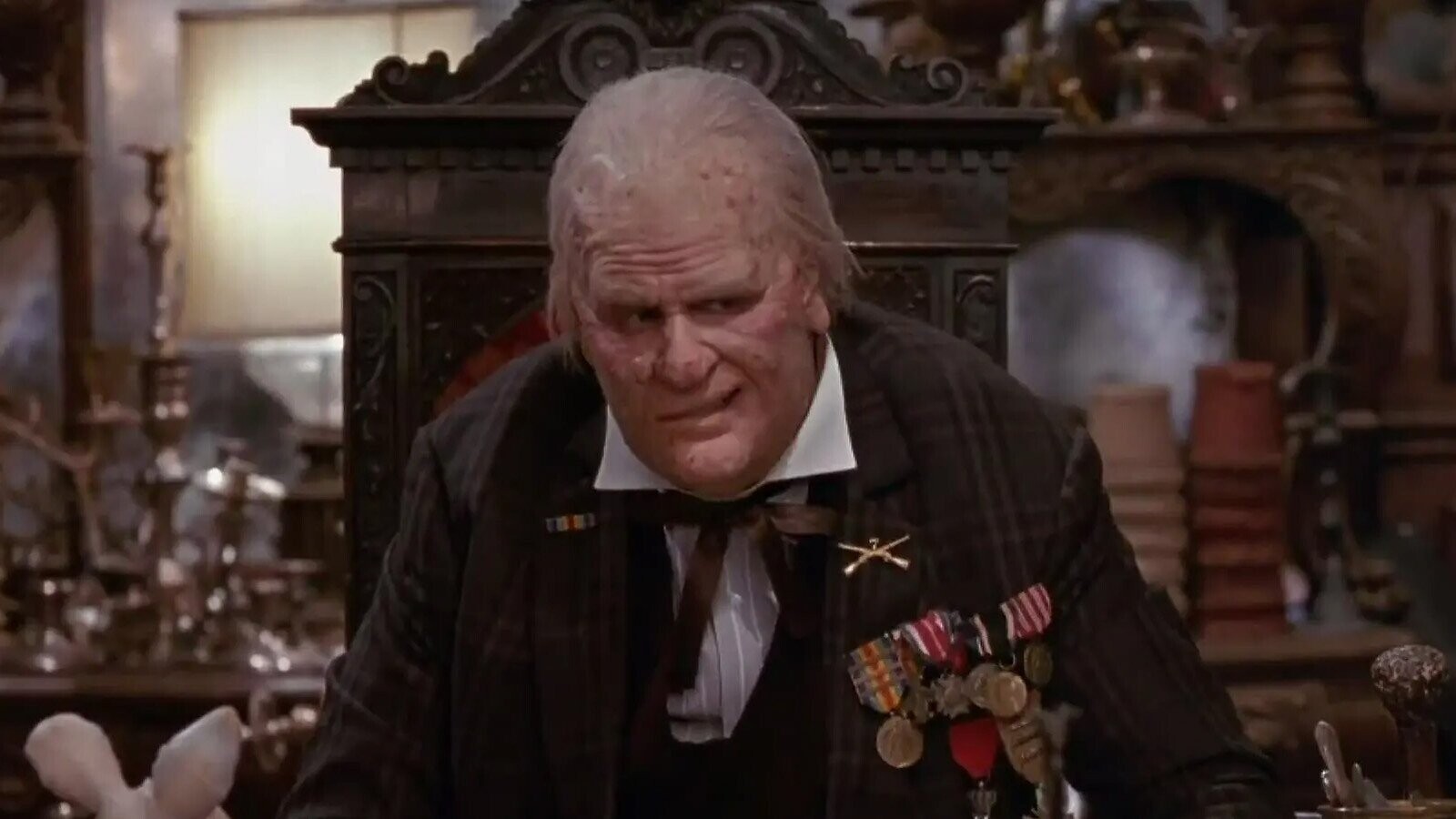
Dan Aykroyd’s Nothing but Trouble is not just a bad movie. It is a haunted carnival ride built out of celebrity confidence, expensive sets, and the feeling that someone lost a bet with reality. Released in 1991, the film stars Chevy Chase, Demi Moore, John Candy, and Aykroyd himself. With that cast, audiences could reasonably expect a dark comedy gem. What they got was one of the strangest studio comedies of the decade.
Aykroyd directed, wrote, and performed in the film, which follows travelers trapped in a grotesque small town ruled by a bizarre judge. The movie aims for surreal, spooky, satirical, and silly all at once. That ambition is admirable. The viewing experience, however, is often like being stuck in someone else’s nightmare after eating gas-station nachos.
Over time, Nothing but Trouble has attracted cult defenders who appreciate its commitment to weirdness. That is fair. A bad movie with personality is often more interesting than a bland one with perfect lighting. But as a comedy, it struggles. The jokes are buried under production design, the performances feel disconnected, and the tone never stops swerving. It remains the ultimate example of a former SNL star using creative freedom to build an entire cinematic funhouseand then forgetting to install the exits.
5. I Think I Love My Wife Directed by Chris Rock
Chris Rock is one of the greatest stand-up comedians of his generation, and his time on SNL was only one chapter in a much larger career. As a filmmaker, he has shown real growth, especially with Top Five. But before that success came I Think I Love My Wife, a 2007 romantic comedy-drama that never quite figures out whether it wants to be a sharp adult comedy, a marriage study, or a remake of an art-house classic.
The film, inspired by Éric Rohmer’s Love in the Afternoon, follows a married man tempted by the idea of a different life. Rock co-wrote, directed, produced, and starred in it. That level of control should have resulted in a personal, precise film. Instead, critics found the movie uneven, with underdeveloped female characters and a tone that muted Rock’s strongest comic instincts.
The strange thing is that the movie has interesting ideas. It wants to examine boredom, marriage, fantasy, and responsibility. But its observations often arrive in flat scenes rather than sharp comic revelations. Rock’s stand-up is famous for cutting straight to uncomfortable truths. I Think I Love My Wife circles those truths, parks nearby, and then spends too long checking the meter.
6. Harlem Nights Directed by Eddie Murphy
Eddie Murphy directing Richard Pryor, Redd Foxx, and himself in a period crime comedy sounds like a dream project. In 1989, Harlem Nights arrived with enormous expectations because Murphy was already one of the biggest comedy stars in the world. He wrote, directed, and starred in the film, giving himself the rare chance to build a movie around his influences and heroes.
The result is fascinating, stylish, and deeply uneven. Set around a 1930s nightclub, Harlem Nights has handsome production design, a legendary cast, and flashes of Murphy’s charisma. But critics attacked the movie for its thin plot, clunky dialogue, and inconsistent rhythm. It often feels like a gangster comedy that wants to be both a loving tribute and a star vehicle, but it never fully commits to either.
Unlike some films on this list, Harlem Nights has a strong fan base today. Many viewers enjoy its atmosphere, cast chemistry, and quotable moments. That cult affection is real. Still, as a directing debut from one of comedy’s biggest talents, it disappointed many critics and showed how difficult it is to manage tone when you are also the writer, star, and central attraction. Murphy has made many iconic movies, but he has not directed another feature since. That says plenty.
7. Zoolander No. 2 Directed by Ben Stiller
Ben Stiller’s directing career includes genuine achievements. Reality Bites, The Cable Guy, Zoolander, Tropic Thunder, and his television work show a filmmaker with visual confidence and a strong sense of comic worlds. That is why Zoolander No. 2 felt so disappointing. The original Zoolander became a cult favorite because its stupidity was oddly elegant. The sequel, released in 2016, often mistakes callbacks for jokes and celebrity cameos for satire.
The movie brings back Derek Zoolander and Hansel, adds Penélope Cruz and Kristen Wiig, and sends everyone into a fashion-world conspiracy. But the comic timing feels forced. The first film mocked vanity culture with a bizarre innocence; the sequel arrives in a social-media era that should have given it more targets, yet it often seems less observant than the movie made 15 years earlier.
Stiller later spoke publicly about being surprised by the harsh response, and that reaction is understandable. Comedy sequels are brutal. Audiences want the same flavor, but fresher. They want nostalgia, but not reheated leftovers. Zoolander No. 2 had the look, the cast, and the brand. What it lacked was the weird little soul that made the first film quotable.
8. Killing Gunther Directed by Taran Killam
Taran Killam was one of SNL’s most versatile performers during his run, capable of impressions, physical comedy, and big sketch energy. His 2017 directorial debut, Killing Gunther, is a mockumentary-style action comedy starring Killam, Bobby Moynihan, Cobie Smulders, and Arnold Schwarzenegger. That cast alone sounds like a reason to press play.
The movie follows a group of eccentric hired killers trying to take down the world’s greatest assassin. It is not the worst-reviewed film on this list, and some critics appreciated Schwarzenegger’s willingness to play along. But the common complaint was familiar: the concept feels like a sketch stretched too far. The mockumentary format gives the movie looseness, yet not enough momentum. Once the premise is established, the jokes start circling the same target.
Killing Gunther is more mildly disappointing than catastrophic. It has energy, and Killam clearly loves the genre he is spoofing. But affection alone cannot carry a feature. The film needed sharper escalation, stronger character turns, and more surprise. Instead, it becomes a comedy that keeps aiming, keeps reloading, and only occasionally hits the bullseye.
What These Movies Teach About the “SNL” Pipeline
The lesson is not that SNL performers should avoid directing. That would be ridiculous. Many sketch comedians understand rhythm, collaboration, improvisation, and audience response better than anyone. The lesson is that directing a movie requires a different comic muscle. A sketch can survive on one strong idea. A movie needs that idea to evolve.
The best actor-directors know when to step away from their own persona and serve the film. The weakest examples on this list often bend the movie around the star’s habits. Big Stan bends around Schneider’s comfort with crude underdog comedy. Nothing but Trouble bends around Aykroyd’s fascination with grotesque absurdity. Harlem Nights bends around Murphy’s desire to honor comedy giants while still owning the spotlight. Each film has a personal fingerprint, but not every fingerprint belongs on the steering wheel.
Still, these movies are worth discussing because failure is part of comedy history. Bad comedies reveal what good comedies hide: timing is fragile, tone is everything, and confidence can become a banana peel. The former SNL cast members on this list all took risks. Some risks became cult curiosities. Some became cautionary tales. A few became both.
Personal Viewing Experiences: Why Bad “SNL” Alumni Movies Are Oddly Fun to Revisit
Watching the worst movies directed by former SNL cast members is a very specific kind of entertainment experience. It is not like watching a random bad movie found at the bottom of a streaming menu at 1:17 a.m., although, spiritually, the two activities are cousins. These movies come with history. You know the performers. You know their comic voices. You know what they can do when everything works. That makes the failures more interesting, because you are not simply asking, “Is this funny?” You are asking, “How did this much talent end up here?”
The first experience many viewers have with a movie like Nothing but Trouble is disbelief. You see the cast list and think, “Surely this cannot be as strange as people say.” Then the movie begins, the world gets increasingly grotesque, and suddenly you understand why cult movies are not always loved in the traditional sense. Sometimes they are admired the way people admire a sinkhole: terrifying, memorable, and technically impressive if you stand far enough away.
Zoolander No. 2 creates a different experience. It is not bizarre enough to become a full midnight-movie artifact, but it is too polished to ignore. Watching it can feel like attending a reunion where everyone remembered the costumes but forgot the inside jokes. You laugh once or twice, then spend the rest of the time trying to remember why the original felt so effortless. That kind of disappointment is almost educational. It shows how comedy depends on cultural timing. A joke that felt fresh in 2001 can feel like a museum exhibit in 2016 if it is not rebuilt for the moment.
Harlem Nights is the most complicated viewing experience of the bunch because it has genuine pleasures. The cast is legendary. The period setting has style. There are scenes that fans quote with affection. Yet the movie also drags in ways that make you aware of Murphy’s divided attention as writer, director, and star. Watching it now, you can feel both the ambition and the unevenness. It is not a disaster in the same way as Big Stan or Teddy Bears’ Picnic. It is more like a lavish dinner where every ingredient is expensive, but the chef forgot the recipe halfway through.
Almost Heroes is often viewed through nostalgia, especially by people who loved Chris Farley. That makes it hard to judge coldly. There are viewers who will always find joy in Farley’s physical comedy, no matter how weak the surrounding movie is. That reaction is valid. Bad movies are not mathematical equations. Sometimes affection overrides structure. But from a critical perspective, the film is still a reminder that casting funny people is not the same as building a funny movie.
The best way to watch these films is with curiosity rather than cruelty. They are not just punchlines. They are creative experiments that reveal how hard comedy filmmaking really is. A former SNL performer can dominate live television, crush a monologue, invent a character in a week, and still struggle to shape a feature film. That does not erase their talent. It makes the process more human. Comedy is risky because silence is always waiting. These movies simply met more silence than applause.
Conclusion
The worst movies directed by former SNL cast members prove that comedy success does not automatically transfer from the sketch stage to the director’s chair. Harry Shearer, Christopher Guest, Rob Schneider, Dan Aykroyd, Chris Rock, Eddie Murphy, Ben Stiller, and Taran Killam all brought recognizable comic identities to their projects. Some produced cult oddities. Others produced forgettable disappointments. A few produced movies that remain strangely watchable precisely because they are so miscalculated.
What connects these films is not a lack of talent. It is the challenge of scale. A sketch can be weird for five minutes and leave a perfect dent. A feature film must be weird, funny, coherent, paced, emotionally legible, and visually alive for much longer. That is a tall order, even for people who survived live television. In the end, these movies deserve their place in comedy historynot because they are great, but because they remind us that failure can be just as revealing as success. Sometimes the bomb tells you more about the artist than the hit.














