
Note: This article is written for web publishing in standard American English, based on real South Park history, and cleaned of unnecessary citation artifacts.
Few TV shows have aged like South Park. Some shows become classics because they are polished. Others survive because they are warm, safe, and comforting. South Park survived because it sprinted straight into cultural chaos wearing a parka, yelling something outrageous, and somehow returning next week with a sharper joke.
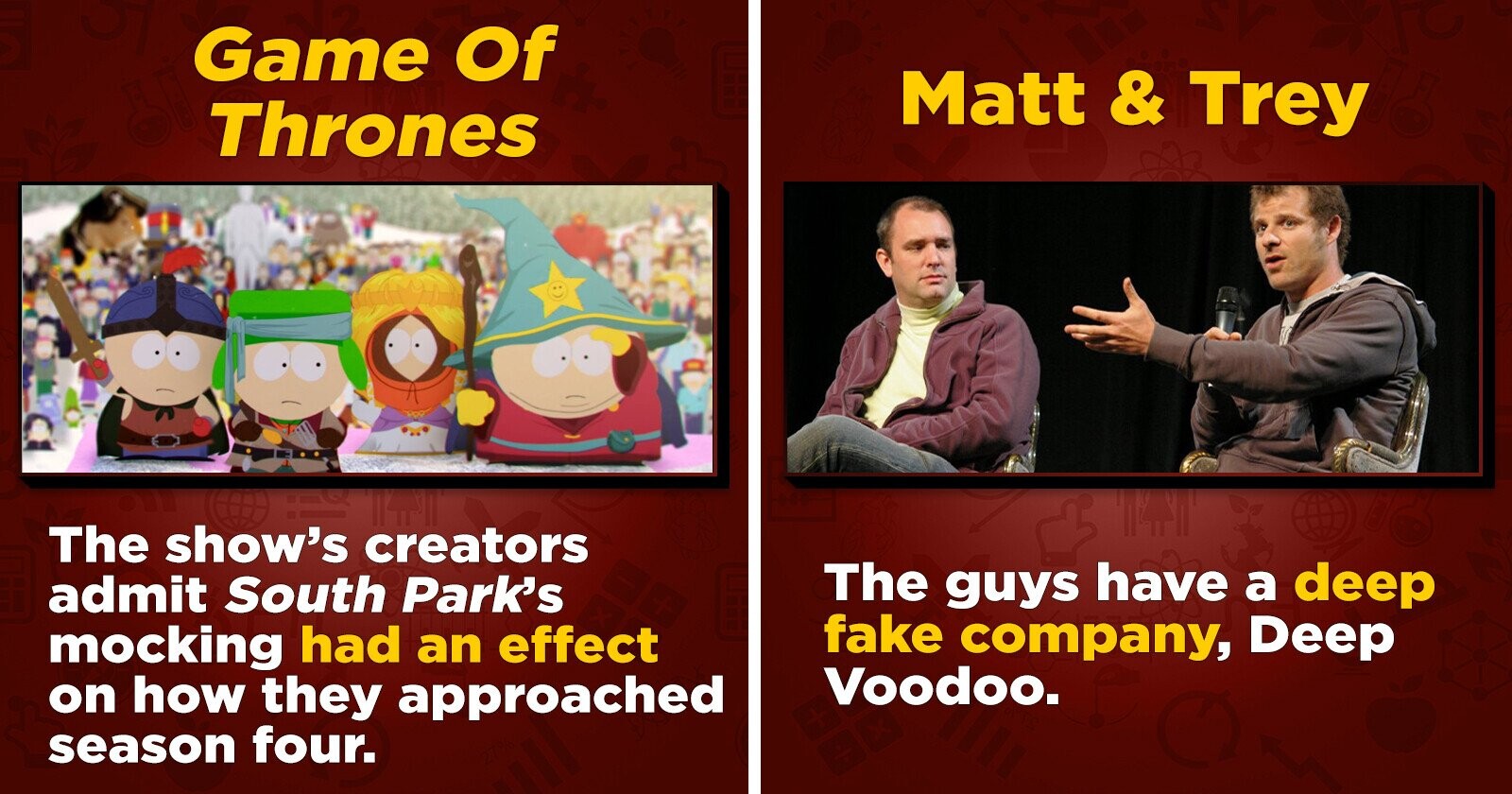
Created by Trey Parker and Matt Stone, South Park began as a crude animated oddity and became one of the most influential adult animated series in American television. It helped define Comedy Central, turned four foul-mouthed fourth graders into pop-culture fixtures, won major awards, upset governments, irritated celebrities, inspired Broadway success, and even led its creators into the restaurant business. That is not a normal career path. That is a cartoon snowball rolling downhill and collecting lawsuits, Tony Awards, and sopapillas.
The title may sound wild, but yes, before and around the early South Park era, Matt and Trey were already playing with raunchy, taboo-breaking comedy. Their work was never just about shock for shock’s sake. At its best, their comedy uses bad taste as a crowbar to pry open bigger conversations about censorship, hypocrisy, celebrity culture, religion, politics, media panic, and the very American habit of yelling at the television while continuing to watch it.
1. Matt and Trey Really Did Make a Lot of “Smut” Before South Park Became Untouchable
The most infamous example is Orgazmo, a 1997 sex-comedy superhero spoof written and directed by Trey Parker and produced with Matt Stone involved. The movie follows a sheltered Mormon missionary who gets pulled into the adult film industry, which is exactly the kind of premise that sounds like someone dared Parker and Stone to make a movie after midnight.
Orgazmo earned an NC-17 rating, which limited its theatrical reach but boosted its cult reputation. The movie is not remembered because it was subtle. It is remembered because it showed the Parker-Stone formula in an early, messy, energetic form: take a subject polite culture avoids, add absurd sincerity, and then make the audience wonder whether the joke is actually about the topic or about the panic surrounding it.
2. The Partnership Started at the University of Colorado Boulder
Trey Parker and Matt Stone met while studying at the University of Colorado Boulder. That college connection matters because their humor still carries the DNA of student-film experimentation: low-budget invention, fast collaboration, musical weirdness, and a willingness to look ridiculous in public.
Before they became television power players, they were film-school troublemakers with cameras, paper cutouts, and a very specific ability to make each other laugh. Many creative partnerships fail because one person wants polish and the other wants chaos. Parker and Stone found a way to make chaos look like a production method.
3. South Park Was Born From a Viral Short Before “Viral” Was a Career Goal
Before YouTube, TikTok, or the phrase “link in bio,” South Park grew from animated shorts known as The Spirit of Christmas. These shorts featured early versions of the boys and used crude construction-paper animation to deliver jokes that were much too rude for a holiday card and therefore perfect as one.
The short spread through Hollywood by tapes and copies, becoming a pre-internet viral sensation. That underground buzz helped convince executives that there was something strangely powerful in the combination of innocent-looking children and very adult satire.
4. The Show Premiered on Comedy Central in 1997
South Park officially premiered on Comedy Central on August 13, 1997. The first episode, “Cartman Gets an Anal Probe,” introduced viewers to Stan, Kyle, Cartman, Kenny, alien abduction jokes, and the basic rule that nothing in this Colorado town would remain normal for more than three minutes.
The show quickly became a cable phenomenon. It did not look like other animated shows, and it definitely did not sound like them. Instead of smooth animation and family-sitcom rhythms, it offered jagged movement, flat voices, and punch lines that seemed to arrive carrying a legal waiver.
5. The “Cheap” Look Became One of TV’s Smartest Visual Brands
The earliest South Park animation used a cutout style that looked homemade because, in spirit, it was. Later production shifted to computer animation, but the team preserved the flat, paper-doll look. That decision became brilliant branding.
The simple style makes the show instantly recognizable. It also gives the writers freedom to move quickly. A celebrity scandal, political disaster, tech trend, or moral panic can become an episode while other animated shows are still waiting for their storyboard notes to put on pants.
6. The Six-Day Production Schedule Is Almost Mythological
One of the most famous facts about South Park is that episodes have often been produced in roughly six days. The documentary 6 Days to Air showed how Parker, Stone, and their team build an episode at terrifying speed, sometimes finishing dangerously close to broadcast.
This system is stressful, risky, and probably not recommended by most doctors. But it also gives South Park its bite. The show can respond to current events while the news cycle is still warm. That is why it often feels less like a traditional cartoon and more like a weekly comedy editorial drawn with mitten hands.
7. Trey Parker Voices a Ridiculous Number of Characters
Trey Parker provides many of the show’s most recognizable voices, including Stan, Cartman, Randy Marsh, Mr. Garrison, and others. Matt Stone voices Kyle, Kenny, Butters, Craig, and several recurring characters. Their vocal performances are part of the show’s secret machinery.
Cartman’s voice alone is a cultural artifact. It can be hateful, childish, manipulative, and weirdly musical, sometimes all inside the same sentence. Randy Marsh, meanwhile, evolved from background dad into one of television’s most reliable chaos engines. When Randy gets involved, common sense quietly leaves the building.
8. Kenny’s Death Became a Gag, Then a Piece of Lore
In the early seasons, Kenny McCormick died so often that “Oh my God, they killed Kenny!” became one of the show’s defining catchphrases. The joke worked because the show treated death like a reset button and childhood like a place where the impossible is only mildly inconvenient.
Over time, South Park played with the gag instead of simply repeating it. Kenny’s immortality became part of the character’s strange mythology, especially in episodes involving his superhero identity, Mysterion. What began as disposable shock humor eventually became world-building, which is a very South Park kind of accident.
9. The Movie Earned an Oscar Nomination
South Park: Bigger, Longer & Uncut arrived in 1999 and proved the show could stretch into a full musical satire. The film attacked censorship, parental panic, and America’s habit of blaming entertainment for social problems. It also included songs so catchy that listeners sometimes forget how outrageous the lyrics are.
The song “Blame Canada” earned an Academy Award nomination for Best Original Song. That placed South Park in one of the funniest possible positions: a proudly vulgar cartoon musical suddenly standing in the same room as Hollywood prestige. Robin Williams performed the song at the Oscars, making the moment even more surreal.
10. Music Has Always Been One of South Park’s Sharpest Weapons
People often talk about South Park as satire, but its musical instincts are just as important. From the Primus theme song to movie numbers and Broadway-level parodies, Parker and Stone understand that music can make a disgusting joke strangely elegant.
That talent later exploded on Broadway with The Book of Mormon, which Parker and Stone created with Robert Lopez. The musical became a major hit and won nine Tony Awards, including Best Musical. For anyone keeping score, that means the guys behind Cartman also conquered Broadway. Theater kids and cable degenerates briefly held hands.
11. Chef’s Exit Became One of the Show’s Biggest Behind-the-Scenes Controversies
Isaac Hayes voiced Chef, the smooth-singing school cafeteria worker who offered the boys advice that was often soulful, inappropriate, or both. His voice gave the early show warmth and musical swagger.
Hayes left after controversy surrounding the show’s treatment of Scientology. The departure turned into a major entertainment story because it raised a question South Park had been asking for years: when satire targets everyone, what happens when the joke finally lands on something close to home?
12. The Muhammad Episodes Became a Flashpoint for Censorship Debates
Episodes “200” and “201” became some of the most discussed and restricted entries in the show’s history because of their handling of depictions of Muhammad and the response surrounding them. Comedy Central censored parts of the broadcast, including key dialogue.
The controversy pushed South Park beyond ordinary “offensive cartoon” complaints and into serious debates about free expression, religious sensitivity, corporate caution, and threats against artists. Whether viewers agreed with Parker and Stone or not, the situation showed that a paper-cutout cartoon could still hit some of the most volatile fault lines in public life.
13. “Band in China” Got South Park Scrubbed From Parts of the Chinese Internet
The 2019 episode “Band in China” mocked Hollywood’s willingness to reshape content for access to Chinese markets. The reaction was dramatic: reports indicated that South Park content became difficult or impossible to find on major Chinese platforms after the episode aired.
Parker and Stone responded with a sarcastic “apology” that was exactly as sincere as Cartman volunteering for community service. The incident reinforced the show’s long-running interest in censorship, money, and the awkward dance between art and global business.
14. Matt and Trey Turned South Park Into a Business Powerhouse
Behind the fart jokes sits a very serious business story. Parker and Stone have made major deals involving streaming rights, specials, new episodes, and long-term franchise control. In recent years, South Park has been at the center of huge streaming negotiations involving Paramount, Warner Bros. Discovery, and major platform competition.
This is one of the strangest parts of the South Park legacy. A show that began with construction-paper kids swearing in Colorado became a billion-dollar media asset. Cartman would absolutely claim credit and then demand residuals in snack food.
15. They Bought Casa Bonita Because South Park Jokes Sometimes Become Real Life
Casa Bonita, the legendary Colorado restaurant featured in the fan-favorite episode of the same name, became more than a joke. Trey Parker and Matt Stone later became involved in buying and reviving the real restaurant, turning a childhood memory and cartoon landmark into a real-world hospitality project.
That move says a lot about their relationship with Colorado and with the South Park universe. The show often exaggerates reality until it becomes absurd. In the case of Casa Bonita, reality looped back and became part of the show’s mythology.
Why South Park Still Works After All These Years
South Park survives because it is fast, flexible, and allergic to sacred cows. Some episodes age brilliantly. Others age like milk in a hot car. But the show’s larger method remains fascinating: it uses children as blunt instruments to expose adult contradictions.
Stan often represents weary common sense. Kyle brings moral anxiety. Cartman is selfishness weaponized. Kenny carries poverty, mystery, and muffled resilience. Butters adds innocence so pure it becomes dangerous. Randy represents every adult who thinks he is being rational while actively turning the situation into a barn fire.
The show’s best episodes do not merely ask, “What if this topic were offensive?” They ask, “Why are people performing outrage? Who benefits from the panic? What hypocrisy is hiding underneath the polite explanation?” That is why South Park can be crude and analytical at the same time.
Experience Section: Watching South Park as a Cultural Time Capsule
Experiencing South Park is different from watching a normal sitcom because the show often feels like opening a time capsule that is still yelling. Each era of the series captures what America was arguing about at that moment: boy bands, censorship, online gaming, celebrity trials, superhero movies, streaming wars, political panic, diet drugs, social media, artificial intelligence, and whatever strange thing adults decided to be furious about that week.
For viewers, that creates a unique rhythm. You can watch an old episode and immediately feel the cultural weather of its release year. A joke about a celebrity scandal may require a little memory. A parody of tech panic may feel oddly current again. An episode about moral outrage may seem like it was written yesterday, because moral outrage never really retires; it just changes apps.
The best way to experience South Park is not to treat it as a perfect moral guide. That would be a terrible idea, and Cartman should not be anyone’s life coach. Instead, the show works best as a satirical pressure test. It pushes an idea until the weak parts crack. Sometimes the target is obvious: censorship, celebrity ego, corporate greed, lazy parenting, political tribalism. Sometimes the target is the viewer’s own assumption that their side of an argument is automatically smarter.
That is also why the show can be uncomfortable. South Park has never been designed to give audiences a cozy pat on the head. It is more like a friend who ruins dinner by saying the thing everyone was avoiding, then somehow makes dessert funny. The jokes can be rude, immature, and intentionally excessive, but the show’s longevity suggests that many viewers recognize the machinery beneath the mess.
There is also a creative lesson in the Parker-Stone approach. Their six-day production model is not just a stunt; it is a philosophy. Waiting too long can sand the edges off satire. By moving quickly, the show captures the emotional temperature of the moment. That speed gives episodes a rawness that more polished productions cannot easily copy.
At the same time, South Park demonstrates the risk of speed. Topical comedy can date quickly. A joke that lands perfectly in one week may confuse viewers years later. Yet that imperfection is part of the appeal. The show is not a museum statue. It is a messy public notebook, filled with sketches, arguments, brilliant lines, bad impulses, and occasional moments of shocking insight.
For longtime fans, the experience is also strangely nostalgic. The crude animation that once looked cheap now feels classic. Kenny’s muffled voice, Cartman’s schemes, Kyle’s speeches, Stan’s exhaustion, and Randy’s spirals all create a familiar rhythm. Even when the topic changes, the town remains the same ridiculous laboratory.
Ultimately, South Park is not famous simply because Matt and Trey made dirty jokes. Plenty of creators have done that and vanished. The show lasted because the dirty jokes were attached to timing, structure, musical skill, business intelligence, and a stubborn refusal to let public life take itself too seriously. It is offensive, clever, uneven, fearless, childish, and weirdly disciplined. In other words, it is exactly the kind of contradiction American pop culture keeps rewarding.
Conclusion
South Park began as a crude animated short and became a massive cultural machine. Matt Stone and Trey Parker built a show that could mock celebrities, challenge censorship, write musical numbers, anger institutions, win awards, dominate streaming negotiations, and somehow make a Colorado theme restaurant part of its legend.
The “smut” is only the loudest part of the story. Underneath the raunch is a creative partnership built on speed, musical intelligence, satire, and a willingness to chase uncomfortable ideas straight into the snow. That is why South Park remains more than a rude cartoon. It is a living archive of American absurdity, and it still knows exactly where to throw the snowball.













