
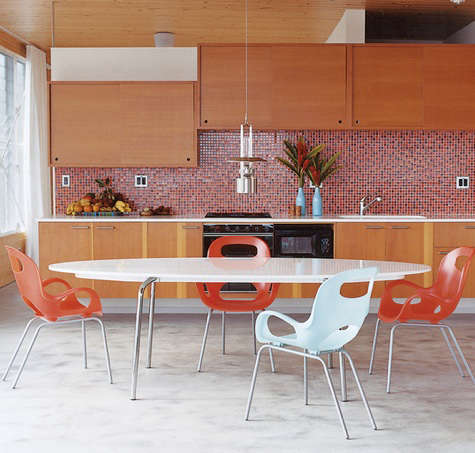
Some rooms announce themselves with chandeliers the size of small planets. Others whisper. Architect Craig Steely’s hanging Stelton lamp belongs to the second group, though it whispers with enough confidence to stop a design lover mid-scroll. Suspended above a dining table in his Hawaii house, the oil-burning Stelton ship’s lamp is not merely a light fixture. It is a little piece of architectural theater: stainless steel, glass, flame, shadow, and a dash of “why didn’t I think of that?”
The appeal is partly practical. A hanging oil lamp can bring light where wiring is inconvenient, expensive, or visually intrusive. But the better answer is emotional. A flame over a table changes dinner. It slows the room down. It turns eating into gathering, gathering into ritual, and ritual into memory. In a modern house where concrete, steel, glass, and landscape already do plenty of talking, the Stelton lamp adds a human heartbeat.
This design sleuth story is about more than one beautiful object. It is about how an architect sees a product differently from the rest of us. Most people look at a ship’s lamp and think, “Nice lantern.” Steely looked at it and treated it like a tiny suspended building. That is the move worth studying.
What Is the Hanging Stelton Lamp?
The lamp in question is the Stelton EM Ship’s Lamp, a modern Danish interpretation of the classic nautical lantern. Designed by Copenhagen-born Erik Magnussen, it is known for its cylindrical form, satin-polished stainless steel body, protective glass chimney, and simple handle that allows it to be carried, placed on a surface, or hung. In Steely’s dining room, that handle becomes the hero. Instead of sitting politely on a sideboard like a decorative object waiting for compliments, the lamp hangs above the table and becomes the center of the room.
That hanging gesture is small but powerful. It turns a portable lamp into a pendant. It changes the way the object occupies space. It also creates a useful visual trick: because the lamp is not wired into the ceiling, it feels both permanent and temporary. It belongs there, but it could be lifted away. That tension is exactly why the idea feels so fresh.
The Real Design Object: Stelton EM Ship’s Lamp
The Stelton EM Ship’s Lamp is not a random flea-market find, although it has the kind of timeless look that could fool you. The large version is commonly associated with item number 1001 and measures about 43 centimeters high by 27 centimeters wide, or roughly 17 inches high. Its materials are straightforward and durable: stainless steel and borosilicate glass. The lamp was designed by Erik Magnussen, whose work for Stelton helped define a crisp, functional version of Scandinavian modern design.
Why the Form Works
The lamp is handsome because it refuses to try too hard. The stainless steel cylinder is clean without being cold. The glass chimney gives the flame protection and visibility. The handle makes it useful. The shape nods to maritime tradition without dressing up like a captain at a costume party. This is nautical design after it has gone to design school, learned restraint, and stopped buying anchor-patterned throw pillows.
Its proportions also matter. Too small, and it would look like a camping accessory lost in a modern dining room. Too large, and it would bully the table. The large Stelton ship’s lamp lands in the sweet spot: big enough to create presence, compact enough to keep the mood intimate.
Craig Steely’s Architectural Eye
Craig Steely is a California and Hawaii-based architect known for houses that respond strongly to landscape, climate, and material reality. His work in Hawaii often deals with lava beds, ocean views, rain, wind, steel, concrete, glass, and the unusual drama of building in a place where nature has absolutely no interest in behaving like a neutral backdrop.
That context helps explain the lamp choice. In a conventional suburban dining room, the Stelton lamp might read as a stylish accessory. In a Steely house, it becomes part of a larger architectural language. His homes often explore openness, shade, airflow, and the blurred line between shelter and exposure. A ship’s lamp, designed to protect flame from wind while remaining portable, fits that language beautifully.
A Lamp That Solves a Problem
One of the most clever parts of the installation is that it sidesteps the need for electrical wiring above the dining table. Anyone who has ever priced ceiling rewiring knows this is not a minor detail. Moving a junction box can turn a simple design decision into a comedy of drywall dust, invoices, and regret. Steely’s solution is elegant: hang an oil lamp where light is needed and let the object’s own design justify the move.
That is the difference between decorating and designing. Decorating often asks, “What can I add?” Designing asks, “What problem can this solve while making the room better?” The hanging Stelton lamp answers both questions at once.
Why a Ship’s Lamp Belongs in a Modern Hawaii House
At first glance, a Danish ship’s lamp and a Hawaii house may seem like distant relatives who only meet at weddings. Look closer, and the pairing makes sense. The lamp carries maritime DNA. Hawaii is inseparable from ocean, wind, salt air, and horizon. The Stelton design is Scandinavian, but its function is universal: protect a flame, make portable light, and keep the atmosphere calm when the world outside is moving.
There is also a material conversation happening. Stainless steel feels right near concrete and glass. The flame softens hard surfaces. The curved lamp body balances straight architectural lines. In a space where the view may be spectacular, the lamp does not compete with nature. It creates a small indoor focus so the room does not dissolve completely into the landscape.
The Magic of Firelight Over a Dining Table
Electric lighting is efficient, convenient, and generally excellent at preventing us from bumping into furniture. But flame has a quality that LEDs still imitate rather than equal. It moves. It flickers. It casts imperfect shadows. It makes faces look warmer and conversations feel slower. A flame over a dining table says, very politely, “Put down the phone. The room is doing something interesting.”
That is why the hanging Stelton lamp has such staying power as a design idea. It is not just about aesthetics. It changes behavior. You must fill it, light it, hang it, watch it, and eventually extinguish it. There is a beginning and an ending. The act of using the lamp becomes part of dinner in the same way opening wine, lighting candles, or setting out real napkins turns a meal into an occasion.
The Ritual Is the Feature
Modern homes often hide effort. Smart switches, motion sensors, and voice assistants do the work invisibly. That is useful, but it can also make a house feel oddly frictionless. The Stelton lamp adds just enough ceremony. Taking it down, lighting it, and returning it to its place makes the light feel earned. That small ritual is not a flaw in the product. It is the secret ingredient.
How to Recreate the Look at Home
You do not need a cliffside Hawaii house to borrow the idea, though having one would certainly not ruin your weekend. The key is to treat the lamp as an architectural element rather than a tabletop accessory. Start with location. A dining table is the obvious choice because it gives the lamp a purpose and a safe visual center. A covered outdoor dining area, screened porch, garden pavilion, or minimalist breakfast nook can also work beautifully.
Get the Hanging Height Right
A hanging lamp over a dining table should feel intimate without blocking sightlines. As a general design approach, place the bottom of the lamp high enough that people can see each other comfortably across the table, but low enough that the glow belongs to the meal rather than the ceiling. Because the Stelton lamp has a substantial body, test the height before committing to hardware. Use a temporary hook, painter’s tape, or a helpful friend with strong arms and opinions.
Choose Hardware That Looks Intentional
The suspension point matters. A flimsy hook will make a luxury design object look like it wandered in from a garage. Use hardware rated for the lamp’s weight, anchored properly into structure. A simple stainless steel hook, marine-style fitting, blackened steel bracket, or minimal ceiling hook can all work depending on the room. The goal is not to hide the hanging system but to make it look calm, precise, and deliberate.
Pair It With Honest Materials
The Stelton lamp looks best near materials that do not fake anything. Concrete, wood, stone, linen, plaster, steel, glass, and leather all make sense. Avoid surrounding it with overly shiny decorative clutter. This lamp is a quiet modernist; it does not want to compete with twelve vases, three bowls of decorative spheres, and a centerpiece that looks like it is applying for a reality show.
Oil Lamp, LED Insert, or Modern Alternative?
The original romance of the Stelton ship’s lamp comes from real flame, typically using lamp oil or kerosene depending on the model and manufacturer guidance. That said, modern life includes building codes, smoke alarms, children, pets, renters’ agreements, and people who forget where they put their coffee while holding it. Safety must come first.
For anyone considering an oil lamp indoors, follow the manufacturer’s instructions carefully. Keep the lamp away from curtains, low shelves, greenery, paper decorations, and anything else that could become a very bad story. Never leave an open flame unattended. Use proper fuel. Keep the lamp stable. Make sure ventilation is appropriate. If there is any doubt, choose the LED version or an LED insert designed for the lamp.
The LED option changes the experience, but it does not destroy the design. You lose the living flame, but you gain simplicity, lower maintenance, and easier everyday use. For many homes, especially apartments or family spaces, that trade-off makes sense. The best design choice is not the most romantic one on paper; it is the one you will use safely and happily.
Why This Idea Still Feels Contemporary
The hanging Stelton lamp feels current because it answers several modern design desires at once. It is flexible, sculptural, functional, and emotionally warm. It has history without nostalgia. It is minimalist without being sterile. It also supports a growing preference for homes that feel personal rather than showroom-perfect.
In an age of recessed lighting grids and generic pendants, Steely’s move feels refreshingly specific. The lamp was chosen because it suited the house, the table, the lifestyle, and the problem. That specificity is what makes the room memorable. Good design often looks inevitable after someone smart has done it. Before that, it looks like a risk.
Design Lessons From Craig Steely’s Hanging Stelton Lamp
1. Let Objects Do More Than One Job
The Stelton lamp provides light, creates atmosphere, avoids wiring, adds sculptural interest, and introduces ritual. That is a lot of work for one object with a handle.
2. Use Contrast Carefully
Hard architecture benefits from soft light. Minimal rooms benefit from living movement. Stainless steel benefits from flame. The lamp succeeds because it brings contrast without chaos.
3. Make Practical Choices Beautiful
Sidestepping electrical work could have led to a compromise. Instead, it became the design feature. That is a lesson worth stealing with both hands.
4. Respect the Room’s Pace
Not every room needs dramatic lighting. Some need quieter gestures that reward attention. The Stelton lamp does not shout. It glows, which is usually better at dinner.
Who Should Consider a Hanging Stelton Lamp?
This idea is best for people who appreciate design with a bit of ceremony. If you want lighting that disappears into the ceiling and never asks anything of you, this may not be your lamp. If you enjoy setting a table, adjusting the mood, and making ordinary evenings feel slightly more cinematic, it may be perfect.
It suits modern homes, coastal interiors, cabins, covered terraces, minimalist dining rooms, and spaces where permanent wiring would be awkward. It also works for design lovers who want a conversation piece that is not loud, trendy, or dependent on novelty. The Stelton lamp has endured because it is clear, useful, and beautiful in a way that does not beg for applause.
Experience Notes: Living With the Idea of a Hanging Stelton Lamp
The first thing you notice about a hanging Stelton lamp is not the lamp itself. It is the pause it creates. A normal switch gives you instant brightness, which is convenient but forgettable. A suspended ship’s lamp asks for a tiny performance. You approach it, check the fuel or charge, prepare the light, and bring it to life. Suddenly the table has a center. The room has a mood. Even leftovers begin acting like they were plated by someone with a linen apron and a very calm playlist.
In daily life, that ritual can be surprisingly grounding. Imagine a small dinner on a warm evening. The windows are open, the table is simple, and the lamp hangs low enough to gather everyone into its circle. The flame or warm LED glow does not flood the room. It gives just enough light to make faces visible and corners mysterious. That balance is rare. Too much overhead lighting can make a dining room feel like a conference room where salad is being audited. Too little light makes everyone wonder whether they are eating parsley or cilantro. The Stelton-style approach lands between those extremes.
There is also pleasure in the object’s portability. Because the lamp is not visually trapped by a cord, it feels more relaxed than a conventional pendant. You can imagine taking it down for cleaning, moving it outside for a special evening, or letting it sit on a console when the table needs a different arrangement. That flexibility changes your relationship with the room. The lamp becomes a companion piece rather than a fixed appliance.
Of course, the experience is not all poetry and perfect shadows. An oil lamp requires attention. You need the correct fuel, careful handling, and common sense. If guests are energetic, children are curious, or the family dog has the tail of a windshield wiper, you must think about placement. The romance of flame should never outrank safety. In many homes, the LED insert or rechargeable version will deliver most of the atmosphere with far less worry. That may sound less adventurous, but good design should support real life, not require everyone to behave like museum guards.
The biggest lesson from the experience is that lighting is not only about visibility. It is about tempo. A hanging Stelton lamp slows the tempo of a room. It makes meals feel gathered instead of rushed. It gives architecture a human scale. It reminds us that a home is not improved only by adding technology; sometimes it is improved by adding a little deliberate friction, a beautiful object, and a glow that makes people want to stay at the table five minutes longer.
Conclusion
Craig Steely’s hanging Stelton lamp is a master class in small-scale design intelligence. The object itself is already strong: a stainless steel and glass ship’s lamp by Erik Magnussen for Stelton, rooted in nautical function and Scandinavian restraint. But Steely’s installation gives it a second life. By hanging it above a dining table, he turns a portable oil lamp into an architectural focal point, a lighting solution, and a nightly ritual.
The idea works because it is specific. It belongs to its place, solves a real problem, and adds atmosphere without decorative noise. Whether used with flame or a modern LED alternative, the lesson is clear: the best interiors are not always built from bigger gestures. Sometimes one well-chosen lamp, hung in exactly the right spot, can make the whole room feel smarter.













