
“`
Note: This guide focuses on the classic two-player dominoes game played with a standard double-six set, especially the beginner-friendly Draw Dominoes and Block Dominoes versions most people mean when they say, “Want to play dominoes?”
Dominoes is one of those games that looks almost suspiciously simple. You match numbers, place tiles, try to empty your hand, and occasionally stare at a double-six like it just insulted your family. But behind the easy setup is a surprisingly sharp two-player game full of timing, memory, blocking, and just enough luck to keep both players blaming “the tiles” instead of their decisions.
If you want to learn how to play dominoes with 2 players, you do not need a tournament table, a complicated scorepad, or an uncle who has been making mysterious “house rules” since 1978. You only need a domino set, a flat surface, and a clear agreement on which version you are playing. This guide walks through setup, rules, scoring, examples, beginner mistakes, strategy tips, and real playing experience so your first game does not turn into a courtroom drama over whether someone was allowed to draw from the boneyard.
What You Need to Play Dominoes with 2 Players
For a classic two-player game, use a double-six domino set. This set has 28 rectangular tiles. Each tile has two ends, and each end shows either a blank or a number of pips from 1 to 6. The highest tile is 6-6, called the double-six. The lowest is 0-0, often called double-blank.
Basic equipment
- One double-six domino set
- A table or flat playing surface
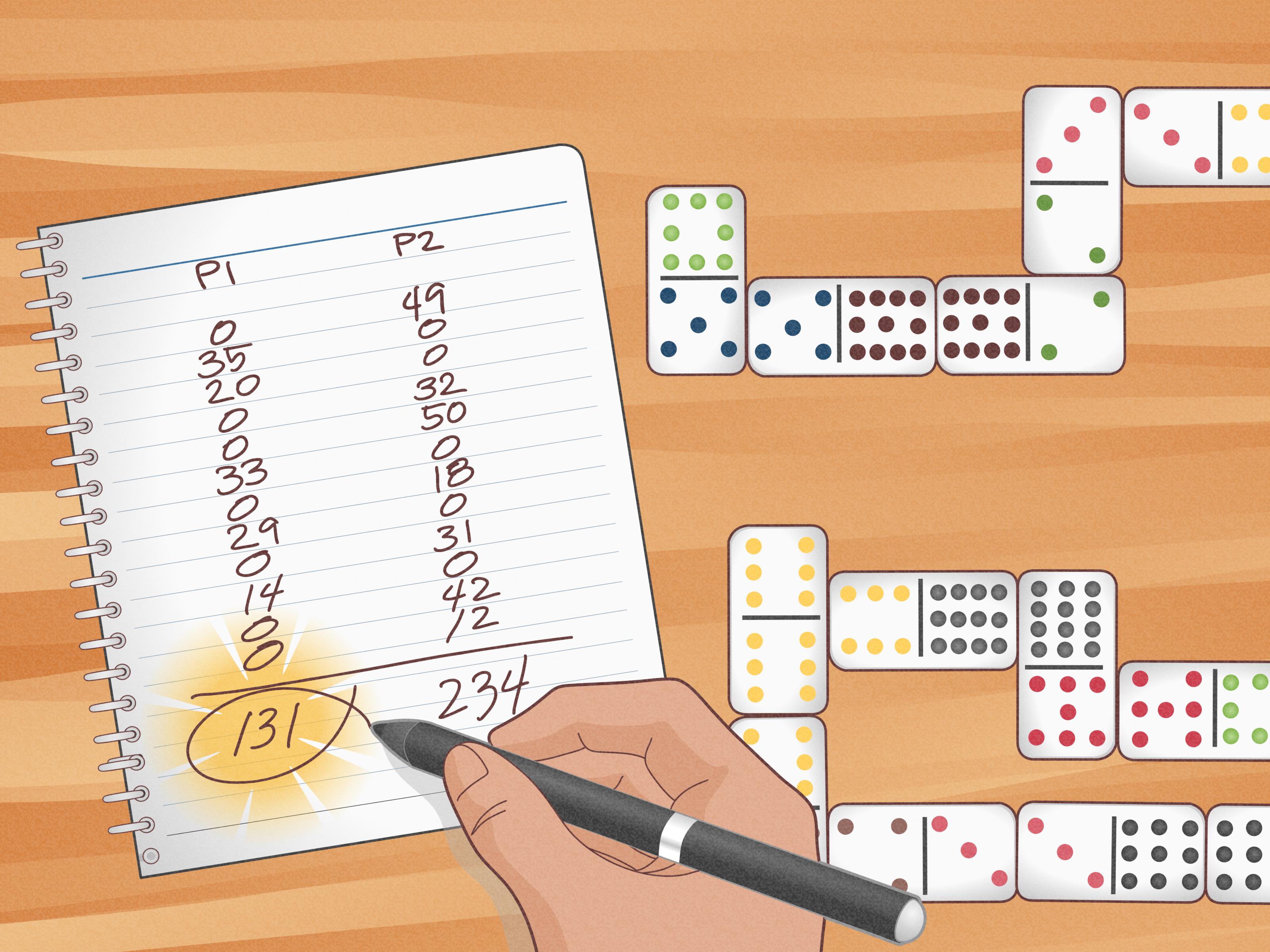
- Paper and pencil for scoring
- Two players
- A little patience when the boneyard refuses to help
You can also play with double-nine or double-twelve sets, but beginners should start with double-six dominoes. The math is easier, the game moves faster, and the table does not become a winding ceramic highway that threatens your snack bowl.
Key Domino Terms Beginners Should Know
Before you start, learn the basic vocabulary. Dominoes has a few words that sound dramatic but are actually simple.
Tile
A domino piece is called a tile. Each tile has two numbered ends.
Pips
Pips are the dots on a domino. A 5-3 tile has eight total pips.
Double
A double has the same number on both ends, such as 6-6, 4-4, or 0-0. Doubles are usually played sideways across the line of play.
Boneyard
The boneyard is the pile of facedown dominoes left after both players draw their starting hands. In Draw Dominoes, players may draw from it when they cannot play. In Block Dominoes, the boneyard is not used after setup.
Open ends
The open ends are the playable ends of the domino chain. On your turn, your tile must match one of those numbers.
How to Set Up Dominoes for 2 Players
Setting up dominoes is quick, which is great because the real arguing should happen during strategy, not preparation.
- Place all 28 tiles facedown on the table.
- Shuffle them by moving the tiles around with your hands.
- Each player draws 7 tiles.
- Stand your tiles on edge or hold them so only you can see them.
- Leave the remaining tiles facedown as the boneyard.
- Decide who goes first.
The most common starting rule is simple: the player with the highest double plays first. If neither player has a double, the player with the heaviest tile, meaning the tile with the highest total pip count, starts. For example, 6-5 beats 5-4 because 6-5 has 11 pips and 5-4 has 9.
The Main Goal of Two-Player Dominoes
The goal is to be the first player to get rid of all your tiles. When you play your final tile, you win the round and score points based on the pips left in your opponent’s hand. Many casual games continue until one player reaches 100 points, though you can choose 50 for a short match or 150 for a longer one.
In short: play tiles, match numbers, empty your hand, score your opponent’s leftovers. Easy to learn, but not always easy to win.
How to Play Draw Dominoes with 2 Players
Draw Dominoes is the best version for beginners because the boneyard gives you a backup plan. If you cannot play, you draw tiles until you can play or until the boneyard is empty, depending on your house rule.
Step-by-step rules
- The starting player places the first tile in the center.
- The second player must place a tile that matches one open end.
- Players take turns placing one tile at a time.
- A tile must touch a matching number: 6 touches 6, blank touches blank, 3 touches 3, and so on.
- If you cannot play, draw from the boneyard.
- If you draw a playable tile, you may play it immediately.
- If the boneyard is empty and you still cannot play, you pass.
- The round ends when one player plays all tiles or both players are blocked.
Simple gameplay example
Suppose Player A starts with 6-6. The open ends are now 6 and 6. Player B can play any tile with a 6, such as 6-2. Now the open ends are 6 and 2. Player A can play on either side, maybe placing 2-4 on the 2 end. Now the open ends are 6 and 4.
That is the rhythm of dominoes: look at the open ends, match one number, and try to leave the board in a position that helps you more than your opponent.
How to Play Block Dominoes with 2 Players
Block Dominoes is similar to Draw Dominoes, but with one major difference: there is no drawing after play begins. If you cannot play, you pass. This makes Block Dominoes more strategic and sometimes more ruthless. It is the dominoes version of locking the refrigerator and pretending you are “teaching discipline.”
Block Dominoes setup
Shuffle the tiles facedown. Each player draws 7 tiles. The rest are set aside and not used in the round. The player with the highest double or heaviest tile begins.
Block Dominoes rules
- Players alternate turns.
- Each tile played must match an open end.
- If a player cannot play, that player passes.
- No tiles are drawn from the boneyard.
- The round ends when one player empties their hand or both players cannot move.
Block Dominoes rewards players who track suits. A “suit” is one number group, such as all tiles containing 5. If you notice many 5s have already been played and your opponent keeps avoiding a 5 end, you may be able to trap them by forcing 5s onto the board.
How Doubles Work in Dominoes
Doubles are usually placed sideways across the line of play. For example, if the open end is 4, you may place 4-4 sideways. In many basic games, a double does not create four playable branches. It simply counts as one tile placed on the line, and the next player continues from the double’s exposed side.
Some domino variations use the first double as a “spinner,” meaning tiles can eventually be played from multiple sides of that double. If you are playing a casual two-player game, decide before starting whether doubles are simple sideways tiles or spinners. For beginners, simple doubles are easier.
How Scoring Works in Two-Player Dominoes
The easiest scoring system is called pip scoring. When a round ends, the winner scores the total number of pips left in the opponent’s hand.
Scoring example
Player A goes out. Player B still has these tiles:
- 6-3 = 9 pips
- 4-1 = 5 pips
- 2-0 = 2 pips
Player A scores 16 points for that round. Keep playing rounds until one player reaches the target score, commonly 100 points.
What happens in a blocked game?
A game is blocked when neither player can legally play. In that case, both players count the pips left in their hands. The player with the lower total wins the round. Many casual players award the winner the difference between the two totals, while others award the total points remaining in the opponent’s hand. Choose one scoring method before the game starts.
For example, Player A has 8 pips left and Player B has 17. Player A wins the blocked round. Under difference scoring, Player A scores 9 points. Under opponent-hand scoring, Player A scores 17 points.
Popular Rule Variations for 2 Players
Dominoes has many local and family variations. That is part of its charm and also the reason someone at every table eventually says, “That is not how my grandfather played.” Here are the most common options.
Draw until you can play
In this version of Draw Dominoes, if you cannot play, you keep drawing from the boneyard until you find a playable tile or the boneyard is empty.
Draw one, then pass
Some players prefer a faster game: if you cannot play, draw one tile. If it plays, place it. If it does not, pass.
Leave two tiles in the boneyard
Some house rules require players to stop drawing when only two tiles remain in the boneyard. This keeps a little mystery in the game and prevents the boneyard from becoming a completely empty tile graveyard.
Play to 50, 100, or 150 points
A quick game can go to 50 points. A standard casual match often goes to 100. If both players are competitive and nobody has anywhere to be, play to 150.
Beginner Strategy: How to Win More Often
Dominoes is not only luck. Good players pay attention to what has been played, what numbers are missing, and how their opponent reacts when certain numbers appear.
Play high-value tiles early
Big tiles are dangerous because they become expensive if they are stuck in your hand at the end. Unless you have a strategic reason to hold them, play high-pip tiles early.
Keep your hand flexible
A hand with many different numbers gives you more options. If you use all your 2s too early, you may get trapped later when 2 becomes an open end.
Watch your opponent’s passes
If your opponent passes when the open ends are 1 and 5, they probably do not have a 1 or a 5. If you can keep those numbers open, you may force more passes.
Control the board
Do not only ask, “What can I play?” Ask, “What will the board look like after I play this?” A move that helps your opponent may be legal but terrible.
Use doubles carefully
Doubles can be powerful, but they can also clog your hand. If you have 3-3 and no other 3s, playing it at the right time may save you from being stuck later.
Common Mistakes to Avoid
New players often lose not because they misunderstand the rules, but because they play too automatically.
Ignoring the open ends
Always check both open ends before choosing a tile. Sometimes the obvious play is not the best play.
Holding too many high tiles
Saving 6-5, 6-4, and 5-5 for “later” sounds clever until later arrives wearing a blocked-game scoreboard.
Forgetting what your opponent cannot play
Every pass gives you information. Treat it like a clue, not background noise.
Changing house rules mid-game
Agree on drawing, scoring, doubles, and target score before the first tile is played. Changing rules halfway through is how friendly games become suspiciously quiet.
Experience Notes: What Playing 2-Player Dominoes Actually Teaches You
The first thing you notice when playing dominoes with only two players is how personal the game feels. In a four-player game, the board changes several times before your turn comes back. With two players, every move is a direct message. If your opponent leaves a 6 open, they may be inviting you to play, baiting you into a bad end, or simply hoping you do not notice they are holding three blanks and a dream.
A good two-player dominoes match becomes a conversation without words. One player opens with a high double, and the other responds by changing the suit. Someone passes, and suddenly the entire table has information. If your opponent cannot play on 2 or 4, you start looking for ways to keep 2 or 4 alive. That is when the game shifts from matching dots to reading patterns.
One practical lesson from repeated games is that beginners often underestimate low tiles. A 1-0 tile looks harmless, almost boring, but in a tight endgame it can be gold. Low tiles reduce your penalty if you lose a blocked round, and they can sneak onto the board when larger numbers are dead. Meanwhile, big doubles are flashy but risky. Holding 6-6 feels powerful until the 6 suit disappears and that tile becomes a twelve-point brick in your hand.
Another experience-based tip: the boneyard changes the mood completely. In Draw Dominoes, a bad hand still has hope because you can draw into answers. In Block Dominoes, a bad hand feels like being trapped in an elevator with elevator music and no buttons. That is why Block Dominoes rewards planning more sharply. You must protect your playable numbers, notice which suits are running out, and avoid creating a board where you are the one with no escape.
Two-player dominoes also teaches emotional discipline. It is tempting to celebrate when your opponent draws three tiles in a row, but be careful. Those three tiles might give them exactly what they need. It is also tempting to dump any playable tile just to reduce your hand, but a fast move can open the perfect number for your opponent. The best players slow down just enough to ask: “What happens next?”
For family game nights, two-player dominoes works beautifully because it is short, portable, and easy to restart. A single round can take only a few minutes, but a match to 100 points gives enough time for comebacks. It is also beginner-friendly for kids and adults because the rules are visual. You do not need to memorize a book. You look at the open number, match it, and learn the deeper tactics as you play.
The most enjoyable games usually happen when both players agree on house rules first. Decide whether you draw until playable or draw once. Decide whether blocked rounds score by difference or opponent pips. Decide whether doubles are simple or spinners. Once those details are settled, the game flows smoothly, and nobody has to pause dramatically to say, “Actually, in my version…” which is the official mating call of rule confusion.
In the end, playing dominoes with 2 players is a mix of logic, memory, timing, and friendly mischief. The tiles are simple, but the decisions are not. That is why the game has lasted for generations: it is easy enough to teach in five minutes and interesting enough to keep playing for years.
Conclusion
Learning how to play dominoes with 2 players is simple: shuffle the tiles, draw 7 each, match open ends, use the boneyard if you are playing Draw Dominoes, pass if you are playing Block Dominoes, and score leftover pips when the round ends. Once the basics feel natural, the real fun begins. You start tracking numbers, reading passes, managing high tiles, and setting tiny traps that make your opponent stare at their hand like it personally betrayed them.
Whether you play a quick game at the kitchen table or a longer match to 100 points, two-player dominoes offers the perfect blend of luck and strategy. It is easy to learn, quick to set up, and surprisingly satisfying when your final tile lands exactly where you planned.
“`













