
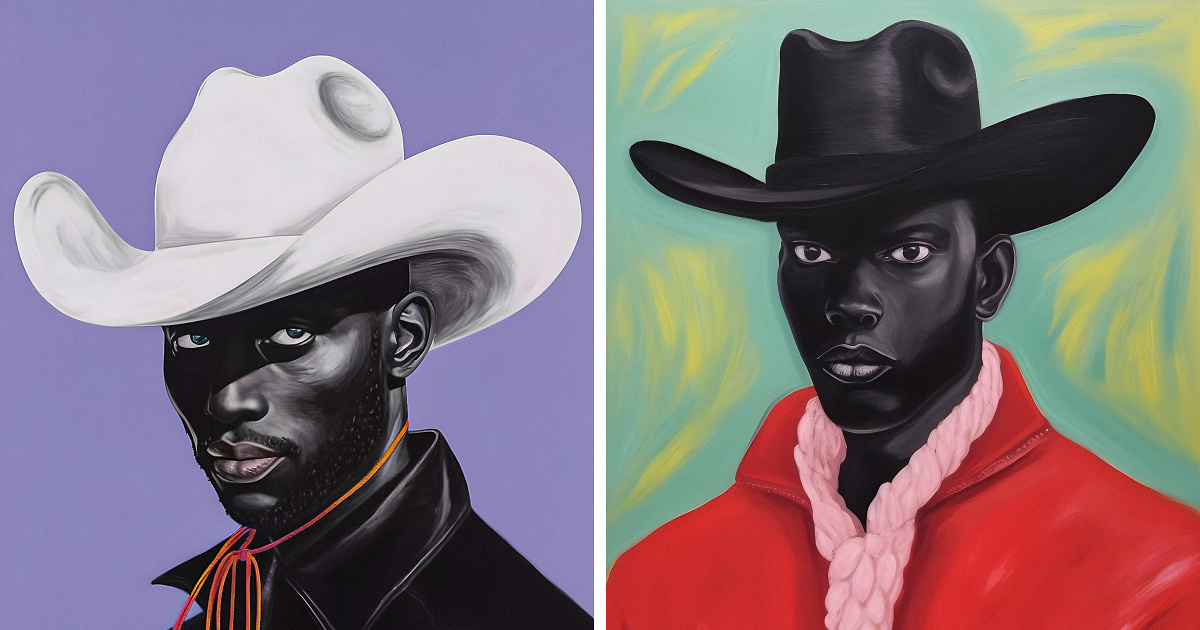
Note: This original article is written for web publication and is based on current public knowledge about Midjourney, generative AI art, Western visual culture, digital creativity, and responsible AI-assisted workflows.
When the Wild West Meets Artificial Intelligence
The Wild West has always been half history, half hallucination. It is dust, denim, horses, cracked leather, sunburned horizons, and the kind of silence that makes a rattlesnake sound like a percussion section. So when I began creating the “Desert Mirage” series with AI and Midjourney, the goal was not simply to generate a few good-looking cowboy images. The goal was to build a visual world that felt weathered, cinematic, nostalgic, and just strange enough to make viewers wonder whether they were looking at a forgotten photograph, a movie still, or a dream that had wandered too far into Arizona.
Midjourney gave me the tools to explore that world quickly, but the direction still had to come from a human brainpreferably one caffeinated enough to argue with a prompt for 40 minutes over the emotional meaning of “wind-battered.” AI can produce an image in seconds, but making a series feel intentional takes taste, patience, revision, and the willingness to admit that “cowboy riding through neon dust with existential sadness” may need a little trimming.
The result became Desert Mirage, a collection inspired by vintage Southwestern imagery, frontier myths, cinematic Westerns, desert landscapes, and the evolving possibilities of AI-generated art. It is a love letter to the American West, but not a postcard version. This is the West as mood: beautiful, harsh, theatrical, haunted, and occasionally dramatic enough to deserve its own soundtrack.
Why the Wild West Is Perfect for Midjourney AI Art
The Wild West is already a visual language. Before AI ever entered the saloon, artists, photographers, filmmakers, and illustrators had spent more than a century building its recognizable grammar: wide skies, lonely riders, wooden storefronts, dust clouds, boots, spurs, cattle trails, desert mesas, and sunsets that look like the sky just discovered oil paint.
That makes the genre especially powerful for Midjourney AI art. The model responds well to strong visual cues, and Western imagery is packed with them. A single prompt can combine clothing, lighting, landscape, era, mood, camera angle, and texture. Words like “weathered,” “cinematic,” “dusty,” “frontier,” “sepia,” “Southwestern,” and “golden hour” immediately push the image toward a world viewers recognize.
But recognition is only the starting point. The challenge is avoiding clichés. Nobody needs another generic cowboy standing in front of a sunset looking like he just lost a staring contest with a cactus. The real fun begins when the familiar ingredients are rearranged: a cowgirl posed like a silent-film heroine, a ghost town glowing under impossible twilight, a vaquero silhouette against a storm of orange dust, or a desert saloon that feels both historically grounded and slightly supernatural.
The Creative Idea Behind the “Desert Mirage” Series
The concept behind Desert Mirage was simple: what if the Wild West were remembered through a dream instead of a textbook? I wanted the images to feel vintage but not dusty in the boring museum-basement sense. They needed warmth, movement, mystery, and a little theatrical flair. Think old tintype photography, Southwestern desert light, classic Western costume design, and modern AI surrealism all sharing one campfire.
The word “mirage” became the heart of the project because it captures the tension perfectly. A mirage is something you can almost reach. It looks real, but it shifts the moment you approach it. That is also how the West often works in American imagination. The historical West included Indigenous nations, Spanish vaqueros, Black cowboys, Mexican ranching traditions, women homesteaders, railroad workers, miners, merchants, and many others. Yet pop culture has often reduced it to a narrow set of heroic stereotypes.
With AI, I wanted to widen the frame. The series includes cowboys and cowgirls, but it also leans into diverse faces, layered clothing, expressive poses, and scenes that suggest untold stories. A portrait should not just say, “Here is a person wearing a hat.” It should make the viewer ask, “Where has this person been, what are they carrying, and why do they look like they know exactly how this town ends?”
How I Used Midjourney to Build the Visual Style
Midjourney is not a magic button, although some days it behaves suspiciously like one. The platform works through prompts, parameters, references, and iteration. A prompt describes what the image should contain; parameters guide elements like aspect ratio, stylization, variation, and overall behavior. Newer Midjourney workflows also make it easier to use image references, style references, personalization, and editing tools to create a more consistent visual direction across a series.
For Desert Mirage, I treated each prompt like a mini art direction brief. Instead of typing “cowboy in desert,” I built prompts around specific creative layers:
1. Subject and Character
The subject came first: a lone cowgirl, a weary sheriff, a vaquero, a frontier musician, a rider crossing a dry basin, or a family standing outside a sun-bleached adobe building. The more specific the subject, the less generic the final image felt.
2. Setting and Atmosphere
The desert is not just a background. It is a character with excellent lighting and terrible hydration habits. I used settings such as sandstone cliffs, dry riverbeds, abandoned towns, cactus fields, railroad outposts, and long roads disappearing into heat haze.
3. Lighting and Color
Lighting carried the emotional weight. Golden hour added warmth. Harsh noon light created severity. Blue twilight made scenes feel lonely. Dusty backlight gave portraits a cinematic glow, as if the characters were being introduced in the final act of a very expensive Western.
4. Texture and Medium
To avoid plastic-looking AI smoothness, I emphasized texture: cracked leather, sun-faded cotton, scratched film grain, dry wood, old photographic processes, oil-painting depth, and desert dust. Texture is what makes an image feel touched by time rather than freshly unwrapped from the algorithmic gift shop.
5. Composition and Camera Language
I used cinematic framing to make each image feel like part of a larger story. Wide shots created scale. Close portraits created intimacy. Low-angle compositions made characters feel mythic. Centered symmetry gave some scenes a formal, almost poster-like quality.
Example Midjourney Prompt Concepts from the Series
While every artist develops their own prompt style, the best prompts for this project were clear, visual, and layered. For example, one concept might begin with: “A lone cowgirl standing beside a weathered horse in a glowing Southwestern desert at sunset, vintage film still, dust in the air, worn leather jacket, cinematic lighting, warm sepia tones.”
Another might focus on environmental storytelling: “Abandoned frontier town under a copper sky, wooden saloon doors half open, tumbleweed crossing the street, long shadows, atmospheric dust, old Western film photography, dramatic composition.”
For portraits, I often pushed emotional specificity: “Close-up portrait of a tired desert rider, sun-browned face, wide-brimmed hat, calm expression, windblown scarf, shallow depth of field, textured photographic grain, 19th-century frontier mood.”
The key was not to overload the prompt with every idea in the saddlebag. Too many instructions can create visual soup, and visual soup is rarely anyone’s favorite soup. The best results came from choosing a strong subject, a vivid setting, a clear mood, and a controlled style direction.
Balancing Historical Inspiration with Creative Freedom
Creating AI art inspired by the Wild West comes with a responsibility: the West was real before it became myth. Popular culture has often flattened its history into a narrow fantasy of rugged white heroes, even though the real frontier was far more diverse and complicated. Spanish vaqueros shaped cowboy traditions long before Hollywood turned the cowboy into a national logo. Black cowboys, Indigenous communities, Mexican ranchers, immigrant laborers, and women of the frontier all played important roles in Western history.
That complexity matters when creating a series like Desert Mirage. AI tools can easily repeat stereotypes if the artist does not guide them carefully. Prompting for diversity, historical texture, realistic clothing, and grounded environments helps create a richer and more respectful visual world. It also makes the artwork more interesting. A myth becomes stronger when it has more voices, not fewer.
At the same time, this series is not a documentary. It is an artistic interpretation. I was not trying to recreate a specific town in 1883 down to the exact nail pattern on a saloon porch. I was building an imaginative Westone that borrows from history, cinema, photography, folklore, and dream logic. The trick was keeping enough authenticity to feel believable while allowing enough stylization to feel magical.
What Midjourney Does Brilliantly
Midjourney shines when it comes to mood, texture, and visual drama. It can quickly translate abstract emotional language into striking imagery. Words like “lonely,” “sun-scorched,” “mythic,” “faded,” and “cinematic” can influence the final image in ways that feel surprisingly intuitive. For artists and designers, this makes Midjourney a powerful ideation partner.
It is especially useful during the early creative phase. Instead of sketching one concept over several hours, you can generate multiple visual directions, compare them, refine the strongest ideas, and develop a clearer sense of the series. This speed does not replace artistic judgment; it puts more pressure on it. When you have dozens of options, you need to know what to keep, what to reject, and what to chase like a runaway horse.
For Desert Mirage, Midjourney helped me discover unexpected compositions. Sometimes the best image was not the one I imagined. A prompt intended to create a classic rider portrait might produce a haunting silhouette against a sandstorm. A saloon scene might accidentally become more interesting because of a strange reflection in a window. AI’s surprises can be frustrating, but they can also open creative doors you did not know were unlocked.
Where AI Still Needs a Human Hand
AI-generated art has improved dramatically, but it still needs direction. Hands can still become questionable little starfish. Horses may occasionally look as if they were assembled from memory by someone who had only heard of horses through gossip. Text on signs can dissolve into alphabet soup. Historical clothing may mix periods in ways that make costume designers quietly leave the room.
That is why curation is essential. The creative process did not end when Midjourney produced an image. I reviewed outputs, selected the strongest results, adjusted prompts, corrected direction, refined style, and considered whether each piece belonged in the larger series. A collection needs rhythm. Not every beautiful image belongs. Some images are gorgeous but say the same thing as another image. Others are technically impressive but emotionally empty.
The human role is also crucial in ethics and originality. AI should not be used to imitate living artists without care, copy protected characters, or hide the fact that machine generation was part of the process. For a project like Desert Mirage, I focused on genre, mood, historical atmosphere, and original combinations rather than trying to clone a specific artist’s signature style.
Why “Desert Mirage” Feels Different from Traditional Western Art
Traditional Western art often aims for narrative clarity: a rider crossing a plain, a cattle drive, a campfire, a confrontation, a heroic landscape. Desert Mirage keeps those ingredients but bends them toward ambiguity. The images are less about what happened and more about what might be remembered.
In one image concept, a cowgirl stands in front of a pale adobe wall, her shadow stretching longer than seems physically reasonable. In another, a rider appears on the edge of a dry lakebed beneath a sky that looks too orange to be trusted. A third shows a frontier street at dusk, empty except for a single figure near a doorway. These scenes do not explain themselves, and that is the point. The viewer supplies the missing story.
This is where AI art becomes more than novelty. When used thoughtfully, it can create images that feel emotionally suggestive rather than merely decorative. It can combine influences that would be expensive or difficult to stage physically: historic wardrobe, desert locations, cinematic lighting, painterly texture, and surreal atmosphere. The result is not a replacement for photography, painting, or film. It is a new kind of visual sketchbook with a very dramatic imagination.
SEO and Creative Lessons from the Project
From a content perspective, AI-generated Wild West art sits at the intersection of several search-friendly topics: Midjourney prompts, AI art, digital illustration, Western aesthetics, cowboycore, cinematic image generation, and creative workflow. That makes the topic strong for Google and Bing because it serves both curiosity and practical intent.
Readers may arrive because they want to learn how AI art is made. Others may be interested in the visual style of the American West. Some may be looking for Midjourney prompt ideas. Others may simply want to see how a creative series can be built around a theme. A strong article should satisfy all of those readers without sounding like it swallowed an SEO spreadsheet.
The main keyword, “Midjourney Wild West”, can appear naturally in headings and body copy. Related phrases such as AI art series, Desert Mirage, generative AI art, AI image prompts, digital Western art, and cinematic desert art help search engines understand the topic without turning the article into a robot square dance.
My Experience Creating “Desert Mirage” with AI and Midjourney
Working on Desert Mirage felt less like pushing a button and more like directing a film crew made entirely of ghosts, lightning, and one overly enthusiastic costume assistant. The first few generations were exciting but uneven. Some images captured the desert mood immediately. Others looked like the Wild West had been redesigned by a luxury perfume brand. Interesting? Yes. Useful? Not always.
The biggest lesson was that prompts are not commands; they are conversations. I would ask for a “weathered frontier portrait,” and Midjourney might give me something too polished. So I adjusted the language: “sun-faded,” “dusty,” “worn fabric,” “natural skin texture,” “old photographic grain.” Each revision moved the image closer to the emotional temperature I wanted. The process became a loop of request, surprise, judgment, and refinement.
I also learned that consistency is harder than beauty. Midjourney can make a beautiful image quickly, but a series needs a shared visual identity. I had to pay attention to color palettes, lighting, framing, wardrobe, and atmosphere. If one image looked like a 1970s Western poster and the next looked like a futuristic fashion campaign, the collection started to wobble. The best pieces shared a common soul: warm dust, lonely space, textured clothing, expressive faces, and a sense that the desert was keeping secrets.
Another important experience was learning when to stop. AI tools encourage endless variation. There is always another upscale, another remix, another prompt tweak, another “what if the horse had more moonlight?” moment. That freedom is wonderful until it becomes creative quicksand. At some point, the artist has to choose. A finished series is not made from infinite options; it is made from decisions.
I found that the strongest images were the ones with restraint. A simple portrait with perfect lighting often worked better than an overloaded scene packed with guns, horses, dust storms, dramatic clouds, burning saloons, and enough accessories to bankrupt a costume department. The desert is powerful because it is spacious. Leaving room in the composition made the images feel more cinematic and more emotionally honest.
Creating Desert Mirage also changed how I think about AI. I do not see it as a replacement for creativity. I see it as a strange collaborator that never sleeps, never complains, and occasionally forgets how fingers work. It can accelerate exploration, but it cannot decide what matters. It can generate atmosphere, but it cannot understand why a quiet image might be more moving than a spectacular one. That responsibility still belongs to the human creator.
The most rewarding part of the project was seeing the Wild West become flexible again. Instead of repeating the same narrow visual clichés, AI allowed me to experiment with mood, identity, memory, and myth. I could create cowgirls who looked powerful without being cartoonish, riders who felt mysterious rather than generic, and landscapes that seemed both real and imagined. The series became a reminder that old genres do not have to stay old. With the right tools and a thoughtful eye, they can ride back into view wearing new dust.
Conclusion: A New Frontier for Digital Western Art
“Desert Mirage” began as an experiment with AI and Midjourney, but it became something more personal: a study of how technology can revive old visual myths without simply repeating them. The Wild West has always lived between fact and fantasy. Midjourney gave me a way to explore that in a modern format, blending vintage Southwestern atmosphere with the speed and flexibility of generative AI.
The best AI art does not happen when the machine does everything. It happens when the artist brings taste, context, restraint, and curiosity to the process. In this series, Midjourney helped create the dust, light, faces, and cinematic tension. But the creative directionthe desire to make the West feel mysterious, diverse, nostalgic, and alivecame from human intention.
For artists, designers, writers, and visual storytellers, the lesson is clear: AI is not the end of imagination. It is another frontier. And like every frontier, it rewards people who explore carefully, question the myths, respect the terrain, and bring plenty of water.













