
Note: This article is an original, publish-ready synthesis based on publicly available design information, product descriptions, interviews, and material references. Source links are intentionally not inserted, as requested.
Introduction: A Lamp That Makes One Sheet Look Like a Design Degree
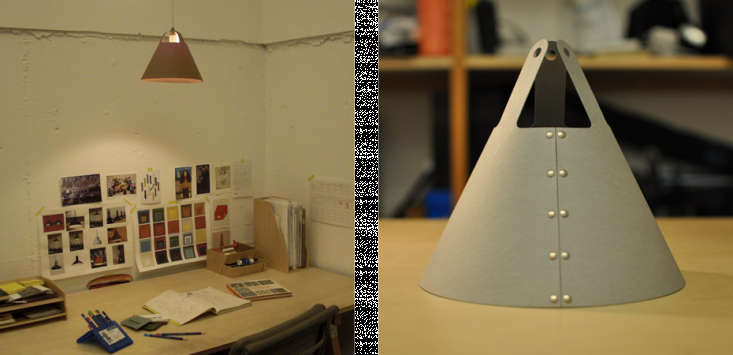
Shigeki Fujishiro’s Rivet Lamp is one of those quiet design objects that does not shout from across the room. It simply hangs there, glows beautifully, and lets you slowly realize, “Wait, is that really made from just one sheet?” Yes, it is. And that is exactly the charm. In a world full of over-designed lighting fixtures that look like they are auditioning for a sci-fi movie, the Rivet Lamp takes the opposite route: a single sheet of vulcanized fiber, rolled into a clean conical form and fixed with rivets.
The result is a pendant lamp that feels both humble and highly intelligent. It has the warmth of craft, the discipline of industrial design, and the kind of minimalism that does not make your home feel like a dentist’s waiting room. The lamp is simple, but not plain. Functional, but not boring. Light in appearance, but serious in construction.
Designed by Japanese designer Shigeki Fujishiro, the Rivet Lamp reflects a broader philosophy found throughout his work: structure becomes form. Rather than hiding the way an object is made, Fujishiro lets the method become the visual identity. The rivets are not decoration pretending to be useful. They are usefuland because they are honest, they become beautiful.
Who Is Shigeki Fujishiro?
Shigeki Fujishiro is a Japanese product and furniture designer born in Tokyo in 1974. He studied at Kuwasawa Design School and worked at IDÉE, a well-known Japanese design company, from 1998 as a furniture designer. In 2005, he left IDÉE and established his own studio, Shigeki Fujishiro Design.
His practice spans furniture, interior products, installations, brand direction, ceramics, footwear, and collaborations with respected names in design and lifestyle. Across these categories, Fujishiro’s work often shares a similar language: simple geometry, clear purpose, tactile materials, and a refusal to overcomplicate the obvious. He is not the kind of designer who adds a decorative swoop just because the CAD software had a good morning.
Fujishiro’s work often feels “elementary” in the best sense of the word. It is built from basic ideas: fold, bend, cut, roll, fasten, balance, support. But elementary does not mean easy. A simple object can be brutally difficult to design because there is nowhere to hide. Every proportion, edge, join, and material choice is visible. The Rivet Lamp is a perfect example of that challenge.
What Is the Rivet Lamp?
The Rivet Lamp is a pendant lampshade made from vulcanized fiber, a natural material created from wood pulp and cotton. The lamp is formed from a single flexible sheet that is rolled into shape and secured with rivets. Instead of using a complicated frame, decorative shell, or layered construction, the lamp depends on the material’s moderate elasticity and the precision of its assembly.
The design includes cut-out bands near the top, which help connect the shade to the light fixture while allowing heat to escape. This is where the lamp’s intelligence becomes clear. It is not just a cone with a bulb inside. The cuts, rivets, curve, and top structure all work together. The shade holds itself, attaches to the fixture, and manages airflow through the same visual system.
Available in understated tones such as black, gray, and brown, the Rivet Lamp has a neutral presence that fits naturally into modern interiors. It can look crisp above a dining table, calm in a reading corner, practical in a studio, and surprisingly poetic in a small apartment where every object has to earn its rent.
The Material: Why Vulcanized Fiber Matters
One of the most interesting things about Shigeki Fujishiro’s Rivet Lamp is its material. Vulcanized fiber is not a trendy luxury material invented last Tuesday by a branding agency. It has been used for roughly a century in applications where strength, insulation, and formability matter. Traditionally, it has appeared in electrical insulation, washers, gaskets, mechanical components, and other practical uses.
Made from wood pulp and cotton, vulcanized fiber is a cellulose-based material with a surprisingly useful personality. It is lightweight, strong for its weight, electrically insulating, and capable of being cut, bent, punched, and shaped. In the Rivet Lamp, these properties are not hidden in a technical footnote; they are the whole story.
Because the material has a natural stiffness combined with moderate flexibility, it can be rolled into a stable three-dimensional form. The rivets hold the sheet in place, turning a flat surface into a sculptural shade. The material’s heat-resistant and insulating qualities also make it suitable for lighting, provided the lamp is used with the correct bulb and fixture specifications.
There is something refreshing about this choice. Many lamps rely on metal, glass, plastic, paper, or fabric. The Rivet Lamp lands somewhere between industrial and organic. It is not as soft as washi paper, not as cold as aluminum, not as fragile as glass, and not as anonymous as molded plastic. It has a dry, tactile, fiberboard-like character that gives the lamp a quiet handmade feeling.
How the Rivet Lamp Is Made: One Sheet, One Gesture, One Smart Idea
The core construction of the Rivet Lamp is beautifully direct. A single sheet of vulcanized fiber is cut, rolled, and riveted. That is the headline. But the beauty lies in the accuracy of the gesture. Roll it poorly and the lamp looks awkward. Cut it wrong and the top structure fails. Place the rivets badly and the whole object loses its clean rhythm.
The rivets create a visible seam. In many products, seams are treated like embarrassing secrets. Designers hide them under trim, paint, glue, or decorative distractions. Fujishiro does the opposite. The seam becomes a feature. The rivets tell you exactly how the lamp holds together. They create a small industrial accent without turning the shade into a factory cosplay costume.
The top bands are especially clever. They are cut from the same sheet and used to attach the shade to the fixture. This reduces the need for extra parts while preserving the lamp’s visual unity. The design feels complete because the shade, structure, attachment, and ventilation all emerge from one material decision.
Design Analysis: Minimalism Without the Cold Shoulder
Minimalist lighting can sometimes feel a little too serious, like it might judge you for owning a colorful mug. Shigeki Fujishiro’s Rivet Lamp avoids that problem because it has warmth. The rivets add personality. The fiber material adds texture. The rolled shape adds softness. The lamp is minimal, but it is not sterile.
The conical form helps direct light downward, making the lamp useful over dining tables, counters, desks, and work areas. At the same time, the shade’s surface creates a gentle visual boundary around the bulb. It does what a good pendant lamp should do: define a zone. Hang it above a table and suddenly that table feels intentional. Your dinner may still be instant noodles, but the lighting will suggest “casual Japanese design bistro.” Small victories count.
The lamp also participates in a long tradition of Japanese lighting design, where material honesty and soft illumination often matter more than visual drama. Unlike Isamu Noguchi’s Akari lamps, which use washi paper and bamboo to create luminous sculptural forms, the Rivet Lamp feels more industrial and grounded. It does not float like a paper lantern. It hangs with a quiet sense of purpose.
Why the Rivet Lamp Still Feels Contemporary
The Rivet Lamp continues to feel current because it aligns with several lasting design values: material intelligence, low visual noise, repair-like honesty, and compact construction. These are not passing trends. They are the design equivalent of good posture.
1. It Uses Less to Say More
The lamp is based on reduction, but not reduction for its own sake. It uses one sheet because one sheet is enough. It uses rivets because rivets solve the problem. It keeps the form simple because the material and construction already provide character.
2. It Celebrates the Joint
In many modern interiors, people are drawn to objects that reveal how they are made. The Rivet Lamp fits this preference perfectly. Its construction is legible. You do not need a design degree to understand it. You can look at it and immediately grasp the idea: sheet, roll, rivet, light.
3. It Works in Many Spaces
Because the lamp is visually quiet, it can adapt to different rooms. In a minimalist apartment, it reinforces calm. In a rustic interior, it adds a clean modern line. In a creative studio, it looks practical and thoughtful. In a dining area, it creates focus without demanding a standing ovation.
Where to Use Shigeki Fujishiro’s Rivet Lamp
The Rivet Lamp is especially strong in spaces where atmosphere and function need to cooperate. It is not a chandelier trying to become the main character. It is more like a reliable supporting actor with excellent timing.
Above a Dining Table
This is perhaps the most natural placement. The conical shade helps direct light downward, creating a cozy pool of illumination over the table. In a small apartment, one Rivet Lamp can visually anchor the dining area. In a larger room, multiple lamps can be arranged in a row for a calm, gallery-like effect.
Over a Desk or Workbench
The lamp’s practical material and construction make it feel at home in a studio or workspace. It has just enough craft character to soften a work area without making it feel decorative. It says, “Let’s make something,” but politely.
In a Reading Corner
Used with a warm bulb, the Rivet Lamp can create a comfortable reading zone. Its shade gives direction to the light, while the fiber surface adds a sense of texture. Pair it with a wooden chair, a small side table, and a stack of books you fully intend to read someday.
In a Café or Boutique Interior
The Rivet Lamp also suits commercial spaces that want a handmade-modern feeling. Its simple silhouette photographs well, but it does not overwhelm products, food, or furniture. For cafés, small restaurants, boutiques, and design studios, that balance is valuable.
Styling Tips for the Rivet Lamp
To get the best from Shigeki Fujishiro’s Rivet Lamp, think about contrast, height, bulb warmth, and surrounding materials. The lamp is simple, so the details around it matter.
Choose a Warm Bulb
A warm white bulb usually suits the lamp better than a harsh cool white one. The Rivet Lamp has a tactile, natural material quality, and warm light brings that out. Cool light can make it look flatter and more technical.
Let the Shape Breathe
Do not crowd the lamp with too many competing objects. Its beauty comes from the clean silhouette and visible seam. Give it space above a table or in an open corner so the form can be read clearly.
Pair It With Natural Materials
Wood, linen, ceramic, stone, paper, and matte metal all work well with the lamp’s quiet personality. Glossy plastic and overly shiny finishes may fight with its grounded texture.
Use Repetition Carefully
Two or three Rivet Lamps in a row can look excellent over a long table or counter. But spacing matters. Too close, and they feel crowded. Too far apart, and they look like they had an argument before installation.
Rivet Lamp vs. Paper Lanterns: A Different Kind of Japanese Lighting
It is tempting to compare the Rivet Lamp with Japanese paper lanterns, especially because both rely on lightweight sheet materials and simple forms. But the feeling is different. Paper lanterns diffuse light softly through translucent material. The Rivet Lamp, by contrast, is more directional and architectural. It shapes light rather than glowing as a whole volume.
Paper lanterns often feel airy, floating, and poetic. The Rivet Lamp feels tactile, constructed, and slightly industrial. One is a cloud; the other is a folded thought. Both can be beautiful, but they speak different interior languages.
This difference makes the Rivet Lamp appealing for people who like Japanese minimalism but want something less familiar than the classic paper globe. It offers restraint without cliché. It nods to craft without looking nostalgic. It feels Japanese in its clarity, but modern in its material confidence.
Why Designers Love Objects Like This
Designers often admire objects that solve several problems at once. The Rivet Lamp does exactly that. It uses a material already associated with heat resistance and insulation. It forms structure from the shade itself. It turns fastening into decoration. It keeps manufacturing understandable. It ships a strong visual idea without requiring an excessive number of components.
That kind of economy is difficult to achieve. The average consumer may simply see a handsome pendant lamp, and that is perfectly fine. But the deeper appeal is in the lamp’s logic. It feels inevitable, as though the material had been quietly waiting for someone to roll it into a lampshade.
Buying Considerations: What to Know Before You Choose One
If you are considering a Rivet Lamp, pay attention to size, color, bulb compatibility, mounting type, and room function. Some versions have been listed with compact dimensions around 20 centimeters high and 23.5 centimeters in diameter, while larger versions have appeared with dimensions around 340 millimeters in diameter and 260 millimeters high. Always check the current product specification before purchase because availability and measurements may vary by retailer or production run.
Many product listings mention E26 bulb compatibility and ceiling mounting systems, but buyers should confirm local electrical standards, plug types, socket requirements, and installation conditions. A beautiful lamp is less charming when it arrives and starts a long emotional relationship with your ceiling adapter.
Because vulcanized fiber is a natural sheet material, slight distortion or irregularity may occur. Rather than seeing this as a flaw, it can be understood as part of the object’s material personality. Still, buyers who expect machine-perfect symmetry should review product photos and descriptions carefully.
Experience Section: Living With Shigeki Fujishiro’s Rivet Lamp
Experiencing Shigeki Fujishiro’s Rivet Lamp in a room is different from simply admiring it in a photograph. In pictures, the lamp appears clean, compact, and clever. In real life, its presence depends heavily on light, distance, and the materials around it. During the day, it reads almost like a small architectural model: a rolled plane, a visible seam, a few rivets, and a calm silhouette. At night, it becomes more atmospheric, pulling attention downward toward the table or surface below.
One of the most enjoyable things about the Rivet Lamp is that it does not try too hard. Many statement lamps enter a room wearing tap shoes. This one enters quietly, takes off its shoes at the door, and still somehow becomes the object people ask about. Guests may not immediately know why it feels special. Then they notice the rivets. Then the single sheet. Then the material. Suddenly, a lamp becomes a short design conversation, which is much better than another debate about where the TV remote went.
In a dining space, the lamp can make ordinary meals feel more intentional. A simple wooden table, two chairs, a ceramic bowl, and the Rivet Lamp above them can create a warm, focused setting. The downward light encourages people to gather. It visually frames the table without creating a heavy ceiling presence. This is especially useful in apartments where one room must handle cooking, eating, working, scrolling, and occasional existential reflection.
In a workspace, the lamp’s character becomes more practical. Its construction language fits naturally around tools, books, sketches, laptops, and materials. It has a maker’s spirit. The riveted seam feels honest, almost like a reminder that good work does not always need to be polished into invisibility. Sometimes the joint is the point.
The lamp also teaches a useful lesson about restraint. When you live with an object this simple, you begin to notice how many household products are visually noisy for no good reason. Extra trim, fake texture, unnecessary curves, glossy finishes, dramatic brandingsuddenly they all seem a bit loud. The Rivet Lamp does not scold those objects, of course. It is too polite. But it does quietly make the case for fewer, better decisions.
Another pleasant experience is how well it pairs with everyday imperfection. It does not require a museum-like room. It can sit comfortably near a slightly scratched table, a stack of magazines, a handmade cup, or a chair that has survived several moves. Because the lamp itself is built around material honesty, it does not demand perfection from its surroundings. That makes it livable, not just admirable.
For people who enjoy Japanese design, the Rivet Lamp offers a refreshing alternative to more familiar icons. It has the simplicity and sensitivity one might associate with Japanese interiors, but it is not a copy of traditional lantern forms. It is contemporary, modest, and quietly inventive. It respects material behavior instead of forcing a dramatic shape. That is why it ages well visually. It does not depend on trend colors, oversized proportions, or novelty. Its charm is structural.
After spending time with the Rivet Lamp, the strongest impression is not “What a fancy light.” It is “What a good idea.” That distinction matters. Fancy objects can become tiring. Good ideas tend to become companions. Shigeki Fujishiro’s Rivet Lamp belongs to the second category: a useful, thoughtful, beautifully restrained object that proves a single sheet, handled with intelligence, can brighten more than just a room.
Conclusion: The Quiet Genius of a Rolled Sheet
Shigeki Fujishiro’s Rivet Lamp is a small masterpiece of material logic. It takes vulcanized fiber, a practical and historically industrial material, and turns it into a warm, minimal, highly usable pendant light. Its beauty does not come from excess. It comes from precision. One sheet becomes structure. Rivets become identity. A simple cone becomes atmosphere.
For anyone interested in Japanese lighting, minimalist interiors, modern craft, or material-driven design, the Rivet Lamp is worth knowing. It is not merely a lampshade; it is a design lesson hanging from the ceiling. And unlike many lessons, this one makes the room look better.














