
For decades, asbestos had the public image of a superhero mineral. It could resist heat, strengthen materials, insulate buildings, survive chemicals, and show up to work without asking for overtime. Manufacturers loved it. Builders trusted it. Homeowners unknowingly lived with it. Then science lifted the curtain and revealed the plot twist: this so-called miracle mineral was also a silent health hazard capable of causing life-threatening diseases years after exposure.
That is what makes asbestos so unsettling. It was not a rare villain hiding in a secret laboratory. It was in ceiling tiles, pipe insulation, roofing, siding, brake parts, floor adhesives, old textured coatings, and even some consumer products from earlier decades. Asbestos did not look dramatic. It did not hiss, glow, or announce itself with spooky music. It simply sat there, doing its job, until disturbed fibers became airborne and entered the lungs.
Today, asbestos is one of the clearest examples of how a material can be technically brilliant and dangerously flawed at the same time. Understanding its history, health risks, common hiding places, and modern safety rules is not just useful trivia. It is practical knowledge for homeowners, renters, workers, parents, school communities, and anyone who has ever looked at an old basement pipe and thought, “That wrapping looks suspiciously vintage.”
What Is Asbestos?
Asbestos is not one single substance. It is a group of naturally occurring fibrous minerals known for durability, heat resistance, chemical stability, and flexibility. The six recognized types include chrysotile, amosite, crocidolite, tremolite, anthophyllite, and actinolite. Chrysotile, often called white asbestos, became the most widely used commercial form, while amphibole varieties such as crocidolite and amosite were also used in many industrial and construction settings.
The reason asbestos became so popular is painfully easy to understand. Its fibers are strong, thin, and resistant to fire. Add them to cement, insulation, vinyl flooring, or friction products, and suddenly those materials perform better. In an era obsessed with industrial progress, asbestos looked like a gift from the geology department: cheap, tough, abundant, and cooperative.
Unfortunately, the same fibrous structure that made asbestos useful also made it dangerous. When asbestos-containing material is damaged, cut, sanded, drilled, demolished, or otherwise disturbed, microscopic fibers can float into the air. Once inhaled, these fibers can lodge deep in the lungs or the lining around the lungs and abdomen. The body has a hard time breaking them down, so the irritation can continue for years.
Why Was Asbestos Called A “Miracle Mineral”?
The nickname was not accidental. Asbestos solved real engineering problems. It could help prevent fires, strengthen building materials, reduce heat transfer, and improve product durability. In factories, ships, schools, homes, and power plants, asbestos seemed to be everywhere because it worked almost everywhere.
Common Historical Uses Of Asbestos
Before its dangers were widely regulated, asbestos appeared in a long list of products and materials, including:
- Pipe and boiler insulation
- Vinyl floor tiles and flooring adhesives
- Roofing shingles and siding
- Ceiling tiles and acoustic panels
- Textured paints and patching compounds
- Cement sheets and construction boards
- Brake pads, clutches, and gaskets
- Fireproof fabrics and protective materials
- Older attic insulation, especially some vermiculite insulation
In other words, asbestos was the overachiever of industrial materials. If a product needed to survive heat, friction, or wear, someone probably considered adding asbestos to it. That decision made sense on a spreadsheet. It made far less sense in a lung.
The Health Risks: Why Asbestos Became A Nightmare
Asbestos is dangerous mainly when its fibers become airborne and are inhaled. The risk depends on the amount of exposure, the duration of exposure, the type of asbestos fibers, and whether a person has other risk factors, such as smoking. The frightening part is that asbestos-related diseases often develop slowly. Symptoms may not appear until 10, 20, 30, or even 40 years after exposure.
Mesothelioma
Mesothelioma is one of the diseases most strongly associated with asbestos exposure. It is a rare cancer that affects the mesothelium, the thin lining around organs, most commonly the lining of the lungs. It can also affect the lining of the abdomen. Because it often appears decades after exposure, many people diagnosed with mesothelioma trace their risk back to earlier work in construction, shipyards, manufacturing, mining, military service, or home renovation.
Lung Cancer
Asbestos exposure can also increase the risk of lung cancer. The danger becomes even greater for people who smoke, because smoking and asbestos exposure together create a much higher risk than either one alone. This is one of the clearest public-health lessons from asbestos history: some risks do not simply add up; they multiply like a bad math problem with consequences.
Asbestosis
Asbestosis is a chronic lung disease caused by inhaling asbestos fibers. Over time, scar tissue can form in the lungs, making breathing more difficult. People with asbestosis may experience shortness of breath, persistent cough, chest tightness, and reduced lung function. It is not cancer, but it can be serious and life-limiting.
Other Cancers And Pleural Disease
Scientific and public-health agencies have also linked asbestos exposure with cancers of the larynx and ovary. Asbestos can also cause pleural plaques and pleural thickening, which affect the lining around the lungs. Pleural plaques may not always cause major symptoms by themselves, but they are evidence of past exposure and can understandably make anyone wish minerals came with warning labels written in giant red letters.
Where Asbestos May Still Be Found Today
Although asbestos use has declined sharply in the United States, older buildings remain the main reason asbestos still matters. Many homes, schools, commercial buildings, and industrial sites built before the 1980s may contain asbestos materials. The key issue is not always whether asbestos is present, but whether the material is damaged, crumbling, exposed, or likely to be disturbed.
Asbestos-containing materials in good condition may not release fibers. The danger rises when people renovate without testing, rip out old flooring, remove pipe insulation, scrape textured ceilings, drill into old siding, or disturb attic insulation. This is why the most important asbestos safety rule is simple: do not guess, and do not turn suspicious material into dust.
Older Homes
In older homes, asbestos may appear in pipe wrap, furnace insulation, cement siding, old shingles, floor tiles, tile mastic, wallboard joint compound, and textured ceiling material. One especially important concern is vermiculite attic insulation. Much of the vermiculite sold in the United States for decades came from a mine near Libby, Montana, where the ore was contaminated with asbestos. Because the risk is not visible to the naked eye, homeowners are generally advised to treat unknown vermiculite insulation with caution and avoid disturbing it.
Schools And Public Buildings
Schools built during the heavy asbestos-use era may also contain asbestos-containing materials. The good news is that U.S. schools are subject to asbestos management requirements. These rules generally focus on inspection, management plans, periodic reinspection, and communication with school communities. The practical goal is not panic; it is controlled management. A properly maintained material behind a wall is a different situation from damaged insulation shedding fibers into occupied space.
Workplaces
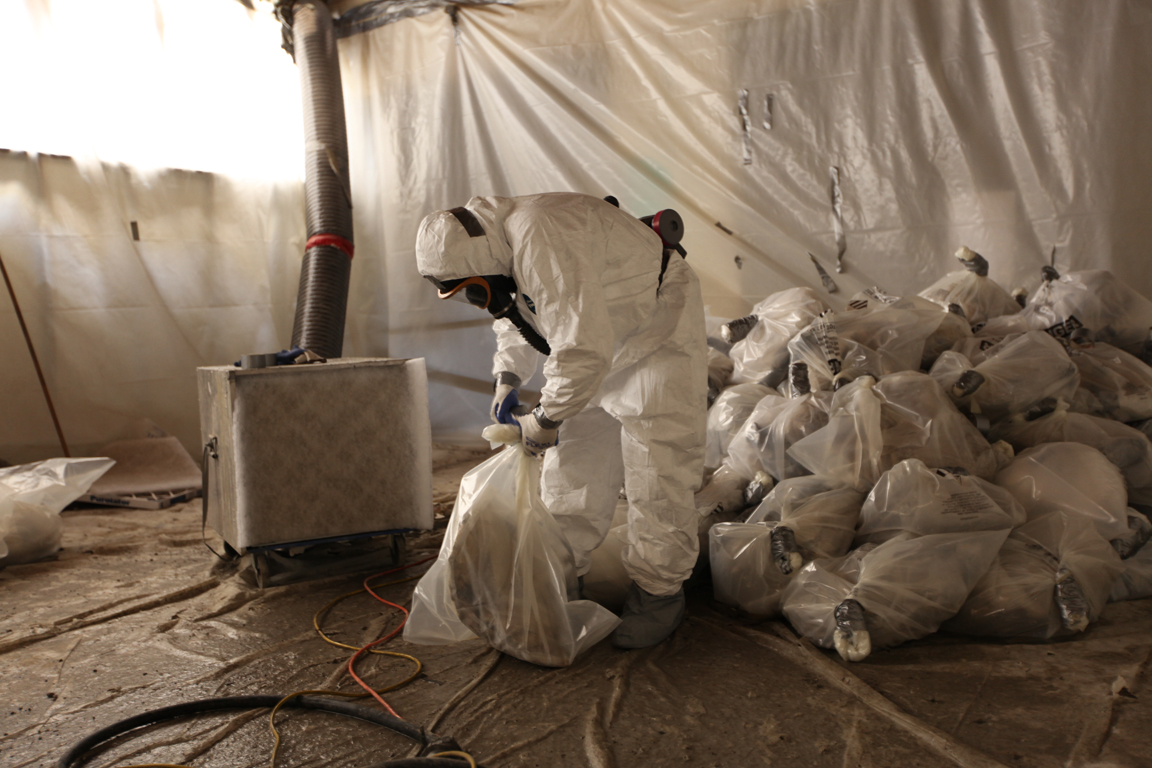
Workplace exposure remains a major concern in construction, demolition, ship repair, automotive repair, maintenance, and certain industrial settings. Workers who disturb older materials may face higher risks if proper controls are missing. That is why asbestos work is heavily regulated, with requirements for training, protective equipment, air monitoring, regulated areas, safe work practices, and disposal procedures.
The Modern Legal Landscape: Is Asbestos Banned?
The asbestos story in the United States is more complicated than many people expect. Some asbestos-containing products were banned or restricted decades ago, but asbestos was not completely gone from every possible use. For years, the remaining legal and industrial uses created confusion. People heard “asbestos is banned” and assumed the problem was over. That assumption was about as reliable as a smoke alarm with no batteries.
In 2024, the U.S. Environmental Protection Agency finalized a major rule prohibiting ongoing uses of chrysotile asbestos, the only known form still imported into the country at that time. This was a significant step because chrysotile had remained connected to uses such as chlor-alkali diaphragms, gaskets, brake blocks, and other specialized industrial products. The rule marked a major shift in federal asbestos policy.
Still, a ban on ongoing uses does not magically remove asbestos from older buildings, legacy products, contaminated sites, or past exposures. The asbestos already installed in homes, schools, factories, and infrastructure remains the long tail of the problem. It is like finally canceling a bad subscription and then realizing the old boxes are still stacked in your garage.
Why You Cannot Identify Asbestos By Sight
One of the biggest asbestos myths is that people can identify it just by looking. They usually cannot. Some asbestos materials look fluffy, some look solid, some look like ordinary tile, some look like cement, and some look like nothing special at all. Even trained professionals rely on sampling and laboratory analysis, not vibes.
This matters because visual guessing can lead to two bad outcomes. First, people may panic over harmless material. Second, and far worse, they may assume a dangerous material is safe and start cutting, sanding, or tearing it out. With asbestos, confidence is not a testing method. A laboratory result is.
Safe Handling: What Homeowners Should And Should Not Do
If you suspect asbestos in your home, the safest first step is to leave the material alone and avoid disturbing it. Do not drill it, sand it, scrape it, sweep up dust from it, vacuum it with a household vacuum, or break it into pieces. Regular vacuums can spread fine fibers instead of capturing them, which is exactly the opposite of helpful.
If renovation or repair is planned, consider hiring a qualified asbestos inspector or licensed abatement professional. Professionals can evaluate the material, collect samples safely, and recommend whether the material should be repaired, enclosed, encapsulated, or removed. Removal is not always the best answer. Sometimes the safest option is to leave intact asbestos-containing material in place and manage it properly.
This is where many DIY instincts need to take a polite seat. Painting a room, replacing a faucet, or assembling a shelf is one thing. Disturbing possible asbestos is another. The internet may be full of weekend renovation confidence, but asbestos is not impressed by confidence. It responds only to physics, fiber release, and exposure control.
Asbestos In Consumer Products: A Smaller But Still Important Concern
Most modern consumer products in the United States do not contain asbestos. However, asbestos concerns have occasionally appeared in discussions about imported products, talc-containing cosmetics, older appliances, vintage household items, and contaminated mineral-based materials. Talc is important because asbestos and talc can occur near each other geologically, creating a contamination concern if mining and testing controls are inadequate.
Federal agencies have continued to evaluate testing methods and product safety expectations for talc-containing cosmetics. For consumers, the practical message is not to panic over every powder product on a shelf. It is to understand that mineral sourcing, testing standards, and supply-chain quality control matter. In the asbestos world, “natural” does not automatically mean safe. Volcanoes are natural too, and nobody invites one into the bathroom cabinet.
The Libby, Montana Lesson
Few American asbestos stories are as sobering as Libby, Montana. Vermiculite mined near Libby was contaminated with asbestos and was shipped for use in insulation and other products. Workers, families, and community members were exposed through mining, processing, household dust, commercial use, and environmental contamination. The situation became one of the most important reminders that asbestos risk is not limited to people who directly handle insulation in a factory.
Libby changed how many Americans think about environmental exposure. It showed that contamination can travel from a mine to a workplace, from work clothes to a family home, from industrial material to attic insulation, and from a local site to buildings across the country. The lesson is uncomfortable but necessary: asbestos problems can have long memories and wide footprints.
Why Asbestos Diseases Take So Long To Appear
The long latency period of asbestos-related disease is one reason the issue feels so unfair. A person may be exposed in early adulthood and not develop symptoms until much later in life. By then, the job is gone, the building has been remodeled, the company may have changed names, and the original exposure may feel like ancient history.
This delay also explains why asbestos remains relevant even after use declines. Public-health progress does not erase past exposure overnight. Doctors, occupational health experts, regulators, and communities still deal with cases rooted in work or products from decades ago. Asbestos is not just a current hazard; it is a historical hazard still sending invoices.
Who Is Most At Risk?
People at higher risk include construction workers, demolition crews, shipyard workers, insulation workers, plumbers, electricians, mechanics, boiler workers, firefighters, maintenance staff, industrial workers, and people involved in asbestos abatement. Family members of heavily exposed workers may also have faced secondary exposure when fibers came home on clothing, shoes, hair, or tools.
Homeowners and renters are generally at lower risk unless asbestos-containing material is disturbed. However, renovation projects can change the risk quickly. A quiet old floor tile may be boring but manageable. That same tile shattered during removal can become a dust problem. The difference is not the tile’s personality; it is disturbance.
What To Do If You Think You Were Exposed
If you believe you had significant asbestos exposure, consider discussing it with a healthcare professional, especially if the exposure was occupational, repeated, or involved heavy dust. A doctor may ask about work history, military history, renovation projects, smoking history, symptoms, and known exposure events. People with past exposure should also avoid smoking, because smoking greatly increases the risk of lung cancer when combined with asbestos exposure.
Symptoms that deserve medical attention include persistent shortness of breath, ongoing cough, chest discomfort, unexplained weight loss, fatigue, or changes in breathing capacity. These symptoms can have many causes, and most are not automatically asbestos-related. Still, a clear exposure history gives healthcare providers important context.
How Asbestos Changed Public Trust
Asbestos did more than harm lungs. It damaged public trust. For years, industries benefited from asbestos while health warnings accumulated. Workers often carried the risk first, then families and communities discovered the consequences later. The result is a legacy of lawsuits, regulations, medical monitoring, contaminated sites, and public suspicion toward “wonder materials” that arrive with big promises and tiny warning labels.
The asbestos story now functions as a cautionary tale for modern innovation. New materials, chemicals, and technologies should be tested not only for performance but for long-term human and environmental impact. A product that works beautifully today can still become tomorrow’s expensive apology.
Practical Prevention Tips
Preventing asbestos exposure is mostly about awareness and restraint. If a building was constructed before the 1980s, treat unknown materials with caution before renovation. Ask for records, inspections, or professional testing when appropriate. Do not disturb suspicious insulation, tiles, roofing, siding, or textured coatings. Use qualified professionals for assessment and abatement. Follow local, state, and federal rules for disposal and workplace protection.
For schools, workplaces, and property managers, prevention means maintaining accurate asbestos management plans, training staff, communicating clearly, and acting quickly when materials are damaged. For homeowners, it means resisting the urge to “just rip it out.” That phrase has caused enough trouble in home improvement history to deserve its own warning poster.
Experiences And Real-Life Reflections: Living With The Asbestos Legacy
The strange thing about asbestos is that many people do not encounter it as an abstract environmental issue. They meet it during ordinary life moments: buying a first house, renovating a kitchen, replacing old flooring, touring a school building, cleaning out a parent’s attic, or helping a relative repair a basement. Nobody wakes up excited to learn about mineral fibers before breakfast, yet asbestos has a way of turning casual projects into serious decisions.
Imagine a homeowner pulling back a corner of old vinyl flooring and finding a second layer underneath, then a third, because apparently previous generations believed flooring should be preserved like geological strata. The tiles are nine inches square, the adhesive is black, and the house was built in the 1960s. Suddenly, the weekend project pauses. The smart move is not to grab a scraper and declare war. The smart move is to stop, cover the area, keep dust down, and get the material evaluated before disturbing more of it.
Or picture a family preparing to improve attic insulation before winter. They climb up and see loose, pebble-like vermiculite scattered between joists. It looks harmless, almost like packing material with a vintage personality. But because some vermiculite insulation may be contaminated with asbestos, the safest response is caution. Do not stir it up. Do not let children play nearby. Do not run a fan. Call someone who understands what they are looking at. The attic can wait. Lungs are less replaceable than heating bills.
Workers have their own asbestos stories. A maintenance employee in an older building may learn that the pipe insulation above a ceiling grid is not just dusty material but regulated asbestos-containing insulation. A mechanic may discover that older brake parts can pose exposure concerns. A contractor may lose time and money because asbestos testing delays a demolition project. These moments can be frustrating, but they are also proof that modern safety systems are doing what they are supposed to do: slowing people down before exposure happens.
Parents may experience asbestos anxiety through schools. A notice about an asbestos management plan can sound alarming at first, especially when the word “asbestos” appears in a letter brought home in a backpack next to a crushed granola bar. But the presence of a management plan does not automatically mean children are in danger. In many cases, it means the school has identified materials, monitors their condition, and follows rules designed to prevent exposure. Clear communication matters because fear grows quickly in silence.
There is also an emotional side to asbestos that rarely shows up in technical summaries. People feel betrayed when they learn that a material once marketed as safe and useful carried hidden dangers. Homeowners feel overwhelmed because professional testing and abatement can be expensive. Former workers may feel angry because they were exposed before protections were strong enough. Families coping with asbestos-related disease often carry grief mixed with the knowledge that the exposure may have happened decades earlier.
The best experience-based lesson is this: asbestos rewards patience. The safest people are not the boldest renovators or the fastest demolition crews. They are the ones who pause, ask questions, check records, test suspicious materials, and hire trained professionals when needed. That may not make for dramatic television, but it makes for healthier homes and workplaces.
In a culture that loves quick fixes, asbestos teaches a slower kind of wisdom. Do not disturb what you do not understand. Do not assume old materials are harmless. Do not let a small project become a large exposure. And when in doubt, trade the crowbar for a phone call. It is not glamorous, but neither is explaining to your future self why you turned a dusty ceiling into an airborne science experiment.
Conclusion: The Mineral That Taught Us The Price Of Ignoring Risk
Asbestos earned its “miracle mineral” reputation because it was genuinely useful. It helped buildings resist fire, machines handle friction, and products last longer. But usefulness is not the same as safety. The nightmare came from microscopic fibers, delayed disease, workplace exposure, contaminated homes, and decades of public-health consequences.
The good news is that awareness works. Regulations, inspections, professional abatement, safer materials, and better public education have reduced many risks. The challenge is the asbestos already around us in older buildings and legacy products. That is why the most practical message remains simple: respect the hazard, avoid disturbance, test before renovation, and rely on qualified professionals when asbestos may be present.
Asbestos is a reminder that progress should always come with questions. What is this material? Who is exposed? What happens over time? And are we calling something a miracle because it is truly safe, or because we have not waited long enough to see the bill?
Editorial note: This article is for general education and homeowner awareness. It is not medical, legal, or abatement advice. If you suspect asbestos exposure or asbestos-containing materials, consult qualified healthcare, environmental, or licensed abatement professionals.













