
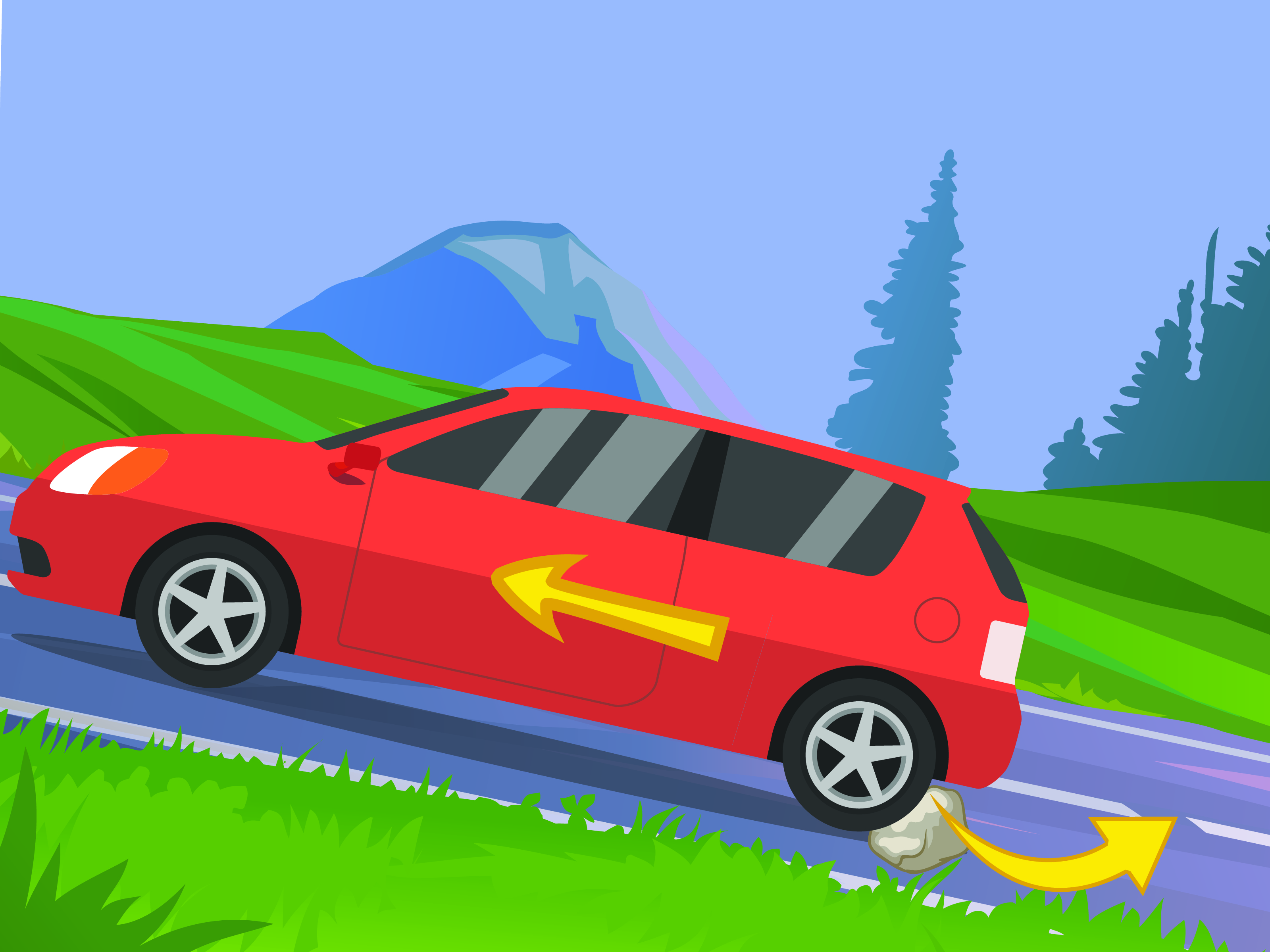
Learning how to prevent a car from rolling back on a hill is one of those driving skills that sounds simpleuntil you are stopped on a steep incline, a pickup truck is breathing down your bumper, and your right foot suddenly forgets it went to driving school.
The good news? Hill rollback is not a mysterious curse placed on new drivers. It is physics, timing, and confidence. Whether you drive a manual transmission, an automatic, or a newer vehicle with hill-start assist, you can learn practical techniques that keep your car steady, protect the vehicle behind you, and save your dignity at red lights.
This guide breaks the process into three easy-to-understand methods: using the parking brake correctly, mastering smooth pedal control, and parking or stopping smart on hills. Think of it as a calm driving instructor in article formminus the clipboard, nervous cough, and unnecessary parallel-parking flashbacks.
Why Cars Roll Back on Hills
A car rolls backward on a hill because gravity is doing exactly what gravity does best: pulling things downhill without asking permission. When your vehicle is stopped on an incline, the engine must create enough forward force to overcome the slope. Until that happens, the car may move backward if the brakes are released too soon.
This can happen in both manual and automatic cars. Manual vehicles are more famous for rollback because the driver has to balance the clutch, accelerator, and brake. But automatic cars can also roll back, especially on steep hills, when the driver moves from the brake pedal to the gas pedal slowly or assumes the car’s idle “creep” will hold it in place.
Modern safety features such as hill-start assist can help, but drivers should not treat them like magic. Many systems hold brake pressure only briefly, giving you a short window to move from brake to accelerator. The skill still belongs to the driver.
Way 1: Use the Parking Brake Method
The parking brake method is one of the most reliable ways to prevent a car from rolling back on a hill, especially in a manual transmission vehicle. It gives you an extra “holding hand” while your feet handle the clutch and accelerator.
How the Parking Brake Method Works
When you stop on a hill, keep your foot on the brake and set the parking brake. In a manual car, press the clutch, shift into first gear, and slowly raise the clutch until you feel the biting point. The biting point is the moment when the engine and transmission begin to connect, and the vehicle feels like it wants to move forward.
Once you feel that gentle pull, apply a little gas and gradually release the parking brake. The goal is not to launch the car like it just heard the starting bell at a racetrack. The goal is smooth forward motion without sliding backward.
Why It Helps Manual Drivers
Manual drivers have to coordinate three actions at once: clutch, gas, and brake. That is a lot of footwork for a normal human who is not auditioning for a tap-dance competition. The parking brake simplifies the process because it holds the car in place while your right foot moves from the brake to the accelerator.
This method is especially useful for beginners, drivers returning to manual cars after years of automatics, and anyone facing a steep hill with traffic close behind. It also reduces panic, and panic is the natural enemy of smooth clutch control.
Can Automatic Drivers Use It?
Yes. Automatic drivers can also use the parking brake on steep hills, particularly if the hill is sharp or traffic is close. Stop fully, keep your foot on the brake, set the parking brake, shift as needed, then release the parking brake only when you are ready to accelerate smoothly.
For most everyday hills, automatic drivers may not need this method. But it is a smart backup technique for steep driveways, crowded city hills, or situations where rollback would be risky.
Common Mistakes to Avoid
Do not drive for long with the parking brake engaged. That can overheat or damage braking components. Do not yank the brake release suddenly while the car is not ready to move forward. And do not use excessive throttle to compensate for poor timing. Smoothness wins. Noise is not confidence; sometimes it is just your engine asking why you are yelling at it.
Way 2: Master Pedal Control and the Hill Start
The second way to prevent rollback is to build better pedal control. This is the foundation of every good hill start. Once you learn how your car responds, hill starts become predictable instead of stressful.
For Manual Cars: Find the Clutch Bite Point
In a manual car, the clutch bite point is your best friend. To practice, find a safe, quiet incline such as an empty parking lot or a low-traffic residential hill. Stop the car, press the clutch fully, hold the brake, and shift into first gear.
Slowly lift the clutch until the front of the car feels slightly raised or the engine sound changes. That is the bite point. Hold it there briefly, move your right foot to the accelerator, add gentle gas, and continue releasing the clutch smoothly.
The trick is not to dump the clutch. Releasing the clutch too fast can stall the engine. Holding it too long while revving hard can wear the clutch. The sweet spot is controlled, calm, and boringin the best possible way.
For Automatic Cars: Do Not Rely Only on Idle Creep
Automatic cars are easier on hills, but they are not immune to rollback. Many drivers assume that once they release the brake, the car will automatically creep forward. On a steep incline, however, gravity may overpower that gentle creep before the engine responds.
The safer approach is simple: keep your foot firmly on the brake until you are ready to go, then move decisively but smoothly to the accelerator. Do not hover halfway between pedals. That tiny delay can be enough for the car to drift backward.
Use the Two-Foot Method Only When Appropriate
Some automatic drivers use a brief two-foot technique on steep hills: left foot on the brake, right foot lightly ready on the accelerator. As the car begins to move forward, the left foot releases the brake. This can help prevent rollback, but it should be used carefully and only for hill startsnot as an everyday driving habit.
Riding the brake while accelerating is bad for control and bad for the vehicle. If you use this technique, keep it brief, gentle, and focused on starting from a stop on a hill.
Practice Smooth Timing
The best hill-start drivers are not necessarily the fastest. They are the smoothest. A clean hill start should feel calm: brake held, gear selected, traffic checked, power added, brake released, vehicle moving forward.
Practice helps because every car feels different. A compact sedan, a heavy SUV, an older manual hatchback, and a turbocharged performance car will not respond the same way. The more you learn your vehicle’s personality, the less likely you are to panic when the light turns green.
Way 3: Use Smart Hill Parking and Safety Habits
Preventing rollback is not only about moving from a stop. It also means making sure your parked car does not roll away while you are inside buying coffee, picking up groceries, or pretending you meant to park that far from the curb.
Always Set the Parking Brake on a Hill
When parking on a hill, set the parking brake before leaving the vehicle. In an automatic car, shift into Park. In a manual car, use the appropriate gear according to your vehicle’s owner guidance; many drivers leave a manual in first gear when facing uphill and reverse when facing downhill. The key idea is to add more than one layer of protection.
The parking brake should not be treated like a decorative lever from the olden days. It is a real safety tool. Use it, especially on inclines.
Turn Your Wheels Correctly
Wheel direction matters when parking on hills. If you are parked uphill with a curb, turn your front wheels away from the curb and let the vehicle settle gently so the tire can act against the curb if the car moves. If you are parked downhill with a curb, turn your front wheels toward the curb.
If there is no curb, turn the wheels toward the edge of the road so the car would move away from traffic rather than into it if something failed. This simple habit adds a backup plan, and backup plans are wonderful when gravity is involved.
Leave Enough Space in Traffic
When stopped behind another vehicle on a hill, leave extra space. You may be confident in your own hill-start skills, but the driver ahead may be new, nervous, distracted, or driving a manual car with a clutch that has seen better decades.
A little extra distance gives everyone room to correct a small rollback without turning a normal commute into an insurance conversation.
Understand Hill-Start Assist
Many newer vehicles include hill-start assist or hill-hold control. This feature uses sensors to detect an incline and temporarily holds brake pressure after the driver releases the brake pedal. It gives the driver a short moment to press the accelerator without rolling backward.
Hill-start assist is helpful, but it is not a substitute for paying attention. Some systems hold for only a couple of seconds. Others may work differently depending on gear selection, slope angle, seat belt status, door status, or vehicle settings. Read your owner’s manual so you know how your specific car behaves.
Manual vs. Automatic: What Changes on a Hill?
The core goal is the same for every vehicle: hold the car until enough forward power is applied. What changes is how you create that balance.
Manual Transmission
With a manual transmission, rollback prevention depends heavily on clutch control. The driver must manage the clutch bite point, accelerator pressure, and brake release. The parking brake method is often the cleanest solution for steep hills because it reduces the need for fast foot movement.
Automatic Transmission
With an automatic transmission, the driver does not manage a clutch, but timing still matters. Keep the brake pressed until it is time to move, then transition smoothly to the accelerator. On very steep hills, use the parking brake or hill-start assist if available.
Electric and Hybrid Vehicles
Many electric and hybrid vehicles offer strong hill-hold behavior, auto-hold features, or regenerative braking settings. These systems can make hills easier, but they vary by model. A driver should still know how to hold the vehicle with the brake and how to use Park, the parking brake, and wheel direction when stopped or parked on slopes.
Real-World Examples
Example 1: The Red Light on a Steep City Street
You are driving a manual car and stop at a red light on a hill. A car pulls up close behind you. Instead of panicking, set the parking brake, press the clutch, shift into first gear, and wait. When the light turns green, raise the clutch to the bite point, add gentle throttle, release the parking brake, and move forward smoothly.
Example 2: The Sloped Driveway
You park in a steep driveway. Before getting out, keep your foot on the brake, set the parking brake, shift into Park if you drive an automatic, or select the correct gear if you drive a manual. Turn the wheels so the vehicle would not roll into traffic or a dangerous area if something failed.
Example 3: The Automatic Car That Still Rolls Back
You drive an automatic SUV. At a stop sign on a steep hill, you release the brake and feel the car move backward before the engine pulls forward. Next time, keep the brake fully pressed until you are ready, then move promptly to the accelerator. If the hill is especially steep, use the parking brake or hill-start assist as a backup.
Extra Safety Tips for Preventing Rollback
Keep your brakes in good condition. Weak brakes make hill starts and hill parking more stressful. If your brake pedal feels soft, your parking brake does not hold, or your car rolls even when properly set, have it inspected.
Avoid distractions at hill stops. Put the phone away, watch the signal, check mirrors, and focus on the pedals. Hills are not the place to discover that your playlist has become more important than your bumper.
Be patient with yourself. New drivers often overcorrect on hills by revving too high, releasing the clutch too quickly, or freezing when another vehicle stops close behind. Skill improves with calm repetition.
of Practical Driving Experience: What Hill Starts Really Feel Like
The first thing most drivers learn about hills is that the car seems to develop a personality. On flat roads, it behaves like a polite machine. On a hill, it can feel like a stubborn goat wearing tires. The trick is to stop treating hill starts like a dramatic event and start treating them like a routine sequence.
One useful experience is practicing on a mild slope before attempting a steep one. Many drivers wait until they are in traffic to learn hill control, which is like learning to swim after being handed a paddle and pushed toward a waterfall. A quiet incline gives you space to understand how the car reacts. You can feel when the clutch begins to bite, how much throttle is enough, and how quickly the brake needs to release.
Another real-world lesson is that smoothness matters more than speed. A beginner may think the goal is to move instantly the moment the light changes. Experienced drivers know the goal is to move safely. Taking one calm second to set the car correctly is better than lunging forward, stalling, rolling back, or making the engine roar like it just saw a ghost.
In manual cars, the parking brake method can feel awkward at first, but it quickly becomes natural. You stop, set the brake, prepare the clutch, add gentle power, and release. It is almost like giving the car a checklist. Once the process becomes familiar, hill starts stop feeling like a test and start feeling like normal driving.
In automatic cars, the biggest lesson is not to get lazy. Automatics are convenient, but convenience can create overconfidence. Some cars hold well on hills; others roll back just enough to surprise you. A confident automatic driver keeps firm brake pressure, watches traffic, and moves to the accelerator smoothly when ready.
Parking on hills teaches another important lesson: never rely on only one thing. Park is useful. The parking brake is useful. Correct wheel direction is useful. Together, they form a safety system. One habit backs up the other. That is why experienced drivers set the parking brake and turn the wheels even when they are “only parking for a minute.” Gravity does not care how quick your errand is.
Drivers also learn to respect space. If you stop too close behind another car on a hill, you increase stress for both drivers. Leaving room is not just polite; it is practical. It gives the driver ahead space for a tiny rollback and gives you more time to react.
The final experience is mental: do not let one bad hill start define your driving. Everyone stalls, jerks, hesitates, or rolls a little at some point. The difference between a nervous driver and a confident one is practice. Learn the method, repeat it safely, and soon hills become just another part of the roadnot a personal challenge from the planet Earth.
Conclusion
Preventing a car from rolling back on a hill comes down to three smart habits: use the parking brake when needed, master smooth pedal control, and apply safe hill-parking techniques. Manual drivers should focus on clutch bite point and controlled brake release. Automatic drivers should avoid relying only on idle creep and should use the brake, accelerator, and hill-start features wisely.
Most importantly, practice before pressure. Find a safe incline, repeat the steps, and learn how your vehicle responds. Once your timing improves, hills become much less intimidating. Gravity may still be undefeated, but with the right technique, it does not get to embarrass you at a stoplight.














