
Note: This article is written for web publication and is based on synthesized information from reputable agriculture, poultry science, animal welfare, university, and technology sources.
Artificial intelligence has officially entered the chicken coop, and no, the hens are not using it to write moody poetry about breakfast. Around the world, poultry keepers, researchers, and farm technology companies are using AI to solve very practical problems: feeding chicks on time, spotting eggs that are laid in the wrong place, monitoring flock health, tracking stress signals, and helping farmers make smarter decisions before a small issue turns into a barn-sized headache.
The title “Lending A Helping Hand To Hens With AI” captures a surprisingly important shift in modern poultry care. AI is no longer just a buzzword floating around boardrooms and self-driving cars. It is becoming a useful tool in precision poultry farming, where cameras, sensors, robots, and machine learning systems work together to improve animal welfare, productivity, and daily farm management.
For small backyard keepers, this may mean an automatic chick feeder or a smart egg-monitoring device. For commercial egg farms, it may mean computer vision systems that detect floor eggs, analyze bird movement, or alert staff when hens show signs of stress. Either way, the goal is the same: use technology to support better care, not replace the human responsibility behind it.
What Does AI Have To Do With Hens?
In poultry farming, artificial intelligence usually refers to software that can recognize patterns in data. That data may come from cameras, microphones, temperature sensors, humidity meters, scales, feeders, water lines, or egg counters. Instead of relying only on a person walking through the coop and saying, “Hmm, something seems off,” AI can help identify subtle changes earlier.
For example, a camera can capture images of hens moving around a cage-free barn. A trained computer vision model can then detect how active the birds are, where they gather, whether they are avoiding a certain area, or whether eggs are appearing on the floor instead of in nest boxes. A microphone can help analyze flock vocalizations. A sensor can track temperature and humidity. When these signals are combined, they can create a more complete picture of flock welfare.
This is the heart of precision poultry farming: collecting useful information, analyzing it quickly, and turning it into practical action. It is not about turning a chicken house into a spaceship. It is about giving farmers better eyes, better ears, and better timing.
The DIY Side: Smart Tools For Chicks And Eggs
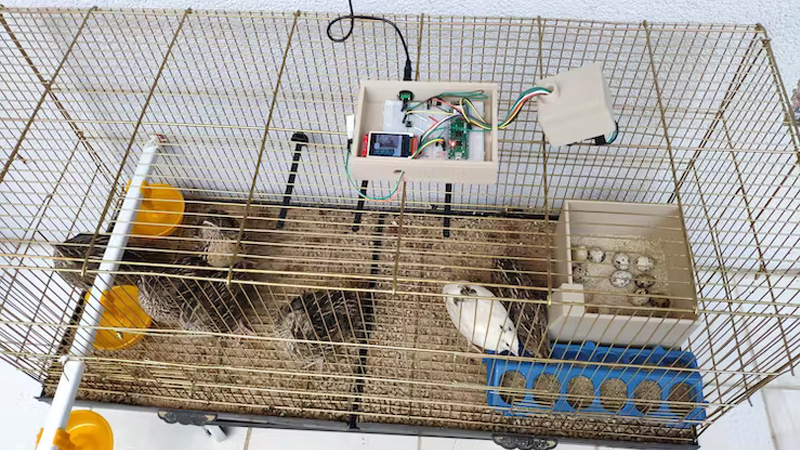
One popular example of this idea came from a maker project that used AI and IoT technology to automatically feed chicks and monitor unhatched eggs. The concept was simple but clever: use connected hardware, sensors, and image-based monitoring to reduce repetitive chores and give young birds more consistent care.
Anyone who has raised chicks knows they are tiny, fluffy, loud, and apparently trained by nature to scatter bedding into every container within a five-foot radius. Feeding them, checking warmth, and monitoring development takes time. A smart system can help by dispensing feed, collecting environmental data, and alerting the keeper if something needs attention.
For backyard poultry keepers, this kind of technology can be especially helpful when life gets busy. A smart feeder will not love your chicks for you, but it can help ensure they are fed on schedule. A monitoring camera will not replace a careful human check, but it can help you notice problems sooner. Think of it as a responsible assistant, not a robotic farm nanny with a clipboard.
Computer Vision: Teaching Cameras To Understand Coop Life
One of the most important AI tools in poultry farming is computer vision. This technology allows a system to “see” images and identify objects or behaviors. In a hen house, that might include detecting hens, eggs, feeders, drinkers, perches, floor eggs, pecking behavior, crowding patterns, or unusual movement.
Researchers have explored machine vision for tracking cage-free hens on litter floors, where birds move freely and often overlap in camera images. That is a tough environment for AI. Birds cluster together, lighting changes, equipment blocks the view, and hens are not exactly known for standing politely in a single-file line. Still, deep learning models have shown strong potential for detecting birds and behaviors in real poultry housing conditions.
Computer vision is especially useful in cage-free egg production. As more farms shift away from conventional cages, managers face new challenges. Hens have more freedom to move, perch, dust bathe, and express natural behaviors, but cage-free systems can also make it harder to monitor every bird manually. AI can help fill that gap by continuously watching for patterns that deserve attention.
Finding Floor Eggs Before They Become A Messy Problem
Floor eggs are a classic headache in cage-free hen houses. Ideally, hens lay eggs in nest boxes, where eggs can be collected cleanly and efficiently. But some hens lay on the floor, under equipment, near walls, or in corners. These eggs can get dirty, cracked, stepped on, or missed entirely.
Machine vision systems can help detect floor eggs automatically. Researchers have trained deep learning models to identify eggs in cage-free environments, even when lighting is uneven or equipment partially blocks the view. This matters because early detection helps farmers adjust nest training, lighting, litter conditions, and management practices before floor laying becomes a larger habit within the flock.
In the future, AI detection may pair with robotic egg collectors. Imagine a small farm robot moving carefully through the house, spotting eggs with a camera, picking them up, and sparing workers from repeated bending and searching. It sounds futuristic, but the research foundation is already being built.
AI And Hen Welfare: More Than Egg Counts
Good poultry technology should not focus only on production. Hens are living animals, not egg-shaped vending machines with feathers. The most promising AI systems are designed to support welfare by monitoring behavior, movement, health indicators, and environmental comfort.
Animal welfare in poultry includes access to feed and water, proper lighting, safe housing, good air quality, appropriate space, low injury risk, and the ability to perform normal behaviors such as perching, preening, dust bathing, scratching, and resting. AI cannot define ethics by itself, but it can help measure conditions that affect welfare.
For example, reduced activity may suggest illness, heat stress, lameness, or discomfort. Sudden crowding in one part of a house may indicate a ventilation issue, lighting problem, or fear response. Increased pecking behavior may point to stress, poor feather condition, or management challenges. AI can flag these patterns faster than occasional manual checks.
Listening To The Flock: Bioacoustics In Poultry Houses
Chickens are not silent creatures. They chirp, cluck, squawk, trill, complain, celebrate, gossip, and occasionally sound like someone stepped on a rubber toy. Those sounds can carry information about stress, hunger, fear, comfort, or disease risk.
AI-powered audio monitoring, sometimes called bioacoustics, can analyze flock vocalizations and detect unusual sound patterns. In poultry houses, microphones can listen for distress calls or changes in the flock’s normal acoustic signature. When combined with video and environmental data, sound analysis can become part of a broader welfare-monitoring system.
This is where multimodal AI becomes powerful. Instead of depending on one sensor, a system can use several data streams at once: video, audio, temperature, humidity, air quality, feed intake, water intake, and egg output. The result is a richer and more reliable view of what is happening inside the flock.
Robots In The Coop: Helpful, Not Hollywood
When people hear “AI robot in a chicken house,” they may imagine a chrome-plated machine marching through the barn while hens scatter dramatically like extras in a sci-fi movie. Real poultry robots are usually much less theatrical and much more useful.
Robots can assist with repetitive or physically demanding tasks such as checking hard-to-reach areas, collecting floor eggs, encouraging bird movement, monitoring litter, and carrying sensors through the house. In some systems, mobile robots use cameras and navigation software to move through poultry environments while minimizing stress to birds.
The key word is assist. Robots are tools for farmers, not replacements for animal care expertise. A robot can collect data, but humans must decide what that data means and how to respond responsibly.
How AI Helps Farmers Make Faster Decisions
One of the biggest benefits of AI in poultry management is speed. Traditional flock checks are valuable, but they happen at intervals. AI systems can monitor continuously. That means a farmer may receive an alert when water consumption drops, when birds avoid a zone, when temperature rises, or when abnormal behavior appears.
Faster alerts can lead to faster action. A clogged water line can be fixed before birds become dehydrated. A ventilation issue can be corrected before heat stress spreads. A sudden drop in activity can trigger closer inspection. A cluster of floor eggs can lead to management changes before egg quality suffers.
This does not make poultry farming effortless. It makes it more informed. The best farmers already rely on observation, routine, and instinct. AI adds another layer: objective data that can support better timing and more precise decisions.
Challenges: The Coop Is Not A Clean Laboratory
AI sounds tidy in a presentation slide, but poultry houses are real-world environments. Dust, feathers, litter, moisture, ammonia, changing light, moving birds, equipment shadows, and camera occlusion all make data collection difficult. A model that performs well in one house may struggle in another with different lighting, stocking density, bird color, or layout.
Cost is another challenge. Small farms may not have the budget for advanced sensing systems. Large farms may need dozens or hundreds of devices to cover multiple houses. Equipment must also be durable enough to survive daily farm conditions. Chickens are curious animals, and if a cable looks peckable, it may quickly become a poultry-approved chew toy.
Data quality matters, too. AI systems need accurate training data. If the dataset is too small, too narrow, or poorly labeled, the model may make mistakes. That is why university research, open datasets, field testing, and collaboration between farmers, engineers, veterinarians, and animal welfare scientists are so important.
AI Should Improve Care, Not Hide Poor Management
A responsible conversation about AI in poultry farming must include this point: technology should never be used as a shiny cover for poor animal management. A camera cannot compensate for overcrowding. A dashboard cannot fix bad ventilation by itself. A robot cannot make an unsafe housing system humane simply by rolling through it with confidence.
AI is most valuable when it supports strong welfare standards, trained staff, good housing design, veterinary guidance, and transparent management. In egg production, welfare guidelines and organic livestock rules increasingly emphasize space, outdoor access, safe housing, normal behaviors, and continuous care. Technology can help measure and manage these goals, but it cannot replace the goals themselves.
In other words, AI should be a flashlight, not a curtain.
Backyard Chicken Keepers Can Benefit Too
You do not need a commercial poultry complex to appreciate smart chicken technology. Backyard keepers can use simpler versions of AI and automation, including smart coop doors, automatic feeders, remote cameras, temperature sensors, water-level monitors, and egg-counting tools.
A small flock owner might use a camera to check whether hens returned to the coop before sunset. A sensor can warn when brooder temperature drops. An automatic door can protect birds from nighttime predators. A smart feeder can reduce waste and keep feed dry. These tools are especially helpful during bad weather, busy mornings, vacations, or those moments when you are halfway to work and suddenly wonder, “Did I close the coop?”
Still, backyard AI should be used carefully. Keepers should inspect birds daily, clean equipment regularly, protect devices from moisture, and avoid depending entirely on automation. Chickens are experts at finding the one weakness in any system. If there is a way to knock bedding into a sensor, they will discover it before lunch.
Practical Examples Of AI Helping Hens
1. Smart Chick Feeding
An AI-assisted or sensor-based feeder can help provide consistent feeding schedules for chicks. This is useful during early growth, when young birds need reliable access to food and a stable environment. For hobbyists, automation can reduce missed feedings. For researchers, data from feeding patterns can reveal early signs of health or growth issues.
2. Egg Monitoring
AI cameras can help detect eggs in nest boxes or on the floor. In cage-free systems, floor egg detection is especially useful because missed eggs can reduce quality and increase labor. Automated alerts can help workers respond quickly and adjust management practices.
3. Behavior Tracking
Computer vision can monitor walking, resting, feeding, drinking, perching, and crowding behavior. These patterns can support welfare assessments and help identify abnormal flock activity.
4. Stress Detection
Audio analysis can detect unusual vocal patterns. When paired with video and environmental sensors, this can help farmers identify stress events, equipment problems, or management issues sooner.
5. Environmental Control
Temperature, humidity, ventilation, and air quality are crucial in poultry housing. AI systems can analyze sensor data and recommend adjustments before conditions become harmful.
The Future Of Smart Poultry Farming
The future of AI in poultry farming will likely be multimodal, practical, and increasingly affordable. Instead of one camera doing one job, future systems may combine several tools into a single management platform. Cameras may track birds and eggs. Microphones may monitor flock sound. Sensors may measure air quality and temperature. Forecasting models may predict egg production, feed demand, or welfare risks.
Edge computing may also become more common. That means data can be processed directly on devices inside or near the farm, reducing the need to send everything to the cloud. This can improve speed, lower connectivity demands, and support privacy. For rural farms with unreliable internet, that matters.
As AI tools become easier to use, the winners will not necessarily be the farms with the flashiest technology. They will be the farms that combine good data with good judgment. The best poultry AI will be simple enough for daily use, rugged enough for barn conditions, and meaningful enough to improve both productivity and welfare.
Experience-Based Insights: What It Feels Like To Help Hens With AI
When thinking about “Lending A Helping Hand To Hens With AI,” the most useful perspective is not that AI magically transforms poultry care overnight. The real experience is more grounded. It feels like adding a very observant assistant to a job that still requires patience, responsibility, and common sense.
Imagine starting with a small flock. At first, everything seems simple. You feed the birds, check the water, collect eggs, clean the coop, and enjoy the proud little parade of hens marching around like they own the property. Then real life happens. A feeder jams. One hen starts laying in a corner behind a storage bin. The weather shifts. A brooder gets too cool. You notice one bird is less active, but you are not sure when it started. This is where smart monitoring becomes genuinely helpful.
A camera near the nesting area can reveal that a hen has been avoiding the nest box at the same time every morning. A temperature sensor can show that the brooder cools down more than expected before sunrise. A water monitor can warn that the flock is drinking less than usual. None of these alerts replaces walking into the coop, looking closely, and using your judgment. But they help you walk in with better information.
The most valuable experience is early awareness. Poultry problems often become expensive or heartbreaking when they are discovered late. AI tools can shorten that delay. If a flock becomes less active during a heat wave, a sensor alert may prompt you to improve ventilation, add shade, check water flow, or adjust cooling before birds suffer. If floor eggs appear repeatedly, camera data may help identify the location and timing so you can improve nest access or lighting.
There is also a labor-saving benefit that should not be underestimated. Poultry work can be repetitive and physically demanding. Bending for floor eggs, checking multiple areas, monitoring chicks, and confirming equipment status all take time. Automation does not remove the work, but it can reduce unnecessary searching and guessing. That gives keepers more time for higher-value care, such as observing bird condition, improving housing, and maintaining cleanliness.
However, the experience also teaches humility. Technology fails. Wi-Fi drops. Cameras get dusty. Sensors drift. A hen may decide the perfect place to perch is directly in front of the lens, because apparently she has a future in performance art. Smart systems must be cleaned, checked, calibrated, and backed up with human observation. The best setup is one where AI supports a routine, not one where the keeper disappears from the process.
Another lesson is that simple tools often deliver the biggest wins. A basic camera, reliable temperature sensor, automatic door, and well-designed feeder may help more than an expensive platform that nobody understands. The right technology depends on the flock size, housing type, budget, and the actual problem being solved. AI should begin with a question: What do the hens need, and what information would help us provide it sooner?
In commercial settings, the experience is larger but similar. Farmers need systems that work in dusty, crowded, noisy environments. They need alerts that are accurate, not a constant stream of digital panic. They need data that connects to action: check this drinker line, inspect this zone, adjust this lighting, review this flock behavior. Useful AI should reduce confusion, not add another dashboard nobody wants to open.
The biggest takeaway is that helping hens with AI is not really about technology showing off. It is about care becoming more timely, more measurable, and more consistent. A well-designed AI system can notice patterns people miss, but people still provide the values, decisions, and hands-on care. The future of poultry farming should not be cold or robotic. Ideally, it should be smarter, kinder, and a little less backbreaking.
Conclusion
AI is giving poultry keepers and farmers new ways to care for hens, chicks, and flocks. From smart feeders and egg-monitoring systems to computer vision, bioacoustics, robotics, and environmental sensors, the technology is moving quickly from novelty to practical tool. When used responsibly, AI can support better welfare, faster intervention, cleaner egg collection, improved flock monitoring, and more efficient farm management.
The important point is balance. Artificial intelligence should not replace human care, animal welfare standards, or good poultry management. It should strengthen them. The best future for smart poultry farming is not a barn run by machines while humans vanish. It is a farm where technology helps people notice sooner, act faster, and give hens the kind of care they deserve. That is a helping hand worth offering.













