
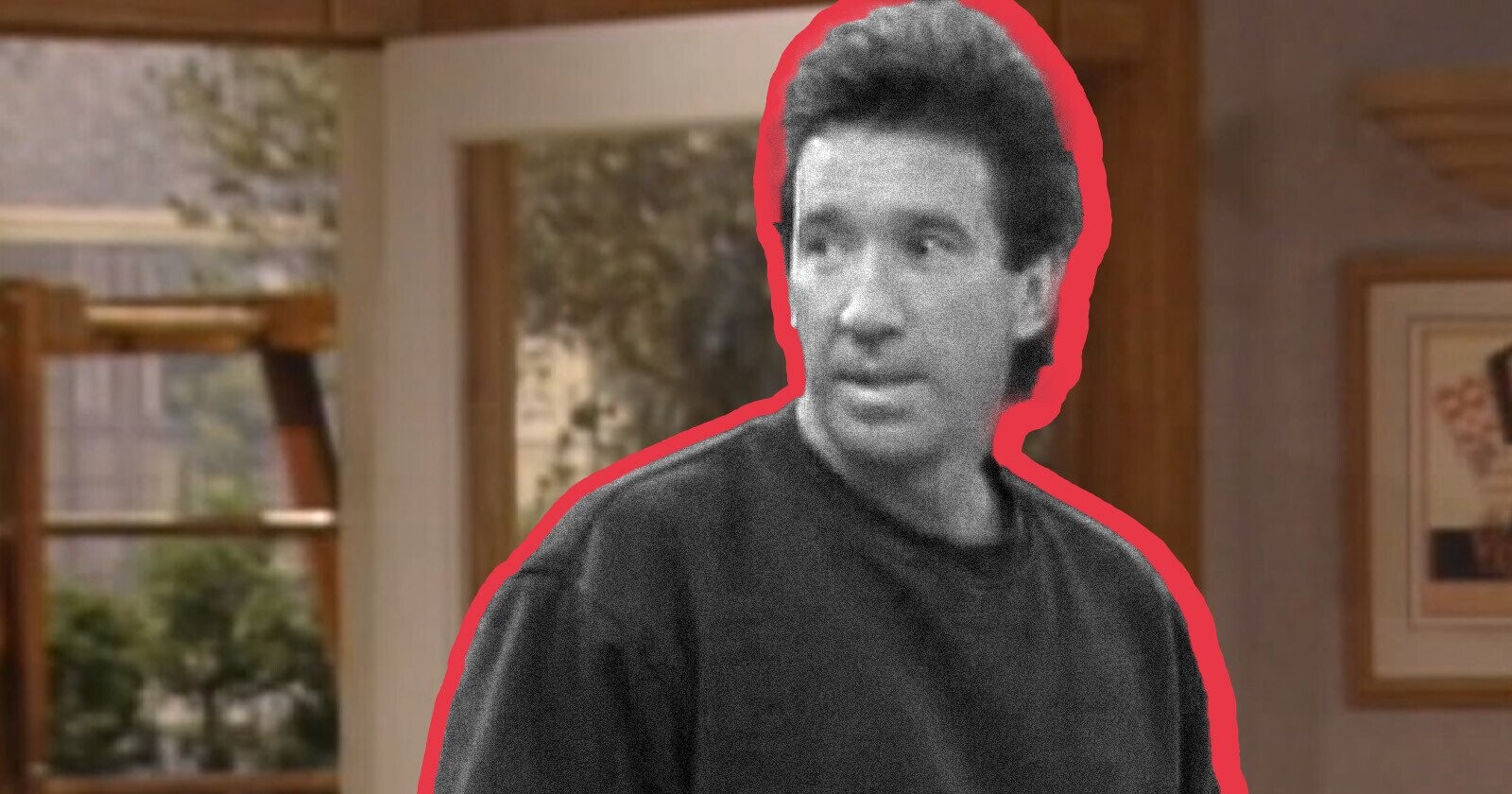
Pamela Anderson has spent much of her public life being treated like a punchline before she ever got to finish the sentence. So when her memoir Love, Pamela arrived with a headline-making allegation about Tim Allen on the set of Home Improvement, the story did more than revive a 1990s sitcom memory. It reopened a larger conversation about fame, workplace boundaries, comedy, and the uncomfortable way Hollywood once excused bad behavior as “just a joke.”
In the memoir, Anderson alleges that Allen exposed himself to her on her first day filming Home Improvement in 1991. According to Anderson’s account, Allen then made a joke suggesting it was “fair” because he had seen her in adult magazine modeling work. Allen has denied the allegation, stating that it never happened. That denial matters. So does the fact that Anderson’s story appears in a book whose larger purpose is not scandal hunting, but narrative reclamation.
The result is a celebrity news story that feels strangely bigger than one hallway, one robe, and one alleged joke. It asks a question that still matters: when does comedy stop being comedy and start becoming a way to dodge accountability?
The Allegation From Love, Pamela
Anderson’s claim appears in her 2023 memoir Love, Pamela, a book promoted as her attempt to tell her life story in her own words. The memoir was released alongside the Netflix documentary Pamela, a love story, both of which focused on Anderson’s childhood, sudden fame, relationships, public scrutiny, motherhood, activism, and long struggle to regain control over how the media portrayed her.
In the book, Anderson recalls being 23 years old and newly hired on Home Improvement, the ABC sitcom that made Tim Allen one of the biggest television stars of the 1990s. She played Lisa, the original “Tool Time girl,” a glamorous assistant on the show-within-a-show hosted by Allen’s character, Tim “The Tool Man” Taylor. For Anderson, the role was an early step in a career that would soon explode with Baywatch.
Her description of the alleged incident is brief but loaded. It is not framed as a long dramatic scene. It is framed as a moment that was awkward, uncomfortable, and immediately explained away with humor. That is exactly why it stuck with readers. The alleged excuse sounded like something from an outdated sitcom writers’ room: a boundary-crossing act followed by a shrugging punchline.
Tim Allen’s Denial
Allen has denied Anderson’s allegation. His statement was direct: he said it did not happen and that he would never do such a thing. In responsible coverage, that denial should not be buried. The public record includes both Anderson’s account and Allen’s denial, and any fair article has to make room for both.
Still, the story gained traction because it fit into a larger cultural reexamination of the entertainment industry. The 1990s are often remembered with warm nostalgia: laugh tracks, oversized denim, family sitcoms, and celebrities who seemed larger than life. But nostalgia has a selective memory. Many performers, especially women who were marketed through beauty and sexuality, have since described working environments where their boundaries were ignored because the culture had already decided they were “in on the joke.”
That is the uncomfortable context around Anderson’s claim. Whether readers approach the story as celebrity news, Hollywood history, or a workplace culture case study, the key issue is not simply “what happened?” It is also “why did so many people once think jokes could erase discomfort?”
Why the “Tim Allen Joke” Framing Hit a Nerve
The phrase “the most Tim Allen joke ever” has a sharp edge because Allen’s television persona was built around macho goofiness. On Home Improvement, Tim Taylor was the guy who grunted, overpowered tools, misunderstood emotional conversations, and usually needed his wife, cohost, neighbor, or children to bring him back to earth. The comedy often came from exaggerated masculinity crashing into basic common sense.
That persona does not prove anything about real-life behavior. Actors are not their characters. But public images shape how audiences interpret stories. When Anderson’s account described an alleged inappropriate act followed by a “now we’re even” style excuse, people connected it to the broad, blundering, masculine humor associated with Allen’s brand. The joke, as described by Anderson, sounded like a rusty power tool: loud, clumsy, and not nearly as clever as it thought it was.
But here is the serious part: what may sound like a joke to one person can feel like humiliation to another. In a workplace, especially one with a major star and a younger performer just starting out, the power dynamic changes everything. The person with more authority may think a moment is harmless. The person with less power may laugh because laughing feels safer than objecting.
Pamela Anderson’s Larger Mission: Reclaiming Her Story
To understand why this allegation became such a major headline, it helps to understand the timing. Love, Pamela and Pamela, a love story arrived after decades in which Anderson’s image had been flattened into a tabloid character. She was treated as a swimsuit poster, a scandal figure, a punchline, and a symbol of 1990s excess. Rarely was she treated as the author of her own life.
Her memoir challenged that old framing. Anderson wrote about fame, vulnerability, objectification, relationships, motherhood, and the cost of having strangers believe they already understood her because they had seen her image. The allegation involving Allen became news because it was specific and involved another famous performer, but it also fit the book’s deeper theme: people mistook access to Anderson’s public image for access to Anderson herself.
That distinction is the heart of the matter. A person can be famous, photographed, glamorous, funny, flirtatious, stylish, or open about their sexuality and still have the same right to boundaries as anyone else. Public image is not permission. A magazine cover is not consent. A role on a sitcom is not an invitation to be made uncomfortable at work.
The 1990s Workplace Culture Problem
The 1990s entertainment industry had a very different vocabulary for misconduct than we have today. Many things that would now trigger an HR investigation were once dismissed as backstage humor, hazing, flirting, or “that’s just how he is.” That phrase“that’s just how he is”has done a suspicious amount of overtime in the history of bad workplace behavior.
Television sets were high-pressure environments. Sitcoms moved quickly. Stars carried shows. Newer actors often entered spaces where everyone else already knew the rhythm, the hierarchy, and the unwritten rules. If something awkward happened, speaking up could feel risky. Would you be labeled difficult? Would you lose screen time? Would people say you could not take a joke?
Anderson’s story lands inside that old system. It highlights how difficult it could be for young performers to name discomfort in real time. Many people do not respond to uncomfortable moments with perfect speeches. They freeze, smile, laugh, move on, and understand the meaning years later. That delayed processing is common, especially in workplaces where humor is used as a pressure valve.
Why This Story Still Matters
Some readers may wonder why an alleged incident from 1991 still matters. The answer is simple: culture is built from the stories people are allowed to tell. When someone like Anderson revisits a memory, she is not merely asking the internet to gasp for 24 hours. She is contributing to a record of how women in entertainment were treated, how fame distorted consent, and how public narratives can silence private discomfort.
The story also matters because it complicates nostalgia. Home Improvement remains a beloved sitcom for many viewers. It was a major hit, ran for eight seasons, and helped define family comedy in the 1990s. Remembering that success does not require pretending every behind-the-scenes culture of that era was perfect. Adults can hold two thoughts at once: a show can be culturally important, and an allegation connected to its set can still deserve serious attention.
That is where mature entertainment writing should land. Not every story needs to become a courtroom. Not every allegation can be resolved by readers online. But public figures’ accounts can be discussed carefully, with context, fairness, and enough humility to admit what is known and what is disputed.
Comedy, Excuses, and the Problem With “Just Kidding”
The alleged excuse in Anderson’s account is what gave the story its viral energy. It was not only the alleged behavior; it was the logic attached to it. The idea that someone could justify exposing himself because he had seen a public image of the other person reflects a deeply flawed assumption: that being seen in one context removes your right to privacy in another.
Comedy can be brave, surprising, and boundary-pushing. But in a workplace, comedy also has responsibilities. A joke between equals is different from a joke aimed at someone with less power. A joke that both people enjoy is different from a joke one person endures. A joke that requires someone else’s discomfort as the setup probably needs a rewrite.
The old defense of “it was a different time” is only half useful. Yes, norms change. Yes, workplaces now have clearer rules. But “different time” should explain context, not excuse harm. Lead paint was also from a different time. Nobody is asking to bring it back because it had vintage charm.
How Anderson Responded to the Denial
After Allen denied the allegation, Anderson responded in interviews by suggesting she was not surprised. She also said she did not believe he necessarily had bad intentions, while still standing by her account. That response is important because it resists the oversimplified internet habit of turning every story into a boxing match.
Anderson’s framing was more nuanced. She described the alleged moment as inappropriate and uncomfortable, but she did not present it as the whole definition of Allen’s life or career. That distinction matters. Accountability does not require cartoon villains. In fact, many workplace boundary problems come from people who think they are being funny, charming, or harmless.
That is what makes the story useful beyond celebrity gossip. It invites readers to think about impact, not just intent. “I meant it as a joke” does not automatically erase “you made me uncomfortable.” Both statements can exist, but only one of them belongs to the person affected.
The Media’s Role in Turning People Into Characters
Anderson’s career is a case study in media reduction. She became famous at a time when tabloids, late-night jokes, paparazzi, and entertainment television could turn a real person into a simplified character. Once that character was established, every story was forced to fit it. If Anderson was glamorous, she could not be vulnerable. If she was funny, she could not be wounded. If she posed for cameras, she could not complain about being objectified.
That logic was always lazy. It was also profitable. The media made money from the Pamela Anderson image while often ignoring Pamela Anderson the person. Her memoir and documentary worked against that pattern by giving her room to be reflective, messy, poetic, angry, forgiving, humorous, and human all at once.
The Tim Allen allegation became one chapter in that broader correction. It reminded readers that behind every glossy 1990s image was a person navigating rooms where other people often assumed too much.
Lessons for Today’s Workplaces
Modern workplaces, including film and television sets, are far from perfect. But expectations are clearer than they were decades ago. Intimacy coordinators, HR policies, anti-harassment training, closed-set protocols, and stronger public awareness have changed how professional boundaries are discussed. The entertainment industry still has problems, but fewer people can credibly claim they “didn’t know” basic boundaries existed.
The practical lesson is not complicated: do not turn coworkers into props for your humor. Do not assume familiarity because someone is famous. Do not confuse public image with private consent. And if a joke requires a legal department to explain it later, maybe workshop the punchline a little longer.
For performers, crew members, managers, and media professionals, Anderson’s story is also a reminder to take discomfort seriously in the moment. A person laughing does not always mean they are fine. Sometimes it means they are trying to survive the awkwardness without making the room turn against them.
Experiences and Reflections Related to the Pamela Anderson and Tim Allen Story
Anyone who has worked in a creative environment knows that humor can be both glue and gasoline. It can help people relax during long hours, build trust between collaborators, and turn stressful work into something joyful. But humor can also become a shield for behavior that should be questioned. The difference often comes down to power, timing, and whether everyone in the room is actually laughing for the same reason.
In entertainment writing, stories like Anderson’s require a careful balance. The temptation is to chase the loudest headline, especially when two recognizable names are involved. But the more useful approach is to slow down and look at the structure around the story. Anderson was a young actress entering a hit show led by a powerful star. She already had a public image shaped by modeling. That image may have made some people feel falsely familiar with her. The experience she describes is not just about one alleged moment; it is about the way fame can make strangers and coworkers believe they know someone more than they do.
Many people have experienced a milder version of that dynamic in ordinary workplaces. A coworker makes a comment that crosses a line. A supervisor tells a joke that puts someone on the spot. The room laughs, not because the joke is good, but because laughter is socially easier than silence. Later, the person who felt targeted wonders whether they are “overreacting.” That word has protected countless bad jokes from proper examination.
The lesson is not that workplaces should become humorless. Nobody wants an office culture with the emotional range of a printer manual. The lesson is that good humor does not require someone else to feel cornered. The best jokes invite people in. The worst jokes trap someone inside the punchline.
Anderson’s story also shows why personal storytelling can arrive years after an event. People often ask, “Why talk about it now?” But memory does not follow a press schedule. Sometimes people need distance before they can name what happened. Sometimes they need success, safety, age, family support, or simply a quiet room and a blank page. Anderson’s memoir was part of a broader process of looking back at her life without letting tabloids hold the pen.
For readers, the healthiest response is not instant certainty about every disputed detail. It is thoughtful attention. We can acknowledge Allen’s denial while also taking seriously what Anderson says the moment meant to her. We can discuss the cultural context without pretending the past was harmless. We can enjoy old shows while admitting that some old norms deserved retirement.
In that sense, the story is not only about Pamela Anderson or Tim Allen. It is about how people learn to hear discomfort that was once disguised as laughter. It is about understanding that a workplace joke is not successful just because the most powerful person in the room enjoyed it. And it is about giving people, especially women whose images were heavily commercialized, the basic respect of believing they are more than the roles, photos, and fantasies projected onto them.
Conclusion
Pamela Anderson’s allegation about Tim Allen remains disputed, and that should be stated clearly. Anderson says the incident happened. Allen says it did not. What is not disputed is that the story became part of a much larger public reassessment of Anderson’s life, career, and treatment by the entertainment industry.
The reason this headline traveled so far is not only celebrity curiosity. It is because the alleged excuse captured an old cultural habit in one uncomfortable sentence: the habit of turning a boundary violation into a joke and expecting the person affected to play along. Anderson’s memoir challenged that habit by putting her perspective at the center. For a star long spoken about, photographed, imitated, judged, and misunderstood, that act of authorship may be the most important part of the story.
Comedy ages. Sitcoms age. Public attitudes age. But the basic rule stays young forever: respect is not optional, even when the laugh track is loud.













