
“`
Some survival stories begin with a storm. Others begin with a shipwreck, a wrong turn, or a deeply regrettable camping decision. The story of Hugh Glass, however, begins with the American fur trade, a grizzly bear, and one man’s refusal to let the wilderness write his obituary.
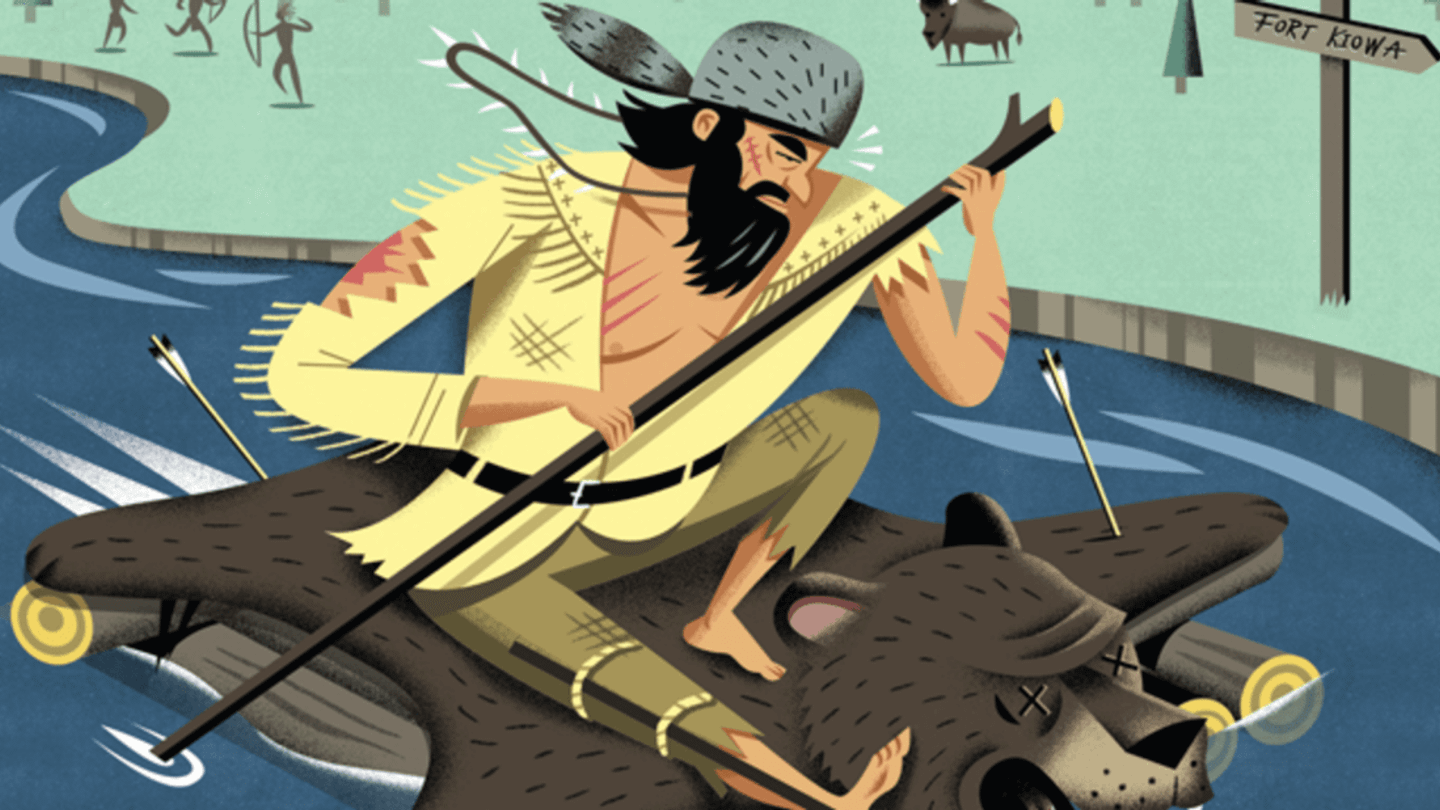
Hugh Glass was an early American frontiersman, fur trapper, hunter, and explorer whose name became attached to one of the most astonishing survival stories in United States history. In 1823, after being badly mauled by a grizzly bear in present-day South Dakota, Glass was left behind by members of his expedition who believed he would not survive. Instead of dying quietly, he crawled, staggered, and drifted hundreds of miles toward safety. It was not exactly a spa retreat.
His ordeal later inspired books, articles, legends, and films, most famously The Revenant. But behind the cinematic snow, revenge, and dramatic close-ups is a real historical figure whose story reveals the brutality, uncertainty, ambition, and myth-making of the early American frontier.
Who Was Hugh Glass?
Hugh Glass was likely born around 1783 in Pennsylvania, though the details of his early life remain cloudy. That is not unusual for frontier figures of the period. Many men who entered the fur trade left behind fewer records than footprints, and even those footprints were usually eaten by weather, rivers, or a passing mule.
What historians generally agree on is that Glass became part of the rough, mobile world of early 19th-century trapping and trading. He traveled through the Upper Missouri River country and became associated with the Rocky Mountain fur trade, a risky business built on beaver pelts, long expeditions, shifting alliances, and extremely uncomfortable sleeping arrangements.
The fur trade helped open the American West to commercial exploration. St. Louis served as a major launching point for expeditions heading upriver, while trappers pushed into regions that would later become the Dakotas, Montana, Wyoming, and Nebraska. These men were not simply wandering adventurers with dramatic hats. They were laborers in a dangerous global industry, supplying demand for fur used in hats and clothing. Still, dramatic hats were definitely involved.
The 1823 Expedition and the Making of a Legend
In 1823, Glass joined an expedition connected to General William Ashley and Major Andrew Henry, part of the ambitious fur-trading enterprise often associated with the “Ashley’s Hundred.” The group traveled into the Missouri River region at a time when the northern plains were contested, unpredictable, and often deadly.
Expeditions like this faced a long list of hazards: harsh weather, hunger, injury, river accidents, conflict with Native nations defending their homelands, and wildlife encounters that could turn a normal morning into a historical disaster before breakfast. Glass’s disaster came during a scouting or hunting excursion near the Grand River area of present-day South Dakota.
The Grizzly Bear Attack
According to the traditional version of the story, Glass surprised a mother grizzly bear with cubs. The bear attacked, leaving him severely injured. His companions managed to kill the bear, but Glass appeared unlikely to live. The expedition could not easily carry him through dangerous country, so Major Henry reportedly offered payment to volunteers who would stay with Glass until he died and then bury him.
Two men remained behind: John Fitzgerald and a young Jim Bridger, who would later become one of the most famous mountain men in American history. After several days, believing Glass had no real chance of survival and fearing danger themselves, they abandoned him. Worse, they took his rifle and gear. In frontier terms, that was not just rude; it was practically a subscription to disaster.
Glass was left alone, injured, and without supplies. Yet he did not die. That is the part of the story that turned a brutal frontier incident into a legend.
The Crawl Toward Survival
Hugh Glass’s journey to safety has been retold many times, and some details vary depending on the source. The core story remains consistent: Glass survived the attack, regained enough strength to move, and made his way toward Fort Kiowa on the Missouri River, more than 200 miles away.
He reportedly crawled at first, then slowly walked when he could. He navigated by using landmarks, rivers, and frontier knowledge. He survived on whatever food he could find. Popular accounts say he consumed roots, berries, and small scraps from animal remains. The journey may have taken around six weeks.
It is difficult for modern readers to grasp the scale of this feat. Today, if a phone battery hits 3%, many people begin making peace with the universe. Glass had no phone, no map app, no emergency room, no protein bars, and no cheerful trail sign saying, “Fort Kiowa: Only 197 Miles to Go!” He had pain, instinct, anger, and an astonishing will to continue.
Why Fort Kiowa Mattered
Fort Kiowa, located near present-day Chamberlain, South Dakota, was a trading post on the Missouri River. For Glass, reaching it meant food, shelter, human contact, and a real chance to recover. His route likely followed waterways and terrain that could guide him toward the Missouri. Rivers were the highways of the fur trade, though unlike modern highways, they did not have rest stops with suspiciously hot coffee.
The survival journey matters because it shows Glass as more than a victim of a bear attack. He understood the land well enough to move through it under extreme conditions. His knowledge of direction, water, shelter, and opportunity likely mattered as much as his toughness.
Revenge, Forgiveness, and the Human Side of the Story
After reaching safety, Hugh Glass reportedly wanted revenge against Fitzgerald and Bridger for abandoning him and taking his possessions. That desire became one of the engines of the legend. A man rises from the edge of death, crosses the wilderness, and hunts the companions who betrayed him. It sounds like the frontier wrote its own movie trailer.
Yet the historical ending is more complicated than a simple revenge tale. Glass eventually encountered Jim Bridger and reportedly spared him, partly because Bridger was young. Fitzgerald, according to some accounts, had joined the U.S. Army, making revenge more complicated and dangerous. Other versions suggest Glass recovered his rifle or confronted Fitzgerald without killing him.
This restraint is one reason the true story remains fascinating. The myth often emphasizes revenge, but the historical Glass may have chosen survival over vengeance. That does not make the story less dramatic. It makes it more human. Anger can push a person forward, but it cannot build a life by itself.
Hugh Glass and the Fur Trade Frontier
To understand Hugh Glass, readers must understand the world that shaped him. The fur trade was one of the most important forces in early western expansion. Mountain men and trappers moved through Indigenous territories, formed alliances, entered conflicts, married into Native communities, traded goods, and gathered geographic knowledge that later settlers, soldiers, and businesses would use.
This history is not a clean adventure story. It includes courage and exploitation, survival and displacement, exploration and violence. Glass’s tale sits inside that larger, complicated history. He was not wandering through an empty wilderness. He moved through homelands already known, traveled, defended, and inhabited by Native nations.
That context matters. Without it, Hugh Glass becomes only a rugged individual in buckskin. With it, he becomes part of a larger American story about commerce, expansion, danger, and memory.
Fact vs. Legend: What Did Hollywood Change?
Many people know Hugh Glass because of The Revenant, the 2015 film starring Leonardo DiCaprio. The movie captures the harshness of the frontier and the emotional force of survival, but it also changes major details for dramatic effect.
For example, the film gives Glass a son whose death becomes central to the revenge plot. Historians have not found solid evidence that this part of the story happened as shown. The movie also intensifies certain conflicts and compresses events, as films often do. Hollywood enjoys subtle historical uncertainty about as much as a raccoon enjoys a locked trash can.
The real Hugh Glass story does not need much decoration. A badly injured trapper abandoned in hostile terrain and traveling more than 200 miles to survive is already astonishing. Adding too much fiction can sometimes distract from the quieter truth: the actual frontier was terrifying enough.
Why Hugh Glass Still Captures the American Imagination
The story of Hugh Glass remains powerful because it sits at the crossroads of several themes Americans return to again and again: survival, betrayal, endurance, wilderness, justice, and reinvention.
1. Survival Against Impossible Odds
Glass’s journey is one of the classic examples of human endurance. He had every reason to stop. Instead, he continued. His survival reminds readers that the human body is fragile, but the will to live can be ferociously stubborn.
2. The Frontier as Both Real Place and Myth
The American frontier was not simply a land of heroic loners. It was a place of trade networks, Native sovereignty, environmental danger, and cultural collision. Glass’s story became a myth because it condensed that world into one unforgettable ordeal.
3. The Thin Line Between History and Storytelling
Hugh Glass became famous partly because his experience was retold, embellished, printed, adapted, and filmed. Each version reveals as much about its own time as it does about Glass. Early accounts celebrated frontier toughness. Modern versions often ask deeper questions about violence, revenge, and survival.
Lessons From Hugh Glass’s Survival Story
Hugh Glass’s life should not be reduced to a motivational poster with a mountain in the background and the words “Never Give Up” slapped across the sky. Still, his story does offer meaningful lessons.
Knowledge Matters
Glass survived not only because he was tough, but because he understood frontier travel. He knew how to read land, follow water, and keep moving toward a destination. Courage without knowledge is just panic wearing boots.
Anger Can Start a Journey, But It Cannot Finish One
Revenge may have fueled Glass at first, but survival required patience, calculation, and restraint. His eventual choice not to kill Bridger is one of the most interesting parts of the story because it complicates the legend.
History Is Stronger When It Allows Uncertainty
Not every detail of Glass’s life can be proven. That does not weaken the story. It reminds us that history is often assembled from fragments: letters, memories, printed accounts, oral traditions, and later interpretations. The honest version is usually more interesting than the overly polished one.
Experiences Related to Hugh Glass and His Survival Legacy
For modern readers, experiencing the story of Hugh Glass is not just about memorizing dates or admiring frontier toughness from a safe distance. It is about imagining what survival meant before modern rescue systems, paved roads, antibiotics, weather apps, and snacks with resealable tops. His journey forces us to slow down and think about dependence, vulnerability, and the strange power of hope.
One meaningful experience is visiting or learning about the South Dakota landscapes connected to the Hugh Glass story. The plains can appear wide, quiet, and almost simple at first glance. But the longer one studies them, the more complex they become. Distances stretch. Weather changes quickly. Rivers shape movement. A hill that looks close may take far longer to reach than expected. In that setting, Glass’s journey becomes less like a campfire tale and more like a confrontation with scale.
Another experience comes from comparing the real history with the movie version. Films like The Revenant are powerful because they make the viewer feel cold, isolated, and desperate. But reading the historical record afterward can be even more rewarding. The real story contains uncertainty, and uncertainty invites curiosity. Did Glass forgive Fitzgerald? How much of the early printed legend was shaped by frontier storytelling? What did Glass himself think of the fame that followed? These questions make the past feel alive rather than sealed in a museum case.
Hugh Glass’s survival also creates a personal experience for anyone who has faced a difficult season in life. Most people will never crawl across the plains after a bear attack, and honestly, let us all be grateful for that. But many people understand what it feels like to be abandoned, underestimated, injured, afraid, or forced to move forward with no guarantee of success. Glass’s story becomes a symbol not because we share his exact ordeal, but because we recognize the emotional shape of it: something terrible happens, help disappears, and the next step still has to be taken.
There is also an educational experience in studying Glass. Teachers, students, and history lovers can use his story to discuss primary sources, folklore, westward expansion, Native history, environmental danger, and the creation of American legends. The story works because it opens many doors. It is an adventure tale, but it is also a lesson in historical skepticism. It asks readers to enjoy the drama while still asking, “How do we know this?”
Finally, the Hugh Glass experience is a reminder that survival stories are rarely neat. They are messy, painful, morally complicated, and often retold until they become shinier than reality. Glass was brave, but he was also part of a violent and disruptive frontier economy. He endured the wilderness, but he also moved through lands shaped by Native nations and contested by expanding American power. To understand him well is to hold both truths at once: the man was extraordinary, and the world around him was complicated.
Conclusion: The Man Who Refused to Become a Footnote
Hugh Glass remains one of early America’s greatest survival figures because his story combines physical endurance with historical mystery. He was a fur trapper in a dangerous trade, a survivor of an almost unbelievable ordeal, and a man whose legend grew larger with every retelling.
His journey from near death to Fort Kiowa continues to fascinate because it speaks to something deep and stubborn in human nature. Glass had no guarantee of rescue. No certainty of justice. No comfortable path home. Yet he moved forward anyway.
That is why his story lasts. Not because every detail is perfectly known, and not because Hollywood made it famous, but because Hugh Glass represents the raw edge of survival: one person, badly broken, facing an enormous landscape, and deciding that the story was not over yet.














