
Note: This original article is based on verified historical accounts and written in a light, web-friendly style while treating the real human costs of war with respect.
History is full of grand speeches, dramatic battles, and leaders who believed they were shaping the future with iron will and very large hats. But every so often, humanity looks at a diplomatic problem and apparently says, “What if we solved this with cannons?” That is how we end up with some of history’s silliest wars: conflicts remembered not for their noble causes, but for pigs, pastries, buckets, dogs, soccer games, and one unfortunately famous ear.
Of course, calling these wars “silly” does not mean they were harmless. People died, borders shifted, money vanished, and leaders learnedusually too latethat national pride is a terrible substitute for common sense. The silly part is often the spark, not the fire. A pastry chef’s complaint may sound funny; naval bombardment does not. A pig eating potatoes is absurd; two empires nearly mobilizing over it is even more absurd.
So, let’s tour six bizarre historical conflicts that prove the world has always had a flair for drama. Think of this as a museum exhibit where every plaque quietly whispers, “Surely adults were in charge here?”
1. The War of the Bucket: When Medieval Italy Went Full Home Depot
The strange spark
The War of the Bucket took place in 1325 between the rival Italian city-states of Bologna and Modena. According to the famous legend, Modenese soldiers stole a wooden bucket from a well in Bologna, and Bologna responded with the medieval equivalent of, “Absolutely not. We ride at dawn.”
At first glance, this sounds like the pettiest neighborhood dispute in European history. Imagine calling your army because someone borrowed your garden hose and did not return it. But the bucket was not really the whole story. Bologna and Modena were already tangled in the larger Guelph and Ghibelline rivalry, a long-running political struggle tied to the power of the papacy and the Holy Roman Empire. The bucket became a symbol, and symbols in medieval politics were apparently flammable.
What actually happened
The major clash was the Battle of Zappolino, where Modena defeated Bologna despite being outnumbered. Thousands were killed or wounded, which makes the “funny bucket war” far less cute once you look beyond the nickname.
The bucket itself became famous later through Alessandro Tassoni’s mock-heroic poem La Secchia Rapita, or The Stolen Bucket. Modena still proudly connects the story to its civic memory, because if your city wins a war and gets a legendary household object out of it, apparently you put that on the tourism brochure.
The lesson? Never underestimate the emotional value of municipal plumbing equipment.
2. The War of Jenkins’ Ear: The Most Aggressive Anatomy Lesson Ever
The strange spark
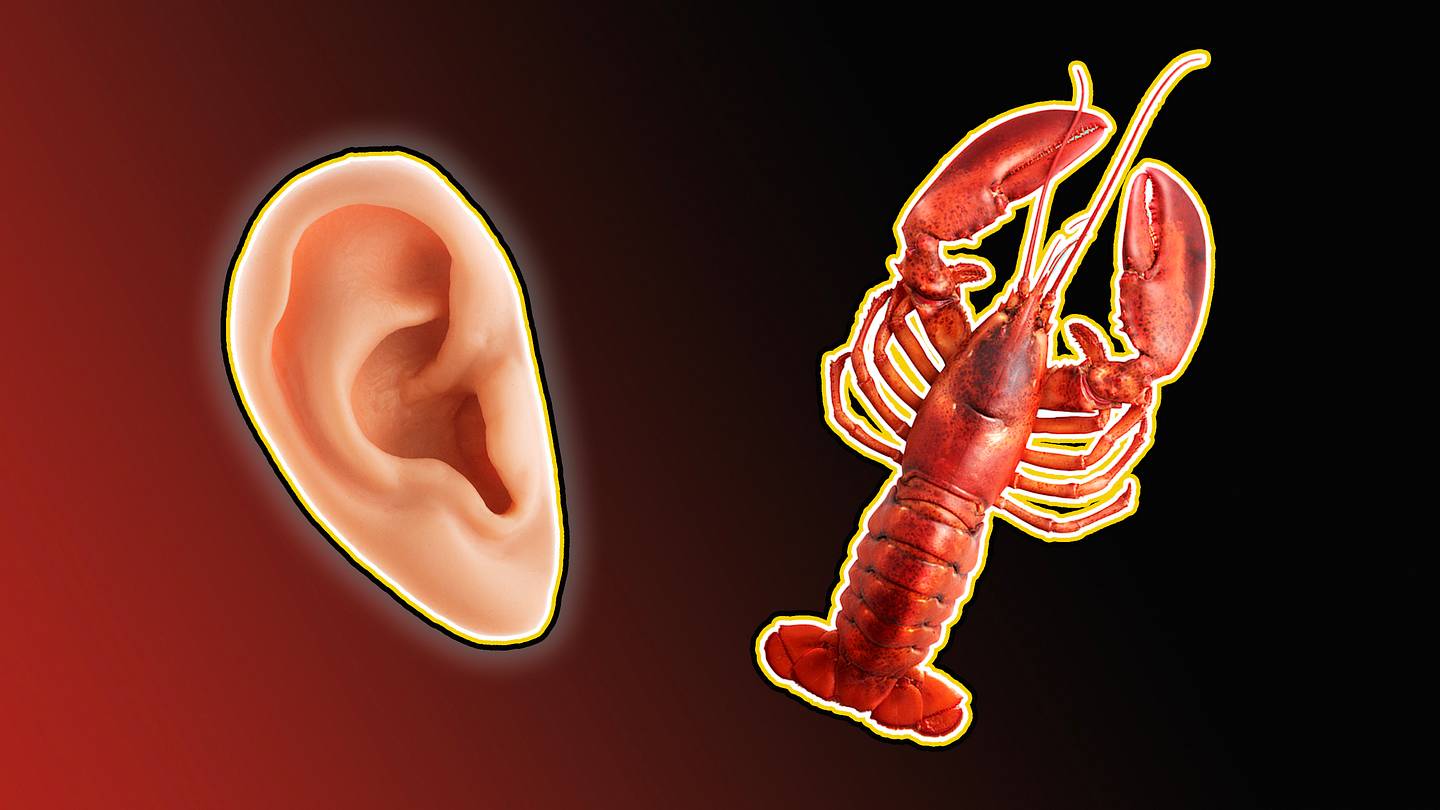
The War of Jenkins’ Ear began in 1739 between Great Britain and Spain. Its name comes from Robert Jenkins, a British sea captain who claimed that Spanish coast guards boarded his ship in 1731 and cut off part of his ear while searching for contraband.
Jenkins later displayed the preserved ear to British officials, and the incident became a powerful piece of political theater. In modern terms, it was less “breaking news” and more “viral outrage with a jar.” British politicians used the story to stir public anger against Spain, and soon a severed ear became a symbol of national insult.
The bigger picture
The real causes were bigger than one sailor’s unfortunate encounter with Spanish maritime enforcement. Britain and Spain were fighting over trade, smuggling, colonial influence, and control in the Caribbean and the Americas. The ear gave the public something vivid to rally around. It was simple, shocking, and much easier to understand than trade agreements, customs enforcement, and imperial competition.
The conflict eventually merged into the larger War of the Austrian Succession. British attacks in the Caribbean, including the major failed assault on Cartagena, showed that the war was no joke once the shooting started. The silly name hides a serious imperial contest.
Still, as war titles go, “The War of Jenkins’ Ear” sounds like something a bored schoolchild invented after losing interest in a textbook. It remains one of history’s best reminders that political branding can make even a complicated war sound like a medical emergency.
3. The Pastry War: France Invaded Mexico Over a Bakery BillSort Of
The strange spark
The Pastry War, fought between France and Mexico from 1838 to 1839, sounds like it should have involved baguettes at dawn. The conflict got its name from a French pastry cook in Tacubaya, near Mexico City, who claimed that Mexican officers had damaged or looted his shop during unrest. He wanted compensation, and France eventually folded his complaint into a much larger demand for payment.
The pastry chef’s claim became the most memorable detail because it is wonderfully ridiculous. A damaged bakery leading to international conflict feels like the plot of a very intense cooking show. But once again, the funny detail was only the frosting on a much heavier cake.
The real recipe for conflict
After independence, Mexico faced political instability, civil disorder, and debt. Foreign residents often complained that their property had been damaged without compensation. France demanded 600,000 pesos, a huge sum at the time, and when Mexico refused, French forces blockaded ports and attacked Veracruz.
Antonio López de Santa Anna, who had been out of power, used the conflict to stage a political comeback after losing a leg during the fighting. That leg later received a ceremonial burial, proving that nineteenth-century politics was somehow both grim and theatrical.
The Pastry War ended after British mediation, with Mexico agreeing to pay France. The conflict is silly in name but serious in meaning: it shows how economic pressure, foreign claims, debt, and national weakness can turn one shopkeeper’s grievance into a military campaign.
If nothing else, it confirms an important rule of history: never anger a great power with a navy, especially if pastries are involved.
4. The Pig War: The Only Casualty Was Deliciously Innocent
The strange spark
The Pig War of 1859 may be the gold medalist of silly wars because it had a perfect absurdity-to-danger ratio. It involved the United States and Britain, a disputed island, an unclear border, armed troops, warships, and one pig who simply wanted potatoes.
The dispute centered on San Juan Island, located between Vancouver Island and what is now Washington State. The Oregon Treaty of 1846 had drawn a border through the “middle of the channel,” but there were multiple channels. Both the United States and Britain claimed the island.
Then came the pig.
How a pig nearly caused an international crisis
On June 15, 1859, American settler Lyman Cutlar shot a pig owned by the Hudson’s Bay Company after finding it rooting in his garden. British authorities threatened action, Americans requested military protection, and soon both sides had forces on the island.
At one point, British warships and American soldiers faced each other in a conflict that could have become a serious war. Fortunately, cooler heads prevailed. The two sides eventually agreed to a joint military occupation rather than a battle. Years later, arbitration awarded the San Juan Islands to the United States.
The Pig War is famous because no humans died. The only casualty was the pig, who accidentally became the most diplomatically significant farm animal in North American history.
The deeper lesson is that unclear treaties are dangerous. A few vague words on paper can become soldiers in the field. Also, potatoes are apparently not worth a war, though the pig might have disagreed.
5. The War of the Stray Dog: A Border Crisis with Four Legs
The strange spark
The War of the Stray Dog, also known as the Incident at Petrich, happened in 1925 between Greece and Bulgaria. According to the most famous version, a Greek soldier chased his dog across the border into Bulgaria and was shot by Bulgarian sentries. Greece then invaded part of Bulgaria near the town of Petrich.
If true in that form, this may be history’s most dramatic case of “Who let the dogs out?” But as with the other conflicts on this list, the border was already tense. Greece and Bulgaria had a history of rivalry, territorial disputes, and suspicion after the Balkan Wars and World War I. The dog was the match, not the powder keg.
How it ended
Bulgaria appealed to the League of Nations, which intervened quickly. Greece was ordered to withdraw and pay compensation. The incident became one of the League’s more successful examples of conflict mediation, though it also revealed how differently powerful and smaller states could be treated in international politics.
This conflict is silly because the image is irresistible: armies mobilizing because one dog took an unscheduled international walk. But it is also a useful warning. Borders are tense places, and when fear is already high, even a small mistake can become a national emergency.
The dog, unfortunately, did not leave a memoir. If it had, the first chapter might have been titled, “I Just Wanted to Sniff Something in Bulgaria.”
6. The Football War: When a Soccer Rivalry Met Real Political Trouble
The strange spark
The Football War, also called the Soccer War or the 100-Hour War, was fought between El Salvador and Honduras in July 1969. The nickname comes from World Cup qualifying matches between the two countries, which inflamed nationalist tensions and sparked violence among fans.
At first glance, a war over soccer sounds absurd, especially to anyone who has ever watched fans argue about a referee’s whistle as if civilization itself were at stake. But the soccer matches did not create the conflict from thin air. They intensified a crisis that already existed.
The real causes behind the nickname
El Salvador had a dense population and limited land. Many Salvadorans had migrated to Honduras, where land reform and anti-immigrant pressure created severe tensions. Political leaders, newspapers, and public anger turned the soccer rivalry into a national symbol. By July 1969, the situation escalated into open military conflict.
The war lasted only about four days, but it caused major casualties, displacement, and long-term political damage. It also showed how sports can become a stage for deeper grievances. A soccer match can be passionate, but when governments and media pour gasoline on old resentments, the scoreboard stops being the real issue.
The Football War deserves a place on this list because its nickname is unforgettable. Still, its real story is not “soccer caused a war.” A better summary is: “Soccer became the loudspeaker for a crisis that leaders failed to manage.” That is less catchy, but much more accurate.
Why Do Silly Wars Happen?
These bizarre historical conflicts have different settings, centuries, and causes, but they share a few patterns. First, the famous trigger is usually symbolic. A bucket, an ear, a pastry shop, a pig, a dog, or a soccer match becomes a convenient object for public anger. People can understand a stolen bucket faster than they can understand decades of political rivalry.
Second, leaders often use small incidents to pursue larger goals. A government under pressure may benefit from an external enemy. A trade dispute may need a dramatic story. A border argument may suddenly become easier to sell if the public believes honor has been insulted.
Third, pride can be wildly expensive. Nobody wants to look weak. Nations, like people, sometimes double down because backing down feels humiliating. The result is that tiny sparks become expensive fires.
Finally, silly wars remind us that history is not always guided by calm strategy. Humans are emotional creatures. We tell stories, take offense, wave flags, and occasionally make terrible decisions over objects that should have stayed in the lost-and-found bin.
Experiences and Reflections: What “6 of History’s Silliest Wars” Teaches Modern Readers
Reading about history’s silliest wars is entertaining because the surface details are so strange. A pig in a potato patch sounds like the beginning of a children’s book. A war named after a pastry chef sounds like a dessert menu got drafted into the army. A stolen bucket sounds like something that should have ended with a stern note from city hall, not a battlefield. But the more you sit with these stories, the more useful they become.
One practical experience modern readers can take from these conflicts is that small disputes become dangerous when nobody wants to lose face. Anyone who has worked in an office, lived with roommates, joined a homeowners association, or watched a family group chat explode over holiday plans knows this pattern. The original issue may be tiny. Someone moved the coffee mugs. Someone parked in the wrong spot. Someone sent a text with the emotional warmth of a tax audit. Suddenly the real issue is no longer the mug, the parking space, or the text. The real issue becomes respect.
That is exactly what happened in many of these wars. The object was not the whole cause; it became a container for wounded pride. The pig represented sovereignty. The pastry claim represented foreign rights and debt. Jenkins’ ear represented British outrage at Spanish interference. The soccer matches represented migration, land pressure, and national identity. When people say, “It’s the principle of the thing,” history quietly reaches for a helmet.
Another lesson is that communication matters before emotions harden into positions. The Pig War ended peacefully because commanders and diplomats eventually chose restraint. The War of the Stray Dog was stopped by outside mediation. These examples show that even ridiculous crises can be defused when someone slows the machinery of escalation. In everyday life, that might mean asking one more question before reacting, checking facts before reposting outrage, or choosing a boring conversation over a dramatic confrontation.
These silly wars also teach media literacy. A catchy story spreads faster than a complicated explanation. “A war over soccer” is memorable. “A war influenced by migration, land reform, nationalism, and political instability, with soccer as a catalyst” is accurate but unlikely to fit on a bumper sticker. Modern readers should enjoy the funny headline, then keep digging. The weird detail gets us interested; the deeper context makes us wiser.
Finally, these stories remind us to laugh carefully. Humor helps history feel human, but it should not erase suffering. People were injured, displaced, and killed in several of these conflicts. The absurdity belongs mostly to the decision-makers, the propaganda, and the chain of escalationnot to the victims. The best way to read these wars is with one eyebrow raised and one foot planted in compassion.
In that sense, “6 of History’s Silliest Wars” is more than a list of strange facts. It is a warning label on human pride. When leaders treat every insult as a national emergency, when people prefer drama over dialogue, and when symbols become more important than lives, even a bucket can become dangerous. History may be funny, but it is rarely joking.
Conclusion
The silliest wars in history prove that human beings are capable of turning almost anything into a crisis if enough pride, fear, politics, and poor communication are involved. The War of the Bucket, the War of Jenkins’ Ear, the Pastry War, the Pig War, the War of the Stray Dog, and the Football War all sound absurd at first. Yet each one reveals deeper tensions beneath the ridiculous nickname.
That is what makes these bizarre historical conflicts so fascinating. They are funny enough to remember, serious enough to study, and strange enough to make us grateful that most modern disagreements do not involve cannons. Ideally, anyway.













