
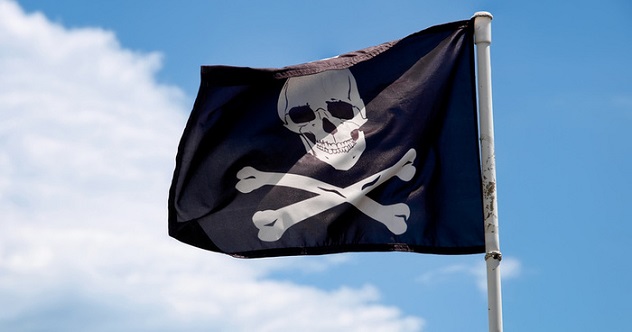
When most people picture pirates, their imagination usually serves up a bearded man with a hat the size of a dinner tray, a suspiciously dramatic coat, and perhaps a parrot with better job security than the crew. But history, being far more interesting than Halloween costumes, tells a different story. Some of the most amazing pirates were women who commanded fleets, negotiated with queens, challenged empires, fought for survival, and occasionally made the men around them look like they had accidentally wandered onto the wrong ship.
The story of female pirates is not just a quirky footnote in maritime history. It is a window into power, trade, gender, rebellion, and survival. Some women became pirates because they were born into seafaring families. Others were pushed by war, politics, poverty, revenge, or a desire for freedom in societies that offered women very little of it. A few became legends so tangled with myth that historians have to squint through centuries of exaggeration to find the person underneath.
This guide explores 10 amazing female pirates from different eras and regions. Some were clearly documented. Others live partly in legend. All of them prove that the history of piracy was never just a boys-only boat club.
Why Female Pirates Still Fascinate Us
Female pirates fascinate readers because they disrupt the usual script. In many historical periods, women were expected to remain on land, manage households, preserve reputations, and absolutely not command armed crews at sea. Yet these women stepped into maritime worlds dominated by commerce, empire, and danger. Some disguised themselves as men. Some ruled openly. Some were described as criminals by their enemies and protectors by their own communities. That tension makes their stories irresistible.
Of course, piracy was not a cute adventure cruise with better hats. It involved theft, coercion, and violence. Still, studying female pirates does not mean celebrating crime. It means looking honestly at how people outside traditional power systems sometimes used the sea as a stage for rebellion, opportunity, and survival.
1. Zheng Yi Sao: The Pirate Queen Who Outsmarted an Empire
If piracy had a championship belt, Zheng Yi Sao would have needed a very large trophy cabinet. Also known in English as Ching Shih, she rose from modest beginnings in southern China to become one of the most powerful pirate leaders in history. In the early 1800s, she helped command the Guangdong Pirate Confederation, a vast organization that operated across the South China Sea.
What made Zheng Yi Sao extraordinary was not simply the number of ships under her influence, though estimates run into the hundreds and sometimes far beyond. Her genius was management. She imposed strict rules, organized fleets by color, controlled distribution of loot, and maintained discipline across a confederation that could have easily collapsed into chaos. In modern business terms, she scaled operations. In pirate terms, she made everyone else look like they were running a lemonade stand with oars.
Her greatest move came in 1810, when she negotiated a settlement with Qing authorities. Instead of ending her life at the end of a rope, she secured amnesty for herself and many followers. That exit strategy alone makes her one of the most successful pirates of all time. Many pirates won battles; Zheng Yi Sao won the retirement plan.
2. Anne Bonny: The Caribbean Rebel With a Legendary Temper
Anne Bonny is one of the most famous female pirates of the Golden Age of Piracy. Born in Ireland and raised partly in the Carolinas, she entered the pirate world through her connection with John “Calico Jack” Rackham. She sailed in the Caribbean in the early 18th century, a time when pirates used the Bahamas and surrounding waters as a base for raids on merchant shipping.
Bonny’s life is difficult to separate from legend, but trial records confirm that she and Mary Read were captured with Rackham’s crew in 1720. Witnesses described them as active participants, not decorative passengers. That detail matters. In popular culture, women near pirates are often written as love interests, hostages, or tavern owners with suspiciously perfect eyeliner. Bonny was accused as a pirate in her own right.
Her sentence was delayed because she was pregnant, and her final fate remains uncertain. Some stories claim she returned to a conventional life; others leave her vanishing into historical fog. Either way, Anne Bonny became a lasting symbol of defiance, especially because she challenged expectations in an era when even stepping onto a pirate ship as a woman was considered shocking.
3. Mary Read: The Soldier-Turned-Pirate Who Refused the Expected Path
Mary Read’s life reads like someone handed history a dramatic novel and said, “Try to keep up.” Raised for part of her childhood as a boy, she later reportedly served in military roles before entering the maritime world. Like Anne Bonny, she eventually sailed with Calico Jack Rackham and was captured in 1720.
Read’s reputation rests on her courage and skill. Contemporary accounts and later retellings emphasize that she fought with determination when Rackham’s crew was taken. While details can be embellished, the court record places her firmly among the accused pirates. She was sentenced to death but avoided immediate execution because she was pregnant. Unlike Bonny, whose ending is uncertain, Mary Read died in jail in Jamaica in 1721.
Her story shows how disguise could function as survival. In a world that sharply limited women’s options, clothing and assumed identity could open doors to wages, mobility, and danger. Mary Read’s life was not a simple adventure tale. It was a complicated journey through gender expectations, war, work, and crime.
4. Grace O’Malley: Ireland’s Sea Queen
Grace O’Malley, also known as Gráinne Ní Mháille, was not a Caribbean pirate in the classic “yo-ho-ho” sense. She was a 16th-century Irish clan leader, trader, seafarer, and power broker whose activities brought her into conflict with English authorities. Born around 1530 into a seafaring family on Ireland’s west coast, she inherited a maritime world of ships, tribute, trade, and clan politics.
O’Malley controlled territory by land and sea. She commanded ships, defended her interests, negotiated alliances, and resisted English expansion during the Tudor period. Her most famous political moment came in 1593, when she met Queen Elizabeth I. Imagine that meeting: two formidable women, neither known for fainting politely when challenged, discussing power across a table shaped by empire and rebellion.
To the English, O’Malley could look like a pirate. To her people, she was a leader protecting clan rights in a changing Ireland. That dual identity is what makes her so compelling. She was not merely stealing cargo; she was navigating a world where politics, trade, and sea power were inseparable.
5. Sayyida al-Hurra: The Mediterranean Corsair Queen
Sayyida al-Hurra ruled Tétouan in northern Morocco during the 16th century and became one of the most powerful female figures in Mediterranean maritime history. Her title, often translated as “free and independent noble lady,” already sounds like the opening line of a very expensive historical drama.
Her life was shaped by the aftermath of the Reconquista, when many Muslims and Jews were forced from Spain. As a ruler, she helped govern a city filled with refugees and political pressure. European sources often described her as a pirate because she supported or organized corsair activity against Spanish and Portuguese interests. In her own context, she could be seen as a defender of her city and a political leader responding to Iberian aggression.
Sayyida al-Hurra also formed an alliance with the famous Ottoman corsair Barbarossa. That alliance connected western Mediterranean corsair networks with broader Ottoman naval power. Her story reminds us that the label “pirate” often depended on who was writing the report. One empire’s pirate could be another community’s protector.
6. Jeanne de Clisson: The Lioness of Brittany
Jeanne de Clisson, known as the Lioness of Brittany, is one of the most dramatic figures in pirate history. A French noblewoman of the 14th century, she reportedly turned to maritime warfare after her husband, Olivier de Clisson, was executed by the French crown during the conflicts surrounding the Breton War of Succession.
According to tradition, Jeanne sold property, raised forces, and attacked French ships in the English Channel. Her ships were said to be painted black with red sails, which is either terrifying psychological warfare or the medieval equivalent of branding. Possibly both.
Some details of her legend are difficult to verify fully, but her reputation as a noblewoman-turned-privateer has endured for centuries. Jeanne’s story is important because it blurs the line between piracy and political war. She was not simply chasing treasure. Her campaign was tied to revenge, loyalty, and the brutal politics of medieval France.
7. Rachel Wall: America’s Female Pirate of New England
Rachel Wall stands out because of her connection to early American history. Born Rachel Schmidt in Pennsylvania, she later lived in Boston and became associated with piracy along the New England coast. Her story is partly drawn from confessions and later accounts, which means historians handle some details carefully.
According to traditional accounts, Rachel and her husband George Wall were involved in schemes that targeted ships near the Isles of Shoals. One story says they used storm-damaged appearances to lure vessels close before robbing them. Whether every part of the legend is accurate or not, Rachel Wall became known as one of the few women linked to piracy in what became the United States.
Her end was bleak. She was convicted not for piracy but for highway robbery after stealing a bonnet and was executed in Boston in 1789. Her story is less glamorous than many pirate legends, but that is exactly why it matters. It shows how poverty, crime, gender, and public punishment intersected in early American society.
8. Lady Mary Killigrew: The Cornish Pirate Aristocrat
Lady Mary Killigrew, also known as Mary Wolverston, belonged to a powerful Cornish family connected to seafaring, politics, and privateering. In Elizabethan England, the line between respectable maritime enterprise and piracy could become as blurry as a sailor’s handwriting after a long night ashore.
Killigrew is associated with pirate activity around the Cornish coast. Her family’s position gave her access to ships, influence, and local networks. Some accounts describe her involvement in the seizure of a merchant vessel, though the details of her life are often tangled with stories of other women in the Killigrew family.
What makes Lady Mary fascinating is the way piracy could hide behind status. Not every pirate lived in a rough harbor tavern. Some lived in grand houses, knew the right officials, and understood that paperwork could be as useful as a pistol. Her story reveals the respectable face that maritime crime could sometimes wear.
9. Anne Dieu-le-Veut: The Buccaneer With a Name Like a Challenge
Anne Dieu-le-Veut was a French woman associated with Caribbean buccaneering in the late 17th century. Her name is often translated as “Anne God-Wills-It,” which is a spectacularly confident nickname. If someone introduces herself that way, you should probably not argue over the dinner bill.
She is connected in tradition with the famous buccaneer Laurens de Graaf. Stories say she challenged him after the death of a husband and later married him. Some details are likely embellished, but historians generally treat Anne Dieu-le-Veut as a real figure whose legend grew with time.
Her story matters because it shows how women could be present in the pirate and buccaneer communities of the Caribbean, not merely as background figures. The Caribbean was a fluid world of colonies, privateering commissions, shifting loyalties, and outlaw economies. Anne’s reputation grew from that unstable environment, where courage and audacity could become currency.
10. Jacquotte Delahaye: The Pirate Legend With a Red-Haired Reputation
Jacquotte Delahaye is one of the most colorful names in female pirate lore, but she must be approached with caution. She is often described as a 17th-century pirate from Saint-Domingue who faked her death, returned under a new identity, and earned the nickname “Back from the Dead Red.” That is a nickname so cinematic it practically arrives with its own theme music.
The problem is evidence. Many historians consider Jacquotte partly or largely legendary. Her story appears in later retellings, and firm documentation is limited. Still, she remains part of the cultural history of female pirates because legends also reveal what societies want to imagine: a woman who survives betrayal, reinvents herself, and commands fear on the sea.
Including Jacquotte in a list of amazing female pirates is not the same as claiming every story about her is proven. Instead, she represents the powerful space between history and folklore. Sometimes the legend of a pirate tells us almost as much as the archive does.
What These Female Pirates Had in Common
These women came from different centuries, cultures, and political worlds, but several patterns connect them. First, many operated during periods of instability. War, colonial expansion, weak maritime enforcement, and contested trade routes created opportunities for piracy and privateering. The sea became a place where official authority was present but inconsistent.
Second, many female pirates were excellent strategists. Zheng Yi Sao organized a massive confederation. Grace O’Malley negotiated with English power while defending Irish clan interests. Sayyida al-Hurra balanced city governance with Mediterranean naval pressure. These women were not simply dramatic personalities. They were political operators.
Third, their stories were shaped by the people who recorded them. Male officials, colonial authorities, sensational writers, and later storytellers often exaggerated, moralized, or romanticized female pirates. That means modern readers must enjoy the drama while asking careful questions. Who wrote this story? What did they want readers to believe? What facts can be checked?
Female Pirates and the Problem of Myth
Pirate history is full of myth. Walking the plank, buried treasure maps, and parrots with flawless comic timing are often more fiction than fact. Female pirates face an extra layer of myth because their lives were considered unusual by the standards of their time. Writers often turned them into warnings, temptresses, monsters, or heroines.
Anne Bonny and Mary Read, for example, are real historical figures, but many popular details about their private lives come from later stories rather than solid records. Jeanne de Clisson’s revenge narrative is powerful, but some of the most vivid details are difficult to prove. Jacquotte Delahaye may be more legend than documented biography. A good reader can still appreciate these stories while keeping one eyebrow raised like a skeptical ship captain.
Experiences and Reflections: What We Can Learn From 10 Amazing Female Pirates
Reading about 10 amazing female pirates is a strangely practical experience. No, the lesson is not “buy a ship and start menacing trade routes.” Please do not make your career counselor nervous. The real lesson is about how people respond when the rules of their world leave them with limited choices. These women lived in societies where wealth, law, inheritance, mobility, and political authority were usually controlled by men. The sea, dangerous as it was, created openings that land-based society often refused to provide.
One experience that stands out when studying female pirates is how quickly the simple label “pirate” becomes complicated. Grace O’Malley looks different depending on whether you view her from the perspective of English officials or Irish clan politics. Sayyida al-Hurra looks different depending on whether the source is Spanish, Portuguese, Moroccan, or modern. Zheng Yi Sao was a criminal leader, yes, but also a brilliant organizer who understood negotiation better than many official commanders. The same person can be villain, rebel, ruler, survivor, and strategist depending on where you stand on the shore.
Another reflection is that pirate stories teach media literacy. Many of the most popular tales are partly built from sensational books, courtroom drama, folklore, and national memory. That does not make them useless. It makes them interesting. When readers compare museum sources, legal records, encyclopedia entries, and modern retellings, they learn to separate documented facts from spicy storytelling sauce. And pirate history has a lot of sauce. Some of it is delicious. Some of it needs a warning label.
These stories are also useful for writers, teachers, students, and history lovers because they make the past feel alive without flattening it into fantasy. A classroom discussion about Zheng Yi Sao can lead to questions about Qing China, maritime trade, gender, and state power. A discussion of Anne Bonny and Mary Read can lead to legal history, colonial Jamaica, and how women were represented in crime narratives. Grace O’Malley opens the door to Tudor Ireland and the politics of empire. In other words, female pirates are not just “cool characters.” They are entry points into serious history wearing extremely memorable boots.
Finally, there is a human experience in these stories: the desire to be more than what society permits. That does not excuse piracy, but it helps explain why these women remain fascinating. They were bold, flawed, strategic, and sometimes frightening. They made choices under pressure. They took risks. They became symbols because they refused to remain invisible. Centuries later, readers still lean closer when their names appear. That is the power of a good historical story: it does not ask us to approve of every action; it asks us to pay attention.
Conclusion: The High Seas Were Never Men-Only
The history of female pirates is bigger, stranger, and more global than many people realize. From Zheng Yi Sao’s vast South China Sea confederation to Grace O’Malley’s Irish strongholds, from Sayyida al-Hurra’s Mediterranean power to Anne Bonny and Mary Read’s Caribbean notoriety, these women challenged the limits placed on them. Some were rulers. Some were rebels. Some were criminals. Some were legends. All of them made history harder to simplify.
What makes these amazing female pirates unforgettable is not just that they sailed, fought, commanded, or survived. It is that their stories force us to rethink who gets remembered in maritime history. The sea was never empty of women. The archives just needed better lighting.













