
Note: This article is based on an anonymous viral wedding account and uses the story as a lens to discuss trust, infidelity, wedding-day doubts, emotional boundaries, and the messy human reality of calling off a marriage after “I do.”
Every wedding has a few expected disasters. Someone’s uncle gives a speech that should have been reviewed by legal counsel. A flower girl decides the aisle is a runway. The cake leans like it has read the news. But one bride’s reported wedding-day nightmare went far beyond ordinary chaos when she allegedly overheard her brand-new husband confessing something no spouse should ever hear, then discovered secret texts that made the entire marriage look less like a love story and more like a badly written crime scene with centerpieces.
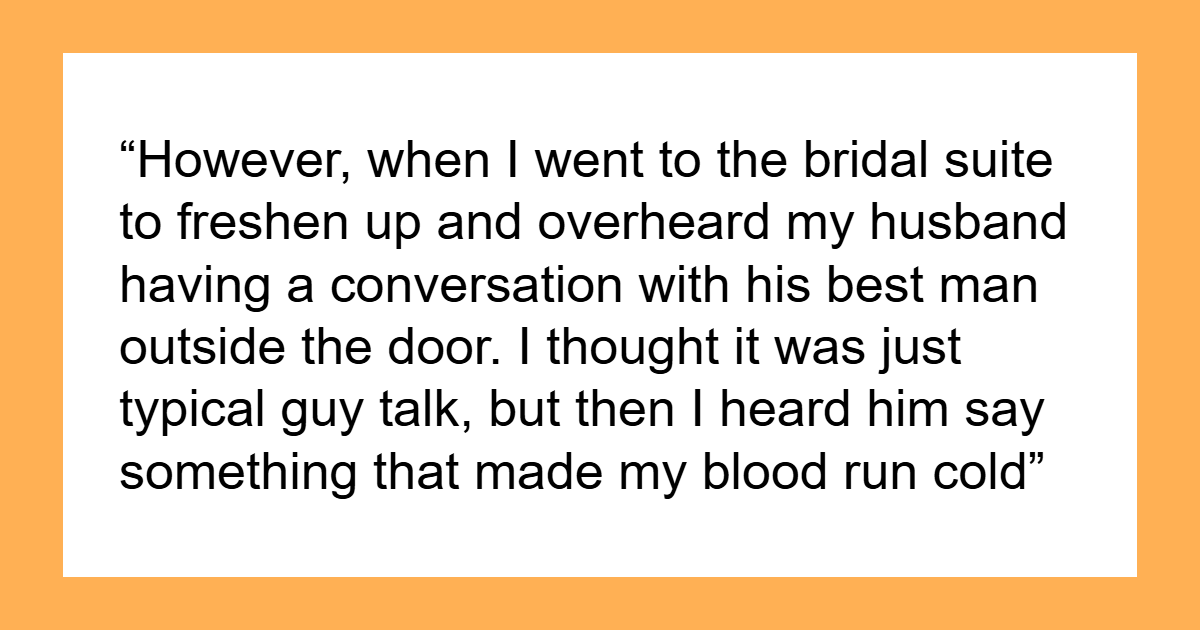
According to the viral account, the bride had just married the man she believed was her forever person. The ceremony was beautiful, the reception was rolling, and everyone seemed ready to toast the beginning of a happy life together. Then, during a quiet moment away from the crowd, she reportedly overheard her husband speaking with his best man. What she heard shattered the glittery wedding-day bubble: he allegedly admitted he did not truly love her and had married her because it seemed like “the right thing to do.”
As if that confession were not already a five-alarm emotional fire, the story took another turn when his phone allegedly revealed secret, explicit messages suggesting an affair. At that point, the bride did not make a dramatic speech, throw champagne, or challenge him in front of 150 guests and one extremely confused DJ. She quietly left her own wedding.
And honestly? The internet did what the internet does best: it formed a courtroom, jury, emotional support group, and popcorn committee in under six minutes.
The Wedding-Day Confession That Changed Everything
In the reported story, the bride’s world collapsed in two stages. First came the confession. The groom allegedly told his best man that he had gone through with the marriage out of duty rather than love. That alone would be devastating. Marriage is not a group project where one person shows up because the deadline is tonight. A wedding vow is supposed to be a promise, not a shrug in formalwear.
The second stage was the phone. After hearing the conversation, the bride reportedly saw messages that suggested her husband had been carrying on a secret relationship. These were not vague “how’s your day?” texts that could be explained away as harmless. The account describes messages intimate enough to turn suspicion into heartbreak.
This combination matters. Cold feet before a wedding can happen. Nervousness before a huge life commitment is not automatically a red flag. But secretly admitting you do not love your spouse while hiding an affair is not cold feet. That is the emotional equivalent of arriving at the airport with three fake passports and asking everyone to trust the itinerary.
Why This Story Hit Such a Nerve Online
Stories like this explode online because they sit at the intersection of three things people fear most in love: public humiliation, private betrayal, and the terrible possibility that the person beside you is performing devotion instead of feeling it.
Weddings are public rituals. They invite families, friends, money, photographs, traditions, and expectations into one room. That is why leaving a wedding can feel almost impossible, even when leaving is the healthiest choice. The pressure to “not make a scene” can be enormous. But sometimes the scene already exists. Walking away simply refuses to keep acting in it.
In this case, readers were not just reacting to cheating. They were reacting to timing. Betrayal before marriage is painful. Betrayal on the wedding day feels cinematic in the worst way. It turns the white dress, the vows, the first dance, and the “just married” sign into props in a lie.
Was Leaving the Wedding an Overreaction?
Based on the details in the viral account, calling her exit an overreaction misses the point. She reportedly had two pieces of information at once: her husband’s private admission that he lacked genuine love for her, and evidence of secret texts suggesting infidelity. That is not one awkward comment. That is a collapse of trust.
When someone discovers betrayal, especially in a high-pressure public setting, the body can go into survival mode. Some people confront. Some freeze. Some try to smile through it because Aunt Linda flew in from Arizona and the salmon has already been plated. Others leave. None of these reactions are automatically irrational. They are human responses to shock.
Leaving gave the bride immediate space. It removed her from the performance of celebration and from a room full of people who might have pressured her to “talk it out” before she had even finished processing what happened. In moments like that, privacy is not drama. It is oxygen.
The Difference Between Wedding Jitters and Real Red Flags
One reason this story resonates is that many engaged people have moments of fear before marriage. They wonder whether they are ready, whether married life will change things, whether the seating chart is a government experiment, and whether spending $400 on napkins was a sign of temporary insanity.
Normal wedding jitters often sound like: “This is a big step,” “I hope we’re ready,” or “I’m nervous about the future.” Those thoughts can be addressed with honest conversation, counseling, and reflection.
Real red flags sound different. They include secrecy, contempt, hidden relationships, pressure to marry despite serious doubts, and dismissive conversations behind a partner’s back. When a person says one thing at the altar and another thing in private, the issue is not nerves. It is integrity.
Healthy Doubt Asks Questions
Healthy doubt can lead to better communication. A couple might pause and discuss finances, children, family boundaries, religion, sex, career plans, or emotional expectations. These conversations are not always romantic, but neither is discovering after the honeymoon that your spouse thinks “budgeting” means buying whatever is on sale and calling it savings.
Dangerous Doubt Hides the Truth
Dangerous doubt hides. It performs certainty in public while feeding resentment in private. It lets one person make life-altering commitments without full information. In the viral bride’s case, the alleged secret texts made the situation far more serious because they suggested not just uncertainty but active deception.
Secret Texts and the Modern Betrayal Problem
Technology has changed how betrayal is discovered. In older eras, people found lipstick on collars, mysterious receipts, or love letters tucked in drawers. Today, betrayal often arrives through a buzzing phone on a dresser, a notification preview, a hidden app, or a message thread that reads like a tiny courtroom exhibit.
Secret texts are powerful because they reveal patterns. A single suspicious message may be ambiguous. A long thread can show tone, intent, timing, emotional intimacy, sexual secrecy, and planning. That is why phone discoveries often feel so devastating: they do not only expose one action; they expose a hidden version of the relationship.
Still, it is worth saying clearly: healthy relationships are not built on constant surveillance. The point is not that partners should become full-time detectives with better lighting. The point is that secrecy corrodes trust. When someone hides a whole emotional or physical connection while making marriage vows, they are asking their partner to consent to a relationship that does not actually exist.
Why Family Reactions Can Make Betrayal Even Harder
In many viral stories like this, the betrayed person faces a second wave of pain: family opinions. Some relatives support the decision to leave. Others focus on embarrassment, money, guests, tradition, or the idea that “marriage takes work.”
Marriage does take work. So does dental surgery, but that does not mean you let someone perform it with a soup spoon. Effort is not the same as tolerating deception. Working through a relationship crisis requires honesty, remorse, accountability, and safety. If those basics are missing, pressure to stay can become another form of harm.
Family members may also react from panic. Weddings are expensive. Guests are present. Parents may feel humiliated. But the cost of a canceled reception is not the same as the cost of building a life on a lie. One is financially painful. The other can reshape years of emotional well-being.
What Should Someone Do After Discovering Wedding-Day Betrayal?
No one plans for this kind of moment. There is no cute Pinterest checklist titled “What To Do If Your Groom Confesses Something Horrible Between The Salad Course And The First Dance.” But there are practical steps that can help someone regain control.
1. Get Somewhere Safe and Private
The first priority is emotional and physical safety. That might mean leaving with a trusted friend, going to a hotel, staying with family, or simply stepping into a private room away from the crowd. A person in shock should not be forced into a public confrontation for everyone else’s convenience.
2. Preserve Evidence Without Spiraling
If legal separation, annulment, divorce, or financial disputes may follow, evidence can matter. Screenshots, timelines, contracts, and written communication may help later. But there is a difference between preserving information and torturing yourself by rereading every message until sunrise. The brain in heartbreak mode is already running enough tabs.
3. Avoid Immediate Pressure to Reconcile
The person who betrayed the relationship may panic, apologize, cry, blame nerves, blame alcohol, blame fear, blame Mercury in retrograde, or suddenly discover a deep vocabulary of remorse. Apologies can be meaningful, but the betrayed partner does not owe instant forgiveness. Time and distance are reasonable.
4. Talk to a Lawyer if the Marriage Was Legally Completed
If vows were exchanged and paperwork was filed, the legal options depend on state law. Some situations may involve divorce; some may raise questions about annulment, especially where fraud or misrepresentation is alleged. Because laws vary, anyone facing this situation should speak with a qualified family law attorney rather than relying on comment-section wisdom from a person named “TruthBomb_87.”
5. Let Guests Know Simply
If a wedding is canceled or a reception ends abruptly, guests do not need a documentary-length explanation. A short message can be enough: “The wedding celebration has ended due to a private matter. Thank you for your love and understanding.” People who truly care will not need the gossip buffet opened immediately.
Can a Relationship Recover After This?
Some relationships recover after infidelity, but recovery is not powered by flowers, tears, or dramatic hallway apologies. It requires the unfaithful partner to take full responsibility, end the outside relationship, answer hard questions honestly, accept boundaries, and commit to long-term repair. It also requires the betrayed partner to decide whether rebuilding is even desirable.
In the reported bride’s case, the timing and the alleged confession would make recovery especially difficult. The problem was not only cheating. It was the suggestion that the groom entered marriage without the love and honesty the bride believed existed. That changes the foundation. You cannot simply repaint a house if the basement is full of raccoons wearing tiny betrayal hats.
Forgiveness, if it happens, is personal. Reconciliation is optional. A betrayed spouse may forgive and still leave. That distinction matters. Forgiveness can be about releasing emotional poison; reconciliation is about deciding whether the relationship is safe enough to continue.
The Bigger Lesson: Public Commitment Requires Private Honesty
Weddings are public promises, but marriages are lived in private. The vows matter because they are supposed to match what happens when no one is watching. If the private reality is full of hidden messages, secret doubts, and conversations that humiliate the partner, the public ceremony becomes theater.
This is why honesty before marriage is not optional. Couples should discuss doubts before the wedding day, not whisper them to a best man after the vows. They should define cheating before boundaries are broken, not after someone claims a secret thread “didn’t mean anything.” They should be brave enough to postpone a wedding if serious issues remain unresolved.
Postponing a wedding is painful. Canceling one is harder. But marrying under false pretenses can be worse. A delayed wedding can be rescheduled. A broken sense of trust takes much longer to rebuild.
Related Experiences: What People Learn After Walking Away From a Wedding-Day Betrayal
People who walk away from a wedding or engagement often describe the aftermath as a strange mix of grief, embarrassment, relief, and logistical nonsense. One moment they are mourning the future they imagined. The next, they are arguing with a venue about chair covers. Heartbreak may be poetic in movies, but in real life it often comes with cancellation fees and 47 unread messages from cousins.
A common experience is the shock of losing not just a partner but an entire planned identity. The bride was not only preparing to be someone’s wife; she may have imagined a shared home, holidays, children, traditions, vacations, and ordinary Tuesday nights. When betrayal appears, all of that vanishes at once. People sometimes grieve the imagined marriage as much as the actual relationship.
Another experience is social pressure. Friends and relatives may ask intrusive questions, offer opinions, or push for reconciliation because they are uncomfortable with unresolved pain. The betrayed person can feel forced to manage everyone else’s emotions while barely managing their own. That is why a small circle of trusted people matters. One calm friend who can say, “You do not have to explain everything today,” is worth more than a ballroom full of unsolicited advice.
There is also the practical cleanup. Gifts may need to be returned. Vendors may need to be contacted. Joint accounts, leases, honeymoon bookings, insurance plans, and legal documents may need review. These chores can feel cruelly ordinary. But each completed task can also become a small act of self-rescue. Canceling the honeymoon is not just admin; it is a step away from a false future.
Emotionally, many people replay the warning signs. They ask themselves how they missed the secrecy, why they trusted so much, or whether they should have known earlier. This self-blame is common, but it is not always fair. Deception works because one person hides and the other person trusts. Trusting someone you love is not stupidity. It is part of love. The responsibility for betrayal belongs to the person who betrayed.
Over time, the experience can become a painful but clarifying turning point. Some people discover stronger boundaries. Some learn to ask direct questions earlier. Some stop confusing chemistry with character. Some realize that being single after a canceled wedding is not failure; it is freedom arriving in an outfit nobody planned.
The bride in this viral account may have left a room full of guests, but symbolically, she walked toward herself. That is the part readers responded to. Not the drama, not the texts, not even the confession. The power of the story is that when the truth appeared, she did not stay to protect the illusion. She chose reality, even when reality was humiliating, expensive, and heartbreaking.
Conclusion
The story of a bride fleeing her own wedding after overhearing her husband’s vile confession and finding secret texts is shocking because it breaks the fantasy of what a wedding day is supposed to be. But beneath the drama is a serious lesson: love cannot survive on performance. A marriage needs honesty before the vows, accountability after mistakes, and enough respect that neither person is secretly auditioning for a different life.
If the reported details are accurate, the bride’s decision to leave was not a theatrical overreaction. It was a boundary. It was the moment she stopped participating in a celebration built on information she no longer believed was true. And sometimes, the bravest walk down the aisle is not the one toward the altar. It is the one out the door when the truth finally speaks louder than the music.














