
A smoke detector is the tiny ceiling hockey puck that everyone ignores until it starts screaming at 2:17 a.m. because someone made “artisan toast.” Annoying? Sometimes. Life-saving? Absolutely. The best smoke detectors give your family early warning, reduce nuisance alarms, and make home safety feel less like a chore and more like a smart, low-maintenance habit.
Choosing the right smoke alarm is not as simple as grabbing the cheapest one near the checkout lane. Today’s best smoke detectors include hardwired models, battery-powered alarms, dual-sensor units, smart smoke and carbon monoxide detectors, and wireless interconnected systems that make every alarm in the house sound when one detects danger. That matters because a fire starting in the basement should not wait politely for smoke to wander upstairs before waking you up.
This guide focuses on real-world home protection: sensor type, interconnection, power source, false-alarm control, ease of installation, smart alerts, carbon monoxide detection, and long-term value. Whether you own a large house, rent an apartment, are replacing expired alarms, or want smart notifications while you are away, these five smoke detectors stand out for practical home safety.
Quick Picks: Best Smoke Detectors for 2026
- Best Overall Smoke Detector: First Alert SM300-AC Interconnect Hardwire Dual-Sensor Smoke Alarm
- Best Smoke and Carbon Monoxide Alarm for Most Homes: First Alert SMCO210 10-Year Battery Smoke & CO Alarm
- Best Smart Smoke Detector for Ring Users: Kidde Smart Smoke + Carbon Monoxide Alarm with Ring
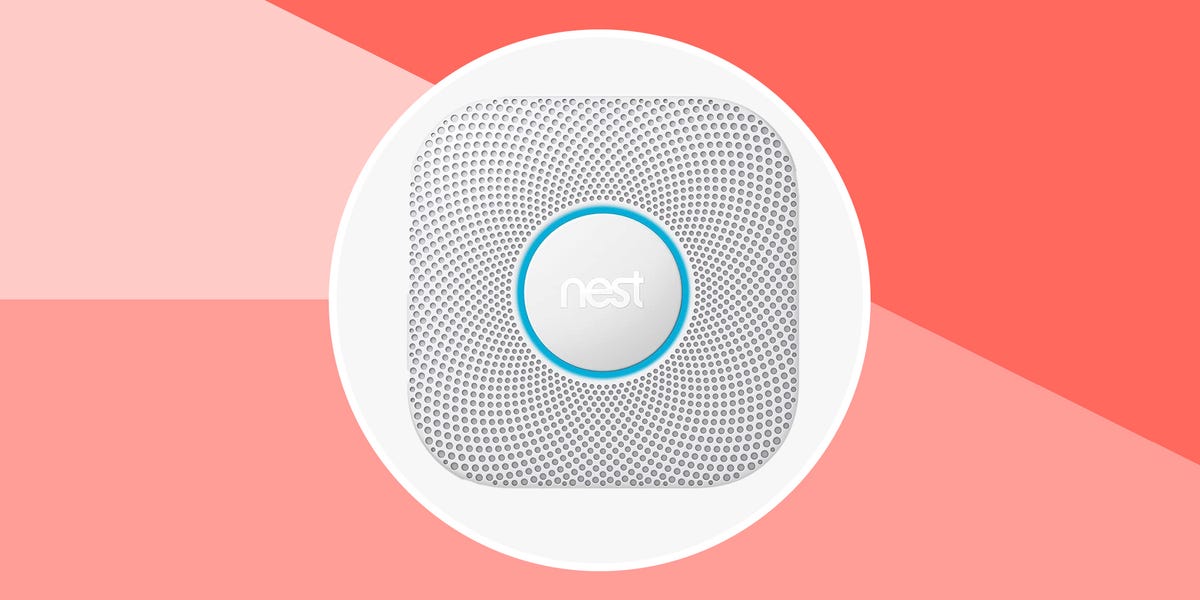
- Best Google Home/Nest Protect Replacement: First Alert SC5 Smart Smoke & Carbon Monoxide Alarm
- Best Wireless Interconnected Smoke Detector System: X-Sense SC07-W Wireless Interconnected Smoke & CO Alarm
What Makes a Smoke Detector Worth Buying?
The best smoke detector is not always the most expensive one. A good smoke alarm should detect fires quickly, alert loudly, be easy to test, and fit the layout of your home. In many homes, the biggest upgrade is not “smart” technology; it is interconnection. When one alarm sounds, all compatible alarms sound. That gives people in bedrooms, upstairs rooms, basements, and far corners of the house more time to react.
Sensor type also matters. Photoelectric sensors are generally better at detecting slow, smoldering fires, such as smoke from overheated upholstery. Ionization sensors are generally faster with flaming fires. Dual-sensor alarms combine both technologies, while combination smoke and carbon monoxide detectors add protection against CO, an invisible gas that deserves its own villain music.
For best protection, homes should have smoke alarms inside bedrooms, outside sleeping areas, and on every level, including basements. Alarms should be tested monthly and replaced when they reach end of life, usually after 10 years. If your smoke detector is old enough to have watched DVD rentals become streaming, it is probably time to retire it.
The 5 Best Smoke Detectors to Protect Your Home
1. First Alert SM300-AC Interconnect Hardwire Dual-Sensor Smoke Alarm Best Overall
The First Alert SM300-AC is the best smoke detector for homeowners who want strong, traditional protection without turning the ceiling into a tech conference. It is hardwired, includes battery backup, supports interconnection with compatible alarms, and uses dual-sensor technology to help detect both fast-flaming and slow-smoldering fires.
That mix is the reason it earns the top spot. Hardwired power means you are not relying only on a battery. Battery backup means the alarm still protects during a power outage. Interconnection means one alarm can trigger the rest of the system. Dual sensors give broader fire detection coverage than a single-sensor smoke alarm.
This model is especially useful for homeowners replacing older hardwired alarms. If your house already has interconnected wiring, a compatible hardwired alarm can keep whole-home coverage intact. It is a practical choice for bedrooms, hallways, living areas, and multi-level homes.
Best for: Homeowners who want a dependable hardwired smoke detector with broad fire detection.
Key features: Dual smoke sensors, hardwired power, battery backup, interconnect capability, loud 85 dB alarm, and end-of-life warning.
Possible drawback: Installation may require working with existing wiring. If you are not comfortable with electrical work, hiring a qualified electrician is the safer route.
2. First Alert SMCO210 10-Year Battery Smoke & CO Alarm Best for Most Homes
The First Alert SMCO210 is a smart choice for households that want two essential protections in one device: smoke detection and carbon monoxide detection. It uses photoelectric smoke sensing and electrochemical CO sensing, and it runs on a sealed 10-year battery. Translation: no annual battery hunt, no mystery drawer full of half-used 9-volts, and fewer “chirp of doom” moments at midnight.
This alarm works well for apartments, bedrooms, hallways, and homes where hardwiring is not available or convenient. The sealed battery design is particularly helpful for renters and homeowners who want simple installation. Mount it, test it, and let it do its job.
The SMCO210 is not a smart alarm, but not every device in your home needs Wi-Fi. Sometimes the best technology is the one that does not require an app update before breakfast. For many households, this is the most practical balance of safety, simplicity, and value.
Best for: Renters, small homes, bedrooms, and anyone who wants smoke and carbon monoxide protection without hardwiring.
Key features: Combination smoke and CO detection, photoelectric smoke sensor, electrochemical CO sensor, 10-year sealed battery, slim profile, and low-maintenance design.
Possible drawback: It is standalone, so it does not offer whole-home interconnection or mobile alerts.
3. Kidde Smart Smoke + Carbon Monoxide Alarm with Ring Best Smart Smoke Detector for Ring Users
The Kidde Smart Smoke + Carbon Monoxide Alarm with Ring is built for people who already live in the Ring ecosystem or want phone alerts without adding a complicated hub. It connects to the Ring app and can send notifications for smoke, carbon monoxide, and low battery warnings. If you have ever left the house and wondered, “Did I hear something beeping?” this is the type of smart alarm that reduces that anxiety.
This model is particularly appealing because it blends traditional life-safety features with modern convenience. It is available as a hardwired alarm with battery backup, and compatible models can interconnect so alarms sound together. Voice alerts can also make emergencies clearer than a generic beep, especially in a stressful moment when everyone is half awake and one person is asking, “Is that the microwave?”
The Ring integration is the star feature. It can alert your phone when the alarm detects a problem, which is useful if you are at work, traveling, or walking the dog. Optional monitoring may be available depending on your Ring plan and location, but the alarm itself should never be treated as a replacement for calling emergency services when there is danger.
Best for: Ring users, smart-home fans, and homeowners who want remote alerts for smoke and carbon monoxide.
Key features: Ring app notifications, smoke and CO detection, voice alerts, hardwired power with backup battery, interconnection support, and reduced nuisance-alarm technology.
Possible drawback: Smart notifications depend on Wi-Fi, app setup, and mobile service. The physical alarm is still the primary safety feature.
4. First Alert SC5 Smart Smoke & Carbon Monoxide Alarm Best Google Home and Nest Protect Replacement
The First Alert SC5 is one of the most important smart smoke detectors for former Google Nest Protect users. With Nest Protect discontinued, many homeowners need a replacement that still works with Google Home and fits into a similar smart safety routine. The SC5 was designed to serve that role, offering smart smoke and carbon monoxide detection with app support and voice alerts.
The SC5 comes in hardwired and battery-powered versions, which makes it flexible for different home setups. It supports Wi-Fi connection, app-based alerts, voice notifications, and compatibility with existing Nest Protect devices through Google Home in supported configurations. That makes it a strong option for people who already built their safety setup around Google’s ecosystem.
Compared with a basic smoke alarm, the SC5 is more expensive. But its value is strongest in homes where smart alerts, Google Home integration, and smooth Nest Protect replacement matter. If your old Nest Protect is reaching its 10-year expiration date, replacing it is not optional. Smoke alarm sensors age, and safety devices are not collectibles.
Best for: Google Home users and households replacing expired Nest Protect alarms.
Key features: Smart smoke and CO detection, Google Home compatibility, voice alerts, Wi-Fi connection, hardwired or battery options, and 85 dB alarm output.
Possible drawback: It is best suited for Google-centered homes. If you use Ring or Alexa heavily, Kidde’s Ring-enabled alarm may fit better.
5. X-Sense SC07-W Wireless Interconnected Smoke & CO Alarm Best Wireless Interconnected System
The X-Sense SC07-W is the best smoke detector system for people who want interconnected alarms without opening walls or running new wires. Each unit detects smoke and carbon monoxide, and the alarms can wirelessly connect so that when one sounds, the others sound too. That is a big deal in larger homes, townhouses, basements, garages near living spaces, and layouts where a single alarm may not wake everyone quickly.
This system is also attractive because it is expandable. You can place alarms across sleeping areas, hallways, and multiple floors, then link them into a network. Many homeowners underestimate how far sound must travel at night. A wireless interconnected system solves that problem better than scattered standalone alarms.
The SC07-W also includes a 10-year battery, photoelectric smoke sensor, electrochemical carbon monoxide sensor, and display. For homes without existing hardwired interconnects, it offers a strong middle ground: more protection than basic standalone alarms, but easier installation than rewiring the house.
Best for: Larger homes, older homes without hardwired interconnects, and families wanting whole-home alerts without major installation work.
Key features: Wireless interconnection, smoke and CO detection, 10-year battery, digital display, photoelectric smoke sensor, and expandable system design.
Possible drawback: It does not integrate as deeply with major smart-home platforms as some Wi-Fi smart alarms.
Smoke Detector Buying Guide: How to Choose the Right One
Choose Interconnected Alarms Whenever Possible
If there is one upgrade worth prioritizing, it is interconnection. In a connected system, a fire detected in one area triggers alarms throughout the home. This is especially important in multi-story homes, homes with basements, and houses where bedrooms are far from kitchens, laundry rooms, or garages.
Understand Photoelectric, Ionization, and Dual-Sensor Alarms
Photoelectric smoke alarms are strong choices near living areas and bedrooms because they respond well to smoldering fires. Ionization alarms are responsive to fast-flaming fires. Dual-sensor models combine both. For whole-home safety, many experts recommend either using dual-sensor alarms or mixing alarm types in appropriate locations.
Do Not Ignore Carbon Monoxide Protection
If your home has fuel-burning appliances, a fireplace, an attached garage, or gas heating, carbon monoxide detection is essential. Combination smoke and carbon monoxide alarms save space and simplify maintenance. Just remember: smoke and CO are different dangers, so the alarm must be designed to detect both.
Look for Current Safety Standards
Modern smoke alarms are designed to meet updated performance standards, including requirements intended to reduce nuisance alarms from cooking while still detecting real fires quickly. That matters because people often disable alarms that go off too often. A smoke detector with better nuisance-alarm resistance is not just more convenient; it is more likely to stay installed and working.
Match the Power Source to Your Home
Hardwired alarms are excellent for permanent installations and whole-home interconnection. Battery-powered alarms are easier to install and ideal for apartments, rentals, older homes, and extra coverage areas. Sealed 10-year battery alarms reduce maintenance, while replaceable-battery models may cost less upfront.
Where to Install Smoke Detectors
Install smoke detectors inside every bedroom, outside each sleeping area, and on every level of the home. For best results, mount alarms on ceilings or high on walls according to the manufacturer’s instructions. Keep smoke alarms away from windows, vents, ceiling fans, and drafty areas that may interfere with smoke reaching the sensor.
Kitchen placement requires judgment. You want protection nearby, but not so close that normal cooking triggers constant false alarms. A good rule is to keep smoke alarms at least 10 feet from cooking appliances when possible. If your smoke alarm goes off every time you sear a steak, the alarm may be poorly placed, overly sensitive, outdated, or simply tired of your cooking career.
Maintenance Tips That Actually Matter
Testing smoke alarms monthly is simple and worth doing. Press the test button and confirm the alarm sounds clearly. Replace batteries when needed unless the unit has a sealed battery. Clean alarms gently according to the manual, because dust can interfere with sensing. Most importantly, replace the entire smoke detector after 10 years or sooner if the manufacturer requires it.
Do not paint over smoke alarms. Do not remove batteries because of nuisance alarms. Do not ignore end-of-life chirps. And absolutely do not treat an expired smoke detector as “probably fine.” Safety equipment has a lifespan for a reason.
Real-World Experience: What Homeowners Learn After Living With Smoke Detectors
Smoke detectors are one of those home products that seem boring until they become the most important device in the house. After living with different alarm types, one lesson becomes obvious: placement matters almost as much as the product itself. A premium smoke detector installed in the wrong spot can become a nuisance. A well-placed basic alarm can quietly do its job for years.
The biggest mistake many homeowners make is buying one alarm and assuming the house is covered. In reality, smoke and sound do not move perfectly through walls, closed doors, stairwells, and long hallways. A bedroom door closed at night can slow smoke, which is good for fire safety, but it can also muffle sound from a distant alarm. That is why interconnected smoke detectors feel like a real upgrade. When one alarm sounds, the message travels instantly through the system: wake up, pay attention, move.
Another experience people quickly notice is the difference between cheap nuisance-prone alarms and newer models designed to reduce false alarms. A detector near a kitchen can turn dinner into a concert if it is too sensitive or poorly placed. After a few false alarms, people start waving towels at the ceiling, pulling batteries, or twisting alarms off the mount. That is how a small annoyance becomes a big safety risk. Better alarm placement and updated sensing technology help prevent that bad habit.
Smart alarms add another layer of convenience, but they should be understood correctly. Phone alerts are useful when you are away from home, but they are not the core life-saving feature. The loud local alarm is still the hero. Wi-Fi can fail. Apps can lag. Phones can be silenced. A good smart smoke detector should first be a good smoke detector, then a smart device.
For families, voice alerts can be surprisingly helpful. A voice warning that names smoke or carbon monoxide is easier to understand than random beeping, especially in the middle of the night. In larger homes, alarms with room labels or interconnected voice alerts can help people react faster and avoid confusion.
Renters often benefit most from sealed 10-year battery alarms. They are easy to install, require less maintenance, and avoid the annual battery-change routine. Homeowners with hardwired systems should pay attention to compatibility when replacing old alarms. Not every alarm interconnects with every other model, and mixing incompatible devices can break the whole-home alert system.
The final lesson is simple: smoke detectors are not “set and forget forever” devices. They are “install, test, clean, and replace on schedule” devices. Put a reminder on your calendar to test alarms monthly. Write the replacement year on a small label if needed. A smoke detector is not exciting, but neither is a seat belt. Both are boring right up until the moment they are priceless.
Final Verdict: Which Smoke Detector Should You Buy?
If you want the best overall smoke detector for a hardwired home, choose the First Alert SM300-AC. Its dual sensors, battery backup, and interconnect capability make it the strongest all-around pick. If you want a simple smoke and carbon monoxide alarm for most rooms, the First Alert SMCO210 is easy to recommend. For smart-home users, choose the Kidde Smart Smoke + CO Alarm with Ring for Ring integration or the First Alert SC5 for Google Home and Nest Protect replacement. For large homes without hardwired interconnection, the X-Sense SC07-W offers excellent wireless whole-home coverage.
The best smoke detector is the one that fits your home, stays working, and gives your family enough warning to get out safely. It may not be glamorous, but neither is arguing with a ceiling alarm while holding burnt toast. Choose the right model, install enough of them, test them regularly, and let these little round watchdogs do their job.
Note: This article is based on current U.S. fire-safety guidance, manufacturer specifications, retailer product data, and recent expert product reviews. Source links are intentionally omitted for clean web publication formatting.













