
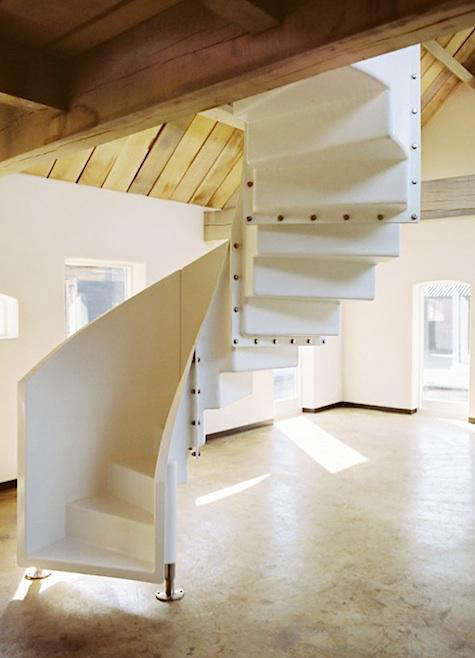
The Elementstair Spiral Fiberglass Staircase is not the kind of staircase that politely blends into the corner and apologizes for existing. It is sculptural, modular, compact, and just a little mischievousthe architectural equivalent of someone arriving at a dinner party wearing a perfectly tailored white suit and somehow pulling it off. Designed by Floris Schoonderbeek for Weltevree, Elementstair rethinks the spiral staircase as something closer to furniture: movable in spirit, expressive in form, and flexible enough to serve homes, lofts, offices, studios, workshops, and creative interiors where a regular staircase would hog the floor like it pays rent.
At its core, the Elementstair is a spiral staircase made from fiberglass-reinforced polyester elements. Its form was inspired by the structure of a water slide, which explains its smooth, flowing, almost playful look. But do not let the fun silhouette fool you. The design speaks directly to serious architectural needs: vertical access, space efficiency, modular installation, lightweight materials, visual impact, and adaptability in changing interiors.
For homeowners, architects, interior designers, and design lovers, the Elementstair Spiral Fiberglass Staircase offers a rare combination: it saves space, behaves like a sculptural centerpiece, and challenges the old idea that stairs must be heavy, hidden, and permanently grumpy.
What Is the Elementstair Spiral Fiberglass Staircase?
The Elementstair is a modular spiral staircase built from individual fiberglass polyester components. Instead of treating a staircase as a fixed architectural structure made only during construction, Elementstair approaches it as a flexible interior object. Each element connects to form a spiral path upward, creating a staircase that feels less like a building part and more like a designed product.
This idea matters because modern living spaces are changing. Lofts, converted offices, tiny homes, studios, mezzanines, and compact urban apartments often need vertical circulation without sacrificing half the room. A traditional straight staircase can require a long run, generous landings, and substantial framing. A spiral staircase, by contrast, rises within a much smaller footprint. Elementstair adds another layer: it makes that compact solution beautiful enough to become the star of the room.
A Staircase Inspired by a Water Slide
The water-slide inspiration is more than a quirky design note. Water slides are made from repeating curved sections that connect into a smooth, continuous path. Elementstair borrows that logic. The result is a spiral stair with linked elements, soft edges, and a strong visual rhythm. It has movement even when nobody is walking on it. That is a neat trick for something whose official job is “let people go upstairs.”
Fiberglass Polyester: Lightweight but Serious
Fiberglass-reinforced polyester is a composite material made by combining glass fibers with a resin matrix. In practical terms, it can offer strength, shape flexibility, corrosion resistance, and relatively low weight compared with many traditional stair materials. That makes it especially appealing for a staircase that wants to be modular, sculptural, and easier to handle during installation.
The material also supports smooth molded forms. This is important because Elementstair’s identity depends on its clean, continuous, almost futuristic shape. Steel can be elegant. Wood can be warm. Concrete can be dramatic. But fiberglass lets the staircase curve like it has been practicing yoga since childhood.
Why Spiral Staircases Still Make Sense
Spiral staircases have been used for centuries, from castles and towers to modern apartments and industrial access platforms. Their popularity survives because the geometry is brilliant. Instead of stretching across the floor, the stair wraps around a central axis. That vertical organization can free up precious square footage.
In a small loft, for example, replacing a straight staircase with a spiral model may open room for a sofa, dining table, reading corner, or storage wall. In a studio, a spiral staircase can connect a mezzanine without visually cutting the room in half. In a workshop, it can provide access to a platform while keeping the main floor open for tools, benches, and the occasional mysterious box labeled “miscellaneous.”
Space Efficiency
The biggest advantage of a spiral staircase is its compact footprint. For many rooms, this is the deciding factor. A straight stair often needs a long rectangular zone. A spiral stair works within a circular area. That means better use of awkward corners, tight floor plans, and secondary access points.
Design Impact
Most stairs are functional. Some stairs are attractive. Elementstair aims higher: it wants to be noticed. Its molded fiberglass shape creates a strong visual statement, especially in minimalist, modern, industrial, or gallery-like spaces. In white, it can look crisp and architectural. In a bold RAL color, it can become the happiest object in the building.
Flexible Applications
Elementstair can suit creative residential interiors, offices, studios, showrooms, and workplaces where design matters. It is particularly interesting for spaces that may evolve over time. Converted buildings, flexible workspaces, and adaptive reuse projects often need solutions that feel less permanent than heavy construction but more refined than temporary stairs.
Elementstair vs. Traditional Spiral Staircases
Traditional spiral staircases are commonly made from steel, aluminum, wood, or combinations of metal and timber. These materials are familiar, durable, and widely available. Elementstair stands apart because it uses molded fiberglass polyester elements, giving it a more fluid and product-like appearance.
Steel Spiral Stairs
Steel spiral stairs are strong, durable, and common in both residential and commercial applications. They can be powder-coated, galvanized for outdoor use, or paired with wood treads for a warmer look. However, steel can feel visually heavier than fiberglass and may require corrosion protection depending on the environment.
Wood Spiral Stairs
Wood spiral staircases bring warmth and craftsmanship. They work beautifully in traditional homes, cabins, and interiors where natural texture is important. The downside is that wood may require more maintenance, especially in humid areas, and it does not naturally deliver the smooth, molded sculptural look of Elementstair.
Fiberglass Spiral Stairs
Fiberglass spiral stairs bring a different personality. They are lightweight, corrosion resistant, and capable of dramatic molded forms. For Elementstair, fiberglass is not merely a material choice; it is central to the design language. The staircase looks like it was born in one continuous gesture, not assembled from a pile of reluctant parts.
Design Benefits of the Elementstair Spiral Fiberglass Staircase
1. It Turns Access Into Architecture
A staircase is often treated as a problem to solve. Elementstair treats it as an opportunity. Instead of hiding the stair, it celebrates it. The spiral form becomes a visual anchor, drawing the eye upward and giving the room a sense of movement.
2. It Works Well in Compact Spaces
If your floor plan is already having a nervous breakdown, a spiral staircase can help. Elementstair’s compact format makes it suitable for mezzanines, loft beds, small studios, compact homes, and secondary access points. It gives you vertical movement without demanding a grand staircase moment worthy of a royal entrance.
3. It Offers Custom Color Possibilities
One of the most appealing aspects of Elementstair is its potential for color customization. A white staircase can feel gallery-clean and futuristic. A black version can feel graphic and bold. A bright yellow, red, or blue version can transform the staircase into a joyful design statement. Color gives architects and homeowners a powerful tool: make the stair disappear quietly, or make it shout, “Yes, I am the main character.”
4. It Has a Modular Personality
Elementstair is based on connected elements, which gives it a modular logic. This supports flexibility in height and configuration. For spaces where conditions vary, modular design can be a major advantage. It also makes the product feel more approachable than a custom-built sculptural staircase fabricated entirely from scratch.
5. It Feels Like Furniture
Floris Schoonderbeek’s design questionwhy not see a staircase as furniture?is central to Elementstair’s appeal. Furniture is personal. It can be chosen, placed, styled, and loved. Architecture is often permanent and expensive to change. Elementstair sits between these worlds, making the staircase feel less like infrastructure and more like a design decision.
Practical Considerations Before Installing a Spiral Fiberglass Staircase
As charming as the Elementstair Spiral Fiberglass Staircase is, stairs are not decorative ladders for optimistic people. They must be safe, code-aware, and appropriate for the intended use. Before installing any spiral staircase, especially in the United States, confirm requirements with local building officials, architects, engineers, or qualified contractors.
Building Code Requirements
Residential spiral stair rules often address clear width, tread depth, riser height, headroom, landing dimensions, handrails, guardrails, and opening protection. Commercial and workplace settings may involve different requirements under the International Building Code, OSHA rules, accessibility standards, or local amendments. The important point is simple: never assume a good-looking stair is automatically code-compliant for your project.
For example, a spiral stair used as a primary means of egress may face stricter limitations than one used for occasional access to a loft, mezzanine, or decorative platform. A staircase in a private residence is not reviewed the same way as a stair in a retail store or workplace. The same object can be brilliant in one context and unacceptable in another. Stairs are dramatic like that.
Comfort and Daily Use
Spiral stairs save space, but they require a different walking rhythm than straight stairs. The treads are wider at the outside and narrower near the center. Most users naturally walk along the outer portion where there is more foot room. This is perfectly normal, but it means spiral staircases may not be ideal for moving large furniture, carrying laundry baskets, or racing upstairs with a full cup of coffee and unrealistic confidence.
Handrails and Guarding
A visually clean staircase still needs safe hand support and fall protection. Handrails should be comfortable, continuous where required, and positioned according to local code. Guards may be needed around landings or floor openings. With sculptural stairs, the challenge is to maintain the design while meeting safety standards. This is where professional detailing matters.
Structural Support
Fiberglass may be lightweight, but the staircase still needs proper support. The floor structure, upper landing, anchoring points, and load paths should be evaluated before installation. A beautiful staircase attached to an inadequate floor is not a design statement; it is a future phone call to your insurance company.
Where the Elementstair Spiral Fiberglass Staircase Works Best
Modern Lofts
Elementstair is a natural fit for lofts because lofts often need vertical access without losing openness. The sculptural spiral form can connect a sleeping platform, office nook, or mezzanine while preserving the airy feel of the room.
Creative Studios
In design studios, photography spaces, small offices, and workshops, Elementstair can function as both access and brand personality. It says the space values creativity, practicality, and objects that do more than one thing.
Showrooms and Retail Spaces
A dramatic staircase can guide attention, create a focal point, and encourage people to explore upper levels. In a showroom, Elementstair can become part of the visitor experience, not just the route to the next floor.
Small Homes and Compact Apartments
For small homes, the appeal is obvious: less floor area consumed by stairs means more usable living space. Elementstair may be especially attractive in interiors that already embrace modern furniture, clean lines, and flexible layouts.
Maintenance and Longevity
Fiberglass-reinforced materials are often valued for their resistance to moisture, corrosion, and general wear. Unlike untreated steel, fiberglass does not rust. Unlike wood, it does not rot in the same way. That does not mean it is magical and maintenance-free forever, but it can reduce some common headaches associated with traditional materials.
Cleaning is usually straightforward: remove dust, wipe surfaces, and avoid harsh abrasives unless recommended by the manufacturer. In high-traffic settings, inspect connections, surface finish, handrails, and any anti-slip areas regularly. A staircase is not a decorative vase. People step on it daily, usually while thinking about snacks, meetings, or where they left their keys.
Design Tips for Styling an Elementstair
Keep the Surroundings Calm
If the staircase has a bold sculptural presence, let it breathe. Avoid crowding it with too much furniture or visual clutter. A clean wall, simple flooring, and good lighting can make the spiral form stand out beautifully.
Use Lighting Strategically
Lighting can transform the staircase from useful object to art installation. Consider wall washers, pendant lights, skylights, or concealed LEDs near the landing. The curved fiberglass surface can catch light in elegant ways, emphasizing the smooth geometry.
Choose Color With Intent
White feels minimal and gallery-like. Black feels bold and architectural. Warm neutrals can soften the look. Bright colors can turn the stair into a joyful centerpiece. The right color depends on whether you want the staircase to whisper, speak, or burst into a Broadway number.
Think About the Landing
The top and bottom of a spiral staircase matter as much as the spiral itself. Make sure the arrival points feel safe, clear, and purposeful. A stair that lands awkwardly into a cramped corner can ruin the experience, no matter how gorgeous the curve is.
Potential Drawbacks to Consider
No staircase is perfect. Spiral stairs are compact and stylish, but they are not always the best solution for every situation. Moving large furniture up a spiral staircase can be challenging. Some users may find spiral stairs less comfortable than straight stairs, especially children, older adults, or anyone with mobility concerns. In some building types, code requirements may limit where and how spiral staircases can be used.
The Elementstair’s design-forward nature also means buyers should verify current availability, specifications, installation requirements, and compliance details before planning a project around it. Product information can change over time, and custom architectural features should always be confirmed directly with the manufacturer, dealer, or project professional.
Is the Elementstair Spiral Fiberglass Staircase Worth It?
The Elementstair Spiral Fiberglass Staircase is worth considering if you want a compact stair that feels like a design object, not an afterthought. It is especially appealing for modern interiors, lofts, flexible workspaces, and design-led homes where every element needs to earn its place visually and functionally.
It may not be the right choice if your main priority is moving bulky items between floors, creating the easiest possible stair for all ages, or meeting strict commercial egress requirements without customization. But for the right project, Elementstair offers a rare mix of utility, playfulness, and architectural drama.
In plain English: if your room needs a staircase but your heart wants sculpture, this one deserves a serious look.
Real-World Experience: Living With an Elementstair Spiral Fiberglass Staircase
Imagine walking into a compact loft where the ceiling is high, the floor plan is tight, and the owner has exactly zero interest in wasting space. A standard staircase would slice through the room like a wooden highway. A ladder would technically work, but only if everyone agreed never to carry anything heavier than a book and a dream. Then there is the Elementstair Spiral Fiberglass Staircase, sitting in the corner like a confident design solution with excellent posture.
The first experience is visual. People notice it immediately. Guests do not say, “Nice stair access system.” They say, “Whoa, what is that?” That reaction matters because a staircase is usually one of the largest objects in a room. If it has to be there, it might as well contribute to the atmosphere. Elementstair does that beautifully. It adds personality without needing extra decoration. No inspirational wall quote required.
The second experience is spatial. A spiral staircase changes how a room feels because it keeps circulation vertical and compact. In a small studio, that can mean the difference between having a real seating area and living in a furniture puzzle. The circular footprint leaves more usable space around it, and the open spiral shape can preserve sightlines better than a bulky stair enclosure.
The third experience is tactile. Fiberglass polyester has a different feel from wood or metal. It can feel smooth, clean, and contemporary. The molded form avoids the busy visual joints that some staircases have. This gives the Elementstair a calm, continuous quality, even though it is made from repeated components. It feels engineered, but also friendly.
Daily use depends on expectations. For occasional trips to a loft office, sleeping mezzanine, reading deck, or storage level, the staircase can be delightful. It feels like a small architectural event every time you use it. For a main family stair used dozens of times a day by children, pets, guests, and someone carrying laundry while negotiating with gravity, the decision needs more care. Spiral stairs require attention. They are elegant, but they do not pretend to be a wide suburban staircase with room for two people and a golden retriever to pass comfortably.
One practical experience that owners often discover quickly is the importance of lighting. A sculptural stair deserves good illumination, but lighting is not only about beauty. Clear visibility improves safety and comfort. A soft overhead pendant, wall-mounted fixtures, or indirect lighting can make the staircase easier to use at night while also highlighting the curved form. The right lighting turns the stair into a glowing centerpiece instead of a mysterious spiral shadow.
Another real-world lesson is to plan furniture movement before installation. If the staircase is the only route to an upper level, large mattresses, desks, and shelving units may not enjoy the journey. In loft settings, this may mean using modular furniture, assembling pieces upstairs, or planning an alternate access method during move-in. Future you will be grateful. Future you has enough problems.
Maintenance is usually less dramatic than with some traditional materials. Fiberglass does not rust like steel and does not behave like exposed wood in humid conditions. Still, the staircase should be inspected periodically. Check fasteners, contact points, handrails, tread surfaces, and any signs of wear. A design object that people walk on deserves regular attention.
The most satisfying experience, however, is emotional. Elementstair makes a practical object feel imaginative. It reminds people that small spaces do not have to feel compromised. They can feel intentional, clever, and even playful. That is the real charm of the Elementstair Spiral Fiberglass Staircase: it solves a spatial problem while giving the room a story. And in interior design, a good story is worth a lotespecially when it also gets you safely to the mezzanine.
Conclusion
The Elementstair Spiral Fiberglass Staircase is a bold answer to a familiar design problem: how to move between levels without surrendering space, style, or personality. Its fiberglass-reinforced polyester construction, modular concept, water-slide-inspired shape, and furniture-like philosophy make it one of the more memorable spiral staircase designs available to design-minded homeowners and professionals.
It is not a universal solution for every building, and it should always be evaluated for code compliance, comfort, structural support, and intended use. But in the right setting, Elementstair does something special. It makes a staircase feel light, flexible, sculptural, and genuinely fun. That is no small achievement for an object whose basic job description is “up and down.”
Note: Before selecting or installing any spiral fiberglass staircase, confirm current product specifications, availability, engineering requirements, and local building code compliance with qualified professionals.













