
Dating rich sounds like the plot of a glossy streaming drama: private jets, beach houses, black cards, champagne that costs more than your first car, and someone saying “Don’t worry, I’ll handle it” with the confidence of a person who has never checked an overdraft fee. But behind the velvet rope, romantic life with serious wealth can get complicated fast. Money can open doors, but it can also build walls, install security cameras, and quietly hand one partner the master key.
This is not an article about why rich people are bad partners. Plenty of wealthy people are generous, grounded, loyal, and emotionally mature. It is also not an article suggesting that financial stability does not matter. It absolutely does. Money stress can grind a relationship down like a cheap blender trying to crush ice. But when one person has far more money, power, family influence, or social access than the other, dating and marriage can start feeling less like romance and more like an acquisition.
The stories below are original composite scenarios based on common relationship patterns, public discussions, financial research, therapist guidance, and real-world social dynamics around wealth, marriage, prenups, class differences, and power imbalance. Some are funny in a “please laugh so we don’t cry” way. Others are cautionary tales wearing designer shoes.
Why Dating Rich Can Feel So Irresistible
Let’s be honest: money can be attractive. Not just “look at that watch” attractive, but “my nervous system feels calmer because rent is not eating me alive” attractive. Wealth can represent safety, freedom, possibility, and competence. A partner who can pay for excellent health care, travel comfortably, help family members, or remove everyday financial panic can seem like a walking life upgrade.
That is not shallow; it is human. People have always considered resources when choosing partners. The problem begins when money becomes the main character, the director, the producer, and the person deciding who gets edited out of the scene.
Relationship experts often point out that financial arguments are rarely only about dollars. They are about values, control, fear, independence, family history, self-worth, and dreams. One person may see a luxury purchase as joy. The other may see it as proof that rules do not apply. One may see a prenup as protection. The other may hear, “I already have one foot out the door, darling.”
30 Stories Of People Dating And Marrying Rich
1. The Gift That Became A Leash
He bought her a car three months into dating. It felt romantic until every disagreement ended with, “After everything I’ve done for you?” The leather seats were nice. The invisible collar was not.
2. The Prenup Dinner
She expected his proposal to come with champagne. It did. It also came with a 42-page prenuptial agreement and a family lawyer who called her “the incoming spouse,” which is not exactly a pet name.
3. The House That Was Never Hers
They moved into his mansion after the wedding, but every painting, sofa, and spoon had been chosen before she arrived. She had a closet bigger than her old apartment, yet somehow less room to exist.
4. The Family Board Meeting
His parents did not dislike her. They simply interviewed her as if she were applying to manage a hedge fund. Her education, background, fertility plans, and table manners were all “discussed.” Love had minutes and action items.
5. The Vacation Nobody Enjoyed
They flew private to an island resort, but he worked through dinner, checked markets at breakfast, and took calls during sunset. She had five-star linens and one-star companionship.
6. The Allowance Marriage
He insisted she quit her job because “my wife doesn’t need to work.” Later, he gave her a monthly allowance and questioned every purchase. Retirement from work became employment as a dependent.
7. The Rich Ex Problem
His ex still attended charity galas, family holidays, and the occasional yacht weekend because “everyone is mature here.” His new wife smiled so hard her jaw probably needed a tax deduction.
8. The Lifestyle Trap
She loved the restaurants, trips, and gifts, but after two years she realized she could not afford the social circle alone. Leaving him meant leaving the lifestyle, the apartment, and most of her new identity.
9. The Invisible Labor Deal
He earned millions. She organized the household, hosted clients, remembered birthdays, managed staff, raised children, and made him look charming in public. Everyone called him successful. Nobody called her exhausted.
10. The “Gold Digger” Label
She had her own degree, job, and savings, but because he was richer, strangers assumed she married for money. Apparently, love becomes suspicious when the honeymoon suite has marble floors.
11. The Poor Little Rich Boyfriend
He complained constantly that women only wanted him for money, then exclusively dated women he impressed with money. His trust issues had a luxury watch and absolutely no self-awareness.
12. The Social Class Translation App
Her family clipped coupons. His family used “summer” as a verb. Neither side was wrong, but every holiday felt like two civilizations trying to share cranberry sauce.
13. The Charity Wife
He liked that she was “down-to-earth.” Over time, she realized he mostly liked feeling noble for choosing someone less wealthy. She was not a partner; she was proof of his humility.
14. The Secret Debt
He looked rich because he spent rich. The cars were leased, the credit cards were screaming, and the business was “between liquidity events.” The first marital shock was discovering that luxury can be rented.
15. The Inheritance Shadow
She married into old money, where nobody discussed money directly because that would be vulgar. Instead, they communicated through trusts, wills, seating arrangements, and comments about “appropriate choices.”
16. The Career Sacrifice
He needed her available for travel, events, and spontaneous plans. Her career slowed while his expanded. Ten years later, his resume glittered; hers looked like it had been interrupted by someone else’s life.
17. The Trophy Husband
She was the wealthy one, and he loved the comfort until friends started joking that he had “married well.” He laughed at first, then slowly became defensive, resentful, and allergic to brunch.
18. The Control Disguised As Protection
He hired drivers, security, assistants, and household staff. At first it felt safe. Later, she realized every movement was visible to someone paid by him.
19. The Wedding That Belonged To Everyone Else
His family paid for the wedding, so his family planned the wedding. She wanted a small ceremony. They had 400 guests, a string quartet, and a cake tall enough to require zoning approval.
20. The Emotional Coupon Clipper
He was generous with things but stingy with apologies. He could buy diamonds, vacations, and art, but somehow “I was wrong” remained outside the budget.
21. The Unequal Risk
When he invested in a business, it was “vision.” When she wanted to start one, it was “risky.” Wealth gave him permission to fail upward while she was expected to be grateful and cautious.
22. The Rich Dating App Mirage
His profile promised luxury travel and fine dining. What it did not mention: he expected availability, admiration, and zero questions. The steak was rare; the emotional maturity was rarer.
23. The Family Office Romance
Every major decision went through accountants, attorneys, and advisors. Buying a home, having children, even charitable giving became a committee process. Marriage had a board of directors.
24. The Friend Group Upgrade
Her new social circle wore quiet luxury and made loud judgments. She learned which fork to use, which brands not to mention, and how to smile while being underestimated in three languages.
25. The “You Don’t Understand Pressure” Fight
He insisted she could not understand the stress of managing wealth. She wanted to reply, “Try managing rent with $43 until payday,” but the argument had already ordered dessert.
26. The Divorce Shock
She assumed years of loyalty would matter if they split. The prenup, trust structure, and separate property rules said otherwise. Love had memories; paperwork had teeth.
27. The Golden Cage
She had staff, clothes, travel, and a perfect house. She also had no privacy, no purpose, and no one who believed she could be lonely. People kept saying, “I’d love to have your problems.”
28. The Power Couple That Wasn’t
In public, they looked unstoppable. In private, they negotiated affection like a merger. Their calendar was full, their house was immaculate, and their marriage was running on fumes and catered dinners.
29. The Rich Partner Who Got It Right
Not every story ends badly. One wealthy partner insisted on transparency, encouraged independence, discussed money early, and never used gifts as ammunition. That relationship worked because respect had a bigger budget than ego.
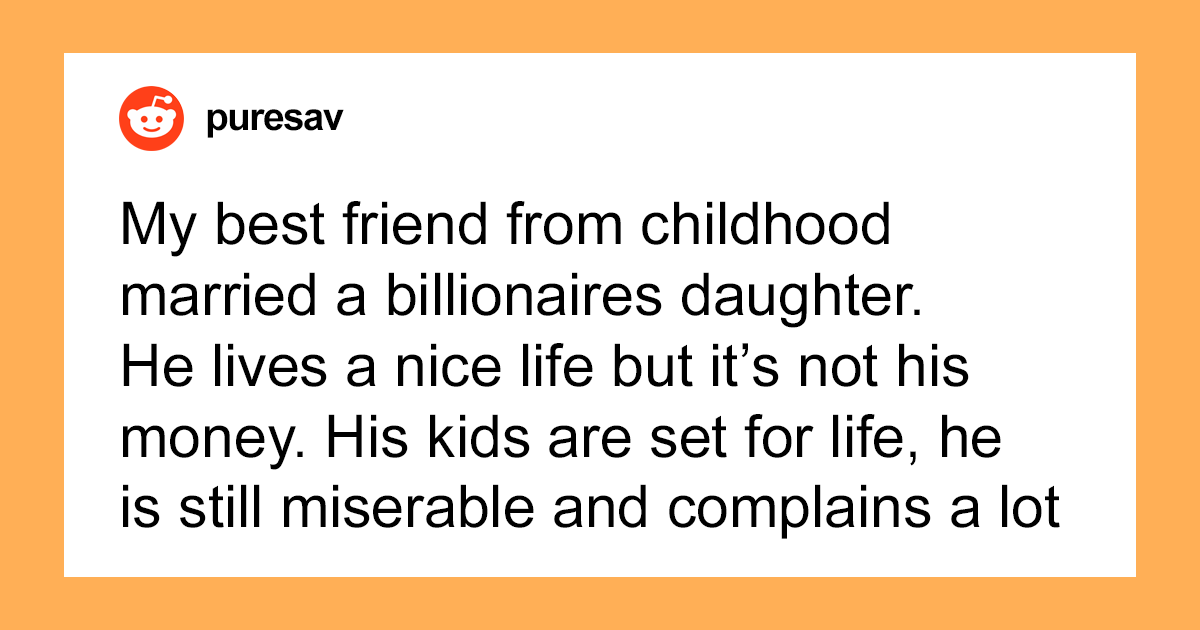
30. The Most Miserable Marriage Anyone Had Seen
They had everything people envy: mansion, cars, travel, children in elite schools, matching smiles at fundraisers. But they barely spoke without cutting each other. The marriage looked expensive. It felt bankrupt.
What These Stories Reveal About Wealth And Love
The obvious lesson is not “never marry rich.” That would be silly, and frankly, some readers just closed this tab in protest from their imaginary yacht. The real lesson is that money magnifies whatever already exists. Kindness becomes more powerful when paired with resources. Control becomes more dangerous. Insecurity becomes louder. Generosity becomes more complicated. Avoidance becomes easier because a couple can distract themselves with travel, renovations, parties, and a very busy shared calendar.
Wealth can also confuse gratitude with obedience. A less wealthy partner may feel guilty for wanting equal say because the other person pays more. But emotional equality is not supposed to be purchased proportionally. A marriage is not a shareholder meeting where voting rights depend on who brought more assets to the altar.
Another pattern is identity loss. When one partner enters a richer world, they may begin dressing differently, speaking differently, vacationing differently, and spending differently. Some changes are fun. Others quietly detach them from their old support system. If the relationship becomes unhealthy, leaving can feel like losing a partner, home, lifestyle, community, and future all at once.
Why Financial Imbalance Creates Romantic Pressure
Financial imbalance is not automatically toxic. Many couples have different incomes and still build healthy, loving marriages. The problem is not the gap itself; it is how the couple handles the gap. Do both people have a voice? Can both say no? Does the wealthier partner respect the other’s work, time, family, and goals? Does the less wealthy partner maintain independence and self-worth?
Money can become a third person in the relationship: sitting at the dinner table, interrupting arguments, joining vacations, and whispering during major decisions. It affects where couples live, how they socialize, whether one partner works, how children are raised, and how safe each person feels if the marriage ends.
Prenups are a perfect example. A fair prenuptial agreement can protect both people, clarify expectations, and reduce future conflict. An unfair one can turn romance into a legal obstacle course where one partner signs away security before fully understanding the stakes. The healthiest couples treat these conversations as serious, transparent planningnot as a surprise ambush between cake tastings.
Green Flags When Dating Or Marrying Someone Wealthy
A rich partner with good character does not need to constantly remind you they are rich. They do not use money to win arguments, control your choices, or make you feel replaceable. They are comfortable discussing finances without turning every conversation into a TED Talk called “Why I Know Better.”
Look for someone who respects your career even if it pays less, encourages your friendships, welcomes your family without condescension, and understands that financial generosity does not cancel emotional responsibility. A healthy wealthy partner can give a gift without later presenting it as Exhibit A in a courtroom drama.
Also pay attention to how they treat people who cannot benefit them: servers, assistants, drivers, housekeepers, interns, and relatives who are not powerful. Money may buy access, but manners reveal character. If someone is cruel to people with less power, do not assume love will magically make them fair at home.
Red Flags That The Relationship Is Becoming A Golden Cage
Be cautious if your partner pressures you to quit your job before you have legal, financial, and emotional security. Be cautious if they isolate you from friends or imply your background is embarrassing. Be cautious if they make major decisions alone because they are paying. And be very cautious if every gift comes with a future invoice written in guilt.
Another red flag is secrecy. If someone has serious wealth but refuses to explain financial expectations before marriage, that is not romance; that is fog with a wine list. You do not need to know every account number on the third date, but before marriage, both people deserve honesty about debt, assets, lifestyle expectations, family obligations, estate plans, and whether “our house” legally means “my family’s trust owns the roof over your head.”
Experiences And Lessons From Dating And Marrying Rich
The experience of dating or marrying rich often begins with awe. Ordinary problems disappear in dramatic fashion. The restaurant bill arrives and nobody flinches. A weekend away does not require six months of planning and a discount code named “PLEASEWORK.” Broken appliances are replaced, not mourned. Medical care, travel, childcare, and comfort become easier. For someone who has lived with financial stress, that ease can feel like oxygen.
But after the sparkle settles, deeper questions arrive. Does comfort come with conditions? Is the less wealthy partner allowed to disagree, or are they expected to be endlessly appreciative? Can they make choices that are inconvenient to the wealthy partner? Can they keep their own bank account, career, friends, habits, and opinions without being treated as ungrateful?
Many people who marry rich describe the strangest part as not the luxury, but the surveillance of identity. Suddenly, their clothes, accent, education, family, and ambitions are evaluated by a new social world. They may be praised as “refreshing” one day and quietly corrected the next. They may be invited everywhere but never fully included. They may discover that wealthy families can be polite and ruthless at the same time, which is honestly an impressive but terrifying skill set.
Another common experience is emotional loneliness. Outsiders assume money solves sadness, so the unhappy spouse gets little sympathy. If they complain, people say, “But you live in that house?” As if granite countertops can hug you back. A person can be financially comfortable and emotionally abandoned. A marriage can have luxury linens and no tenderness. A couple can own several homes and still have nowhere honest to talk.
There are also beautiful experiences. Some wealthy partners use their resources to build stability, not control. They help without humiliating. They protect without possessing. They encourage the other person to grow, study, work, invest, create, and remain fully themselves. In those relationships, money becomes a tool, not a throne. The couple discusses values, not just expenses. They plan for fairness. They understand that love does not require equal bank balances, but it does require equal dignity.
The best lesson is simple: marry character, not lifestyle. A kind rich person can make life warmer, safer, and more generous. A controlling rich person can turn comfort into captivity. Before saying yes to wealth, look closely at the person holding it. The bank account may impress you, but the daily behavior will be what you actually live with.
Conclusion
Dating and marrying rich can look glamorous from the outside, but real intimacy is built in the less photogenic moments: the money conversations, the family boundaries, the career compromises, the prenup negotiations, the apologies, and the everyday choice not to use power as a weapon. Wealth can make a relationship easier in practical ways, but it cannot substitute for trust, emotional maturity, respect, or shared values.
The most miserable rich marriages are not miserable because there is too much money. They are miserable because money becomes the language of control, avoidance, image, or fear. The happiest ones tend to understand something deeply unglamorous and deeply true: love works best when both people can stand freely, speak honestly, and leave the room without feeling owned.
Note: This article is an original, human-style synthesis based on commonly reported relationship patterns, financial research, therapist guidance, prenup discussions, and wealth-and-marriage dynamics. The stories are composite examples created for analysis and readability, not copied personal accounts.













