
Myopia, better known as nearsightedness, is the reason a street sign can look like abstract art until you get close enough to practically shake hands with it. People with myopia usually see nearby objects clearly, but distant objects appear blurry. Reading a book? Fine. Reading the board from the back of the classroom? Suddenly, the alphabet has entered witness protection.
Although myopia is common, it is not something to ignore. It can affect school performance, driving safety, sports, work, and everyday comfort. In children, progressive myopia may increase the risk of eye problems later in life, especially when the prescription becomes high. The good news is that myopia is usually easy to diagnose, vision can often be corrected very well, and several treatment options can help manage it.
This guide explains what myopia is, why it happens, how it is diagnosed, and what treatments are available, from glasses and contact lenses to refractive surgery and modern myopia-control options for children.
What Is Myopia?
Myopia is a refractive error. That means the eye does not bend light correctly, so images do not focus exactly where they should. In a healthy eye with clear distance vision, light focuses directly on the retina, the light-sensitive tissue at the back of the eye. In a myopic eye, light focuses in front of the retina instead of on it. The result is blurry distance vision.
In simple terms, the eye is often a little too long from front to back, or the cornea is too curved for the length of the eye. Either way, the focusing system overshoots the target. Think of it as a camera that focuses perfectly on the snack in your hand but turns the scoreboard across the field into a foggy rumor.
Common Signs and Symptoms of Myopia
Myopia can appear gradually, and many people do not notice it right away. Children, especially, may assume everyone sees the world the same blurry way they do. Common symptoms include:
- Blurry vision when looking at distant objects
- Squinting to see road signs, classroom boards, or TV captions
- Headaches after trying to focus at a distance
- Eyestrain or tired eyes
- Sitting very close to screens or holding objects closer than usual
- Difficulty seeing clearly while driving, especially at night
- Frequent blinking or rubbing the eyes
For children, warning signs may include moving closer to the board, losing interest in sports that require distance vision, or complaining that school slides are “too small” even when everyone else seems fine. Spoiler: it may not be the slides.
What Causes Myopia?
Myopia usually develops from a combination of genetics and environment. It is not caused by one single bad habit, and it is not a punishment for loving books, games, or tiny-print instruction manuals. However, certain factors can raise the risk.
Eye Shape and Focusing Problems
The most direct cause of myopia is the way the eye is shaped. If the eyeball grows too long or the cornea bends light too strongly, light lands in front of the retina. This makes distant objects appear blurred, even though close objects may remain sharp.
Family History
Myopia tends to run in families. A child with one nearsighted parent has a higher chance of developing myopia, and the risk increases when both parents are nearsighted. Genetics does not guarantee myopia, but it can load the dice. The eye may be more likely to grow in a way that favors nearsightedness.
Childhood Eye Growth
Myopia often begins during childhood and adolescence, when the eyes are still growing. It may progress for several years before becoming more stable in early adulthood. Some people notice changes into their 20s or even later, but many prescriptions slow down or stabilize between young adulthood and middle age.
Near Work and Screen Use
Reading, studying, drawing, gaming, and using digital devices involve focusing up close. Research has linked heavy near work and reduced outdoor time with a higher risk of myopia in children. Screens are not automatically villains wearing tiny digital capes, but long periods of close-up work without breaks may contribute to eye fatigue and may be part of a lifestyle pattern associated with myopia development.
The most practical approach is balance. Children and adults should take visual breaks, avoid marathon close-up sessions, and spend time looking into the distance. The 20-20-20 rule is a simple habit: every 20 minutes, look at something about 20 feet away for 20 seconds. It will not magically erase myopia, but it can reduce eyestrain and remind your focusing muscles that the room is bigger than your screen.
Limited Outdoor Time
Outdoor time appears to be protective, especially for children. Studies suggest that more daylight exposure and time spent looking at distant objects may help reduce the risk of developing myopia or delay its onset. The exact biological reasons are still being studied, but bright outdoor light may influence healthy eye growth.
This does not mean every child must become a professional tree climber. Walking, biking, playing sports, visiting a park, or simply spending safe daylight time outside can help create a healthier visual routine. Sunglasses and sun protection are still important when needed.
Types and Severity of Myopia
Eye doctors measure myopia in diopters, written with a minus sign, such as -1.00 D or -4.50 D. The more negative the number, the stronger the prescription needed to correct distance vision.
Low, Moderate, and High Myopia
Low myopia may cause mild distance blur and may only be noticeable in classrooms, theaters, or while driving. Moderate myopia usually requires correction for most distance activities. High myopia is more severe and can increase the risk of eye health complications, including retinal detachment, glaucoma, cataracts, and myopic macular changes.
That is why regular eye exams matter. Corrective lenses help you see clearly, but eye doctors also monitor the health of the retina and other structures inside the eye.
How Is Myopia Diagnosed?
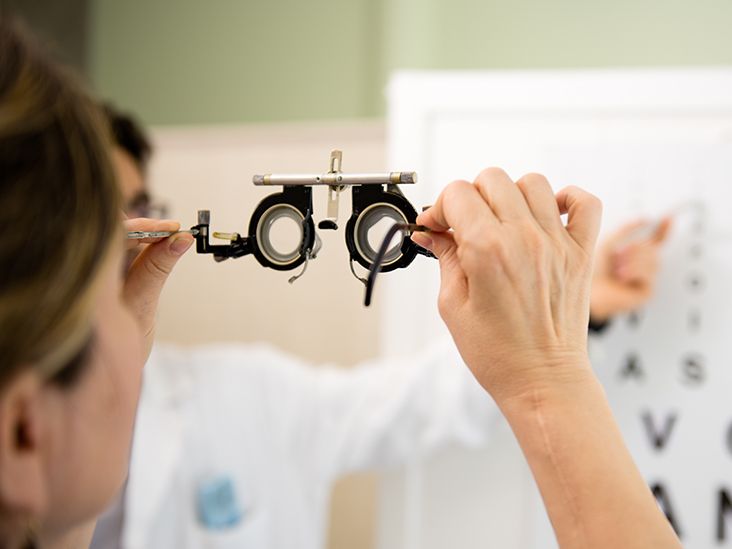
Myopia is diagnosed during a comprehensive eye exam. This usually includes a visual acuity test, where you read letters or symbols on a chart, and refraction testing, where the doctor determines the lens power needed to correct your vision.
The eye doctor may use drops to temporarily relax focusing, especially in children. This is called cycloplegic refraction, and it can help reveal the true prescription without the child’s focusing muscles “helping” too much. Yes, your pupils may look dramatic afterward, like you just discovered a plot twist in a movie, but the effect wears off.
A complete eye exam may also include checks of eye pressure, eye alignment, eye movement, and retinal health. For children with progressive myopia, the doctor may measure axial length, which is the length of the eye from front to back. Tracking axial length can help monitor whether myopia is worsening.
Treatment Options for Myopia
The main goal of myopia treatment is to focus light properly on the retina so distance vision becomes clear. In children, another goal may be slowing progression to reduce long-term risks.
Eyeglasses
Glasses are the simplest and most common treatment for myopia. They are safe, effective, and easy to update when the prescription changes. For children, glasses can improve school performance, confidence, and safety. For adults, they can make driving, presentations, movies, and daily life much easier.
Single-vision lenses correct the blur but do not necessarily slow progression. Newer myopia-control spectacle lenses are designed not only to correct vision but also to help slow myopia progression in eligible children. An eye care professional can explain whether these lenses are appropriate.
Contact Lenses
Contact lenses correct myopia by sitting directly on the surface of the eye. They can be useful for sports, appearance preferences, or wider peripheral vision. However, they require good hygiene. Sleeping in lenses not designed for overnight wear, swimming with contacts, or reusing disposable lenses can increase the risk of eye infections. Contacts are convenient, but they are not tiny plastic pajamas for your eyeballs.
Some soft contact lenses are specifically designed for myopia control in children. For example, certain FDA-approved daily disposable lenses can correct vision while helping slow myopia progression in children who meet age and prescription criteria.
Orthokeratology
Orthokeratology, often called ortho-k, uses specially fitted rigid contact lenses worn overnight. These lenses gently reshape the cornea temporarily, allowing clearer vision during the day after the lenses are removed. Ortho-k may also help slow myopia progression in some children.
Because ortho-k involves overnight contact lens wear, careful fitting, cleaning, and follow-up visits are essential. It is not a do-it-yourself treatment, and skipping hygiene steps is like inviting germs to a house party no one asked for.
Low-Dose Atropine Eye Drops
Low-dose atropine drops may be used to slow progressive myopia in children. These drops are different from the stronger atropine doses used for other eye conditions. Side effects are usually milder at low doses but may include light sensitivity, slightly larger pupils, or mild blur up close.
In the United States, low-dose atropine for myopia management may be prescribed off-label and often comes from a compounding pharmacy. Parents should discuss benefits, risks, dosing, and follow-up plans with a pediatric ophthalmologist or optometrist experienced in myopia management.
Refractive Surgery
Adults with stable prescriptions may consider refractive surgery, such as LASIK or PRK. These procedures reshape the cornea so light focuses more accurately on the retina. Some people may also be candidates for implantable lenses, depending on their prescription, corneal thickness, eye health, and lifestyle.
Refractive surgery can reduce dependence on glasses or contacts, but it is not right for everyone. A detailed evaluation is necessary. People with unstable prescriptions, certain corneal conditions, severe dry eye, pregnancy-related prescription changes, or specific medical issues may need to avoid or delay surgery.
Can Myopia Be Prevented?
Not all myopia can be prevented, especially when family history is strong. Still, healthy habits may reduce risk or slow progression in children. The best strategy is early detection plus a balanced visual lifestyle.
Healthy Habits That May Help
- Schedule regular eye exams, especially for children and teens.
- Encourage safe outdoor time during daylight.
- Use the 20-20-20 rule during reading, studying, and screen use.
- Keep reading material and screens at a comfortable distance.
- Avoid using phones too close to the face for long periods.
- Make sure children have good lighting for homework.
- Discuss myopia-control options if a child’s prescription keeps increasing.
Prevention is not about banning books, homework, or technology. That plan would be unpopular with schools, employers, and anyone who likes modern life. The goal is to protect the eyes from endless close-up strain and give them regular chances to relax and look far away.
When Should You See an Eye Doctor?
See an eye doctor if distance vision becomes blurry, headaches appear after visual tasks, a child starts squinting often, or night driving becomes difficult. Children should have vision screening and full eye exams when recommended, especially if there is a family history of myopia or if school performance suddenly changes.
Seek urgent medical care for sudden flashes of light, a curtain-like shadow in vision, sudden new floaters, or sudden vision loss. These symptoms can signal retinal problems and should not be ignored.
Living With Myopia
Most people with myopia live normal, active lives. Glasses, contacts, and other treatments can provide clear vision, and regular eye care can help monitor long-term eye health. The key is not pretending blurry distance vision is a personality trait. If the movie screen looks like a watercolor painting, it may be time for an eye exam.
For children, myopia management can be especially important. A prescription that changes every year deserves attention, not just stronger lenses. Parents can ask about myopia-control contacts, specialized glasses, atropine drops, ortho-k, and outdoor-time habits. The right plan depends on age, prescription, lifestyle, maturity, eye health, and family preferences.
Personal and Everyday Experiences With Myopia
Living with myopia often starts with small moments that are easy to laugh about later. A student may copy the wrong homework because the board looked like a secret code. A driver may realize road signs are becoming readable only when the exit is already flirting with the rearview mirror. Someone at a coffee shop may wave warmly at a stranger, convinced it is their friend, only to discover they have greeted a confused accountant named Steve. Myopia has a way of turning ordinary life into a low-budget mystery show.
One common experience is the “first glasses” moment. Many people remember putting on their first pair and suddenly seeing individual leaves on trees, sharp streetlights, or crisp classroom letters. It can feel almost cinematic, as if the world has upgraded from standard definition to ultra-high definition. That moment is also a reminder that blurry vision can become normal if it develops slowly. Children may not complain because they do not know what clear distance vision looks like.
Another familiar experience is managing glasses in daily life. Glasses fog up when stepping indoors on a cold day, slide down during sports, collect fingerprints faster than a detective’s evidence board, and mysteriously disappear exactly when needed. Still, they are dependable and simple. For many people, glasses become part of personal style, almost like a face accessory with medical benefits.
Contact lenses bring different experiences. They can feel freeing during sports, photography, performances, or rainy days when glasses turn into tiny windshields. But contacts demand responsibility. Clean hands, fresh solution, proper replacement schedules, and regular checkups are nonnegotiable. Anyone who has ever dropped a contact lens on a bathroom floor knows the emotional journey: hope, panic, denial, and finally, acceptance.
For parents, childhood myopia can feel more serious. A child’s prescription may change quickly, and each new pair of glasses raises the same question: “Will it keep getting worse?” This is where myopia management can be helpful. Instead of simply updating lenses, families can discuss options designed to slow progression. The experience becomes less about reacting and more about planning.
Students and office workers with myopia often learn that visual habits matter. Long study sessions, gaming marathons, and phone scrolling in bed may not be kind to the eyes. Building breaks into the day helps. Looking across the room, stepping outside, adjusting screen brightness, and keeping devices at a reasonable distance may sound simple, but simple habits are often the ones people actually follow.
Adults considering LASIK or another refractive procedure may describe the decision as exciting but nerve-racking. The idea of waking up and seeing the clock without searching for glasses can be very appealing. However, surgery requires realistic expectations. It may reduce dependence on glasses or contacts, but it does not make someone immune to all future eye changes. Reading glasses may still be needed with age, and routine eye exams remain important.
The biggest everyday lesson from myopia is this: clear vision affects confidence, safety, learning, and comfort. Treating myopia is not vanity. It is practical health care. Whether the solution is glasses, contacts, myopia-control treatment, or surgery, the goal is the same: helping the eyes do their job without making the brain guess what the world is trying to show.
Conclusion
Myopia, or nearsightedness, is a common vision condition that makes distant objects look blurry while nearby objects remain easier to see. It often begins in childhood, may run in families, and can be influenced by eye growth, near work, screen-heavy routines, and limited outdoor time. Fortunately, myopia is usually straightforward to diagnose through an eye exam and can be corrected with glasses or contact lenses.
For children with worsening prescriptions, modern myopia-management options may help slow progression and protect long-term eye health. For adults with stable prescriptions, refractive surgery may be an option after a careful evaluation. The smartest move is simple: do not ignore blurry distance vision. Your eyes are not being dramatic; they are asking for backup.










