
Note: In this article, “hacker” means a curious maker, builder, coder, electronics tinkerer, and problem-solvernot someone breaking into systems. Different suitcase, fewer felonies.
There is a special kind of travel that happens when a technical person flies halfway around the planet. A normal traveler packs socks, chargers, snacks, and perhaps a neck pillow with the emotional support value of a soggy bagel. A hacker abroad packs all of that plus a dev board, three cables that do not fit anything useful, a notebook full of pinouts, and the belief that a sixteen-hour flight is “basically free lab time.” That is the spirit behind Hacker Abroad: A Very Long Way To China: the story of going far beyond your home Wi-Fi, your favorite soldering station, and your preferred coffee mug into a country where hardware, transportation, food, payments, language, and internet access all become part of the adventure.
The original travel idea is simple enough: a technology-minded visitor heads from the American Midwest to Shanghai for an electronics industry event, discovers that China is very far away, and immediately begins viewing the journey like a circuit board with excellent public transit. The real story, however, is bigger than one itinerary. China remains one of the most important places on Earth for electronics manufacturing, component supply chains, rapid prototyping, smart devices, and maker culture. For a hardware hacker, China is not merely a destination. It is a live demo of how modern technology gets built, shipped, paid for, regulated, translated, and occasionally served with breakfast from a street cart.
Why China Feels Like the Final Boss Level for a Traveling Hacker
For American makers, developers, and electronics enthusiasts, China carries a near-mythical reputation. Shenzhen is famous for hardware markets and fast manufacturing. Shanghai hosts major trade fairs and international business events. Across the country, mobile payments, QR codes, high-speed rail, dense urban logistics, and enormous electronics ecosystems make daily life feel both futuristic and stubbornly practical. You can buy breakfast with a phone, ride a train that looks like it was designed by a science fiction committee, and then spend the afternoon staring at sensors, chips, connectors, embedded systems, and robots until your brain politely requests a reboot.
That is why the phrase “Hacker Abroad” works so well. It captures the mindset of someone who does not only visit a place but tries to understand how it functions. A regular tourist sees a maglev train and says, “Cool, fast train.” A hacker sees magnetic levitation, propulsion, control systems, ticketing infrastructure, station design, passenger flow, and a speed display that might as well be whispering, “You should build a smaller version of this in your garage.” This is how technical people travel: half sightseeing, half debugging reality.
The Long Road from the U.S. to Shanghai
Traveling from the United States to China can feel like compressing several days into one extremely confused calendar square. A common route from the Midwest may involve a domestic hop to a major hub, a long-haul flight across oceans and time zones, and then arrival in Shanghai with your body convinced it is breakfast, dinner, and possibly 1998. In the original journey that inspired this topic, the traveler left from Wisconsin, connected through Atlanta, flew more than 8,000 miles, and landed in Shanghai after a very long travel day. That kind of trip is not just transportation; it is endurance testing for humans, batteries, and optimism.
Long flights are strangely perfect for hackers. There are no errands. There is limited internet. Nobody can ask you to fix their printerunless the aircraft has a printer, in which case please do not touch it. A flight becomes a floating workshop where you can read datasheets, clean up code, sketch a PCB idea, organize project notes, or finally understand why your microcontroller refuses to speak politely to that e-paper display. The trick is to bring projects that are compact, offline-friendly, and unlikely to make the cabin crew ask pointed questions. A small dev board is fine. A homemade device with exposed wires, dramatic LEDs, and no explanation is less fine. Airports are famously low-humor environments.
Shanghai Arrival: When Public Transit Steals the Show
Shanghai is a dramatic introduction to China because it does not ease you in gently. It hands you skyscrapers, crowds, mobile payments, layered highways, subway lines, and, if you choose the right route from Pudong International Airport, the Shanghai Maglev Train. For anyone interested in engineering, the maglev is more than airport transport. It is a reminder that infrastructure can be theatrical. The train covers roughly 30 kilometers between Pudong Airport and Longyang Road in about eight minutes, and it can reach very high operating speeds during peak service. For a jet-lagged traveler, that is not a commute; that is a physics lecture with seats.
The maglev experience also sets the tone for technical travel in China. Systems are large, visible, and optimized for scale. The same impression appears in metro stations, trade show halls, delivery networks, mobile payment systems, and electronics markets. Things are built for huge numbers of people doing things quickly. For a hacker abroad, that raises useful questions: How does the ticketing system handle throughput? How are signs designed for multilingual travelers? What happens when an app becomes essential infrastructure? How do people adapt when cash, cards, and Western apps are not the default tools?
The Digital Reality: China Is Not Just Another Wi-Fi Network
One of the biggest mistakes a first-time tech traveler can make is assuming that the internet works the same everywhere. In mainland China, the internet environment is shaped by the Great Firewall, a combination of regulations and technical controls that can filter, slow, block, or redirect access to certain foreign websites and online services. Popular tools used casually in the United StatesGoogle services, some social media platforms, certain news websites, and various collaboration toolsmay not work normally without planning. For a traveler who stores itineraries in Gmail, maps in Google Maps, notes in cloud drives, and two-factor codes in a single phone, this can quickly turn into a comedy with no punchline.
The smart move is preparation. Before traveling, download offline maps, save hotel addresses in both English and Chinese, install essential apps, confirm access to payment tools, and make sure important documents are available offline. A hacker abroad should also think about threat models. Are you protecting ordinary personal privacy? Company intellectual property? Source code? Client data? Research notes? A prototype design? The answer determines whether you bring your everyday laptop, a clean travel laptop, a loaner phone, or only the minimum devices necessary. Traveling light is not just convenient; it reduces the number of digital doors you have to lock.
Cybersecurity Travel Tips for Makers, Coders, and Hardware People
Pack Less Data Than You Pack Clothing
Before going abroad, remove sensitive files that are not needed for the trip. Back up your devices, update operating systems, enable full-disk encryption where appropriate, and use strong passcodes. Do not rely only on fingerprints or face unlock when crossing borders or moving through unfamiliar environments. Biometrics are convenient, but a memorized passcode gives you more control. Also, avoid storing passwords in plain text files with names like “passwords-final-FINAL-real.txt.” That file name is not security; it is a confession.
Use Public Wi-Fi Carefully
Public Wi-Fi in airports, hotels, restaurants, and trade show venues is convenient, but convenience is not the same as trust. Modern HTTPS encryption has made public Wi-Fi safer than it was in the old days, yet travelers should still verify network names, avoid sensitive transactions on unknown networks, disable auto-connect, and use a reputable VPN where lawful and appropriate. Be aware that VPN rules and availability vary by country, and China’s internet controls can affect VPN reliability. In other words, do not make “I’ll figure it out after landing” your entire network strategy. That strategy has the structural integrity of wet cardboard.
Keep Control of Your Hardware
Hardware people love hardware, which means they also tend to accumulate it. Trade fairs, meetups, factories, and markets can produce a sudden pile of USB drives, demo boards, cables, chargers, adapters, and mysterious promotional gadgets. Treat unknown USB devices with suspicion. Do not plug random drives into your main machine. Do not charge from untrusted USB ports when a wall charger or power bank is available. Keep business devices and personal devices separate when possible. If you are carrying prototypes or unreleased designs, assume they deserve the same care as a passport, because in some situations they may be just as difficult to replace.
Payments, Apps, and the QR Code Lifestyle
China’s urban payment culture can surprise visitors from the United States. Mobile payments through apps such as WeChat Pay and Alipay are widely used for taxis, restaurants, stores, vending machines, and tiny purchases that would once have involved coins, bills, or a lengthy search for exact change. The U.S. State Department notes that most people in China pay for goods and services through mobile payment apps, while cash may be legally accepted but not always convenient in practice. Recent moves to connect foreign payment options more easily to Chinese platforms show how important mobile payments have become for tourism and daily commerce.
For a hacker abroad, QR codes are fascinating because they turn the physical world into a clickable interface. Menus, payments, bike rentals, event registration, delivery lockers, transit systems, and business cards can all become QR-powered workflows. The downside is that QR codes also require caution. A code is basically a printed link wearing a tiny checkerboard costume. Before scanning codes in random places, especially codes stuck over another code, think twice. Use official apps, confirm payment recipients, and avoid entering sensitive credentials after scanning unknown codes. The future is convenient, but it still needs a password manager.
Electronics Events: Where the Supply Chain Becomes Visible
Electronics trade fairs in Shanghai and other Chinese cities show the scale behind modern devices. An event like electronica China has historically brought together exhibitors across semiconductors, sensors, embedded systems, PCBs, manufacturing services, automotive electronics, smart factory technology, and industrial applications. For a maker used to ordering parts online one tiny bag at a time, walking a major electronics exhibition can feel like stepping behind the curtain of the global gadget machine. Suddenly, the connector you casually added to a project has a booth, a sales team, a datasheet stack, and someone who can explain minimum order quantities with the calm confidence of a person who has crushed many dreams before lunch.
The value of such events is not only product discovery. It is context. You see which technologies are being pushed, which industries are driving demand, which components are becoming cheaper, and which design choices are influenced by manufacturing realities. You also learn that hardware is social. Relationships matter. Clear communication matters. Documentation matters. A brilliant prototype that cannot be manufactured, serviced, certified, or explained is not a product; it is a very expensive desk ornament.
Street Breakfast and the Joy of Debugging a City
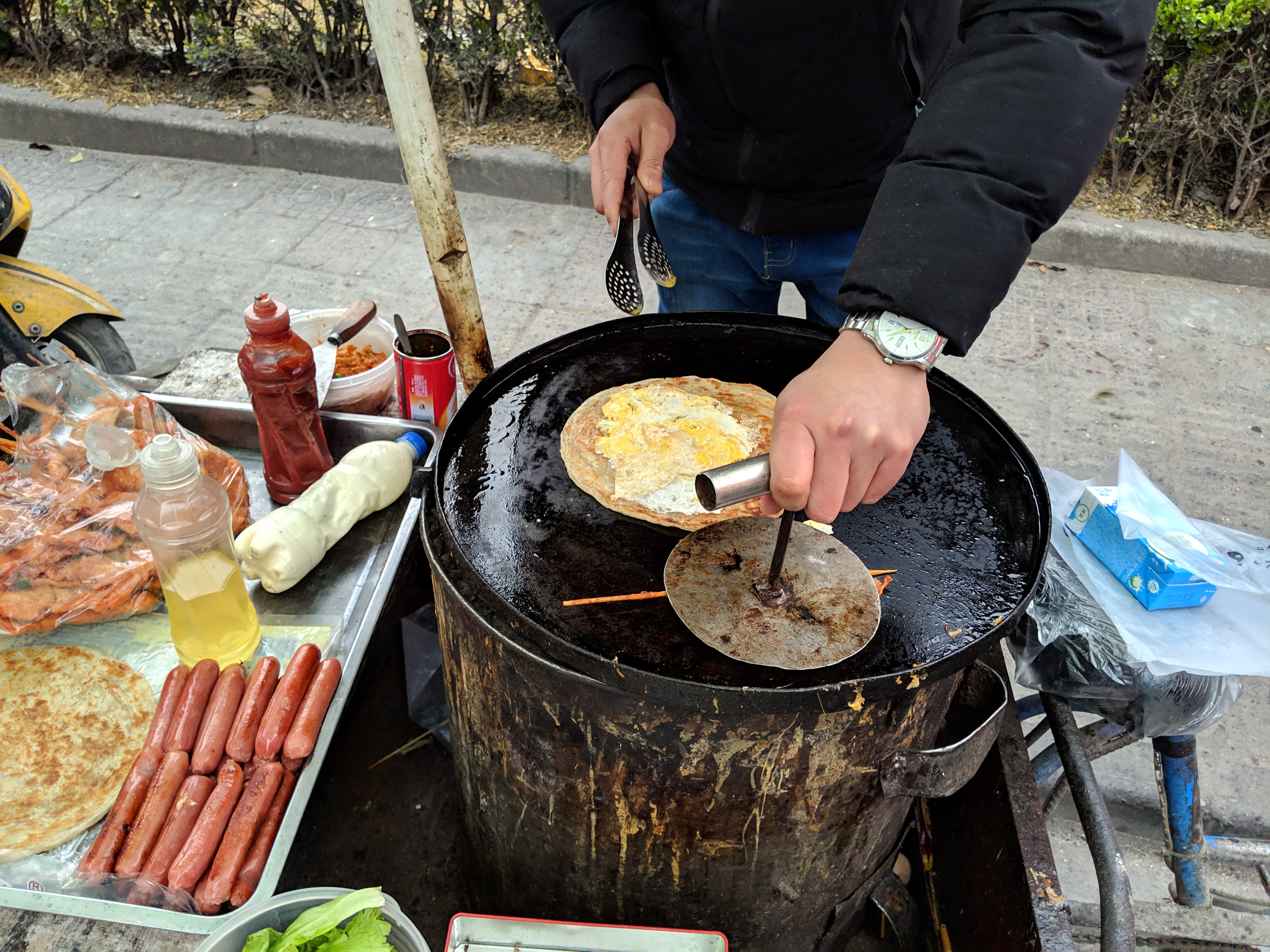
No serious travel story is complete without food, and Shanghai breakfast deserves its own fan club. Street vendors, small storefronts, grills, steamers, and griddles can turn an early morning walk into a delicious research project. A traveler may encounter egg wraps, dumplings, fried bread, rice rolls, sauces, vegetables, and mystery items that require courage, pointing, and possibly a backup snack. The best approach is curiosity with common sense: go where locals line up, watch how ordering works, keep small payment options ready, and accept that you may not know exactly what you ate until later. Sometimes discovery tastes like victory. Sometimes it tastes like “interesting.” Both are educational.
This is where the hacker mindset becomes especially useful. Cities have interfaces. Breakfast stalls have protocols. Subway systems have logic. Hotel light switches have translations that may amuse or confuse. Every moment becomes a small act of reverse engineering. How do people queue? Which side of the escalator moves faster? What app does everyone open before paying? Why does this bathroom switch label sound like a rejected science fiction weapon? Travel becomes richer when you stop treating unfamiliar systems as obstacles and start treating them as puzzles with snacks.
The Cultural Lesson: Curiosity Beats Control
A good hacker abroad does not arrive as a critic with a checklist of how everything “should” work. The better posture is humility. China is vast, complex, regionally varied, and impossible to understand through one airport transfer or one trade show. Shanghai is not Shenzhen. A hotel district is not a factory town. A breakfast cart is not a national policy. A blocked app is not the whole internet. The goal is to observe carefully, ask better questions, respect local rules, protect your data, and avoid confusing inconvenience with insight.
The most useful technical travelers are neither naive nor paranoid. They understand that China offers extraordinary opportunities for learning about electronics, manufacturing, infrastructure, consumer technology, and urban scale. They also understand that the legal, digital, and political environment is different from the United States. That means planning matters. Respect local law. Avoid political demonstrations. Be careful with what you post or message. Protect client and employer data. Separate personal curiosity from professional responsibility. In short: enjoy the adventure, but do not let jet lag become your chief information security officer.
Practical Checklist for a Hacker Abroad Going to China
Before departure, install required apps, set up payment methods, save offline copies of reservations, print key addresses, and confirm that your phone works with an international plan or eSIM. Bring a power bank, plug adapters, a wall charger, and only the project hardware you truly need. Update devices before leaving, enable multifactor authentication, reduce stored sensitive data, and consider using separate travel devices for business trips. Keep your devices with you, avoid unknown USB accessories, and be cautious with public Wi-Fi. After returning home, change passwords used during the trip, review account activity, scan devices if your organization requires it, and archive notes while memories are fresh.
For hardware enthusiasts, add a second checklist: bring a small notebook, business cards, a translation app, photos of connector types you are searching for, and clear specs for anything you hope to source. If you attend a trade fair, take photos of booth signs with permission, label your notes immediately, and do not assume you will remember which vendor sold which magical component after twelve halls of blinking LEDs. You will not. Your brain will merge everything into one giant booth called “Maybe Hall C?”
Extra Travel Experience: What the Long Way to China Teaches You
The first lesson of a very long trip to China is that distance changes your relationship with your tools. At home, your laptop is a workstation. On the road, it becomes a lifeline, library, map cabinet, translation assistant, boarding-pass vault, camera backup, and occasional dinner tray. Your phone becomes even more important. It holds payments, ride-hailing, messaging, maps, tickets, hotel confirmations, and emergency contacts. That dependency feels efficient until your battery drops to 9 percent and you realize you are one cracked screen away from becoming a wandering analog mammal.
The second lesson is that travel rewards redundancy. Save your hotel address in multiple places. Carry a printed copy. Screenshot your passport page and visa information only if you can store them securely. Keep a charger in your backpack and another in your luggage. Have a plan for getting from the airport to the hotel that does not depend on one app loading perfectly at the exact moment your roaming plan decides to take a philosophical break. The best travel systems are boring because boring systems work.
The third lesson is that jet lag makes every interface harder. A payment screen, subway map, hotel elevator, or breakfast menu that would be simple at noon can feel like advanced cryptography at 5:30 a.m. after sixteen hours in the air. Build slack into your first day. Do not schedule your most important meeting immediately after landing unless your professional brand is “haunted spreadsheet.” Walk around, eat something warm, learn the neighborhood, and let your brain synchronize with local time.
The fourth lesson is that the best technical insights often come from ordinary moments. Watching delivery drivers coordinate orders, seeing commuters move through a metro station, observing how vendors use mobile payments, or noticing how QR codes connect physical and digital services can teach more about technology adoption than a polished keynote. China’s technology culture is not only in laboratories or exhibition halls. It is in the way people buy breakfast, unlock bikes, hail rides, message friends, and run tiny businesses from a phone.
The fifth lesson is that communication is a design problem. Language barriers push you to become clearer, kinder, and more visual. A photo of a destination helps. A translated address helps. A drawing of a connector helps. Smiling helps more than it should, though it is not a substitute for correct voltage. When you cannot rely on fluent speech, you learn to communicate through context, examples, gestures, diagrams, and patience. That skill transfers directly back to engineering, where many failures are not technical failures at all but communication failures wearing a lab coat.
The sixth lesson is that travel makes you less precious about your routines. Your favorite keyboard is gone. Your desk setup is gone. Your usual coffee is gone. Your internet habits may not work. And yet, somehow, the project continues. You write notes on a train. You debug code in a hotel room. You sketch ideas after walking through a trade fair. You learn that creativity does not live in your perfect setup; it lives in your ability to adapt when the setup collapses into a backpack full of cables.
Finally, a long trip to China reminds a hacker abroad why curiosity matters. The world is too large, too strange, too engineered, and too delicious to understand from a single screen. You can read about manufacturing ecosystems, internet controls, public transit, mobile payments, and electronics markets forever, but standing inside those systems feels different. It turns abstract knowledge into lived experience. It also gives you better questions, and better questions are the true souvenirs. They take up no luggage space, pass through customs easily, and occasionally lead to your next project.
Conclusion
Hacker Abroad: A Very Long Way To China is more than a travel diary title. It is a reminder that technology is global, physical, cultural, and deeply human. A trip from the United States to Shanghai can include long flights, maglev trains, embedded systems, trade fairs, breakfast carts, mobile payments, internet restrictions, and enough small surprises to keep any curious maker awake even after jet lag wins the wrestling match. For hackers, makers, and tech travelers, China offers a rare chance to see the modern electronics world at scale. Go prepared, travel respectfully, secure your devices, ask good questions, and leave room for the best discovery of all: the one you did not know you came to find.
Source note: This article was synthesized from reputable travel, cybersecurity, technology, and public-information sources, including Hackaday’s original “Hacker Abroad” travel installment, U.S. State Department China travel guidance, FTC public Wi-Fi advice, NCSC travel security guidance, Britannica’s Great Firewall overview, AP reporting on China mobile payments, and electronica Shanghai/electronica China event information.













