
Editor’s note: This article is based on recent archaeological, genetic, and heritage research on Rapa Nui, including peer-reviewed studies and reporting from major science and cultural institutions.
For generations, Easter Island has been handed to the public like a warning label with palm trees: “Cut down all your trees, build giant stone heads, collapse dramatically, and become a cautionary PowerPoint slide.” It was tidy. It was dramatic. It was also, according to a growing body of new research, probably far too simple.
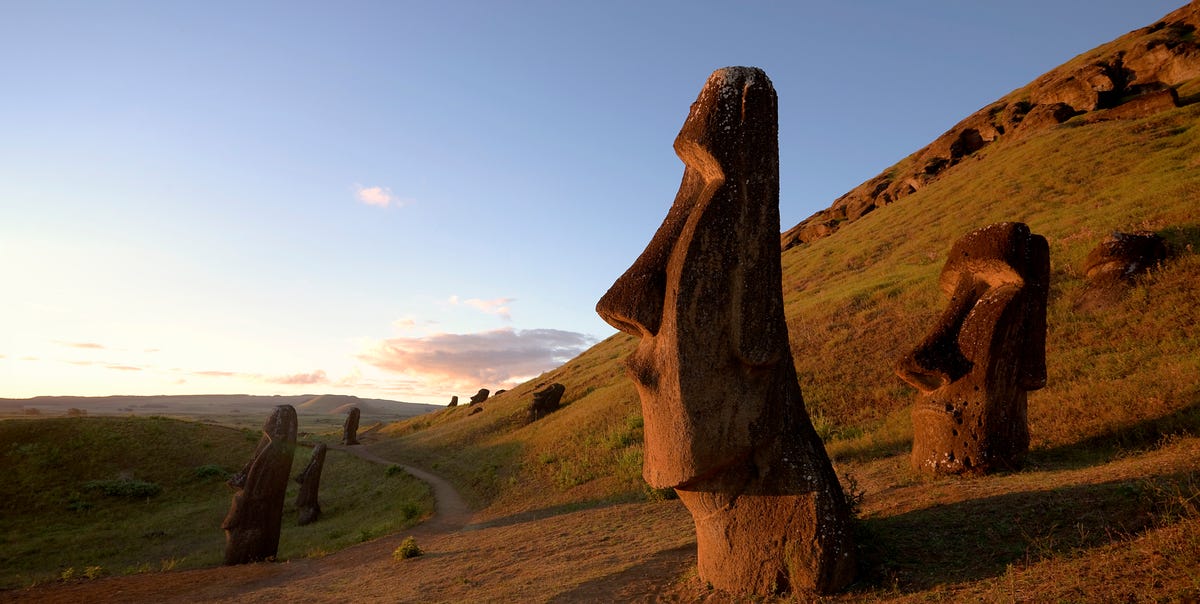
The island, known to its Indigenous people as Rapa Nui, has long been famous for its moai, the monumental stone figures that seem to stare across the landscape with the calm confidence of people who definitely know something we do not. But the latest discoveries are shifting attention away from mystery-movie stereotypes and toward a more human, more impressive story: survival, adaptation, long-distance voyaging, and sophisticated community organization.
Recent findings from ancient DNA, satellite mapping, 3D modeling, and archaeological surveys suggest that the old “ecocide” story may need serious rewriting. Instead of a doomed society that destroyed itself before Europeans arrived, evidence increasingly points to a resilient Polynesian community that adapted to a difficult island environment for centuries. That is not just a footnote. It changes how we understand one of the most famous places on Earth.
The Old Easter Island Story: Collapse, Chaos, and a Very Convenient Moral
The traditional version of Easter Island history goes something like this: Polynesian settlers arrived on a remote volcanic island, built hundreds of giant moai, cut down the forests to move them, exhausted the land, fought among themselves, and suffered a catastrophic collapse before European contact. It became one of the world’s most repeated environmental parables.
The problem is that history rarely behaves like a neat bedtime story, especially when the bedtime story includes cannibalism, civil war, and suspiciously perfect lessons for modern audiences. Researchers have challenged parts of the collapse narrative for years, but recent discoveries have made the counterargument much stronger.
Rapa Nui National Park is recognized by UNESCO for preserving the extraordinary architectural and sculptural legacy of Rapa Nui culture, including the island’s famous ceremonial platforms and moai. The moai are widely understood as ancestral figures, often placed on ahu platforms and facing inland toward communities rather than out to sea. That detail matters because it reframes the statues not as vanity projects but as cultural and spiritual anchors.
Ancient DNA Is Changing the Conversation
One of the biggest recent developments comes from ancient DNA research. A 2024 study published in Nature analyzed the genomes of 15 ancient Rapanui individuals dated from roughly 1670 to 1950. The results found no genetic evidence of a sharp 17th-century population bottleneck that would match the popular idea of a massive pre-European collapse.
That is a big deal. If the island had experienced a dramatic demographic crash before Europeans arrived in 1722, researchers might expect to see genetic signs of that collapse. Instead, the study supports a picture of continuity and resilience. In plain English: the DNA is not backing up the disaster-movie version.
The same genetic research also found evidence of pre-European contact between Rapanui people and Indigenous Americans. That does not mean someone casually paddled over for brunch. It means Polynesian voyaging networks may have been even more extraordinary than many people realized. The Pacific was not an empty barrier. For skilled navigators, it was a highway with waves.
Pre-European Contact With the Americas? That Is Huge
The possibility of contact between Polynesians and people from the Americas has been debated for decades. One famous clue is the sweet potato, a South American crop that spread across Polynesia before European contact. The new DNA evidence adds another powerful layer to that discussion.
If Rapanui ancestors had contact with Indigenous Americans before Europeans entered the picture, then the history of ocean exploration needs a larger stage. It suggests that Indigenous navigators connected distant worlds long before European ships claimed to have “discovered” everything in sight. Apparently, history was networking before LinkedIn.
This does not erase uncertainty. Scholars still debate when, where, and how this contact occurred. But the evidence makes one thing harder to ignore: Rapa Nui was not an isolated dead end. It was part of a dynamic Pacific world shaped by mobility, knowledge, and risk-taking on a scale that still feels astonishing today.
Rock Gardens Reveal a Different Kind of Genius
Another key discovery comes from research into Rapa Nui’s agricultural system. A 2024 Science Advances study used shortwave infrared satellite imagery and machine learning to map rock gardens across the island. These gardens were not decorative landscaping. They were practical, clever farming systems designed to grow crops such as sweet potatoes in a challenging environment.
Rock gardening works by mixing stones into soil or placing stones around planting areas. The rocks can reduce evaporation, stabilize temperature, protect plants from wind, and add minerals as they weather. It is not flashy in the way a giant statue is flashy, but if you are trying to feed a community on a remote island, a good rock garden is basically ancient agricultural engineering with better aesthetics.
The study found that the extent of rock gardening was likely much smaller than some earlier estimates. That matters because large population-collapse theories often assume Rapa Nui once supported a much bigger population that eventually overshot its resources. If the agricultural footprint could support only a few thousand people, then the island may never have had the enormous pre-contact population required by the classic collapse model.
A Smaller Population Does Not Mean a Smaller Achievement
Some readers may hear “smaller population” and assume “less impressive society.” That is exactly backward. If Rapa Nui communities created hundreds of moai, maintained ceremonial centers, farmed poor soils, and navigated political life with limited resources, then their achievements become more impressive, not less.
Instead of imagining a huge, centralized society burning through resources like a bad roommate with your last candle, researchers are increasingly describing smaller communities that adapted intelligently to constraints. The story shifts from reckless collapse to sustainable survival under pressure.
This is why the new findings may rewrite history as we know it. They do not simply add one more statue or one more date. They challenge the moral framework that has shaped public understanding for decades.
The New Moai Found in a Dry Crater Lake
In 2023, researchers documented a newly discovered moai in the dry lakebed of Rano Raraku, the volcanic crater where many of the island’s statues were carved. The statue was relatively small compared with some of the island’s giants, measuring about 5.2 feet, but its discovery was historically meaningful because it emerged in an area exposed by changing environmental conditions.
Rano Raraku is often called the moai quarry, but that phrase undersells it. It is more like a sacred workshop, sculpture park, archaeological archive, and volcanic amphitheater all rolled into one. Hundreds of statues are associated with the crater and its slopes, some completed, some unfinished, and some still attached to the stone from which they were born.
The newly found statue did not single-handedly overturn history. Archaeology rarely works like a movie scene where someone brushes sand off a rock and immediately yells, “This changes everything!” But it did remind researchers that Rapa Nui still holds secrets in plain sight. Even on an island studied for generations, new evidence can appear when landscapes shift.
Fresh Water May Explain Where the Moai Stand
Another important line of research asks why moai and ahu were placed where they were. A 2019 study in PLOS One found that the locations of ahu are best explained by proximity to freshwater sources, especially coastal seeps. That finding turns the statues into part of a practical social landscape, not just a ceremonial one.
Fresh water is one of Rapa Nui’s great challenges. The island has limited surface water, and communities had to understand where drinkable water could be accessed. If ceremonial platforms were placed near freshwater sources, the moai may have marked places central to both spiritual identity and everyday survival.
That is a powerful shift. The statues were not just giant stone celebrities standing around for dramatic sunsets. They may have been tied to resource management, community boundaries, and local identity. In other words, the moai were not separate from life. They were woven into it.
Did the Moai “Walk”?
One of the most fascinating questions about Easter Island is how the Rapa Nui moved statues that could weigh many tons. Older theories imagined logs, sledges, huge labor forces, and the catastrophic removal of forests. More recent experimental archaeology and 3D modeling support a different possibility: the moai may have been moved upright using ropes, rocked side to side in a motion often described as “walking.”
This idea fits Rapanui oral traditions that say the statues walked. It also makes practical sense. Some transport-phase moai appear designed with features that could help controlled rocking movement, including forward lean and bases suited to motion. Instead of requiring absurd numbers of workers, experiments suggest smaller coordinated groups could move statues effectively.
Honestly, that makes the moai even cooler. Dragging a statue is impressive. Designing one so it can be carefully rocked across the landscape like the world’s most intimidating refrigerator is next-level engineering.
3D Modeling Points to Decentralized Moai Production
New 3D mapping of the Rano Raraku quarry has also challenged assumptions about social organization. Recent research led by teams including Binghamton University archaeologist Carl Lipo suggests that moai production may have occurred across multiple distinct quarrying zones or “workshops,” rather than under a single centralized authority.
This matters because giant monuments are often assumed to require top-down control: kings, chiefs, command systems, and large labor pools. But the evidence from Rapa Nui points toward multiple kin-based or community groups working independently within the quarry. Different carving areas, techniques, and production traces suggest a more decentralized system.
That does not make the work less organized. It makes it differently organized. Rapa Nui society may have been capable of producing monumental art through shared cultural values and local group effort rather than through one island-wide command structure. The lesson is subtle but important: complexity does not always wear a crown.
Why the “Ecocide” Label Is Losing Ground
The word “ecocide” became attached to Easter Island because the island was deforested before European arrival. That part is real: Rapa Nui once had palms, and the landscape changed dramatically. But the causes and consequences of that deforestation are more complicated than the old morality tale suggests.
Human land use likely played a role. So did introduced Polynesian rats, which may have eaten palm seeds and slowed forest regeneration. Climate variability, limited resources, and agricultural adaptation all belong in the conversation. The newer research does not claim Rapa Nui was an untouched paradise. It argues that environmental change did not automatically produce a pre-European societal collapse.
The harshest demographic disaster appears to have come later, after European contact, through disease, slave raiding, forced labor, colonial disruption, and other outside pressures. That is a much darker and more historically grounded story than “they destroyed themselves.” It also puts responsibility where it belongs.
What This Discovery Means for World History
The new Easter Island discoveries matter because they challenge a pattern in how history is often told. Indigenous societies are too frequently described as mysterious, doomed, primitive, or self-destructive. Rapa Nui has been forced into that box for decades. The emerging evidence says: not so fast.
Rapanui communities were not passive victims of geography. They were navigators, farmers, engineers, artists, and political actors. They developed strategies for living on one of the most remote inhabited islands on Earth. They created monuments that still command global attention. They may have participated in trans-Pacific contact before Europeans arrived. And they endured.
That does not mean every question is solved. Archaeology is not a vending machine where you insert a shovel and receive certainty. But the direction of the evidence is clear: the old collapse story is being replaced by a more nuanced account of resilience.
Specific Examples That Show the New Picture
Example 1: DNA Without a Collapse Signal
The ancient DNA study found no strong evidence of a severe population bottleneck in the 1600s. That directly challenges the idea that Rapa Nui society collapsed before Europeans arrived.
Example 2: Rock Gardens Built for Survival
Satellite mapping of rock gardens suggests a population adapted to limited food production rather than exploding beyond the island’s capacity. The agricultural system looks careful, not careless.
Example 3: Moai Near Fresh Water
The link between ahu locations and freshwater sources suggests that monuments were connected to practical community needs, not only ritual display.
Example 4: Walking Statues
If moai were moved upright with ropes, the Rapa Nui may have transported massive statues with fewer resources than older theories assumed. That weakens arguments that statue transport required total ecological ruin.
Example 5: Multiple Quarry Workshops
3D modeling suggests moai production was spread among independent groups. This points to social cooperation and local organization rather than a single centralized system forcing the entire island into monument mania.
Why Rapa Nui Still Matters Today
Modern Rapa Nui is not just an archaeological site. It is a living community, a Chilean territory, a UNESCO World Heritage landscape, and a place where heritage protection is urgent. Climate change, erosion, wildfires, tourism pressure, and sea-level rise threaten the island’s cultural sites. The moai may look eternal, but they are carved from vulnerable volcanic stone. Even legends need maintenance.
That makes the new discoveries more than academic updates. They affect how the world values Rapa Nui heritage. If the island is seen only as a symbol of failure, preservation becomes an act of saving ruins. If it is understood as a story of ingenuity and survival, preservation becomes an act of respecting living knowledge.
Experience-Based Reflection: What Easter Island Teaches Us Now
There is something humbling about imagining a person standing before a moai for the first time. The statue does not explain itself. It does not offer a QR code, a timeline, or a convenient “Top 10 Things You Misunderstood About Me” list. It simply stands there, weathered by salt air and centuries, asking the visitor to be patient.
That patience may be the most important experience connected to Rapa Nui. The island teaches us that history is not always found in the loudest story. Sometimes the loudest story is just the easiest one to repeat. For years, Easter Island was treated as a global symbol of environmental stupidity. It appeared in classrooms, documentaries, books, and casual conversations as proof that humans inevitably destroy their own home. The new discoveries do not make environmental responsibility less important. They make lazy storytelling less acceptable.
Imagine walking through Rano Raraku, where moai rise from the slopes as if the mountain itself is remembering faces. Some statues are upright. Others lie unfinished. A few seem almost ready to emerge. The experience is not one of collapse. It is one of process. You see work interrupted, traditions layered, choices made in stone. It feels less like a graveyard and more like a workshop where the workers stepped away and history rushed in behind them.
The rock gardens offer a different kind of experience. They are quieter, easier to miss, and far less likely to appear on postcards. Yet they may be just as important as the statues. A visitor who learns how these gardens function begins to see intelligence in the ground itself. Stones become tools. Poor soil becomes possibility. Survival becomes design. There is a lesson there for the modern world, which often confuses technology with screens and forgets that technology can also be a rock placed carefully in a field.
The DNA discoveries add an even wider emotional dimension. They suggest that Rapa Nui was connected to the broader Pacific and perhaps to the Americas before European arrival. That possibility changes the feeling of remoteness. The island is still geographically isolated, of course, but isolation is not the same as disconnection. For skilled Polynesian navigators, the ocean was not simply emptiness. It was knowledge, memory, route, risk, and opportunity.
For anyone writing, teaching, traveling, or simply thinking about Easter Island, the experience should now include a little humility. The old story was too confident. The new story is more interesting because it allows room for uncertainty, adaptation, and human dignity. It asks us to see the Rapanui not as characters in a disaster fable but as people who made difficult decisions in a demanding place.
That may be the real discovery at Easter Island: not just a new statue, a new genome, or a new satellite map, but a new way of listening. History changes when evidence changes. It also changes when we stop forcing the past to perform simple lessons for the present. Rapa Nui does not need to be a cartoon warning about collapse. It can be something better: a story of endurance, creativity, loss, survival, and the stubborn human habit of making meaning, even on the farthest edge of the sea.
Conclusion: Easter Island Is Not Done Surprising Us
The new discoveries at Easter Island do not erase every mystery. They deepen it. Ancient DNA challenges the idea of a pre-European population crash. Rock garden mapping suggests a society that lived within tight ecological limits. Freshwater research reveals practical logic behind sacred landscapes. 3D modeling points to decentralized moai production. The newly discovered moai in Rano Raraku reminds us that the island still has more to reveal.
Together, these findings rewrite Rapa Nui’s story from one of simple self-destruction to one of resilience and complexity. That version may be less dramatic than the old collapse myth, but it is far more powerful. After all, survival is not boring. Sometimes it is the greatest achievement of all.













