
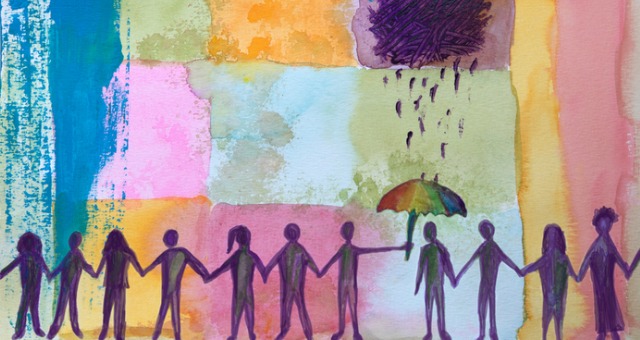
Disconnection is one of those problems that can look deceptively quiet. It does not always kick down the door wearing a dramatic cape. Sometimes it shows up as a student who stops logging in, a coworker who says “I’m fine” with the emotional range of a printer, a friend who replies to texts three weeks later, or a family dinner where everyone is technically present but spiritually living inside their phones.
In a world with faster Wi-Fi, smarter tools, and more ways to “stay in touch” than ever before, many people still feel unseen, unheard, and unsupported. That is the strange riddle of modern life: we can message anyone in seconds, yet genuine connection can feel like trying to find a parking space at the mall in December.
The good news is that disconnection is not unbeatable. Research on social connection, mental health, online learning, leadership, and compassion points toward a practical antidote: using courage, compassion, and connection intentionally. These are not fluffy words stitched onto a motivational pillow. They are human skills that affect learning, health, trust, resilience, and belonging.
This article explores how courage helps us become honest, compassion helps us respond with care, and connection helps us build the relationships that make people feel they matter. Whether you are an educator, leader, parent, student, teammate, or simply a human trying not to become a lonely houseplant, these three practices can help combat disconnection in meaningful ways.
Why Disconnection Has Become a Serious Problem
Disconnection is not simply the absence of social activity. A person can be surrounded by people and still feel alone. It is possible to sit in a crowded classroom, attend five Zoom meetings, comment on twelve posts, and still feel like no one actually knows what is happening beneath the polished “I’m good, thanks” routine.
Public health research has increasingly treated loneliness and social isolation as major concerns, not minor emotional inconveniences. The U.S. Surgeon General’s advisory on loneliness and isolation described social connection as essential to health and well-being. The Centers for Disease Control and Prevention has also emphasized that social connectedness can help reduce risks associated with serious physical and mental health conditions, including depression, anxiety, heart disease, stroke, and dementia.
That matters because disconnection affects more than mood. It can weaken motivation, reduce trust, make people less likely to ask for help, and increase the feeling that everyone else received an instruction manual for life while you are assembling yours with missing screws.
Disconnection in Education, Work, and Everyday Life
Disconnection became especially visible during and after the rapid expansion of online learning and remote work. Online education has many benefits: flexibility, access, convenience, and the ability to attend class without hunting for a parking spot or pretending cafeteria coffee is “not that bad.” But online environments can also make it easier for students to disappear quietly.
Federal education data shows that distance education grew substantially before and during the pandemic years. In fall 2018, millions of college students were already enrolled in distance education courses, and by fall 2021, a majority of undergraduate students had taken at least one distance education course. This shift made one truth impossible to ignore: technology can deliver content, but it does not automatically deliver belonging.
In workplaces, the same pattern appears. Remote and hybrid teams may communicate constantly, yet still experience thin relationships. A full calendar does not equal community. In fact, a packed day of transactional meetings can leave people more isolated because they interact all day without ever feeling personally connected.
At home, disconnection can hide behind busyness. Families may share a roof but not attention. Friends may exchange memes but not honesty. Communities may share geography but not trust. The result is a culture where people are reachable but not always available, visible but not always known.
The Three-Part Antidote: Courage, Compassion, and Connection
Combating disconnection requires more than telling people to “reach out.” That phrase is well-meaning, but it can sound like asking someone with a broken leg to “just jog lightly.” Real connection often requires emotional risk, practical care, and repeated effort.
Courage, compassion, and connection work together because each one solves a different part of the problem.
Courage Makes Honesty Possible
Courage is the willingness to be real when pretending would be easier. In the context of disconnection, courage often looks small but powerful. It might mean admitting, “I’m struggling to keep up,” “I felt left out,” “I don’t understand,” or “I need help.” These sentences are short, but emotionally they can feel like jumping out of an airplane while holding a sandwich instead of a parachute.
Courage also matters for educators and leaders. A courageous teacher acknowledges when a class feels disconnected and invites students back into conversation. A courageous manager notices silence in a meeting and asks what is not being said. A courageous friend sends the awkward but caring message: “You’ve seemed distant lately. I’m here.”
Courage is not oversharing or turning every interaction into a dramatic documentary. It is choosing appropriate honesty over polished distance. When people model realness, they create permission for others to be human too.
Compassion Turns Awareness Into Action
Compassion is more than noticing that someone is having a hard time. It includes the desire to reduce suffering. Empathy says, “I can sense what you may be feeling.” Compassion adds, “How can I respond in a way that helps?”
This distinction matters. Without compassion, awareness can become passive observation. We may notice that a student is disengaged, a coworker is overwhelmed, or a loved one is withdrawn, but then move on because we are busy, uncomfortable, or unsure what to say. Compassion interrupts that drift.
Compassion does not always require grand gestures. Often, it is practical and ordinary: checking in privately, offering flexibility, giving clear feedback without humiliation, listening without immediately trying to fix everything, or remembering that behind every late assignment, short email, or tired expression is a person with a full life.
Compassion also includes self-compassion. People who are disconnected often blame themselves harshly. They may think, “Everyone else is handling this better,” which is rarely true. Most people are improvising adulthood with invisible duct tape. Self-compassion helps people stop treating their own struggles like moral failures.
Connection Creates Belonging Over Time
Connection is not built by one inspirational announcement. It grows through repeated signals of safety, attention, trust, and mutual respect. In a classroom, connection may come from timely feedback, warm communication, student choice, discussion, and instructor presence. In a workplace, it may come from psychological safety, shared purpose, mentoring, recognition, and conversations that are not only about deadlines.
True connection is not the same as constant contact. A person can receive dozens of notifications and still feel emotionally invisible. Meaningful connection requires quality: being heard, being valued, being included, and having some sense that your presence changes the room.
That is why small habits matter. Saying someone’s name. Following up after a hard conversation. Asking a second question instead of accepting the automatic answer. Remembering details. Creating space for quiet people. These practices may seem minor, but they are the social equivalent of compound interest. Over time, they build trust.
How Educators Can Use Courage, Compassion, and Connection
Education is one of the clearest places to see the cost of disconnection. Students who feel anonymous are less likely to participate, ask questions, persist through difficulty, or seek support. In online and hybrid courses, the risk can be even higher because silence is easy to miss. A student can vanish behind a blank screen, a muted microphone, or a login record that looks like digital tumbleweed.
Faculty Focus and related teaching research have emphasized the importance of communication, empathy, timely feedback, and belonging in student engagement. The heart of the issue is simple: students learn better when they feel seen as people, not just usernames attached to assignments.
Use Courage to Humanize the Learning Space
Educators can model courage by being appropriately transparent. This might mean acknowledging that a difficult unit is challenging, sharing a brief example of struggling through learning, or saying, “I know many of you are balancing work, family, stress, and this course. Let’s talk about how to stay engaged.”
Humanizing the learning space does not reduce academic standards. It strengthens the conditions that help students meet them. A compassionate course can still be rigorous. In fact, rigor without connection often becomes a wall; rigor with connection becomes a climb with handholds.
Use Compassion in Feedback and Communication
Feedback is one of the most powerful tools for connection or disconnection. A cold comment can make a student feel foolish. A vague comment can leave them confused. A compassionate comment can be honest, specific, and encouraging at the same time.
For example, instead of writing, “This is unclear,” an instructor might write, “Your main idea is promising, but the second paragraph needs a clearer link to your thesis. Try adding one sentence that explains why this evidence matters.” The second version still identifies the problem, but it gives the student a way forward. Compassion is not lowering the bar; it is lighting the path to reach it.
Use Connection to Build Early Belonging
Early connection matters. Students often decide quickly whether a course feels welcoming or cold. A welcome video, introduction forum with meaningful prompts, quick instructor responses, low-stakes check-ins, and peer interaction can help students feel part of a learning community.
The key is consistency. One warm announcement in week one is nice. Continued presence throughout the course is better. Students should not feel that the instructor entered the room, waved cheerfully, and then disappeared into the academic fog.
How Leaders Can Combat Workplace Disconnection
Workplace disconnection can be sneaky because productivity may continue for a while even as belonging declines. Teams can hit targets while trust erodes. Employees can answer emails while feeling emotionally checked out. Leaders may not notice the problem until collaboration weakens, turnover rises, or meetings become as lively as a bowl of unseasoned oatmeal.
Compassionate leadership research highlights the value of being present, direct, transparent, and caring. Strong leaders do not avoid hard conversations; they handle them with humanity. They understand that employees are not machines that occasionally request vacation days. They are people whose performance is tied to clarity, trust, purpose, and support.
Courageous Leaders Address Silence
When teams are disconnected, silence often grows. People stop offering ideas. They avoid disagreement. They keep concerns private. Courageous leaders do not confuse silence with agreement. They ask better questions: “What are we missing?” “Who has a different view?” “What would make this easier to discuss?”
This kind of courage can feel uncomfortable because it invites truth. But truth is usually less expensive than avoidance. Unspoken concerns do not disappear; they just start charging interest.
Compassionate Leaders Make Care Practical
Care must be more than a slogan printed on a conference room poster. Practical compassion includes manageable workloads, clear expectations, respectful communication, flexibility when possible, and recognition that people have lives beyond the organization.
It also includes accountability. Compassion does not mean ignoring harmful behavior or pretending poor performance is fine. It means addressing issues directly while preserving dignity. A compassionate leader can say, “This needs to improve, and I want to support you in improving it.” That is very different from blame, shame, or managerial thundercloud behavior.
Connected Teams Create Psychological Safety
Connected teams are not teams where everyone agrees. They are teams where people can speak honestly without fear of ridicule or retaliation. This creates psychological safety, which helps people share ideas, admit mistakes, ask questions, and learn faster.
Connection at work grows through rituals and norms: meaningful onboarding, mentoring, regular one-on-ones, inclusive meetings, shared celebrations, and space for informal conversation. People do not need forced fun with matching T-shirts. They need real opportunities to know and trust one another.
How Individuals Can Rebuild Connection in Daily Life
Not everyone controls a classroom or workplace, but everyone can practice connection. The daily work of combating disconnection often begins with small choices that seem almost too simple to matter. They matter anyway.
Start With One Honest Check-In
Choose one person and send a message that is specific, warm, and real. Instead of “We should catch up sometime,” try, “I was thinking about you today. How have you really been?” Specificity opens a door. Generic phrases often lean politely against the door and then wander away.
Listen Longer Than Feels Convenient
Many conversations fail because we listen just long enough to prepare our own reply. Connection improves when we listen to understand, not to win, fix, diagnose, or launch into a story about ourselves that begins, “That reminds me…” Listening is one of the most underrated forms of generosity.
Create Low-Pressure Rituals
Connection thrives on repetition. A weekly walk, monthly dinner, Sunday phone call, shared study session, or five-minute daily check-in can create stability. The ritual does not have to be fancy. In fact, the best rituals are usually simple enough to survive real life.
Reduce Digital Substitutes When They Replace Real Contact
Digital communication can support connection, but it can also become a substitute for it. Liking a post is not the same as asking how someone is doing. Watching someone’s life through updates is not the same as being in it. Use technology as a bridge, not a bunker.
Specific Examples of Courage, Compassion, and Connection in Action
Imagine a student who has missed two weeks of assignments. A disconnected response says, “Late work is not accepted.” A compassionate and still accountable response says, “I noticed you have missed recent assignments. Please contact me by Friday so we can discuss your options and create a plan.” The second response does not erase standards; it invites re-engagement.
Imagine a remote employee who rarely speaks in meetings. A disconnected leader assumes they have nothing to contribute. A connected leader follows up privately: “I noticed you were quiet today. I value your perspective and wanted to check whether there was anything you wanted to add or anything making it hard to jump in.” That small invitation can change the entire tone of participation.
Imagine a friend who keeps canceling plans. A disconnected response takes it personally and withdraws. A courageous response says, “I miss you, and I’m wondering if you’re overwhelmed. No pressure to explain everything, but I care about you.” That sentence may become a lifeline.
Common Barriers That Keep People Disconnected
If connection is so important, why do people avoid it? Because connection requires vulnerability, and vulnerability has terrible public relations. Many people associate vulnerability with weakness, embarrassment, or emotional exposure. They would rather appear self-sufficient than risk needing someone.
Another barrier is fear of saying the wrong thing. People avoid compassionate conversations because they worry they will make things worse. But silence can also communicate something, often something unintended: “You are on your own.” A sincere, imperfect check-in is usually better than perfect avoidance.
Busyness is another major barrier. Modern schedules can turn relationships into leftovers. We give people whatever energy remains after work, tasks, errands, and digital noise. But relationships rarely flourish on crumbs. Connection requires attention, even when attention feels expensive.
Building a Culture Where People Feel They Matter
To combat disconnection at scale, courage, compassion, and connection must become cultural habits, not occasional rescue missions. A culture of connection asks better questions. Who is missing from the conversation? Who feels unseen? Where are people afraid to speak honestly? What systems make care harder than it needs to be?
In schools, that may mean designing courses with belonging in mind. In organizations, it may mean training leaders to communicate with clarity and compassion. In communities, it may mean creating spaces where people can gather across differences. In families, it may mean protecting device-free time and practicing honest conversation before problems become emotional sinkholes.
The goal is not to create a world where nobody ever feels lonely. Loneliness is part of being human. The goal is to create environments where loneliness is noticed, where support is accessible, and where people do not have to perform perfection to receive care.
Experiences Related to Using Courage, Compassion, and Connection to Combat Disconnection
One of the clearest experiences related to this topic happens in classrooms, especially online classrooms. A student may begin the semester with good intentions, fresh notebooks, and the heroic belief that this time they will not procrastinate. Then life arrives with its usual subtlety: work hours change, a child gets sick, anxiety spikes, Wi-Fi fails, and suddenly the student is behind. Once behind, the student may feel embarrassed. Embarrassment becomes silence. Silence becomes absence. Absence becomes disconnection.
In that moment, courage matters on both sides. The student needs courage to send the uncomfortable email: “I am behind and I need help.” The instructor needs courage to respond not with suspicion, but with clarity and care. A compassionate response can turn a disappearing student into a returning student. It might not solve every problem, but it can interrupt the shame spiral. That interruption is powerful.
A similar experience often appears at work. Consider a new employee who joins a hybrid team. Everyone is polite. There are onboarding documents, shared drives, and enough acronyms to qualify as a second language. But the employee does not yet know whom to ask for help, which questions are safe, or whether their ideas are welcome. They attend meetings, smile on camera, and slowly feel like a guest in a house where everyone else knows which drawer holds the forks.
A connected team changes that experience through intentional gestures. A mentor checks in. A manager explains not only tasks but norms. Teammates invite questions without making the new person feel like a confused tourist. Compassion becomes structure: clear expectations, friendly follow-ups, and permission to learn out loud. Courage becomes participation: the new employee asks questions, shares ideas, and admits what they do not know. Over time, connection turns the workplace from a system into a community.
In personal life, the experience can be even more tender. Many adults quietly lose connection because friendships are not built into daily routines the way they were in school. Nobody rings a bell and sends everyone to lunch together. Maintaining friendship requires effort, planning, and the emotional bravery to say, “I miss you,” without knowing whether the other person will say it back.
Compassion helps here because people often withdraw when they are overwhelmed, not because they do not care. A friend who stops replying may be drowning in stress, grief, depression, caregiving, or plain exhaustion. Connection is rebuilt when someone reaches out without accusation: “No need to respond perfectly. I just want you to know I’m here.” That kind of message carries warmth without pressure.
There is also an inner experience. Disconnection is not only between people; sometimes it happens within a person. People become disconnected from their own needs, values, emotions, and limits. They say yes when they mean no. They perform competence while feeling depleted. They confuse being useful with being worthy. Courage helps them tell the truth to themselves. Compassion helps them stop attacking themselves for being tired. Connection helps them seek people who support the person, not just the performance.
These experiences show that combating disconnection is rarely dramatic. It is usually ordinary, repeated, and deeply human. It is the teacher who writes one more caring email. The leader who asks one better question. The friend who sends the honest text. The parent who puts down the phone. The student who admits they are lost. The coworker who makes room for someone quieter. The person who decides that being real is worth the risk.
And yes, sometimes it feels awkward. Connection often does. But awkward is not failure. Awkward is frequently the sound of people trying to remember how to be human together.
Conclusion: Reconnection Is a Practice, Not a Personality Trait
Using courage, compassion, and connection to combat disconnection is not about becoming endlessly cheerful, socially perfect, or emotionally fluent in every situation. It is about practicing small, brave acts that make people feel less alone.
Courage allows us to be honest. Compassion allows us to respond with care. Connection allows us to build trust over time. Together, they create classrooms where students feel seen, workplaces where people feel valued, families where honesty is welcome, and communities where belonging is more than a nice word in a mission statement.
Disconnection may be a modern epidemic, but reconnection is a human skill we can practice daily. It begins when someone decides to notice, to ask, to listen, to admit, to repair, to include, and to care. Not perfectly. Not dramatically. Just sincerely.
In a noisy world, that sincerity can be revolutionary. It can also be surprisingly simple: look up, reach out, tell the truth kindly, and make room for another person to do the same.
Note: This article synthesizes public information and research from reputable U.S. sources on social connection, loneliness, compassion, education, leadership, and well-being. It is fully rewritten in original language for web publication.










