
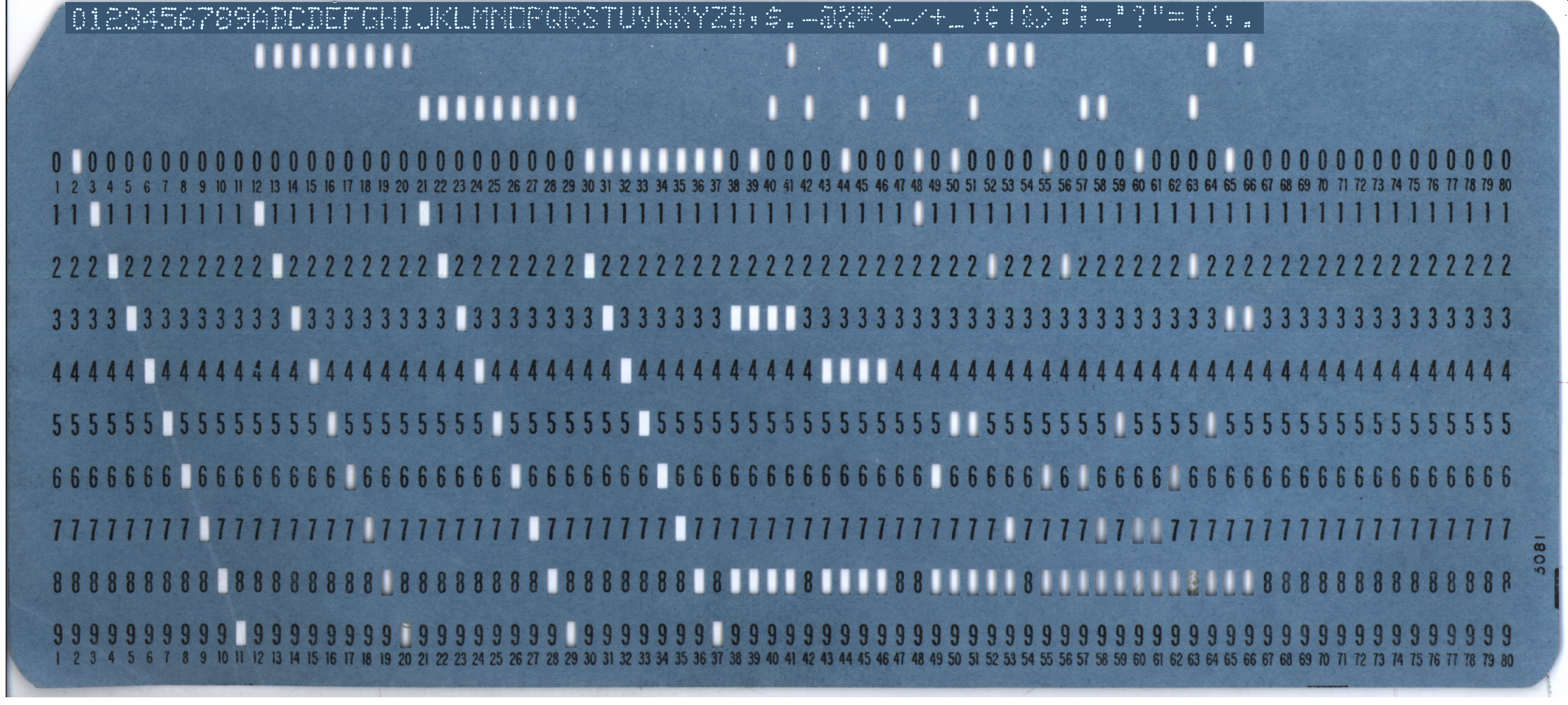
Once upon a time, computers were terrible at talking to each other. Not because they lacked intelligence, but because they could not agree on how to spell “hello” once the conversation crossed a language, platform, or operating system boundary. A file written on one machine could arrive on another looking like alphabet soup with a side order of mysterious boxes. Accented letters turned into hieroglyphic confetti. Japanese text became digital spaghetti. Currency symbols went missing like socks in a dryer.
Then came Unicode, the ambitious attempt to build one universal character set for the modern world. Its mission sounds simple: give every character used in writing systems, symbols, punctuation, and emoji a stable number so computers can store, exchange, and display text reliably. In practice, that meant solving one of the most deliciously complicated problems in computing: how to represent human writing, in all its beauty and chaos, without making software engineers cry into their keyboards.
What Is Unicode?
Unicode is a universal text encoding standard. It assigns a unique code point to characters, symbols, marks, scripts, and many other elements used in digital text. A code point is usually written in the form U+ followed by hexadecimal numbers. For example, the capital letter “A” is U+0041, the euro sign is U+20AC, and the grinning face emoji is U+1F600.
The magic of Unicode is not that it invented letters. Humanity had already handled that department with impressive enthusiasm. Unicode’s real achievement is giving software a shared map. Whether you are sending Vietnamese, Arabic, Hindi, Cherokee, mathematical symbols, or an emoji that looks like it has seen too many Monday meetings, Unicode helps devices understand what character you meant.
Before Unicode: The Great Encoding Jungle
Before Unicode became the default foundation of digital text, character encoding was a jungle of incompatible systems. ASCII worked well for basic English letters, digits, and control characters, but it was tiny. It could not comfortably handle the world’s writing systems, accents, currency signs, or complex scripts. Extended encodings appeared, each solving a local problem but creating global confusion.
One region had one encoding. Another vendor had another. A database might store text in one format, a browser might interpret it as another, and suddenly “résumé” became “résumé.” This phenomenon is often called mojibake, a wonderful word for a terrible user experience. It is what happens when bytes are decoded using the wrong character encoding. The result is not a language. It is a cry for help.
The Early Vision: Unique, Universal, and Uniform
The idea behind Unicode emerged in the late 1980s from work involving engineers connected with Xerox and Apple, including Joe Becker, Lee Collins, and Mark Davis. The name “Unicode” was meant to suggest a unique, universal, and uniform character encoding. That was a bold promise in a world where software companies were still building their own text kingdoms with very tall walls.
The original dream was direct and practical: create a standard wide enough to encode the world’s important writing systems and stable enough that text could survive travel across platforms. Unicode was not just a technical standard. It was a peace treaty for text.
How Unicode Works
Code Points Are Not Fonts
A common misunderstanding is that Unicode defines how characters look. It does not. Unicode defines what a character is and gives it a code point. Fonts decide how that character appears visually. That is why the same letter can look elegant in one font, stern in another, and like it owns a coffee shop in a third.
For example, Unicode can say, “This is the Latin capital letter A.” A font decides whether that A looks like a textbook letter, a luxury brand logo, or something carved into a wizard’s door.
Characters, Glyphs, and Grapheme Clusters
Unicode also teaches us that the word “character” is slippery. A user may think of “é” as one character. Technically, it can be represented as a single precomposed code point or as an “e” followed by a combining accent mark. Both can look the same on screen.
This is where grapheme clusters enter the party. A grapheme cluster is what a user typically experiences as one visible character, even if it is made from multiple Unicode code points. Many emoji work this way. Some family emoji, flags, skin tone modifiers, and gender variations are sequences rather than single code points. So yes, one emoji can be a tiny parade of code points wearing a trench coat.
Unicode Encoding Forms: UTF-8, UTF-16, and UTF-32
Unicode itself is the character set. Encoding forms are ways to store those code points as bytes. The three most important are UTF-8, UTF-16, and UTF-32.
UTF-8: The Web’s Favorite Workhorse
UTF-8 is the dominant encoding on the web because it is compact, flexible, and backward-compatible with ASCII. Basic English characters use one byte, while other characters use multiple bytes. This makes UTF-8 efficient for English-heavy text while still supporting global scripts. It is the encoding equivalent of a backpack that expands when needed.
For websites, APIs, databases, and modern software projects, UTF-8 is usually the safest default. It handles international text gracefully, avoids many legacy encoding traps, and works beautifully with web standards.
UTF-16: The Middle Path With Surrogates
UTF-16 uses one or two 16-bit code units. Many common characters fit into one code unit, while characters outside the Basic Multilingual Plane require a pair of code units called a surrogate pair. UTF-16 has been widely used in environments such as Java, JavaScript, Windows APIs, and older internal string systems.
The important lesson is that “string length” can become tricky. Counting code units is not the same as counting user-perceived characters. If your app limits a username to ten “characters” but counts UTF-16 code units, emoji users may discover that their dragon emoji has eaten the form validation rules.
UTF-32: Simple but Spacious
UTF-32 stores each Unicode code point using a fixed 32-bit unit. It is conceptually simple because every code point has the same storage width. The trade-off is size. UTF-32 can be wasteful for ordinary text, especially when compared with UTF-8. It is useful in some internal processing situations, but it is rarely the best choice for web storage or transmission.
Why Unicode Matters for the Web
Unicode is one of the quiet foundations of the internet. HTML, XML, CSS, JSON, databases, programming languages, mobile operating systems, and search engines all rely on consistent text representation. Without Unicode, multilingual websites would be fragile, global e-commerce would be messier, and social media would contain even more squares, question marks, and broken symbols than it already does on a bad day.
For SEO, Unicode matters because search engines need to understand text correctly. A page title with smart punctuation, accented names, non-English keywords, or local currency symbols should be encoded consistently. If a website mishandles encoding, search snippets can look broken, users lose trust, and crawlers may misunderstand content. Good encoding is not glamorous, but neither is plumbing until the kitchen floods.
Unicode and Internationalization
Internationalization is the process of designing software so it can support different languages, regions, writing systems, formats, and cultural expectations. Unicode is central to that work, but it is only part of the story. Text direction, sorting rules, date formats, number formats, calendars, line breaking, and plural rules all matter too.
This is where projects such as CLDR, the Common Locale Data Repository, and ICU, International Components for Unicode, become important. CLDR provides locale data for languages and regions, while ICU offers libraries that help developers handle text processing, formatting, collation, normalization, and internationalization. In other words, Unicode gives characters their passports; CLDR and ICU help them behave politely when they arrive in another country.
The Emoji Explosion
No discussion of Unicode can avoid emoji. Emoji began as a practical feature in Japanese mobile communication and eventually became a global visual language. Unicode helped standardize emoji so that a smiling face sent from one device could be recognized on another, even if the artwork differed by platform.
Emoji also show how Unicode balances technology, culture, and politics. Adding a new emoji is not as simple as someone yelling, “We need a disco raccoon!” and pressing a button. Proposals are evaluated based on expected usage, distinctiveness, compatibility, and other criteria. Once approved, vendors such as Apple, Google, Microsoft, and Samsung create their own visual designs. That is why the same emoji can look cheerful on one platform and mildly haunted on another.
Normalization: When Identical-Looking Text Is Not Identical
Unicode normalization solves a subtle but important problem: the same visible text can be represented in more than one way. The character “ñ” might be stored as a single code point or as “n” plus a combining tilde. To humans, both look the same. To software, they may be different sequences unless normalized.
Normalization is critical for search, login systems, databases, file names, and security. Without it, two visually identical strings might fail to match. A user could search for a name and get no results because the database stored the accent differently. That is not a user problem; that is a software problem wearing a tiny fake mustache.
Security: Unicode’s Sneaky Side
Unicode also introduces security challenges. Some characters from different scripts look similar or identical. Attackers can use these confusable characters in phishing domains, fake usernames, or misleading source code. For example, a Latin “a” and a Cyrillic character that looks like “a” may appear nearly identical to a reader but have different code points.
This does not make Unicode dangerous. It makes text powerful. The solution is careful validation, display policies, script restrictions where appropriate, and security-aware libraries. Developers should not treat Unicode as a decorative layer. It is part of the application’s data model, user interface, and security surface.
Common Developer Mistakes With Unicode
Assuming One Character Equals One Byte
This mistake belongs in the software museum next to “works on my machine.” In UTF-8, a character may use one to four bytes. If software assumes otherwise, it can truncate text, break strings, or corrupt data.
Counting Code Units Instead of User-Visible Characters
Many programming environments expose string length as code units, not grapheme clusters. This matters for emoji, combining marks, and complex scripts. A text box that counts incorrectly can annoy users and embarrass developers.
Ignoring Normalization
Search, comparison, and authentication systems should understand normalization. Otherwise, visually identical strings may behave differently. That is the sort of bug that hides quietly until a customer with an accent in their name opens a support ticket.
Forgetting Directionality
Languages such as Arabic and Hebrew are written right-to-left. Mixed-direction text can be tricky, especially when numbers, punctuation, and Latin words appear inside it. Proper Unicode bidirectional handling is essential for readable, respectful interfaces.
Unicode for Content Creators and SEO Writers
If you publish content online, Unicode affects you even if you never write code. Your headlines, meta descriptions, product names, author names, quotes, symbols, and multilingual keywords all depend on correct encoding. A beautifully written article can look unprofessional if apostrophes, dashes, or accented letters break in the browser.
For Google and Bing, clean text helps indexing and presentation. Use UTF-8, declare it clearly in your HTML, avoid copying strange invisible characters from word processors, and test pages on multiple devices. Also be careful with fancy Unicode text generators. Mathematical bold letters and decorative scripts may look stylish, but they can harm accessibility, search clarity, and screen reader behavior.
The Cultural Achievement of Unicode
Unicode is not just a technical standard. It is cultural infrastructure. It helps preserve scripts, supports minority languages, enables global publishing, and lets people write their names correctly. That last point matters. A name is not an optional decoration. When software cannot represent someone’s name, it sends a quiet message that the system was not built for them.
By encoding scripts and symbols from around the world, Unicode helps digital communication become more inclusive. It does not solve every language technology problem, but it gives software a shared foundation. Without that foundation, the global internet would be less global, less searchable, and much more annoying.
Experience: What Unicode Teaches Anyone Who Works With Text
Working with Unicode is a humbling experience because it teaches a lesson that every developer, editor, designer, and SEO specialist eventually learns: text is not simple. It only looks simple because decades of standards work are quietly holding the stage together while the rest of us type, paste, publish, and pretend everything is fine.
The first real Unicode lesson often arrives through a broken character. Maybe a client sends a product description with curly quotes, accented words, and a trademark symbol. It looks fine in the document, but after upload, the website displays strange replacement characters. The page suddenly appears less like a professional article and more like a ransom note assembled by a malfunctioning printer. That moment is usually when people discover that encoding is not an abstract technical footnote. It is the difference between readable content and digital soup.
Another common experience comes from multilingual SEO. Suppose a website serves English, Spanish, Vietnamese, and Arabic audiences. The content strategy may be excellent, the keyword research may be sharp, and the page structure may be clean. But if the site mishandles character encoding, search visibility and user trust suffer. Vietnamese tone marks must display correctly. Spanish accents must survive database storage. Arabic text needs proper directionality. Even small errors can make a page feel careless. Unicode reminds us that international audiences deserve more than translated words; they deserve technical respect.
Unicode also changes how people think about names. In older systems, forms often rejected apostrophes, accents, hyphens, or non-Latin characters. That design may have been convenient for a database, but it was not convenient for human beings. A modern system should not panic because someone’s name contains “Đ,” “Ł,” “Ñ,” or “李.” Unicode encourages better habits: store text correctly, validate carefully, and avoid forcing the whole world into an ASCII-sized box.
There is also a practical lesson for content teams: copying and pasting is not always innocent. Text can carry invisible characters, unusual spaces, directional marks, or decorative Unicode symbols. These can affect search, formatting, analytics, and accessibility. A headline may look normal but contain a nonbreaking space. A slug may fail because it includes a hidden mark. A social media post may use stylish Unicode letters that look pretty but are harder for screen readers and search engines to interpret. Unicode gives us power, but like all power, it occasionally arrives holding a banana peel.
The best experience-based rule is simple: treat text as data with structure, not as decoration. Use UTF-8. Normalize when comparing strings. Test with real international examples. Include names, emoji, accents, right-to-left scripts, and combining marks in quality assurance. Do not wait until launch day to discover that your checkout page can sell to Ohio but collapses when a customer from São Paulo enters an address.
In the end, Unicode teaches patience and perspective. It shows that the internet is not one language, one alphabet, or one culture. It is a messy, brilliant conversation among billions of people. The job of good software and good publishing is to let that conversation happen without corrupting the message. Unicode is the quiet machinery behind that promise. It may not wear a cape, but it absolutely deserves one.
Conclusion
Unicode is one of the most important standards in computing because it makes global text possible. It replaced fragmented character encoding systems with a shared model that supports languages, symbols, punctuation, scripts, emoji, and complex text behavior across platforms. For developers, Unicode is essential to data integrity, security, internationalization, and user experience. For content creators, it protects readability, SEO performance, accessibility, and professional presentation.
The next time a message arrives perfectly from another country, an emoji appears correctly on your phone, or a website displays a name with every accent intact, remember the invisible standard doing the work. Unicode is not just “one character set to rule them all.” It is one of the reasons the digital world can speak in more than one voice.
Editorial note: This article was written from synthesized public technical knowledge based on reputable sources such as the Unicode Consortium, W3C internationalization materials, IETF UTF-8 documentation, Microsoft globalization documentation, Oracle internationalization documentation, ICU, CLDR, and related standards-focused references. No external source links or citation artifacts are embedded in the article body.













