
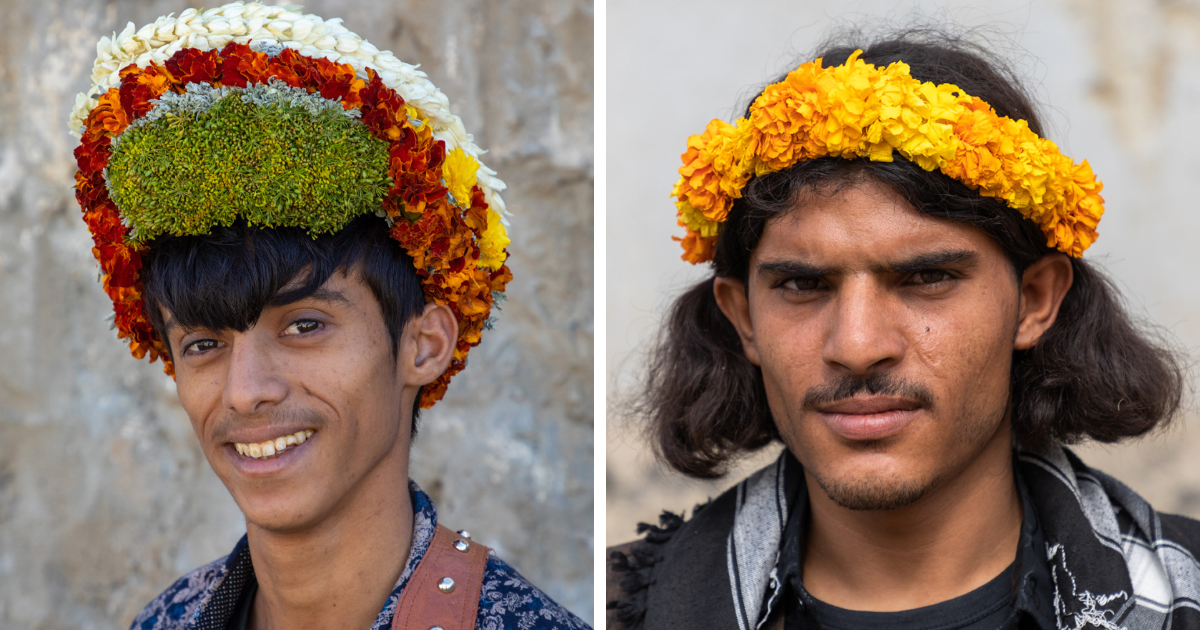
Before my trip to Saudi Arabia, I thought I had a decent idea of what the country would look like: desert horizons, date palms, gleaming cities, and enough coffee hospitality to make my bloodstream negotiate directly with cardamom. Then I traveled south toward the mountains of Asir, and Saudi Arabia politely tore up my mental pos of the Qahtan tribe known as the Flower Men. Their name sounds like something invented by a poet who had too much jasmine tea, but the tradition is very real. These men wear crowns and garlands made from fresh flowers, herbs, grasses, basil, marigolds, jasmine, and other local plants. The result is not costume. It is identity, fragrance, pride, history, and, frankly, one of the most stylish travel surprises I have ever encountered.
The Flower Men of Saudi Arabia are often associated with the Asir and Jizan regions in the country’s southwest, near the border with Yemen. In places like Rijal Almaa, Habala, and the highlands around Soudah, this culture has been preserved through generations, even as highways, tourism, smartphones, and festival stages have brought more outside attention. It is an ancient tradition living in a modern world, and somehow the flowers still win.
Who Are the Flower Men of Saudi Arabia?
The Flower Men are most commonly described as men from southern Saudi tribal communities, especially the Qahtan tribe and related Tihama and Asir groups, who are known for wearing handmade floral headpieces. These crowns are not random decorations picked up five minutes before a tourist photo. They are part of a long-standing regional tradition rooted in mountain life, tribal identity, beauty, scent, and local knowledge of plants.
Many reports connect the Flower Men to the Qahtani people, one of the old and influential tribal formations of the Arabian Peninsula. The tradition is especially visible in Asir Province, a region that feels strikingly different from the sand-colored Saudi Arabia many first-time visitors imagine. Asir is mountainous, cooler, greener, and culturally layered. Terraced farms cling to hillsides. Old stone towers rise like stacked chocolate cake with architectural ambition. Mist drifts through the peaks. It is Saudi Arabia, yes, but wearing a completely different outfit.
The Flower Men’s garlands are usually made with aromatic plants. Popular choices include wild basil, marigold, jasmine, fenugreek, and other herbs or grasses. Some crowns are simple and green, while others burst with yellow, orange, white, and red tones. The more elaborate arrangements can be worn for weddings, festivals, Ramadan gatherings, public celebrations, or special social occasions. Everyday wreaths may be more modest, but even the “casual” version looks like nature hired a personal stylist.
My First Meeting With the Flower Men
I first saw them from a distance, standing near a market area where the morning air smelled like herbs, dust, coffee, and the faint sweetness of flowers. A few older men wore long hair and floral crowns arranged with quiet confidence. Younger men stood nearby, their crowns brighter, almost competitive, as if each garland had entered a mountain fashion contest and intended to win.
What struck me first was not only the flowers, but the ease with which they were worn. In many places, a man wearing a flower crown might look like he accidentally walked away from a music festival. Here, the crowns looked natural, dignified, and masculine in a way that challenged my own lazy assumptions. The men wore them with traditional garments, including colorful wraparound cloths often described as futas, and in some cases with the curved dagger known as a jambiya. The combination was bold, fragrant, and deeply local.
One man noticed me staring, which is always the traveler’s least elegant moment. I smiled the international smile of “I promise I am respectful, just amazed.” He smiled back, adjusted his crown, and nodded. That tiny exchange did more than any travel brochure could. It reminded me that culture is not something frozen behind museum glass. It breathes, jokes, poses for photos when it wants to, refuses photos when it does not, and occasionally smells like basil.
Why Do the Qahtan Flower Men Wear Flower Crowns?
The reasons are layered. The flower crowns are worn for beauty, identity, scent, celebration, and sometimes for traditional beliefs connected to wellness. Certain herbs are believed locally to help with headaches or provide a cooling, refreshing effect in the mountain climate. Whether worn for health, fragrance, personal style, or social pride, the crowns are never just “pretty things.” They carry meaning.
In the Asir highlands, flowers and herbs are part of the landscape. The mountains support more greenery than many outsiders expect from Saudi Arabia. Local plants become part of daily life: medicine, food, scent, decoration, and symbolism. Wearing flowers on the head is a way of carrying the land with you. It says, “This is where I come from,” without needing a long speech or a PowerPoint presentation. Thank goodness, because nobody wants a PowerPoint in a flower market.
The crowns also distinguish the men of this region from other parts of Saudi Arabia. While many Saudi men wear the white thobe and ghutra, the Flower Men have historically kept a style that reflects their own mountain identity. Some men who no longer wear floral garlands regularly may still keep long hair as a sign of local tradition. The point is not to perform difference for tourists. The point is that difference already existed long before tourism arrived with cameras and comfortable shoes.
The Role of Rijal Almaa and the Asir Mountains
Rijal Almaa is one of the most important places to understand this cultural world. Located west of Abha in the Asir region, the village is famous for its tall stone, clay, and wood buildings, many of which resemble stacked fortresses. The village once served as a trading point linking routes between Yemen, the Red Sea, Makkah, Madinah, and the Levant. Today, it is a heritage destination and a symbol of southern Saudi culture.
Walking through Rijal Almaa feels like stepping into a mountain archive. The buildings are vertical and dramatic, with dark stone walls and bright decorative touches. Inside some homes, visitors can see examples of Al-Qatt Al-Asiri, a traditional interior wall art associated with women in the Asir region. Its geometric patterns and vivid colors add another layer to the area’s visual identity. The Flower Men may get the camera attention, but the region’s women have also played a powerful role in preserving beauty, design, and heritage.
Nearby Habala is also connected to Flower Men history. The village is known for its dramatic cliffside setting and stories of past isolation, when access to some communities was difficult and depended on ropes or steep routes. This isolation helped preserve local traditions, but it also meant that outsiders knew little about the culture for a long time. Modern roads, cable cars, festivals, and tourism development have changed that, making the region more accessible while raising an important question: how do you share a culture without flattening it into a souvenir?
Flower Crowns, Markets, and Morning Rituals
One of the most memorable parts of meeting the Flower Men is seeing how the crowns come together. In local markets, sellers arrange herbs and flowers into wreaths that can be worn for a day or two, depending on the plants used. Some men buy ready-made garlands, while others choose specific flowers and herbs for a more personal look. This is not so different from choosing a tie, a watch, or a pair of shoes, except the accessory is alive and smells better than nearly everything in an airport duty-free shop.
The crowns vary in mood. A simple green wreath made mostly of herbs gives a calm, earthy impression. A crown packed with marigolds and jasmine announces itself before the wearer says a word. Some arrangements are symmetrical and neat; others are wild and generous, like a garden decided to become a hat. The style can reflect age, occasion, taste, and personality.
What I loved most was the lack of embarrassment. The men did not wear flowers as irony. They did not need a caption explaining that masculinity can include beauty. They simply wore them. That quiet confidence made the tradition feel even stronger. In a world where many people dress according to trends created by strangers on screens, the Flower Men dress according to memory, place, and family.
The Flower Men Festival and Saudi Arabia’s New Tourism Era
Saudi Arabia’s tourism landscape has changed dramatically since the country began opening more widely to international leisure travelers. As the kingdom promotes destinations beyond the familiar religious and business routes, regions like Asir have become more visible. The Flowerman Festival in Rijal Almaa has helped introduce visitors to southern heritage through floral crowns, folk performances, poetry, markets, art, and cultural exhibitions.
Festivals can be tricky. Done poorly, they turn living traditions into background wallpaper for selfies. Done well, they create a platform for local communities to celebrate and benefit from their own heritage. The best moments I saw were not staged speeches but small interactions: a child watching an elder adjust a crown, a visitor learning the names of herbs, women weaving garlands with astonishing speed, and local men explaining their traditions with pride rather than performance.
For travelers, this is the difference between “seeing” a culture and meeting people inside it. You can photograph a flower crown in one second. Understanding why it matters takes patience.
Respectful Travel Tips for Meeting the Flower Men
Ask Before Taking Photos
The Flower Men are famous partly because of striking portraits shared by photographers and travelers, but fame does not cancel privacy. Always ask before taking a photo, especially close portraits. A smile, a gesture toward your camera, and patience go a long way. If someone says no, accept it immediately. The mountain will not collapse because you missed one shot.
Learn a Few Local Words
Arabic greetings are useful across Saudi Arabia. “Assalamu alaikum” is a respectful hello, and “shukran” means thank you. Even if your pronunciation sounds like it was assembled from spare parts, the effort is appreciated.
Dress Modestly and Comfortably
Asir is more relaxed in climate than many parts of Saudi Arabia, but modest dress remains important. Light layers, comfortable shoes, and respectful clothing will serve you well, especially in villages, markets, and heritage sites. Also, bring a jacket if you are heading to higher elevations. Saudi mountain weather enjoys surprising visitors who packed only desert confidence.
Buy Local When Possible
If you are offered the chance to buy a flower crown, local craft, coffee, honey, or food from small vendors, do it. Responsible tourism should put money into local hands. It also gives you a better story than buying another magnet shaped like a camel, though camels have excellent branding.
What the Flower Men Taught Me About Saudi Arabia
Meeting the Flower Men changed the way I understood Saudi Arabia. The country is often described in broad, heavy words: oil, desert, religion, monarchy, reform, megaprojects. Those words matter, but they do not tell the whole story. Saudi Arabia is also mountain villages, regional dialects, women’s wall art, folk dances, coffee terraces, old trade routes, and men who wear flowers because their fathers and grandfathers did.
The Flower Men are not a decorative footnote. They are a reminder that Saudi identity is not one single image. It is regional, tribal, historical, and constantly negotiating with modern life. A young man in Asir might wear a flower crown, use Instagram, work in tourism, study at university, and still carry a tradition that predates the modern Saudi state. That is not contradiction. That is culture doing what culture always does: adapting without asking permission from outsiders.
More Travel Experiences From My Time With the Flower Men
At the end of the day, what stayed with me was not only the visual drama of the crowns, although I admit the visuals were doing Olympic-level work. It was the pace of the place. In the mountains of Asir, people seemed to move with the confidence of those who know their landscape intimately. Roads twisted around cliffs. Clouds lowered themselves over peaks. Terraced slopes appeared suddenly, then vanished behind bends. Every turn felt like Saudi Arabia whispering, “You thought you knew me? Cute.”
One afternoon, I watched a small group of men gather near a shaded area after the market had quieted. Their flower crowns had softened slightly in the heat, but the scent remained bright. A younger man teased an older one about the size of his wreath, and the older man replied with a look that needed no translation: respect your elders, especially when their floral arrangement has better architecture than your apartment. Everyone laughed. That moment helped me see the crowns not as solemn relics but as part of everyday life, full of humor, teasing, and personality.
I was offered coffee more than once, because Saudi hospitality does not gently knock; it enters the room carrying a dallah and dares you to refuse. The coffee was light, spiced, and served in small cups that magically refilled whenever I thought I was finished. Dates appeared. Conversation followed. Some words required translation, others did not. A gesture toward the mountains, a hand touching the crown, a smile after a joke these things travel well across languages.
In Rijal Almaa, the old buildings became even more beautiful as the light changed. Their stone faces seemed to hold the day’s warmth while the air cooled around them. I imagined caravans passing through centuries ago, traders carrying goods between Yemen, the Red Sea, and the holy cities. Then I looked at a teenager nearby checking his phone under a floral crown and realized that history was not behind us. It was standing next to us with better Wi-Fi.
The most meaningful experience came when I was invited to try on a garland. It was placed carefully on my head, heavier than I expected and much more fragrant. For a few minutes, I became the least authentic Flower Man in Asir, but the gesture was generous. People smiled, not because I suddenly belonged to the tradition, but because hospitality often begins by letting a guest feel the edge of belonging. I did not pretend to understand everything. I simply stood there, smelling of herbs and flowers, grateful that travel can still surprise us when we stop treating places like checklists.
That is why the Flower Men matter beyond the beauty of their crowns. They invite visitors to reconsider what strength, elegance, tradition, and masculinity can look like. They show that heritage does not need to be dusty to be old, and that beauty does not become weak because men wear it. In fact, in the Asir mountains, beauty looked strong enough to survive centuries, isolation, tourism, smartphones, and the suspicious stare of every traveler who thought Saudi Arabia was only sand.
Conclusion: Saudi Arabia’s Flower Men Are More Than a Photograph
My trip to Saudi Arabia gave me many memories, but meeting male members of the Qahtan tribe known as the Flower Men remains one of the most vivid. Their floral crowns are beautiful, yes, but their real power lies in what they represent: regional pride, inherited knowledge, mountain identity, and the quiet confidence of people who know exactly who they are.
For travelers looking beyond the obvious Saudi itinerary, Asir deserves attention. Rijal Almaa, Habala, Soudah, local markets, and the Flower Men tradition reveal a side of the kingdom that is colorful, fragrant, mountainous, and deeply human. Come for the photos if you must. Stay long enough to learn why the flowers matter.
Note: This article is written as a publish-ready travel feature based on real cultural, heritage, and tourism information about the Flower Men of southern Saudi Arabia, the Qahtan tribe, Asir, Rijal Almaa, Habala, and related regional traditions.













