
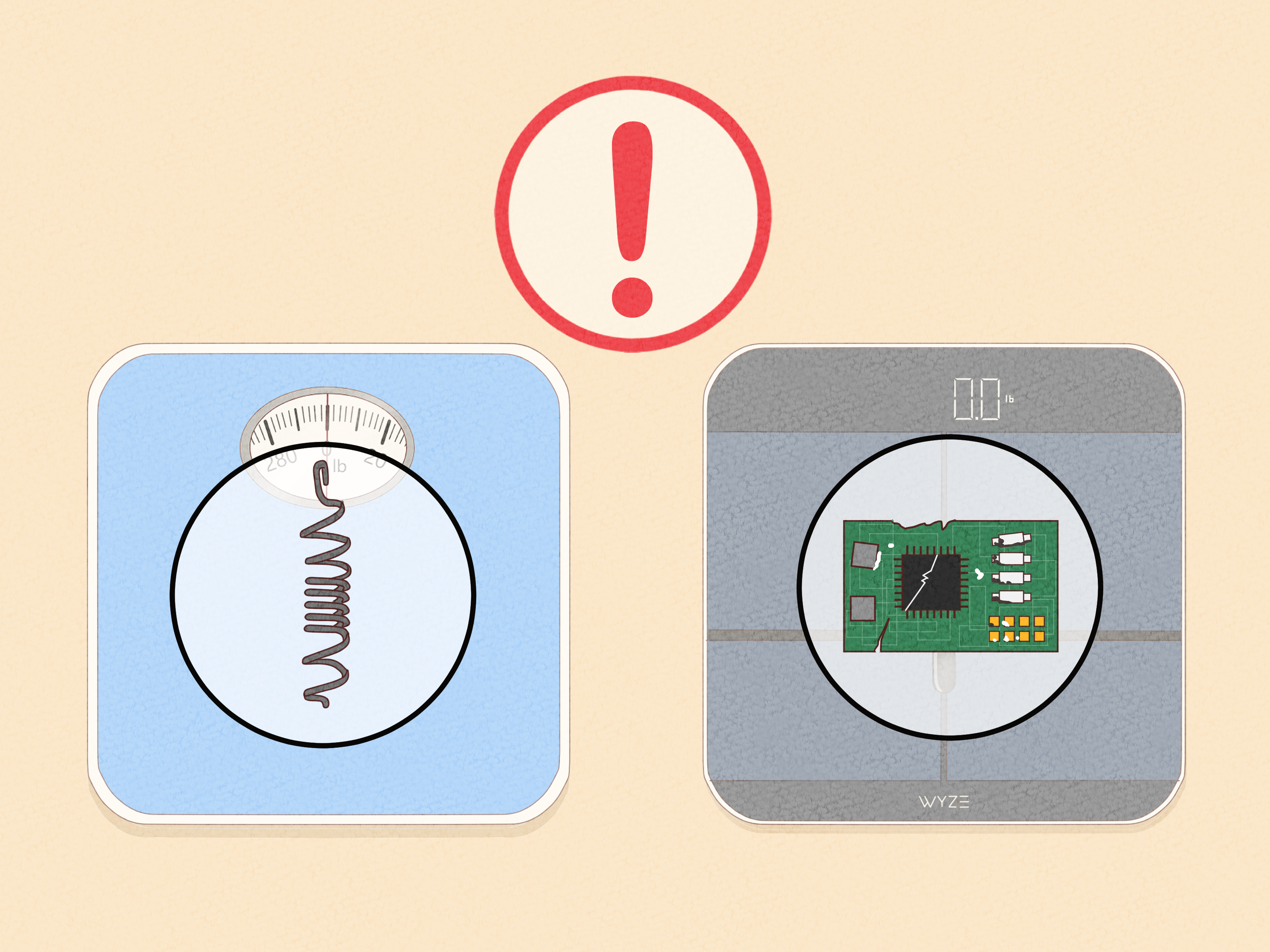
Your scale has one job: tell the truth about weight. Simple, right? Unfortunately, scales can be a little dramatic. Move one from tile to carpet, step on it while leaning like you are avoiding a spider, or ignore a low battery warning, and suddenly your “accurate” reading looks like it was produced by a confused fortune cookie.
The good news is that you do not need a laboratory coat, a clipboard, or a suspiciously serious face to check whether your scale is working correctly. Whether you use a bathroom scale, kitchen scale, postal scale, luggage scale, or small digital gram scale, a few easy tests can reveal whether it is accurate, consistent, properly zeroed, and worth trusting.
This guide explains how to test a scale at home using known weights, coins, repeat measurements, placement checks, and common troubleshooting steps. You will also learn when a small difference is normal, when it is a warning sign, and when your scale deserves retirement with full honors.
Why Scale Accuracy Matters
A slightly inaccurate scale may seem harmless until it starts affecting real decisions. In the kitchen, a bad scale can turn bread dough into a sticky science project. In fitness tracking, a jumpy bathroom scale can make normal body-weight fluctuations feel like breaking news. In shipping, a wrong reading can mean underpaid postage, delayed packages, or surprise fees. For hobbies like soap making, coffee brewing, jewelry, or supplements, even a few grams can matter.
Scale accuracy is not just about whether the number looks reasonable. A working scale should do four things well: return to zero, give the same reading for the same object, measure known weights closely, and respond correctly when weight increases. In plain English, your scale should not act like it has a different opinion every time you step near it.
First, Know What Kind of Scale You Have
Before testing your scale, identify what it is designed to measure. Bathroom scales usually measure body weight in pounds or kilograms and may round to the nearest 0.1 pound, 0.2 pound, or 0.1 kilogram. Kitchen scales often measure grams, ounces, pounds, and milliliters, usually with 1-gram readability. Precision pocket scales may measure tenths or hundredths of a gram. Shipping and luggage scales are built for heavier objects and may be less precise at very low weights.
This matters because a bathroom scale is not expected to notice the weight of a nickel, and a tiny jewelry scale is not meant to hold a suitcase. Testing a scale with the wrong type of object is like judging a pickup truck by how gracefully it parallel parks in a dollhouse.
Test 1: The Zero Test
The easiest test is also one of the most important: check whether the scale starts at zero.
How to do it
- Place the scale on a hard, flat, stable surface.
- Turn it on and wait for the display to show zero.
- If it has a tare button, press it and confirm the display returns to zero.
- Remove everything from the platform and watch whether the number drifts.
A working digital scale should settle at zero before you weigh anything. If it shows a random number when empty, flickers constantly, or refuses to zero out, something is wrong. Common causes include low batteries, crumbs under the weighing plate, an uneven surface, moisture, overload damage, or a sensor problem.
For analog bathroom scales, check that the needle rests exactly at zero. Many dial scales have a small adjustment wheel. Turn it gently until the needle lines up with zero before each use. Analog scales can be charming, but they also love to develop opinions over time.
Test 2: The Repeatability Test
Repeatability means the scale gives the same reading when weighing the same object multiple times. This is one of the best ways to spot a scale that is inconsistent.
How to do it
- Choose one object that is stable and easy to place, such as a full water bottle, unopened bag of flour, dumbbell, book stack, or your own body weight for a bathroom scale.
- Weigh it, write down the number, then remove it.
- Wait a few seconds and weigh it again.
- Repeat the process five times.
If the readings are nearly identical, your scale is probably consistent. A kitchen scale that reads 500 g, 500 g, 501 g, 500 g, and 500 g is behaving well. A bathroom scale that varies by 0.2 to 0.6 pounds may still be normal depending on its design. But if the same object reads 148.2 pounds, then 151.0 pounds, then 146.8 pounds without any real change, the scale is not giving you reliable information.
Repeatability is sometimes more useful than one perfect reading. If your scale is slightly off but always off by the same small amount, you can understand it. If it changes its mind every 10 seconds, you have a problem.
Test 3: The Known-Weight Test
The known-weight test checks accuracy by placing something with a known weight on the scale. The best option is a certified calibration weight, especially for kitchen, coffee, postal, jewelry, or laboratory-style scales. But for basic home checking, you can use items with marked weights.
Good known-weight options
- Calibration weights made for your scale’s capacity and readability
- Unopened bags of sugar, flour, rice, or coffee
- Sealed dumbbells or weight plates, if their actual weight is reliable
- U.S. coins for small gram scales
- A gallon of water for a rough household check
For small gram scales, U.S. coins are handy. A modern U.S. nickel weighs 5.00 grams, a quarter weighs 5.67 grams, a dime weighs 2.268 grams, and a modern penny weighs 2.5 grams. Coins are not a replacement for certified calibration weights, especially if they are worn, dirty, damaged, or collected from the mysterious bottom layer of a junk drawer. Still, they can be useful for a quick reality check.
How to do it with a kitchen or gram scale
- Set the scale on a stable counter.
- Turn it on and let it show zero.
- Place one clean nickel on the center of the platform.
- Check whether the display reads close to 5 grams.
- Add more nickels one at a time to test 10 g, 15 g, 20 g, and so on.
If one nickel reads 5 g but ten nickels read 53 g, the scale may have a linearity problem, meaning it does not respond correctly as weight increases. That is your scale’s way of saying, “I was fine with a snack, but not with a meal.”
Test 4: The Linearity Test
Linearity means a scale stays accurate at low, medium, and higher weights within its range. A kitchen scale may be accurate at 100 grams but off at 2,000 grams. A bathroom scale may behave at 120 pounds but drift at 220 pounds.
How to test linearity
- Choose several known weights across the scale’s normal range.
- Test a light weight, a medium weight, and a heavier weight.
- Record the expected weight and the scale reading.
- Look for a pattern of increasing error.
For a kitchen scale, you might test 100 g, 500 g, 1,000 g, and 2,000 g. For a bathroom scale, you could weigh yourself, then weigh yourself holding a 10-pound dumbbell, then holding two 10-pound dumbbells. The total should rise by about the amount you added.
This test is especially helpful because some scales look accurate near zero but become less reliable as the load gets heavier. That is not ideal unless you only weigh imaginary cupcakes.
Test 5: The Corner Test
Many digital scales use sensors placed under the platform. If one sensor is damaged or the platform is uneven, the reading may change depending on where the object sits.
How to do it
- Use a small object with a known or consistent weight.
- Place it in the center of the scale and record the reading.
- Move it to the front left, front right, back left, and back right areas.
- Compare the numbers.
A small difference may be normal, especially on inexpensive scales. But if the same object weighs 500 g in the center and 540 g in one corner, the scale may have a load cell or platform issue. For bathroom scales, uneven foot pressure can create similar problems, so stand still with your weight distributed evenly on both feet.
Test 6: The Surface Test
Scale placement can make or break accuracy. Bathroom scales are especially sensitive to flooring. Carpet, rugs, soft vinyl, uneven tile, and wobbly boards can all distort readings by changing how pressure reaches the sensors.
How to do it
- Weigh the same object or yourself on a hard, flat floor.
- Move the scale to carpet and weigh again.
- Move it to another tile or hardwood spot and weigh again.
If the number changes dramatically, the surface is the culprit. Keep your scale in one reliable location. For bathroom scales, tile or hardwood is usually better than carpet. For kitchen scales, use a sturdy counter away from vibration, heat, moisture, and your enthusiastic elbow.
Test 7: The Battery Test
Low batteries can cause slow displays, flickering numbers, sudden shutoffs, or inaccurate readings. Some scales show a “Lo” warning, but not all of them are polite enough to announce their decline.
If your digital scale gives weird readings, replace the batteries before blaming the scale itself. After installing fresh batteries, place the scale on a flat surface, turn it on, let it reset to zero, and repeat your accuracy tests. Many digital scales need a moment to reinitialize after battery changes or after being moved.
Test 8: The Tare Test
The tare function subtracts the weight of a container so you can measure only the ingredient or item inside it. A faulty tare function can quietly ruin recipes, postage, and portion measurements.
How to do it
- Place an empty bowl on the scale.
- Press tare and wait for zero.
- Add a known weight, such as 100 g of calibration weights or 20 nickels.
- Check whether the scale reads the added amount only.
- Remove the added weight and see whether the display returns to zero or shows the negative weight correctly when the bowl is removed.
If the tare function behaves strangely, the scale may need fresh batteries, cleaning, or replacement. For kitchen work, tare should be fast and dependable. Nobody wants to calculate flour weight manually while dough is judging them.
How Accurate Should Your Scale Be?
Not every scale needs laboratory-level precision. A bathroom scale does not need to measure your body weight to the nearest gram. A kitchen scale should be much more sensitive than a luggage scale. The acceptable difference depends on the scale’s purpose.
Bathroom scales
A small variation of a few tenths of a pound is usually normal. Body weight also changes throughout the day due to food, water, bathroom habits, clothing, salt intake, exercise, and hydration. To get the most useful trend, weigh yourself at the same time of day, on the same scale, on the same surface, wearing similar clothing or no clothing.
Kitchen scales
A good kitchen scale should usually be within a gram or two for everyday cooking. For baking, coffee, nutrition tracking, or meal prep, consistency matters. If a 100 g test weight reads 95 g or 108 g, that is a problem.
Postal and shipping scales
Shipping scales should be accurate enough to avoid postage errors. Test them with known package weights near the range you normally ship. If your packages are close to a postage cutoff, leave a safety margin or verify with the carrier.
Precision scales
For jewelry, supplements, soap making, lab-style work, or espresso dosing, use proper calibration weights and follow the manufacturer’s instructions. A “close enough” test with coins may be useful for a quick check, but it is not enough for high-precision tasks.
Common Signs Your Scale Is Not Working Correctly
- The scale does not return to zero.
- The same object gives different readings every time.
- Readings change dramatically based on where the item sits.
- The display flickers or drifts while nothing is moving.
- The scale works on one surface but fails on another.
- Fresh batteries do not improve strange behavior.
- The scale has been dropped, overloaded, soaked, or stored poorly.
- It shows error messages frequently.
One odd reading does not automatically mean your scale is broken. But repeated failures across the zero, repeatability, known-weight, and surface tests are strong evidence that the scale is no longer trustworthy.
How to Fix an Inaccurate Scale
1. Move it to a better surface
Use a hard, level, stable surface. Avoid carpet, soft mats, uneven tile, vibrating counters, and flexible tabletops.
2. Clean it carefully
Crumbs, dust, sticky residue, or debris around the platform can interfere with readings. Use a dry or slightly damp cloth, depending on the manufacturer’s care instructions. Do not soak a digital scale unless you enjoy turning appliances into paperweights.
3. Replace the batteries
Fresh batteries are one of the simplest fixes. If the display is dim, slow, or jumpy, batteries should be your first suspect.
4. Let it reset
Turn the scale off, remove the batteries for a minute, reinstall them, and place the scale back on a stable surface. Some scales need to wake up and zero themselves before use.
5. Calibrate it if your model allows calibration
Some digital scales have a calibration mode. The process usually requires a specific calibration weight, such as 100 g, 500 g, 1 kg, or 5 kg. Check the user manual for the exact procedure. Do not guess the button sequence unless you enjoy accidentally changing units to something you have never heard of.
6. Stop overloading it
Every scale has a maximum capacity. Exceeding it can damage sensors permanently. If your kitchen scale maxes out at 11 pounds, do not test its character with a cast-iron Dutch oven full of chili.
When to Replace Your Scale
Replace your scale if it fails multiple accuracy tests, cannot hold zero, gives unstable readings after battery replacement, or has been dropped hard enough to damage its sensors. Also consider replacing it if the display is hard to read, the platform is warped, the buttons stick, or the scale no longer fits your needs.
For everyday home use, a reliable digital scale does not have to be expensive. Many simple models perform well when used correctly. Look for a clear display, stable platform, suitable capacity, easy unit conversion, tare function if needed, and good readability for the kind of weighing you do most often.
Best Practices for Keeping Your Scale Accurate
- Keep it on a hard, flat surface.
- Use the same location every time.
- Let the display reach zero before weighing.
- Stand still or place items gently in the center.
- Keep the scale clean and dry.
- Replace batteries when readings become strange.
- Store it away from heat, steam, moisture, and heavy objects.
- Use calibration weights for precision tasks.
- Check accuracy monthly if the scale is important to your routine.
Quick At-Home Scale Accuracy Checklist
Use this simple checklist when your scale seems suspicious:
- Is the scale on a hard, level surface?
- Does it show zero when empty?
- Does it give the same reading five times in a row?
- Does it correctly measure a known weight?
- Does the reading stay similar in different positions on the platform?
- Are the batteries fresh?
- Has the scale been moved, dropped, overloaded, or exposed to moisture?
- Does calibration improve the reading?
If the answer to several of these questions is “no,” your scale may be inaccurate. If the answer to “Has it been dropped?” is “yes, but only down the stairs,” please allow the scale to retire with dignity.
Real-Life Experiences: What Scale Problems Look Like at Home
The most common scale problem I have seen is not a broken sensor. It is location. A bathroom scale on carpet can behave like it has entered a witness protection program. One morning it says 172.4 pounds, then 175.8 pounds, then 170.9 pounds after being nudged two inches to the left. The person using it thinks their body is changing by the minute, when the real culprit is the soft floor pressing unevenly under the scale feet. Move that same scale to tile, let it zero, stand still, and suddenly the drama disappears.
Kitchen scales have their own personality quirks. One classic example is the “bowl problem.” Someone places a mixing bowl on the scale, presses tare too quickly, and starts adding flour before the display has fully settled. The recipe calls for 300 grams, but the scale was still thinking about the bowl. The result is dough that feels like wallpaper paste with ambition. The fix is simple: place the bowl on the scale, wait for the number to stop moving, press tare, wait for zero, then add ingredients slowly.
Another experience involves battery weirdness. A digital food scale may look fine, but as the battery weakens, readings can become jumpy. You put a 500 g bag of coffee on it and get 497 g, then 503 g, then 491 g. It is tempting to accuse the coffee of shrinking. Usually, fresh batteries solve the problem. If not, the sensor or internal electronics may be failing.
Bathroom scales can also confuse people because body weight naturally changes during the day. Weighing yourself after dinner, after a salty meal, after drinking several glasses of water, or after a hard workout can produce a different number than your morning weight. That does not mean the scale is broken. It means your body is not a statue. The best habit is to weigh at the same time, under the same conditions, and focus on trends rather than one dramatic reading.
For small gram scales, coins can be surprisingly useful. If a nickel reads close to 5 grams and ten nickels read close to 50 grams, the scale is probably doing a decent job for casual use. But if one nickel reads 5 g and ten nickels read 58 g, that scale is not just inaccurate; it is freelancing. For coffee, baking, or small-item weighing, that kind of error matters.
Shipping scales reveal problems in a different way. A package may weigh just under a postage cutoff at home but slightly over it at the carrier counter. Sometimes the home scale is wrong; sometimes the box was not centered; sometimes the user rounded down with dangerous optimism. The safer habit is to test your shipping scale with known weights and leave a small margin before choosing postage.
The biggest lesson is this: do not judge a scale by one reading. Test it. Check zero, repeatability, known weights, surface, batteries, and placement. Most “bad scale” mysteries are solved by better setup. But if your scale still behaves like it is making numbers up for attention, it is time for a replacement.
Conclusion
Knowing if your scale is working correctly does not require special equipment for basic home use. Start with the simple tests: zero, repeatability, known weight, linearity, corner placement, surface stability, battery condition, and tare performance. A good scale should be steady, predictable, and close to the expected weight for its purpose.
Remember that accuracy depends on context. A bathroom scale should help you follow body-weight trends, not make you panic over every decimal. A kitchen scale should measure ingredients consistently. A precision scale should be checked with proper calibration weights. And every scale, no matter how fancy, performs best on a hard, flat, stable surface.
If your scale passes the easy tests, keep using it with confidence. If it fails repeatedly, replace the batteries, clean it, recalibrate it if possible, and test again. If it still acts like a tiny electronic liar, thank it for its service and upgrade to a scale you can trust.
Note: This article is written for general household scale testing and does not replace professional calibration for medical, commercial, legal-for-trade, laboratory, or safety-critical weighing needs.













