
Meeting a bear in the wild is one of those moments that instantly upgrades your brain from “nice hike” to “nature documentary, but I am the nervous guest star.” The good news is that most bears do not want a fight. They want berries, fish, insects, privacy, and possibly whatever snack you irresponsibly left in your backpack. The bad news is that bears are fast, powerful, curious, and deeply uninterested in your dramatic inner monologue.
Knowing how to escape from a bear does not mean learning a magic trick where you vanish behind a pine tree. It means staying calm, reading the situation, making smart choices, and avoiding the classic mistakes: running, screaming like a malfunctioning car alarm, climbing a tree, or trying to take “one quick photo.” This guide explains three practical ways to survive a bear encounter: avoid the conflict before it starts, back away safely when you see a bear, and respond correctly if the bear charges or makes contact.
This article focuses on realistic bear safety advice for hikers, campers, anglers, hunters, photographers, and anyone who spends time in bear country. Whether you are dealing with a black bear in the Appalachians, a grizzly in the Rockies, or a brown bear in Alaska, the main rule is simple: do not act like prey, do not act like a threat, and definitely do not act like lunch.
Understanding Bear Behavior Before You Panic
Before learning the three escape methods, it helps to understand what a bear encounter usually means. A bear standing on its hind legs is not necessarily preparing to attack. It may simply be trying to smell you better, which is both impressive and mildly insulting if you skipped deodorant. A bear that huffs, pops its jaws, swats the ground, or bluff charges may be warning you that you are too close. A bear that follows quietly, stays focused on you, or approaches without obvious fear may require a more assertive response.
Most dangerous encounters happen because a bear is surprised at close range, protecting cubs, guarding food, or has learned to associate people with easy meals. That is why prevention matters so much. The best bear escape is the one where the bear hears you coming, decides you are weird but not interesting, and walks away before you ever meet.
Way 1: Avoid the Encounter Before It Happens
The safest way to escape from a bear is to avoid surprising one in the first place. Bears generally prefer space. If you give them warning and distance, many encounters end before they begin. This is not cowardice; this is premium-grade wilderness intelligence.
Make Noise in Bear Country
When hiking through thick brush, near rushing water, around blind corners, or in berry patches, make regular human noise. Talk with your group, clap occasionally, or call out in a calm, confident voice. Many hikers use the classic “Hey bear!” call. It may feel silly at first, but feeling silly is better than accidentally appearing three feet from a grizzly’s breakfast.
Do not rely only on bear bells. They are cute, but they may not be loud enough to warn bears until you are already too close. Human voices are usually more effective because they clearly identify you as a person, not a sneaky mystery snack with hiking poles.
Travel in Groups and Stay Alert
Groups are safer than solo hikers. Three or more people make more noise, look more intimidating, and are less likely to surprise wildlife. Stay together instead of spreading out along the trail like breadcrumbs in moisture-wicking shirts. Keep children close. Keep dogs leashed where allowed, because an off-leash dog can chase a bear, panic, and bring the bear right back to you like the world’s worst game of fetch.
Stay alert in places where bears are more likely to be active: berry patches, salmon streams, carcass sites, dense vegetation, and trails at dawn or dusk. If you see fresh bear scat, tracks, claw marks, dug-up roots, or a dead animal, leave the area calmly. A carcass is not a wilderness curiosity exhibit. It is a bear’s refrigerator, and you are standing in the kitchen.
Manage Food Like Your Life Depends on It
Food storage is bear safety. Store food, trash, scented toiletries, pet food, and cooking gear in bear-resistant containers, bear lockers, or approved hangs where required. Never cook or store food in your tent. Keep sleeping areas away from cooking and food-storage areas when camping in bear country. A toothpaste tube, bacon wrapper, or granola bar crumb may seem harmless to you, but to a bear’s nose it can sound like a dinner bell with jazz hands.
Also, never feed a bear. A fed bear may lose its natural fear of people and become dangerous. That often ends badly for the bear, not just the humans. Keeping bears wild is part of keeping everyone alive.
Way 2: If You See a Bear, Back Away Slowly
If you spot a bear at a distance and it has not noticed you, do not move closer. Do not whisper, “This is perfect for Instagram.” Do not attempt a selfie. Slowly and calmly leave the area while keeping the bear in view. Give it a wide route to escape. The goal is to make yourself boring and non-threatening.
Stay Calm and Identify Yourself
If the bear sees you, remain standing upright. Speak in a calm, firm voice. Say something like, “Hey bear, I’m leaving now,” even though the bear is unlikely to appreciate your excellent communication skills. Your voice helps identify you as human. Avoid sudden movements. Pick up small children immediately. Keep your group together so you appear larger and more unified.
Do not make direct, intense eye contact. In many animal encounters, a hard stare can look like a challenge. Instead, watch the bear without glaring. Think “aware neighbor,” not “saloon duel.”
Do Not Run
Running from a bear is one of the worst choices you can make. Bears can outrun humans easily, including the humans who brag about their half-marathon times. Running may trigger a chase response, especially if the bear is already tense or curious. Climbing a tree is also not a reliable escape. Black bears are excellent climbers, and young grizzlies can climb too. Even if the bear does not climb, it may simply wait below, making your tree strategy dramatically less heroic.
Instead, back away slowly. Move diagonally if needed to avoid blocking the bear’s path. If the bear seems irritated by your movement, stop and hold your ground. Give the bear space and a clear escape route. Most bears do not want a fight; they want the awkward two-legged creature to leave.
Prepare Your Bear Spray
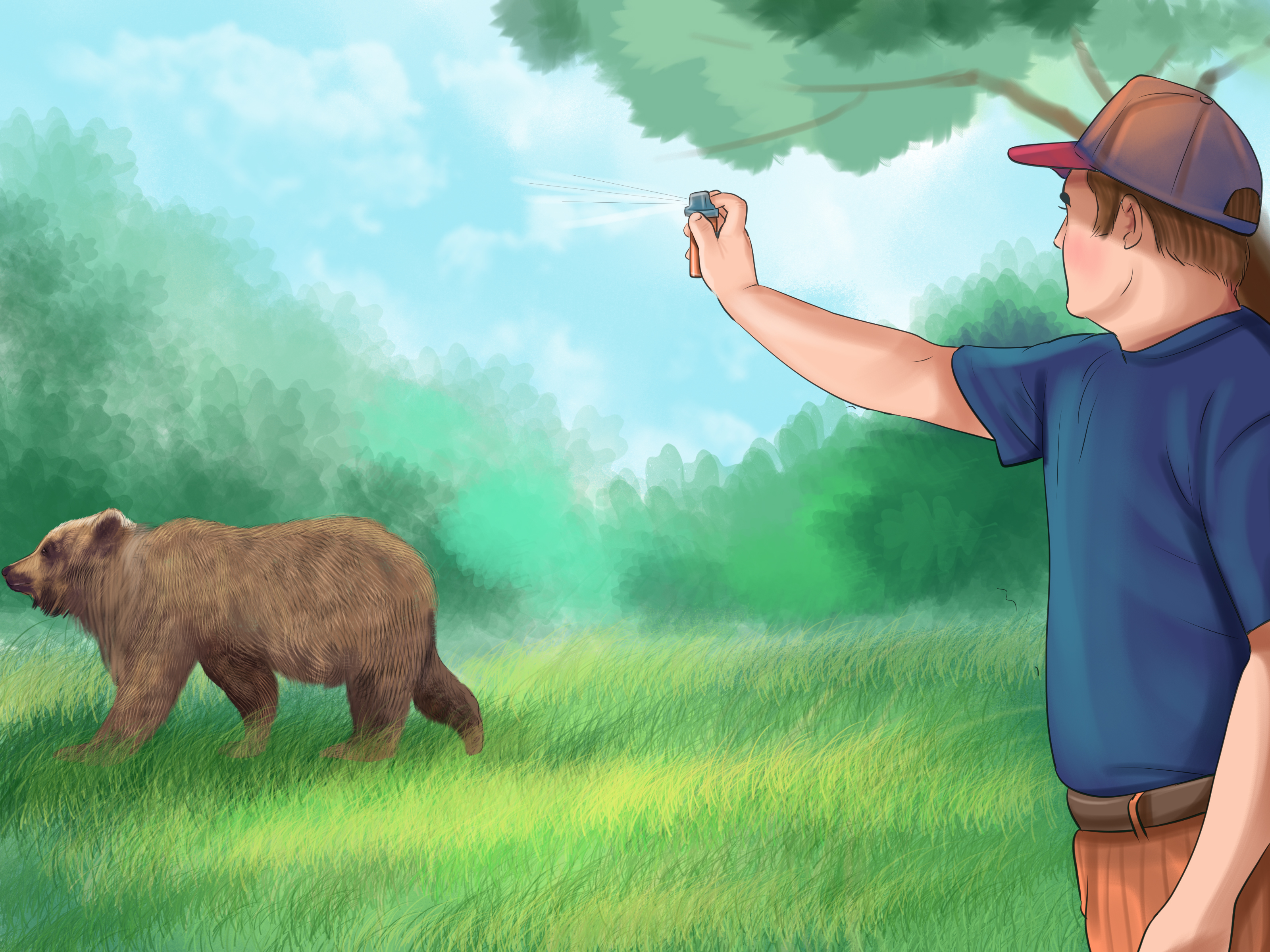
If you are in bear country, carry EPA-approved bear spray where you can reach it quickly, such as a chest or hip holster. Do not bury it in your backpack under trail mix, rain gear, and the emotional weight of poor planning. Bear spray is a last-line defensive tool, not a perfume, not a tent treatment, and not a magical force field. It is meant to create a temporary irritating cloud between you and an aggressive or charging bear.
If a bear is nearby, remove the spray from the holster and be ready. Keep the safety clip on until you may need to use it. Pay attention to wind direction. If the bear charges, aim slightly downward toward the bear’s path and spray when it is close enough for the cloud to reach it, often around 30 to 60 feet depending on product instructions and conditions. Keep spraying until the bear changes direction, then leave the area quickly, walking rather than running.
Way 3: If a Bear Charges or Attacks, Respond Correctly
A bear charge is terrifying, but not every charge ends in contact. Bears sometimes bluff charge to scare away a perceived threat. Your job is to stand your ground, prepare bear spray, and avoid turning yourself into a fleeing target. This is the moment when calm matters most, which is deeply unfair because your nervous system will be holding a tiny emergency meeting.
If the Bear Charges
If a bear charges, do not run. Stand your ground, speak firmly, and deploy bear spray when the bear comes within range. Create a cloud in front of the bear, not a tiny decorative mist above your head. If the bear stops or veers away, do not celebrate loudly, chase it, or linger. Leave the area calmly and quickly.
If the bear keeps coming and contact seems unavoidable, your response depends on the bear’s behavior and species. This is where bear safety gets more specific.
If a Grizzly or Brown Bear Attacks Defensively
Many brown bear or grizzly attacks are defensive, especially when the bear is surprised, protecting cubs, or guarding food. If a grizzly or brown bear makes contact in a defensive encounter and you cannot use bear spray, play dead. Lie flat on your stomach, spread your legs for stability, keep your pack on for protection, and clasp your hands over the back of your neck. Stay still and quiet.
The purpose is to convince the bear you are not a threat. Do not jump up the second the bear moves away. Wait until you are sure it has left. If the attack continues for a prolonged period or shifts from defensive to predatory, fight back with everything you have, focusing on the bear’s face and muzzle.
If a Black Bear Attacks
If a black bear attacks, do not play dead. Fight back aggressively. Use rocks, sticks, trekking poles, fists, elbows, or anything available. Aim for the face, eyes, and nose. Make yourself loud, forceful, and difficult to subdue. Black bear attacks are rare, but when they occur in a predatory manner, passive behavior can make the situation worse.
This difference between “play dead” and “fight back” is one of the most important pieces of bear safety knowledge. Defensive brown bear contact often calls for playing dead. Predatory black bear contact calls for fighting back. If any bear enters a tent, cabin, or building and attacks, fight back. A bear treating you as food is not asking for a peaceful misunderstanding; it is time to become the most inconvenient meal in the forest.
Common Mistakes That Make Bear Encounters Worse
Mistake 1: Trying to Get a Photo
Wildlife photography is wonderful when done from a safe distance with proper equipment. It becomes foolish when someone walks closer to a bear because their phone camera makes everything look tiny. If a bear changes its behavior because of you, you are too close. Respect distance. No photo is worth a hospital trip or a bear being killed because it was pushed into conflict.
Mistake 2: Assuming All Bears Act the Same
Black bears, grizzlies, brown bears, and polar bears differ in behavior, habitat, and risk. Even individuals of the same species behave differently depending on age, hunger, cubs, food sources, and previous human contact. Use general safety rules, but also learn local guidance before visiting bear country.
Mistake 3: Carrying Bear Spray but Not Knowing How to Use It
Bear spray is useful only if you can access it quickly and deploy it correctly. Practice removing the safety clip with an inert training canister if possible. Read the label. Check the expiration date. Do not store it in a hot car. Do not spray it on your clothes or campsite. Bear spray is a defensive tool, not seasoning for your backpack.
What to Do After a Bear Encounter
Once you are safe, leave the area and report the encounter to park rangers, land managers, or local wildlife officials, especially if the bear charged, made contact, entered a campsite, obtained food, or behaved aggressively. Reporting helps protect other visitors and helps wildlife managers make informed decisions. It can also protect the bear by preventing future conflicts.
If anyone is injured, call emergency services immediately if possible. Even minor-looking wounds can require medical attention because of infection risk, trauma, or shock. Do not continue hiking just to prove toughness. The mountain does not hand out medals for pretending a bear incident was “probably fine.”
Quick Bear Escape Checklist
- Make noise while hiking, especially in thick brush or near loud water.
- Travel in groups and keep children close.
- Carry EPA-approved bear spray where you can reach it fast.
- Store food, trash, and scented items properly.
- If you see a bear, stay calm and back away slowly.
- Never run, climb a tree, or approach a bear for photos.
- If charged, stand your ground and use bear spray when the bear is close enough.
- If a defensive grizzly or brown bear attacks, play dead unless the attack continues.
- If a black bear or predatory bear attacks, fight back aggressively.
- Report serious encounters to wildlife authorities.
Realistic Experiences and Lessons from Bear Country
One of the most useful lessons from bear country is that encounters often happen faster than people expect. A hiker may spend hours on a peaceful trail, admiring wildflowers and debating whether a granola bar counts as lunch, then suddenly notice a bear crossing the trail 40 yards ahead. The people who handle that moment best are usually not the strongest or bravest. They are the ones who already know what to do. They stop, speak calmly, gather their group, ready their bear spray, and back away without turning the situation into a chase scene.
Imagine hiking in a forested national park where the trail bends around a noisy creek. The water is loud enough to cover your footsteps, and the brush is high enough to hide anything around the corner. This is exactly the kind of place where making noise matters. A simple “Hey bear!” before blind corners may feel awkward when nothing happens, but nothing happening is the goal. In bear country, prevention often looks boring. Boring is excellent. Boring means you get back to the trailhead with all your limbs, snacks, and dignity mostly intact.
Campers often learn another lesson the hard way: bears are not attracted only to obvious food. They can be drawn to toothpaste, deodorant, sunscreen, cooking oil, pet food, candy wrappers, and dirty dishes. A clean campsite is not about being neat for style points. It is about avoiding a midnight visitor with claws. Experienced campers create a routine before dark: cook away from the sleeping area, clean thoroughly, store scented items properly, and double-check pockets for forgotten snacks. The “one tiny wrapper” you ignore may smell like a buffet sign to a bear.
Anglers have their own bear-country challenges. Fish smell strong, streams are noisy, and bears may use the same waterways to feed. A smart angler stays aware, keeps fish secured, cleans fish away from camp, and leaves immediately if a bear shows interest. Trying to defend a fish from a bear is not noble. It is negotiating with a furry bulldozer. Let the fish go, give the bear space, and keep yourself out of the argument.
Many experienced hikers also talk about the emotional side of bear encounters. Fear can make people do strange things: freeze, run, shout, or fumble with gear. That is why preparation matters before the trip begins. Practice reaching for bear spray. Talk with your hiking partners about what to do if you see a bear. Agree that nobody runs. Agree that nobody stops for photos. Agree that the person carrying the snacks does not become the unofficial bear ambassador.
The biggest takeaway from real bear-country experience is humility. The wilderness is not a theme park, and bears are not villains. They are powerful wild animals trying to survive. Most conflicts happen when humans surprise them, crowd them, feed them, or fail to secure attractants. When you move through bear habitat with respect, awareness, and the right tools, you greatly improve your chances of avoiding trouble. You also help bears remain wild, which is the best outcome for everyone involved.
Conclusion
Escaping from a bear is not about being faster than the bear. You are not faster. Sorry, cardio fans. It is about being smarter before, during, and after the encounter. Avoid surprise meetings by making noise, traveling in groups, staying alert, and managing food properly. If you see a bear, stay calm, speak firmly, and back away slowly while giving it space. If a bear charges or attacks, use bear spray when appropriate and respond based on whether the bear is acting defensively or predatory.
The three best ways to escape from a bear are simple but serious: prevent the encounter, de-escalate with calm distance, and know how to react in the rare event of contact. Learn local rules before entering bear country, carry the right gear, and treat every bear with respect. The goal is not to “win” against a bear. The goal is to go home safely while the bear goes back to doing bear things, preferably far away from your trail mix.














