
Note: This article is written for web publication and synthesizes real automotive, safety, engineering, tire, and repair information into original editorial content.
The Little Gauge That Keeps Everyone Honest
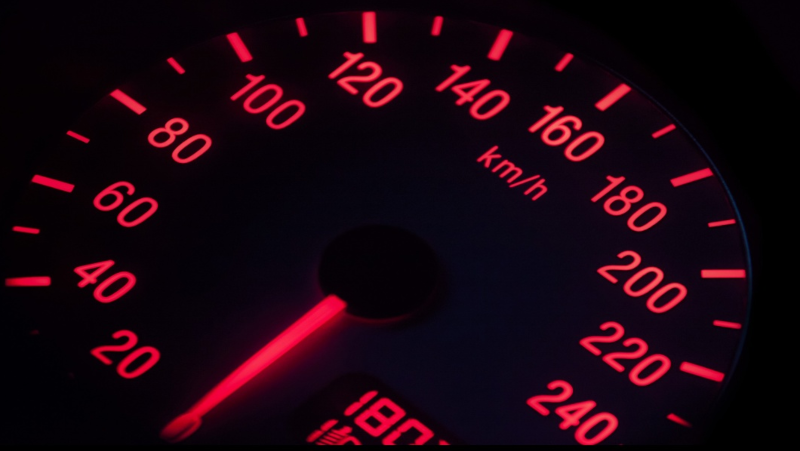
A speedometer is one of those pieces of technology we stare at constantly but rarely admire. It sits in front of us like a calm little referee, quietly announcing whether we are cruising responsibly, crawling through traffic, or accidentally auditioning for a courtroom drama. It does not look dramatic. It does not make coffee. It does not say, “Wow, nice lane change.” Yet the speedometer is one of the most important instruments in any vehicle.
The title “Tech In Plain Sight: Speedometers” fits because this device is both ordinary and surprisingly clever. Behind that needle, digital number, or futuristic head-up display is a chain of physics, sensors, software, regulations, tire mathematics, and human behavior. It is a perfect example of everyday automotive technology: visible enough to ignore, essential enough to miss immediately when it fails.
At its simplest, a speedometer measures and displays the instantaneous speed of a vehicle. In American cars, that usually means miles per hour, or MPH. But the path from spinning wheels to a number on your dashboard has changed dramatically over the last century. Early speedometers were mechanical. Modern speedometers are electronic. Some cars now combine wheel-speed data, transmission signals, GPS, driver-assistance systems, and digital instrument clusters. The result is a humble display with a very serious job: helping the driver understand speed before physics does something rude.
What a Speedometer Actually Measures
A speedometer does not directly measure how fast the car body is moving through space in the way a radar gun or GPS receiver might. In most vehicles, it estimates road speed based on rotation. Something in the drivetrain or wheel system turns, a sensor or cable detects that movement, and the vehicle converts rotation into speed.
That sounds simple until you remember one important detail: tires are not abstract circles from a geometry textbook. They wear down. They flex under load. They change effective diameter with inflation pressure, temperature, tread depth, and replacement size. If the vehicle assumes one tire circumference but the actual tire behaves differently, the speedometer reading can drift from real road speed. This is why larger-than-stock tires can make a speedometer show a lower speed than the vehicle is actually traveling, while smaller tires can make it show a higher speed.
In other words, the speedometer is not reading the road like a mind reader. It is doing math with assumptions. Most of the time, those assumptions are close enough to keep the driver informed and legal. But when the assumptions change, the little number on the dash may become more of a polite suggestion than a sworn statement.
A Brief History: From Spinning Cables to Digital Dashboards
Automotive speedometers became common in the early 20th century as cars grew faster, roads improved, and governments became understandably interested in preventing drivers from treating Main Street like a racetrack. Early units were mechanical and often beautifully simple. They relied on a rotating cable connected to the transmission or drivetrain. As the vehicle moved, the cable spun faster or slower depending on speed.
The most famous traditional design is the eddy-current speedometer. It sounds like something invented by a wizard named Eddy, but it is actually a clever application of electromagnetism. A spinning magnet rotates near a metal cup attached to the speedometer needle. As the magnet spins, it creates electrical currents in the cup. These currents generate a force that tries to turn the cup and move the needle. A spring resists that motion. The faster the magnet spins, the farther the needle moves across the dial.
This design has a certain mechanical poetry. No tiny computer is required. No software update. No dashboard loading screen. Just a cable, a magnet, a cup, a spring, and physics doing what physics does best: making complicated things happen while pretending it is obvious.
Modern vehicles, however, usually use electronic speedometers. Instead of a spinning cable, they rely on vehicle speed sensors, wheel speed sensors, transmission output sensors, or data from the anti-lock braking system. These sensors generate electrical signals based on rotation. The vehicle’s electronic control units interpret those signals and send the calculated speed to the instrument cluster. In a digital dashboard, the displayed number may be the final result of several systems quietly sharing data like a tiny committee meeting under the hood.
How Mechanical Speedometers Work
The Cable, Magnet, Cup, and Spring
In a classic mechanical speedometer, the drivetrain turns a flexible cable. That cable spins a permanent magnet inside the speedometer assembly. The magnet does not physically touch the speed cup, but its rotating magnetic field induces eddy currents in the cup. Those currents create their own magnetic field, which interacts with the spinning magnet and applies torque to the cup.
The cup wants to rotate, and the needle attached to it moves across the dial. A hairspring resists the motion. At a steady speed, the magnetic torque and spring tension balance each other. The needle settles at a position that corresponds to vehicle speed. Slow down, and the magnetic force weakens. Speed up, and the needle climbs. Very elegant. Also very satisfying to anyone who enjoys technology that can be explained without using the phrase “cloud-based dashboard ecosystem.”
Why Mechanical Systems Could Drift
Mechanical speedometers are durable, but they are not magical. Cables can wear, bind, or break. Gears can be mismatched after a transmission change. Springs can age. Needles can bounce. Tire size changes can throw off calibration. Anyone who has driven an older car with a trembling speedometer needle knows the feeling: the car says 47, then 52, then 44, while your brain says, “Let’s call it 50 and remain spiritually calm.”
Even with these quirks, the mechanical speedometer was a brilliant solution for decades. It gave drivers a real-time visual sense of speed, helped enforce traffic laws, and became part of the emotional language of driving. A needle sweeping across a dial still feels more dramatic than a number changing from 54 to 55. Digital dashboards may be precise, but analog needles have theater.
How Electronic Speedometers Work
Vehicle Speed Sensors
Most modern vehicles use electronic speed sensing. A vehicle speed sensor may be mounted on the transmission, transaxle, differential, or wheel hub area, depending on the design. As a toothed wheel, reluctor ring, or magnetic encoder rotates, the sensor produces a signal. The faster the rotation, the faster the signal pulses. The car’s computer translates those pulses into speed.
Some systems use Hall-effect sensors, which respond to magnetic field changes. Others use variable reluctance sensors, which generate voltage as metal teeth pass by a magnetic pickup. Modern wheel-speed sensors are also essential for anti-lock brakes, traction control, stability control, and many advanced driver-assistance systems. That means speed data is no longer just for the driver. It is also for the car itself.
From Sensor Signal to Dashboard Display
Once the vehicle has a speed signal, the data can travel across internal communication networks to the instrument cluster. In older electronic designs, the cluster may drive an analog needle with a small motor. In newer cars, the speed appears on an LCD or OLED display. Some vehicles also project speed onto the windshield through a head-up display, allowing drivers to keep their eyes closer to the road.
Electronic speedometers are flexible. Automakers can display speed in multiple formats, integrate warnings, change units, support adaptive cruise control, and coordinate with navigation systems. But flexibility also adds complexity. A bad sensor, damaged wiring, failed cluster, software issue, or communication fault can make the speedometer behave strangely or stop working entirely.
Speedometer Accuracy: Why Your Car and GPS May Disagree
Many drivers notice that their dashboard speed and GPS speed do not always match. This does not automatically mean one of them is lying. It means they measure speed differently.
A vehicle speedometer usually estimates speed from wheel or drivetrain rotation. GPS estimates speed by tracking changes in position over time using satellite signals. On an open highway with a strong signal, GPS speed can be impressively accurate. In tunnels, dense cities, parking garages, forests, or mountain roads, GPS can lag, drop out, or smooth the reading. Meanwhile, the vehicle speedometer keeps working as long as its sensors and assumptions remain valid.
Automakers commonly avoid calibrating speedometers to read lower than actual speed. From a safety and legal standpoint, a slightly optimistic speedometer is preferable to one that tells a driver they are going 65 when they are actually going 70. That is why many vehicles show a speed that is a little higher than GPS under normal conditions. It is annoying only if you are emotionally attached to perfect agreement between machines. The machines, sadly, do not share your need for closure.
The Tire Factor: Small Circles, Big Consequences
Tire size is one of the most common reasons a speedometer becomes inaccurate. The vehicle is calibrated around a specific tire circumference. If you install taller tires, each wheel rotation carries the vehicle farther than the computer expects. The speedometer may read slower than actual speed. If you install shorter tires, the wheel rotates more times for the same distance, and the speedometer may read faster than actual speed.
This is especially relevant for trucks, Jeeps, off-road builds, and vehicles with aftermarket wheels. A tire change that looks fantastic in the driveway can quietly confuse the speedometer. It can also affect odometer readings, fuel economy calculations, shift behavior, driver-assistance systems, and maintenance intervals. The speedometer may be the visible symptom, but the math spreads through the vehicle like gossip at a family barbecue.
Tire wear matters too. A brand-new tire has a larger rolling circumference than the same tire after thousands of miles. Inflation pressure and vehicle load can also change the effective rolling radius. These differences are usually small, but they help explain why speedometer accuracy is not a fixed, eternal truth carved into the dashboard by automotive angels.
Speedometer vs. Odometer: Cousins, Not Twins
The speedometer displays how fast the vehicle is moving right now. The odometer records distance traveled over time. They are related because both often depend on wheel or drivetrain rotation, but they serve different purposes.
The odometer affects maintenance schedules, resale value, lease limits, warranty coverage, and legal disclosures. The speedometer affects real-time driving decisions. In older mechanical systems, both could be driven by related gearing. In modern vehicles, both can be calculated electronically. If tire size or sensor data is wrong, both speed and distance readings may be affected.
That is why odometer tampering is treated seriously, and why electronic odometers have specific rules around disclosure. Distance is not just a number; it is part of a vehicle’s history. Speed is a moment. Mileage is a biography.
Regulations and Display Rules in the United States
In the United States, vehicle speedometers are tied to safety and display standards. Passenger vehicles are expected to present speed in miles per hour, with kilometers per hour allowed as an additional display. This makes sense because American road signs use MPH. A dashboard showing only kilometers per hour would turn every commute into a pop quiz, and nobody needs algebra before coffee.
There is an interesting distinction between display requirements and accuracy expectations. U.S. rules emphasize that the speedometer must display the appropriate units, while accuracy practices vary by vehicle type and manufacturer. Commercial vehicles have specific requirements, and engineering organizations publish recommended practices. In real-world passenger vehicles, manufacturers generally aim for a reading that is close and usually not lower than actual speed.
For drivers, the practical takeaway is simple: treat the speedometer as the official instrument in the car, but understand that it may not match GPS perfectly. If you change tire size, modify drivetrain components, or notice unusual readings, calibration may be necessary.
Common Speedometer Problems
The Speedometer Stops Working
A dead speedometer can be caused by a failed vehicle speed sensor, broken speedometer cable in older cars, damaged wiring, blown fuse, faulty instrument cluster, or software-related issue. In some vehicles, a bad speed sensor can also cause transmission shifting problems because the powertrain control module depends on speed data.
The Needle Jumps or Bounces
In mechanical systems, a bouncing needle often points to a worn or binding cable. In electronic systems, erratic readings may suggest sensor signal problems, wiring faults, poor connections, or cluster issues. A bouncing needle is charming in a vintage movie. On your commute, it is less charming and more “please diagnose me.”
The Reading Is Consistently Too High or Too Low
If the speedometer is consistently off by a predictable percentage, tire size is a prime suspect. Aftermarket tire and wheel changes should be checked against the original rolling diameter. Many modern vehicles can be recalibrated through software, scan tools, or aftermarket programmers, depending on the model.
Warning Lights Appear
Because speed data feeds several systems, a speed sensor problem can trigger warning lights for ABS, traction control, stability control, or the check engine system. The speedometer may look like the main character, but in modern vehicles it is part of an ensemble cast.
GPS Speedometers: Helpful Tool or Dashboard Rival?
GPS speedometer apps and standalone GPS displays are popular because they can show speed independently from the vehicle’s own sensors. They are useful for checking approximate speedometer accuracy, monitoring speed on bicycles or boats, or adding a display to older vehicles. Some drivers use GPS speed as a reality check after changing tires.
However, GPS speedometers have limitations. They need satellite reception. They may lag during rapid acceleration or braking. They can struggle in tunnels, urban canyons, heavy tree cover, or bad weather. A phone-based GPS speedometer also introduces a distraction risk if the driver keeps looking at the screen. The safest approach is to set up any device before driving and rely primarily on the vehicle’s built-in instruments while on the road.
GPS is a helpful witness, not necessarily the judge. The dashboard speedometer remains the instrument designed into the vehicle’s safety and control environment.
Why Speedometers Still Matter in the Age of Smart Cars
Modern cars can brake automatically, steer within lanes, follow traffic, read signs, and complain if you forget to buckle up. With all that intelligence, it might seem like the speedometer is old news. It is not.
Speed remains central to almost every driving decision. Following distance depends on speed. Braking distance increases with speed. Curve safety depends on speed. Fuel consumption changes with speed. Tire heat, suspension load, crash energy, and reaction time are all speed-related. The speedometer gives the driver immediate feedback about an invisible force: momentum.
It also supports human trust. Even in a vehicle with adaptive cruise control, drivers want to know how fast they are going. A self-driving future may reduce the driver’s workload, but speed information will still matter for passengers, regulators, diagnostics, and vehicle systems. The display may change shape, but the question will remain: how fast are we moving?
Design: Analog Needle, Digital Number, or Head-Up Display?
Speedometer design has become a small battleground between tradition and technology. Analog gauges are easy to understand at a glance because the needle position gives a visual sense of proportion. A driver can see not only the exact speed but also the direction and rate of change. There is a reason racing games and sports cars still love big circular speed displays.
Digital speedometers provide exact numbers and can be easier to read quickly. They fit well into modern dashboards and can be customized for different drive modes. Head-up displays add another layer by projecting speed near the driver’s line of sight, reducing the need to look down.
The best design is not always the flashiest. A good speedometer is readable in bright sun, dim at night, clear at a glance, and not buried under unnecessary graphics. A dashboard should not require the driver to navigate a menu called “Motion Lifestyle Metrics” just to know whether they are doing 38 in a 35.
Examples of Speedometer Tech in Everyday Life
Consider a pickup truck owner who installs larger off-road tires. The truck looks tougher, climbs better, and makes the owner feel prepared for a mountain trail even while parking at a grocery store. But the speedometer may now underreport speed unless recalibrated. At highway speeds, a small percentage error can become several miles per hour.
Or imagine a commuter using a GPS app and noticing the car says 60 MPH while the phone says 57 MPH. That difference may be normal. The car may be calibrated slightly high, the GPS may be smoothing the reading, or the tire diameter may differ from the original setup.
Now picture an older sedan with a speedometer needle that waves around like it is conducting an orchestra. In that case, the problem may be mechanical wear, a cable issue, or a gauge fault. The technology is different, but the goal is the same: convert movement into useful information before the driver has to guess.
Experiences Related to “Tech In Plain Sight: Speedometers”
The most memorable thing about speedometers is how quickly they become invisible. When everything works, you barely think about the gauge. It is just part of the dashboard landscape, like the fuel gauge, air vents, and that one mystery button nobody presses because it looks expensive. But the moment the speedometer acts strangely, the entire driving experience changes.
Many drivers have had the classic “GPS versus dashboard” moment. You are driving down the highway, your speedometer says 70 MPH, and a navigation app says 67 MPH. Suddenly you become a scientist in sunglasses. Is the car wrong? Is the phone wrong? Is the satellite having a bad day? The answer is usually less dramatic: different systems measure speed in different ways. The car estimates based on rotation; GPS estimates based on position change. Both can be useful, and neither is personally insulting you.
Another common experience happens after tire replacement. A driver may buy a different tire size for appearance, traction, or availability, then notice that speed readings feel slightly off. The vehicle may accelerate normally, steer normally, and look perfectly fine, yet the speedometer math has changed. This is where everyday technology teaches a quiet lesson: cars are systems. Change one part, and another part may need recalibration. A tire is not just rubber; it is part of the measuring instrument.
Older vehicles create a different kind of speedometer experience. In a classic car, the needle may tremble, sweep, or respond with a tiny delay. Some drivers find that charming. Others find it terrifying. There is something wonderfully human about a mechanical speedometer: it feels alive, even when it is slightly confused. It reminds us that older technology often solved problems with physical relationships rather than digital interpretation. A spinning cable and a magnet could tell a driver nearly everything they needed to know.
Digital speedometers bring their own personality. They are clean, bright, and direct. They do not hint; they declare. “You are going 42.” No needle interpretation required. This can be helpful in city driving, where a few miles per hour matter. But digital displays can also make speed feel oddly abstract. Watching a number change from 44 to 45 does not feel the same as watching a needle climb. Good dashboard design understands this and often combines digital precision with visual context.
Head-up displays may be the most practical modern improvement. Seeing speed near the windshield helps reduce glances away from the road. It feels futuristic the first time, then completely normal by the third trip. That is the destiny of good technology: first it impresses you, then it disappears into habit.
The best real-world lesson from speedometers is not about gauges. It is about attention. Speed is easy to underestimate because modern cars are quiet, stable, and comfortable. A well-built vehicle can make 75 MPH feel like sitting on a couch with cup holders. The speedometer cuts through that illusion. It translates motion into a number the brain can respect.
So the next time you glance at the speedometer, give it a little credit. It is not just a dashboard decoration. It is a compact storyteller, reporting the relationship between wheels, sensors, tires, laws, physics, and your right foot. And unlike your passenger, it will not gasp dramatically every time you merge.
Conclusion: The Dashboard Hero Nobody Thanks
Speedometers are a perfect example of technology hiding in plain sight. They combine mechanical history, electronic sensing, tire geometry, regulatory standards, and user-focused design in a device most people notice only when it misbehaves. From eddy-current magnets to digital clusters and GPS comparisons, speedometer technology has evolved while keeping the same basic mission: tell the driver how fast the vehicle is moving.
A good speedometer helps prevent tickets, supports safer driving, informs vehicle systems, and gives drivers confidence. It may not be glamorous, but it is essential. The speedometer is the quiet dashboard hero that keeps your commute from becoming a guessing game with legal consequences.













