
If your mid-back feels like it has been personally offended by your desk chair, you are not alone. The thoracic spine the part of your back between the base of your neck and the low back tends to get stiff when life becomes one long loop of sitting, scrolling, driving, hunching, and pretending your posture is “basically fine.” Add stress to the mix, and the muscles around your shoulder blades can tighten up like they are bracing for an email marked urgent.
The good news is that gentle mid-back stretches can help ease tension, improve mobility, and make everyday movement feel less creaky and dramatic. They will not magically turn you into a yoga influencer by sunset, but they can help you move more comfortably, breathe a little easier, and stop feeling like your upper torso is wearing invisible shoulder pads made of concrete.
Below are 10 practical mid-back stretches that can loosen a cranky thoracic spine, reduce stress-related tightness, and support better posture. Some directly target the mid-back. Others open the chest, shoulders, and upper trunk, which often pull the mid-back into that classic rounded “human shrimp” position. Do them gently, breathe normally, and stop if anything causes sharp pain.
Why Mid-Back Tension Happens in the First Place
The mid-back is built for rotation, extension, and helping your rib cage move while you breathe. But modern life often trains it to do one thing really well: freeze. Hours of sitting can encourage rounded shoulders and a forward head position. Stress can make the muscles around the shoulder blades work overtime. Weak upper-back and core muscles can leave the thoracic spine less supported. Tight chest muscles can also drag the shoulders forward, which makes the mid-back feel overworked and underappreciated.
That is why the best mid-back stretches usually do more than bend you in one direction. They often include breathing, chest opening, posture resets, gentle rotation, and movement that teaches the spine to extend again. Think of it as reminding your back that it has options.
How to Stretch Safely Before You Begin
Move into each stretch slowly. A mild pulling sensation is fine; sharp, shooting, or electric pain is not. Hold most stretches for about 15 to 30 seconds, or repeat slow moving stretches for several breaths. Breathe normally instead of holding your breath like you are defusing a bomb. If you have osteoporosis, a recent injury, spine surgery, numbness, weakness, fever, unexplained weight loss, or bowel or bladder changes, get medical advice before trying a new routine.
10 Mid-Back Stretches to Ease Stress and Tension
1. Seated Cat-Cow
This is one of the simplest ways to wake up a stiff thoracic spine. Sit tall near the edge of a chair with both feet flat on the floor. Place your hands on your thighs. As you inhale, lift your chest, gently arch your back, and let your shoulders roll down and back. As you exhale, round your upper back, tuck your chin slightly, and draw your belly in. Move slowly for 6 to 10 rounds.
Why it helps: Seated cat-cow gently takes the spine through flexion and extension, which can reduce stiffness from prolonged sitting. It is especially good on workdays, after long drives, or anytime your back feels like a frozen breadstick.
2. Child’s Pose
Kneel on the floor or a mat and sit back toward your heels. Reach your arms forward and lower your chest toward the floor. Rest your forehead on the mat, a folded towel, or your forearms. Breathe slowly for 5 to 8 deep breaths.
Why it helps: Child’s pose lengthens the back of the body and can feel particularly soothing when stress has your shoulders creeping up toward your ears. It is less of a heroic stretch and more of a “tell your nervous system to calm down” stretch.
3. Seated Upper-Back Reach
Sit upright in a chair. Extend your arms in front of you, cross one wrist over the other, and clasp your hands if that feels comfortable. Exhale as you reach your arms forward and round through the upper back, like you are trying to push the wall away. Hold for 15 to 20 seconds, then return to neutral. Repeat 3 to 5 times.
Why it helps: This stretch targets the area between the shoulder blades, where stress and desk posture often create that stubborn “knotty” feeling. It is excellent when your bra line, shoulder blade region, or mid-back feels tight without needing a full floor routine.
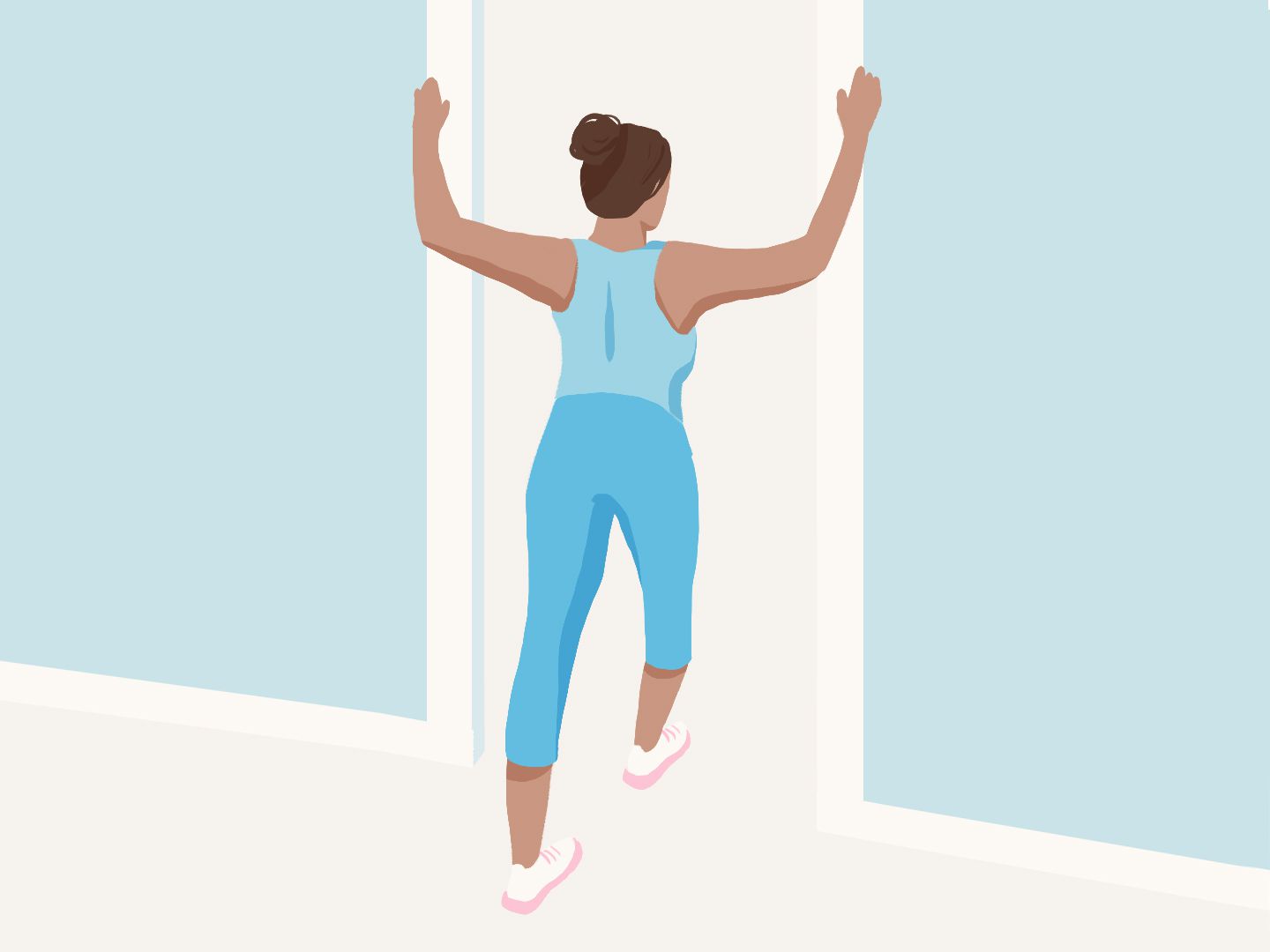
4. Doorway Chest Stretch
Stand in a doorway and place your forearms on each side of the frame with elbows bent about 90 degrees. Step one foot forward and gently shift your weight until you feel a stretch across your chest and the front of your shoulders. Hold for 15 to 30 seconds and repeat 2 to 3 times.
Why it helps: Tight chest muscles pull the shoulders forward, which can make the mid-back work harder. Opening the front of the body often gives the thoracic spine some immediate relief. It is the classic “undo the laptop posture” stretch, and yes, your chest probably needs it more than you think.
5. Thoracic Extension Over a Chair
Sit in a sturdy chair with a mid-back-height backrest. Interlace your fingers behind your head for support. Gently lean your upper back over the backrest while keeping your low back fairly neutral. Pause for a breath or two, then return upright. Repeat 5 to 8 times.
Why it helps: Many people have plenty of flexion and not much extension. This move encourages the mid-back to extend, which can counter the rounded shape created by screens, steering wheels, and generally being alive in the 21st century.
6. Seated Thoracic Rotation
Sit tall with your feet grounded. Cross your arms over your chest or place one hand on the opposite knee and the other behind you for support. Gently rotate your upper body to one side while keeping your hips facing forward. Hold for 10 to 20 seconds, then switch sides. Repeat 2 to 4 times each way.
Why it helps: The thoracic spine is designed to rotate. When it gets stiff, neighboring areas like the neck and low back often complain. Gentle twisting can improve mobility and make everyday actions like backing out of the driveway or reaching into the back seat feel less like a full-body negotiation.
7. Wall Angels
Stand with your back against a wall, feet a few inches away from it, knees soft. Try to keep your head, upper back, and tailbone lightly connected to the wall. Raise your arms into a goalpost position and slowly slide them upward, then back down, staying within a comfortable range. Perform 8 to 10 slow reps.
Why it helps: Wall angels combine mobility and posture awareness. They help open the chest, engage the upper back, and teach your body what a more aligned position feels like. They are humbling, which is another way of saying effective.
8. Side Reach Stretch
Sit or stand tall. Reach one arm overhead and gently lean to the opposite side without collapsing forward. Keep both sides of your torso long. Hold for 15 to 30 seconds, then switch sides. Repeat 2 to 3 times per side.
Why it helps: The muscles between the ribs, along the sides of the trunk, and into the mid-back can get tight when you sit for long stretches or breathe shallowly under stress. This movement opens the side body and can make breathing feel easier too.
9. Shoulder Rolls and Blade Squeezes
Sit or stand tall. Roll your shoulders up, back, and down 10 times, then reverse the direction. Next, gently squeeze your shoulder blades toward each other without arching your low back. Hold for 3 to 5 seconds and repeat 8 to 10 times.
Why it helps: Shoulder motion and scapular control directly affect the mid-back. When the shoulder blades glide better, the muscles around them tend to stop acting like overcaffeinated interns. This is a subtle move, but it can make a real difference over time.
10. Slouch-Overcorrect Posture Reset
Sit in a chair and intentionally slouch for a second or two. Then slowly move into an exaggerated upright position, lifting the chest and gently drawing the shoulders back. Finally, settle into the middle ground between the two. Repeat 10 to 15 times.
Why it helps: This stretch-reset teaches body awareness. A lot of people do not know where “neutral” posture feels like anymore. This move helps you find it without turning posture into a military audition. It is especially useful if your mid-back pain builds throughout the day rather than showing up only after exercise.
How to Turn These Stretches Into a Routine That Actually Happens
The best stretch routine is not the one with the fanciest mat or the most dramatic soundtrack. It is the one you will actually do. A realistic place to start is five to ten minutes, three to five days a week. Pick three or four stretches that match how your body feels that day. For example, if you have been sitting for hours, try seated cat-cow, doorway chest stretch, thoracic extension over a chair, and wall angels. If stress is the main issue, child’s pose, side reach, upper-back reach, and shoulder rolls can be a great combo.
You can also stack stretches onto habits you already have. Do shoulder rolls while coffee brews. Do the doorway stretch every time you leave your office. Do seated rotation after long meetings. Sneak in a posture reset before doomscrolling turns into a part-time job.
When Stretching Helps and When It Is Time to Get Checked Out
For everyday tightness, posture-related stiffness, and stress tension, these movements can be very helpful. But stretching is not a cure-all. If mid-back pain is severe, persistent, getting worse, or linked with trauma, fever, numbness, weakness, balance problems, or bowel or bladder symptoms, it is time to talk with a healthcare professional. The same goes for pain that wakes you up at night or wraps around your chest in a concerning way.
In other words, if your back feels stiff after a week of meetings, stretching may help. If your body is waving a giant red flag, listen to it.
Final Thoughts
Mid-back tension is incredibly common, especially in people who sit a lot, carry stress in their shoulders, or move less than their spine would prefer. The thoracic spine thrives on gentle motion, variety, and better alignment. These 10 mid-back stretches can help reduce stiffness, ease stress-related tightness, and support better posture without requiring a full gym setup or a spiritual awakening.
Start small, move consistently, and give your back a chance to remember that it is allowed to bend, rotate, and breathe. Your mid-back may never send a thank-you note, but it might stop growling every time you stand up from your chair.
Experience-Based Insights: What People Often Notice After Doing Mid-Back Stretches Regularly
In real life, the biggest change people often notice is not dramatic pain relief in five minutes. It is something quieter and more useful: they stop feeling locked up all day. A person who works at a computer may realize they no longer end the afternoon with that familiar burning ache between the shoulder blades. A parent carrying kids, bags, and approximately nine mysterious water bottles may notice they can stand upright more easily after a long day. A driver may discover that turning to check blind spots no longer feels like an audition for a robot malfunction.
Another common experience is that breathing feels easier. When the chest opens and the thoracic spine moves better, deep breaths can come more naturally. That matters because stress often shows up physically as shallow breathing, raised shoulders, and muscle guarding. Once people pair stretching with slower breathing, they often report feeling calmer overall. The back loosens, the jaw unclenches, and the nervous system gets the memo that not every email is a saber-toothed tiger.
People also tend to notice that posture improves more as a side effect than as a forced correction. Instead of constantly reminding themselves to “sit up straight,” they simply feel less collapsed. The body starts to choose a better position because it is easier, not because they are scolding themselves every 20 minutes. That is a much more sustainable win. Nobody wants posture improvement to feel like a full-time personality trait.
There is also a practical lesson that comes up again and again: consistency beats intensity. Doing three or four gentle stretches most days usually works better than launching into a heroic 40-minute mobility session once every two weeks and then walking around sore and offended. The thoracic spine seems to respond well to frequent reminders rather than rare dramatic interventions.
Some people find one stretch changes the game more than the others. Desk workers often love the doorway chest stretch and wall angels because they directly reverse the rounded position of typing and scrolling. People who feel stress around the shoulder blades may prefer the seated upper-back reach or child’s pose. Those who feel stiff when twisting often notice the most benefit from thoracic rotation. This is normal. Bodies have favorite complaints, and they also have favorite solutions.
Finally, many people realize mid-back tension is rarely just a “back problem.” It is often tied to how they sit, breathe, train, sleep, drive, and manage stress. The stretches help, but so does taking standing breaks, adjusting screen height, strengthening the upper back, and not spending every free moment folded over a phone like a question mark. When those pieces come together, the mid-back usually becomes less dramatic, less tight, and much easier to live with.













